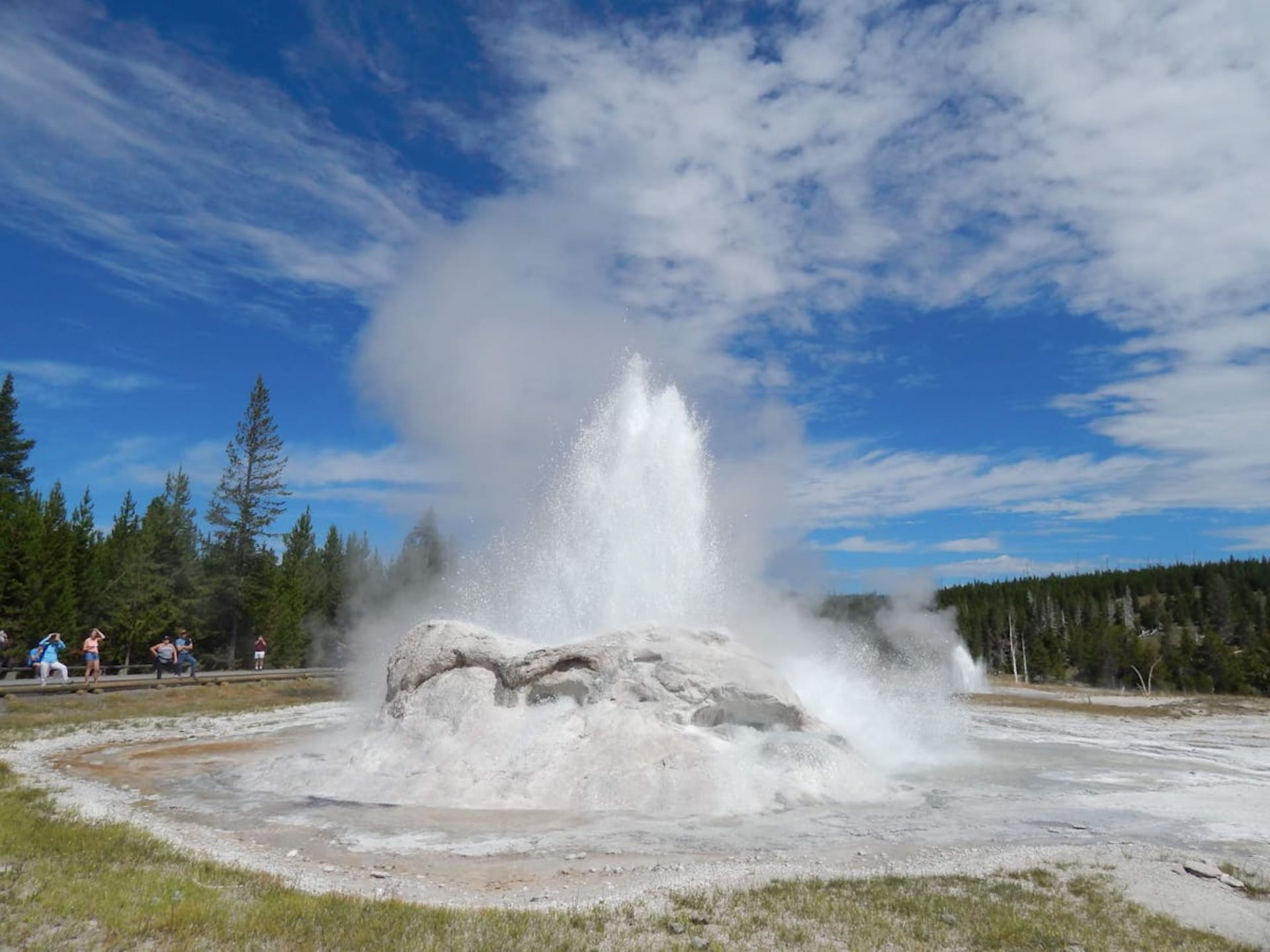
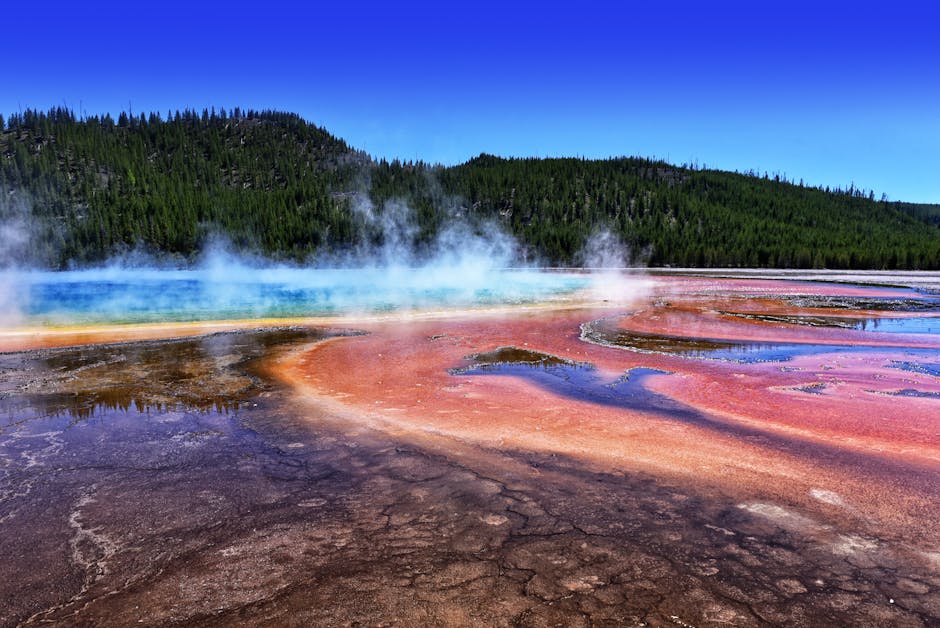
Yellowstone feels like visiting another planet. The Grand Prismatic Spring radiates impossible colors — turquoise, orange, gold — while Old Faithful erupts with clockwork reliability. Mud pots bubble, fumaroles hiss, and the ground itself feels alive beneath your feet. This is where the volcanic heart of the continent beats closest to the surface, and you can feel it.
In France, we have thermal towns — Vichy, Aix-les-Bains — elegant places where hot water is a civilized amenity. Yellowstone is the opposite of civilized. The thermal features here are not amenities. They are warnings. The ground is a thin crust over a supervolcano, and the park reminds you of this constantly: boardwalks over boiling pools, warning signs about acid burns, steam venting from cracks in the earth that smell of sulfur and deep time. I stood on the boardwalk above Grand Prismatic and watched the colors shift from sapphire to emerald to rust, all produced by heat-loving bacteria that thrive at temperatures that would kill any organism I can name. It is beautiful in the way a thunderstorm is beautiful — with an undercurrent of genuine danger.
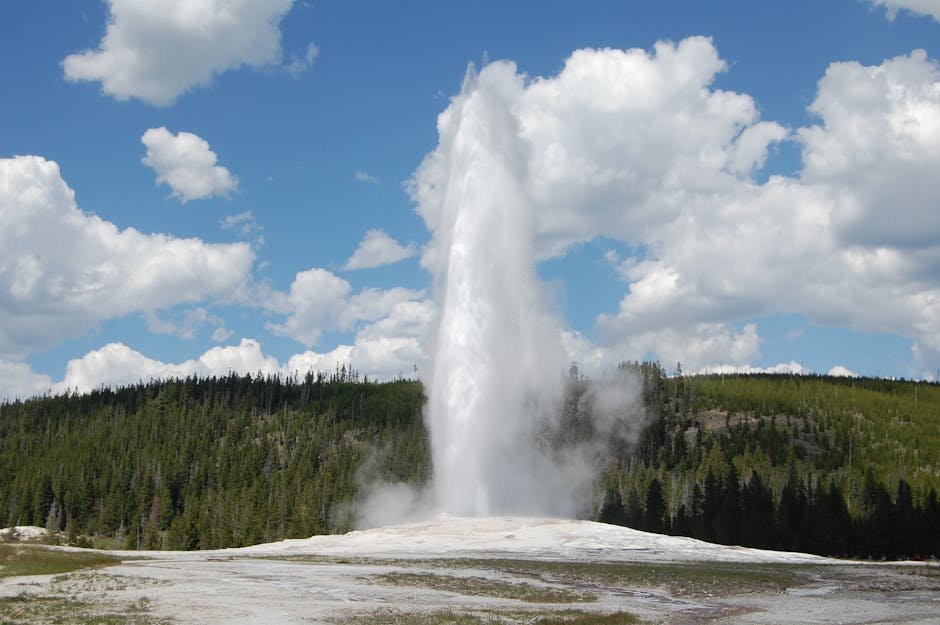
Old Faithful is worth the wait, and not because the eruption is the most spectacular thing in the park — it is not. It is because sitting on the benches with a few hundred strangers, watching a column of boiling water launch itself a hundred and fifty feet into the Wyoming sky, you participate in a ritual that has been happening roughly every ninety minutes for as long as humans have been watching. The regularity is what stuns. The earth has been doing this, patiently, while civilizations rose and fell.
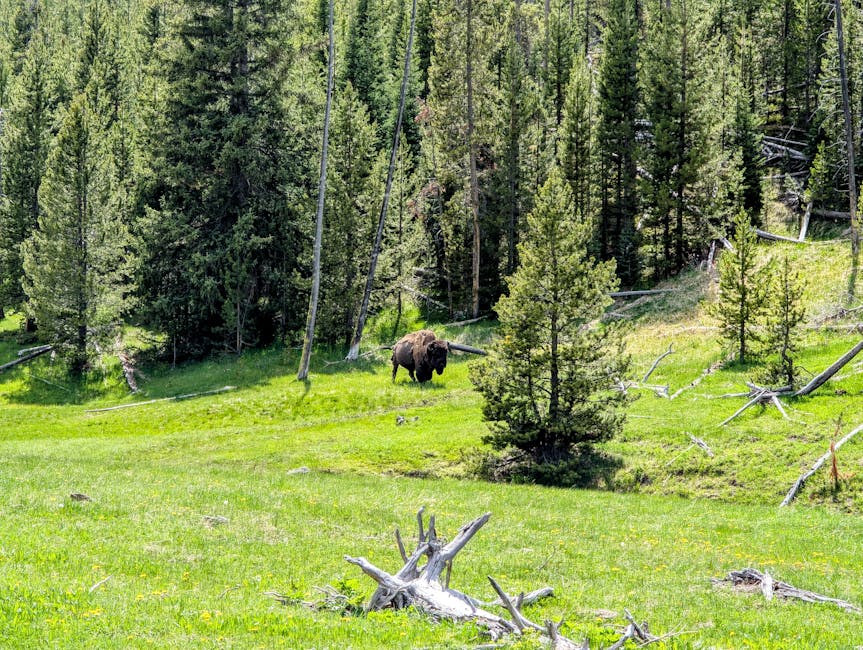
Beyond the geothermal wonders, Yellowstone is one of the last intact ecosystems in the northern hemisphere. Bison herds block the roads without apology. Wolves hunt in the Lamar Valley at dawn. Elk graze beside the Madison River as eagles circle overhead. I sat in my car at five in the morning in the Lamar Valley with a borrowed pair of binoculars and watched a wolf pack move across the sagebrush in the blue pre-dawn light. The park spans nearly 3,500 square miles of wilderness — enough to spend a week and barely scratch the surface.
When to go: Late May through September for accessible roads and wildlife. Winter offers a magical, snow-covered landscape accessible by snowcoach.