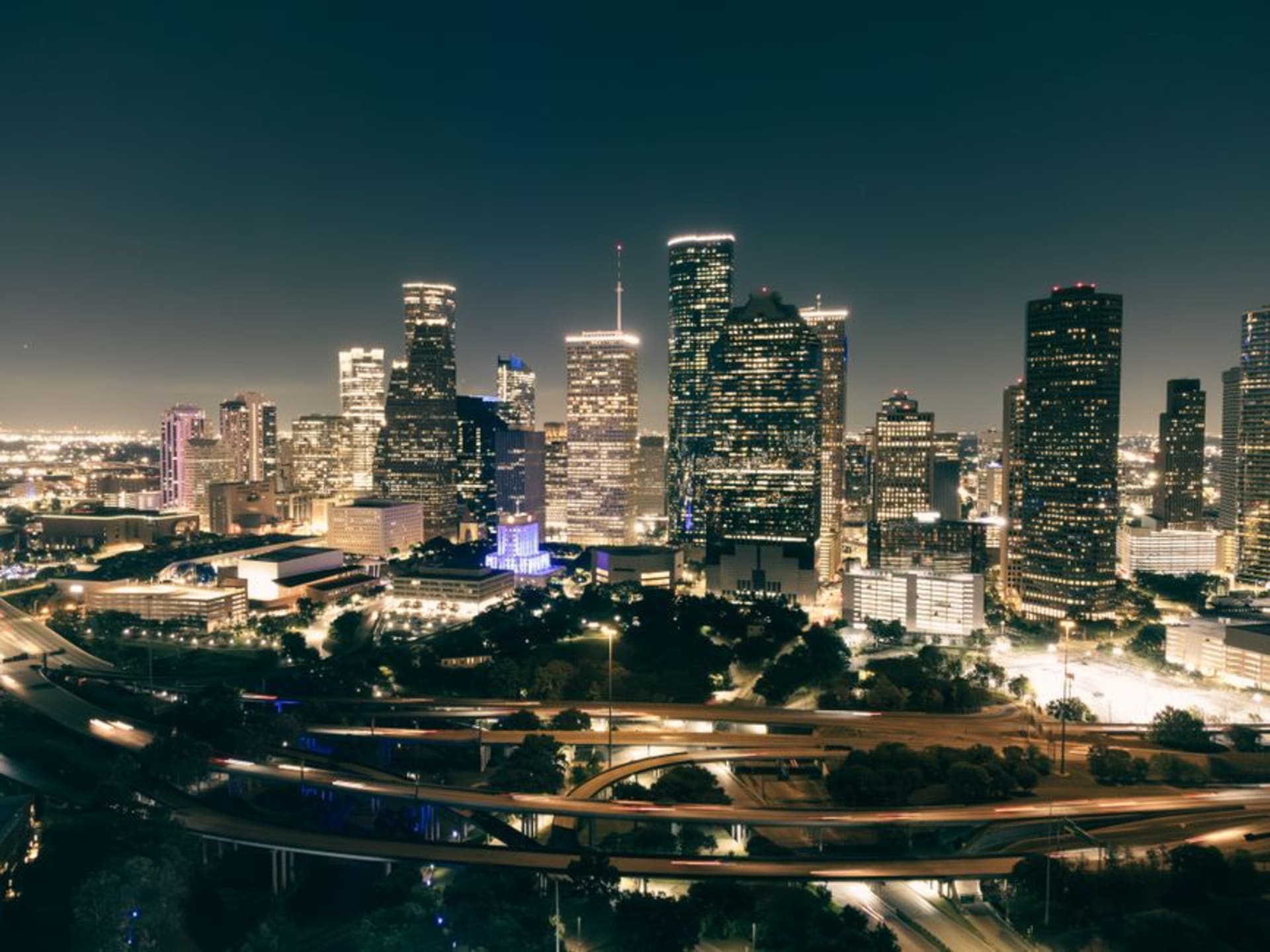
A sprawling, gloriously diverse Texas metropolis where astronauts trained, oil built glass towers, and half the planet seems to have opened a restaurant. Houston has no shape you can hold in your head, but it feeds you like nowhere else in America. We came for the space program and stayed for the food.
Houston does not announce itself the way other great cities do. There is no single hill to climb, no old square to arrive in; it simply spreads, flat and green and endless, until you give up trying to picture it and just start driving. Lia and I got hopelessly lost our first evening, missed three highway exits, and ended up entirely by accident in a strip mall on Bellaire Boulevard where every sign was in Vietnamese and the pho was the best either of us had eaten outside Hanoi. That, it turned out, was the truest possible introduction. Houston reveals itself one neighborhood, one meal, at a time.
Space Center Houston
We had come, officially, for the space program, so on our first full morning we drove southeast to Space Center Houston. This is Mission Control, the room from which the words “Houston, we have a problem” actually travelled, and standing in the restored 1960s control room, the consoles still angled toward the big screen, I felt the hair rise on my arms. A tram carried us out to see the astronauts training and a genuine Saturn V rocket lying on its side in a hangar, so vast that Lia laughed out loud at the impossibility of it. We are children of the moon-landing footage, both of us, and here it stopped being footage.
The Museum District and Hermann Park
Houston surprised me most with its culture. The Museum District packs nineteen museums into a walkable green pocket, and we spent a slow afternoon in the Menil Collection, which is free, and then sat in absolute silence inside the Rothko Chapel, fourteen enormous dark canvases pressing a strange calm into the room. Afterward we wandered into Hermann Park, past the reflecting pool, and rented a paddleboat because the heat demanded water. Lia steered us in lazy circles while cicadas roared in the live oaks. For a city famous for oil and sprawl, Houston hides an unexpected amount of shade and quiet if you know where to look.
Eating Around the World
But the real Houston is the food, and we gave ourselves over to it. This is one of the most diverse cities in America, and the map of it is written in restaurants: tacos al pastor in the East End, Nigerian jollof rice near Alief, dim sum in the sprawling Chinatown out west, and crawfish, the Gulf Coast obsession, served by the pound and eaten with your hands. On our last night we joined a long weekend line for Viet-Cajun crawfish, a Houston invention that soaks the mudbugs in garlic butter and lemongrass, and sat at a paper-covered table peeling and laughing with strangers. Lia said she finally understood the city: you cannot see Houston, you have to taste it.
Getting There
Houston has two airports: George Bush Intercontinental (IAH) far to the north for long-haul and international flights, and the smaller Hobby (HOU) closer in to the south. Either way you will want a car, because Houston is built for driving and its treasures are scattered wide across the flat coastal plain. Downtown and the Museum District have a light rail line that helps, but the great immigrant food neighborhoods demand wheels. Avoid high summer if you can, when the heat and humidity turn the air to soup; late autumn and spring are far kinder.
Keep exploring
More of Texas