Tacoma
"The mountain wasn't there, and then it was — as if the clouds had been hiding a secret all week."
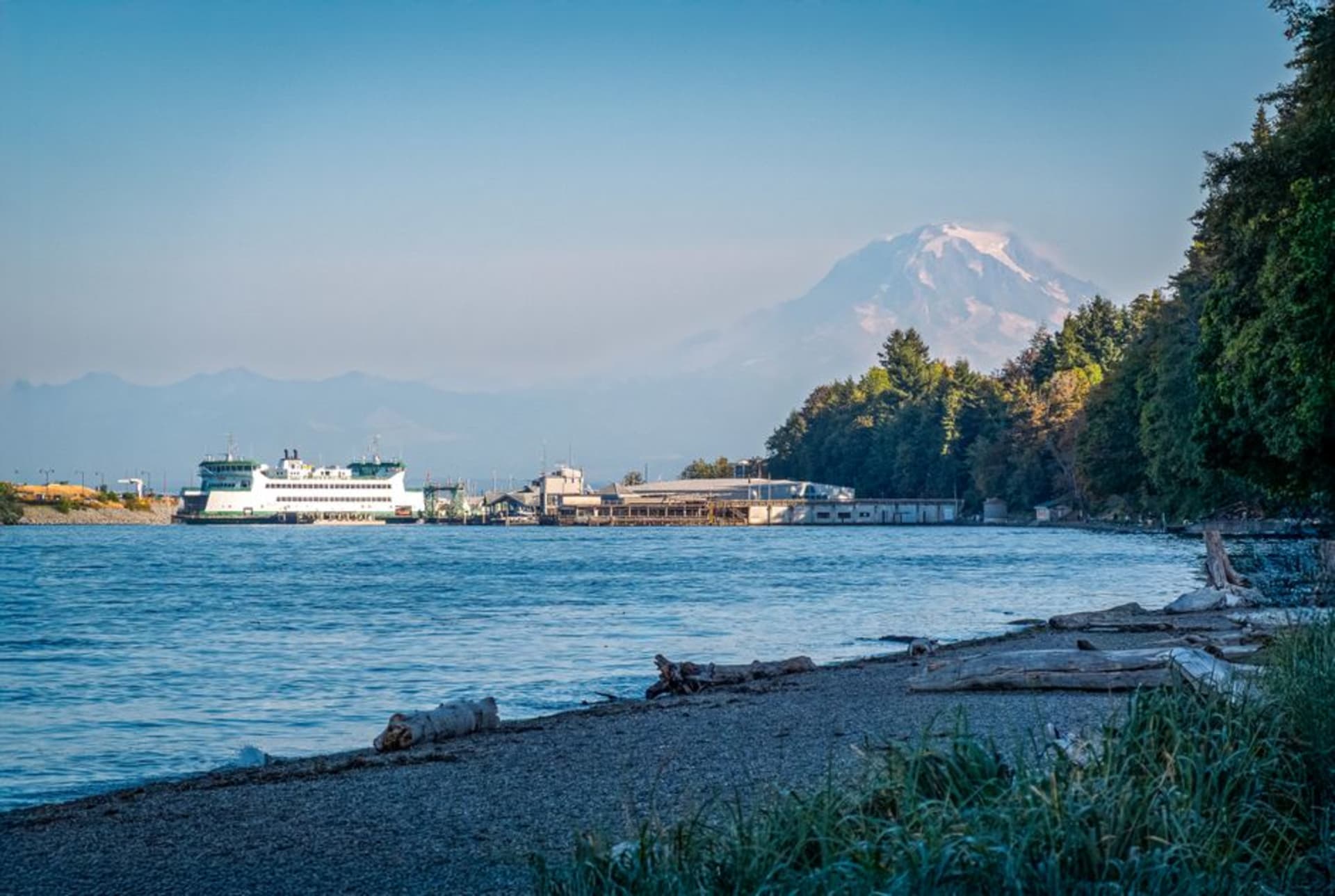
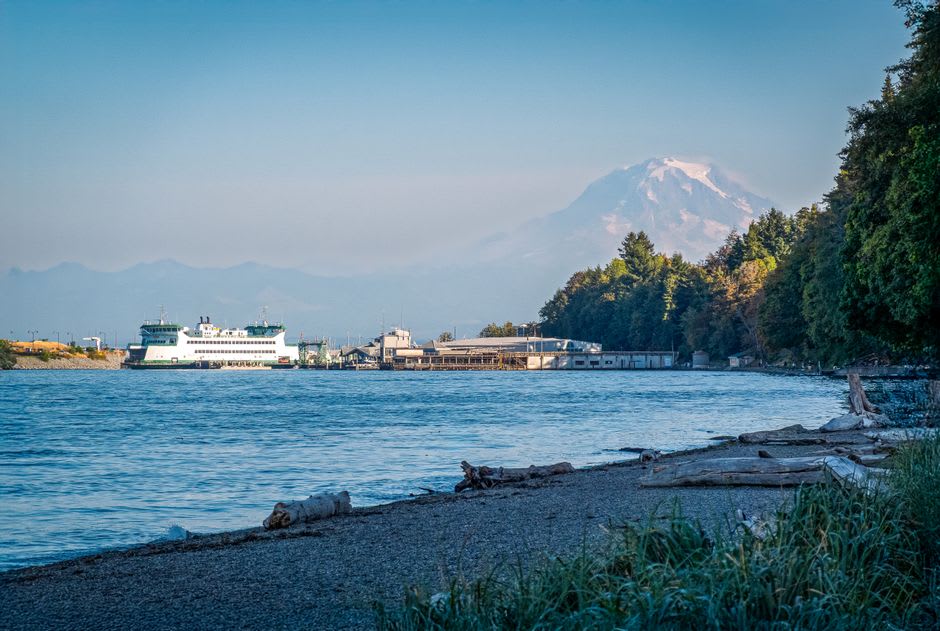
We almost skipped Tacoma. Everyone told us to go straight to Seattle, that Tacoma was the place you drove through with the windows up. So of course we stayed three nights, and on the second morning Lia shook me awake and pointed at the window. Mount Rainier had appeared overnight, or rather the marine layer had finally lifted, and there it was — a white bulk floating above the port cranes, so large it seemed to bend the logic of the city beneath it. We drank our coffee on the balcony without speaking. Some places you have to earn by waiting out the weather.
Glass and Fire on the Waterfront
Dale Chihuly is Tacoma’s most famous son, and the city has turned his obsession into its signature. At the Museum of Glass we stood in the Hot Shop, a working amphitheater where artists gather molten gobs on the end of steel pipes and spin them into being. The heat reaches you in the front row; you flinch when the furnace door swings open. Lia is not usually one for museums, but she watched a single vase take shape for forty minutes without moving, mesmerized by the way the glass sagged and glowed and refused to hold still.
Outside, the Chihuly Bridge of Glass carries you over the highway beneath a ceiling packed with thousands of luminous forms — sea anemones, twisted horns, colors I don’t have names for. We crossed it slowly, necks craned, letting the afternoon light do its work through the glass.
The Ruston Way Shore
Our favorite ritual became the walk along Ruston Way, the old shoreline path that traces Commencement Bay. Sailboats leaned in the wind, a fireboat idled at its dock, and the water threw back the low northern sun in hammered silver. We bought fish and chips from a shack and ate them on a bench while a container ship the size of a neighborhood slid past, improbably quiet.
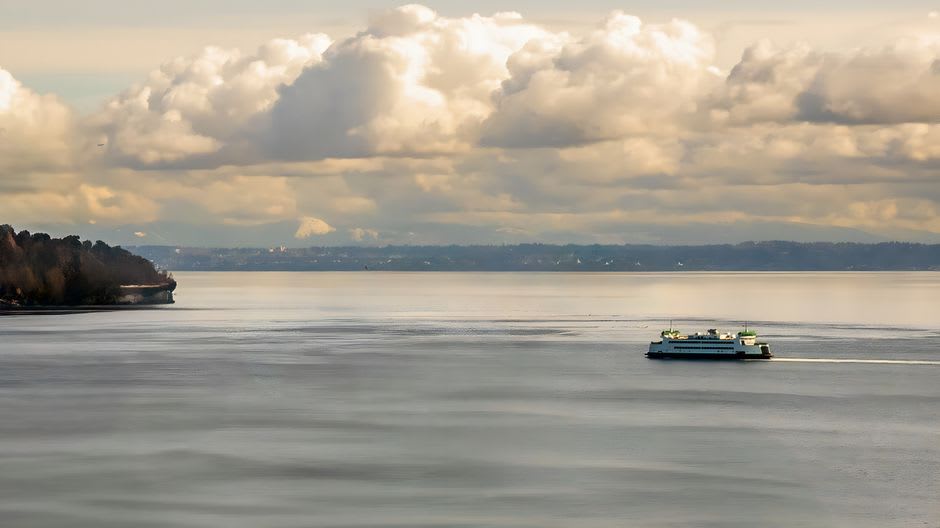
Further along we found Point Defiance Park, a headland of old-growth forest with a five-mile drive that ducks under enormous firs and keeps offering the water back to you at every bend. We stopped at an overlook where the Narrows Bridge stretched off toward the Kitsap Peninsula, and stayed until the light went pink.
Stadium District and Old Brick
Tacoma’s downtown surprised us. We wandered the Stadium District, where a brown-brick castle of a high school perches above a bowl-shaped stadium, and drifted down into blocks of restored warehouses now full of coffee roasters and record shops. The city has that half-recovered feeling I love — grand old buildings that were nearly lost, brought back one at a time, still a little rough at the edges.
We ended one evening at Union Station, a Beaux-Arts rotunda that no longer runs trains but holds a hanging garden of Chihuly glass beneath its great dome. A security guard let us linger past closing, sensing, I think, that we weren’t quite done looking up.
Getting There
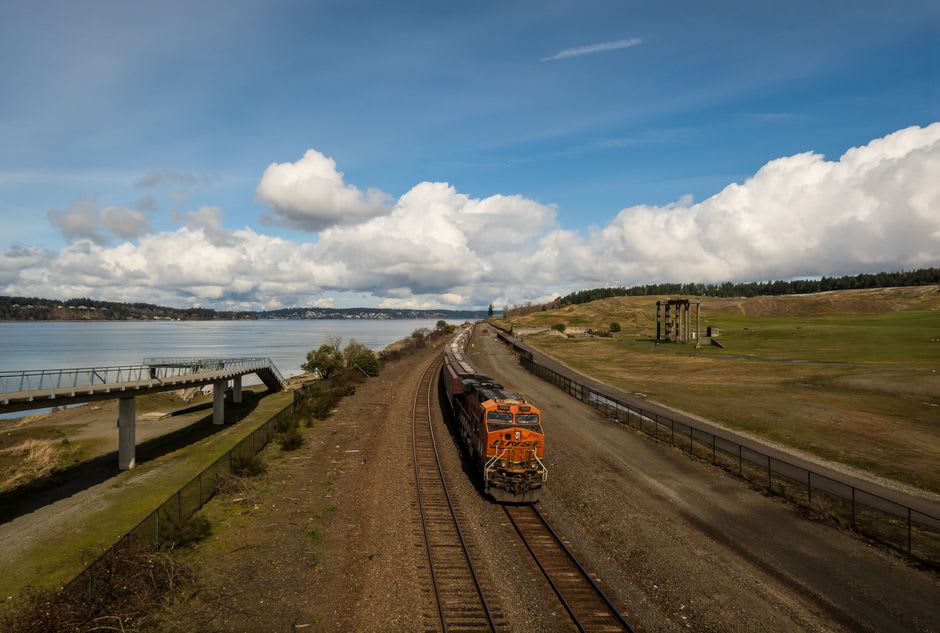
Tacoma sits about 35 miles south of Seattle on Interstate 5, roughly 40 minutes by car outside rush hour, though the traffic can double that. Sea-Tac International Airport is only 20 minutes north, making Tacoma an easy and cheaper base than Seattle itself. Amtrak’s Cascades line stops at the restored Freighthouse Square station, and the Sounder commuter train links to Seattle on weekdays. Once here, the free Link light rail loops through downtown, but we found the waterfront and museum district best explored slowly on foot.