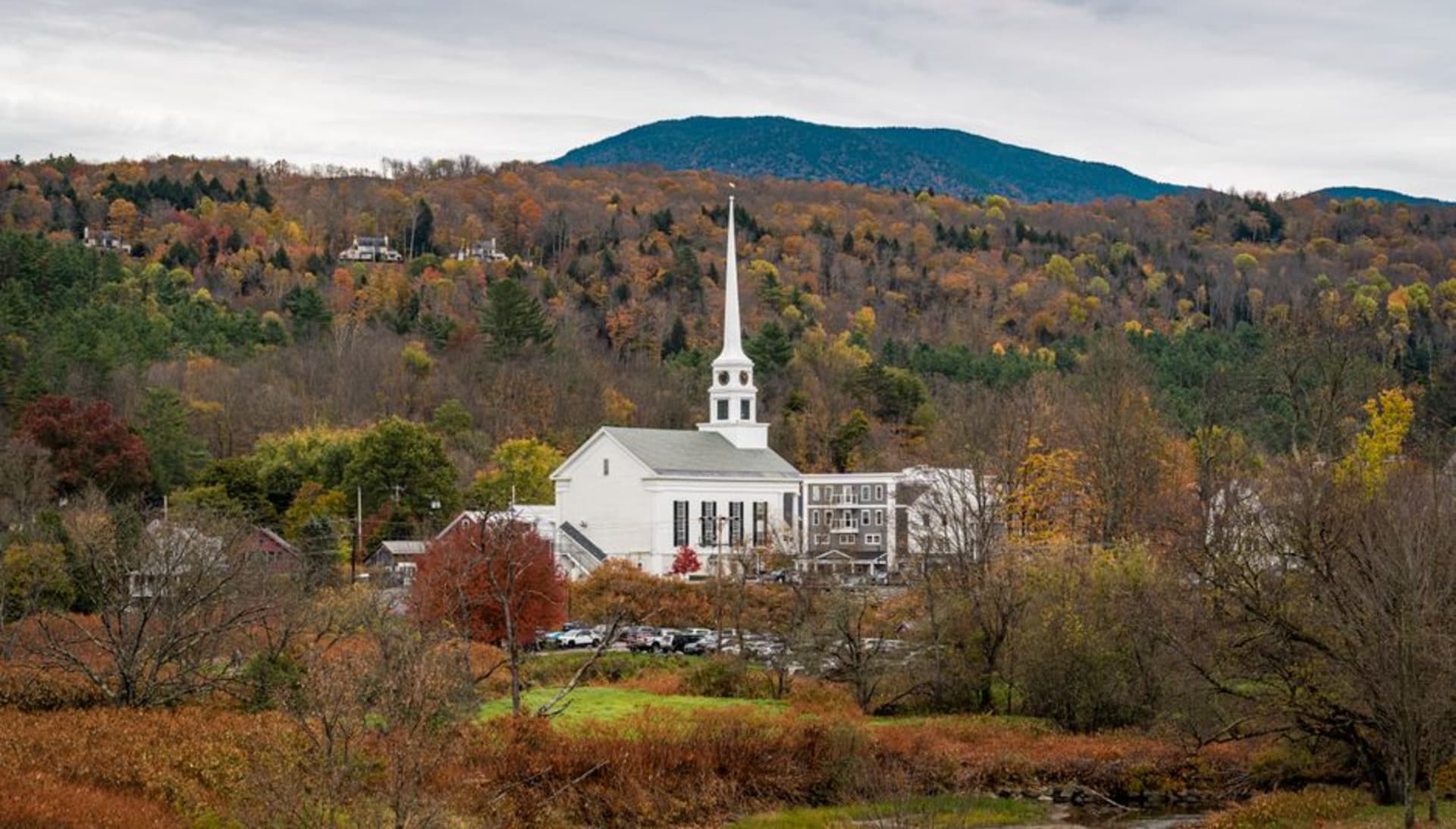
Stowe
"The church steeple, the red barns, the mountain going up in color behind them — I had seen it on a thousand calendars and assumed it was a lie. It is not a lie."
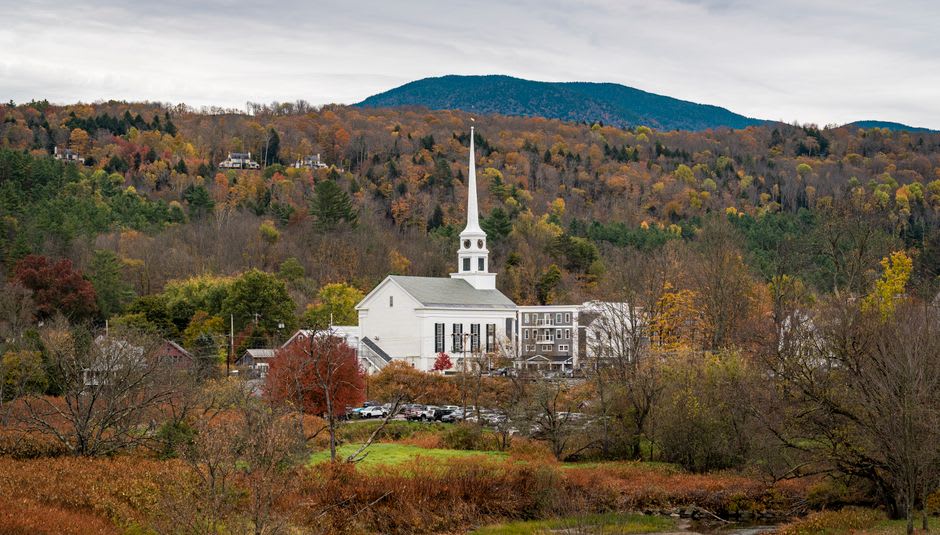
We drove into Stowe on a crisp October afternoon and the first thing we saw was the white steeple of the Stowe Community Church rising above a blaze of orange and red maples, with Mount Mansfield — Vermont’s highest peak — filling the sky behind it. Lia made me stop the car. I have spent enough time being a superior European about American scenery, and I will now admit, in writing, that I was wrong: the Vermont autumn is every bit as absurd and glorious as the postcards promise. The whole hillside looked as though it were combusting slowly and enjoying it.
The Mountain and the Leaves
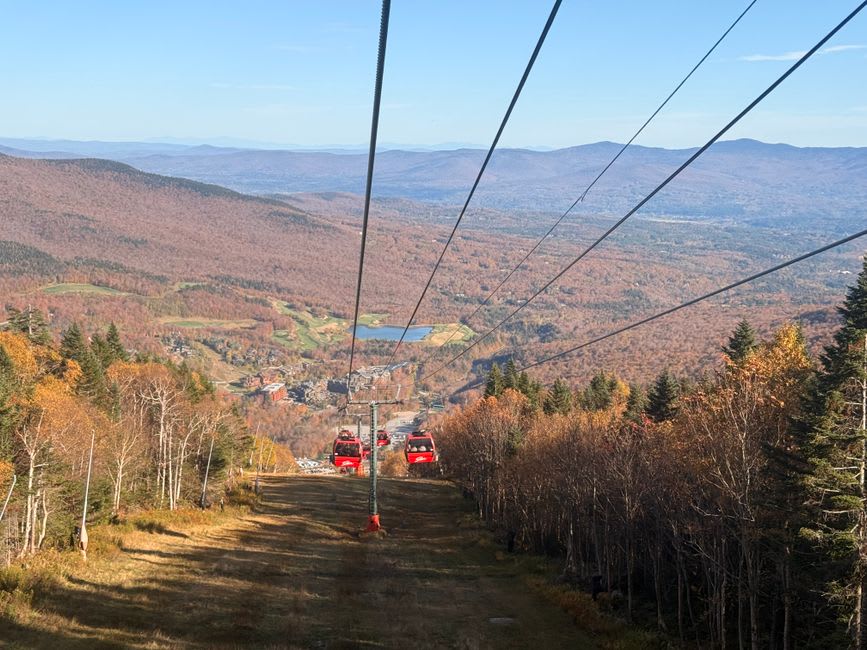
Mount Mansfield dominates Stowe, and the best way to understand the town’s setting is to get up onto it. We drove the narrow, twisting Toll Road toward the summit ridge — the mountain’s profile is said to resemble a reclining human face, with a “Nose” and a “Chin” — and from the top the fall color rolled away in every direction, whole valleys of red and gold with the occasional dark spire of a fir breaking it up. The wind was cold and clean. Below us the ski trails cut green ribbons through the color, waiting for snow. We hiked a short stretch of the ridge, and I understood why people organize entire pilgrimages around this two-week window when the leaves turn — it is genuinely, unrepeatably beautiful, and it does not last.
The Recreation Path and the Village
Stowe has a wonderful thing called the Recreation Path — a paved five-mile trail that follows the West Branch river from the village out toward the mountain, crossing it on old bridges, threading past farms and inns and the occasional grazing horse. We walked most of it, stopping where the trail crossed the river to watch the water run brown and quick over stones, maple leaves spinning down onto its surface. Back in the village we ate at a tavern in a building older than my entire country’s constitutional history, and I had a maple-glazed something with a local cider, because when in Vermont one submits to the maple. Everything, gently, tastes of it here. I have made my peace with this.
Cider, Cheese and the Von Trapps
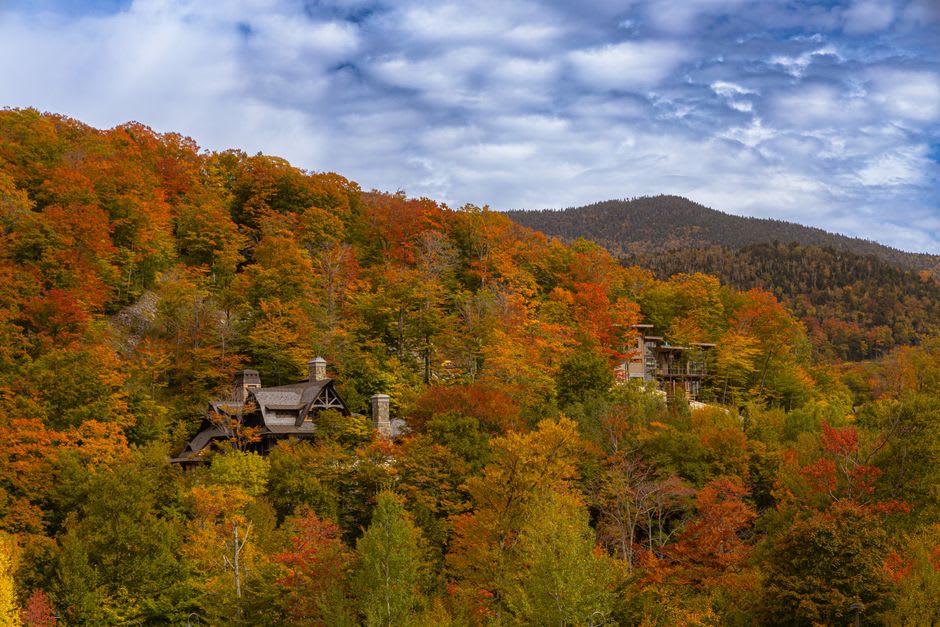
The countryside around Stowe is dense with small producers, and we spent a happy afternoon following our noses. We stopped at a cider mill where they were pressing apples the old way and drank the raw juice, sharp and cold, and bought a warm cider doughnut that Lia declared the finest thing she had eaten all trip. Just up the hill sits the Trapp Family Lodge — yes, those von Trapps, who settled here because the Green Mountains reminded them of Austria — now an alpine-styled resort with its own brewery, and we ended the day on its lawn with a lager, looking out at the same view that apparently consoled a family of exiled singers seventy years ago. I could see their point.
Getting There
Stowe sits in northern Vermont, about 40 minutes east of Burlington, whose airport (BTV) is the nearest with regular flights. Most visitors drive — it is roughly three and a half hours from Boston and five from New York, up through increasingly rural and lovely country. Come in late September or the first half of October for peak foliage, but book lodging months ahead, as the leaf-peepers arrive in force. Winter is the other great season, when Stowe becomes a serious ski town. A car is useful for the cider mills and the Toll Road, but the village and much of the Recreation Path are easily walked.