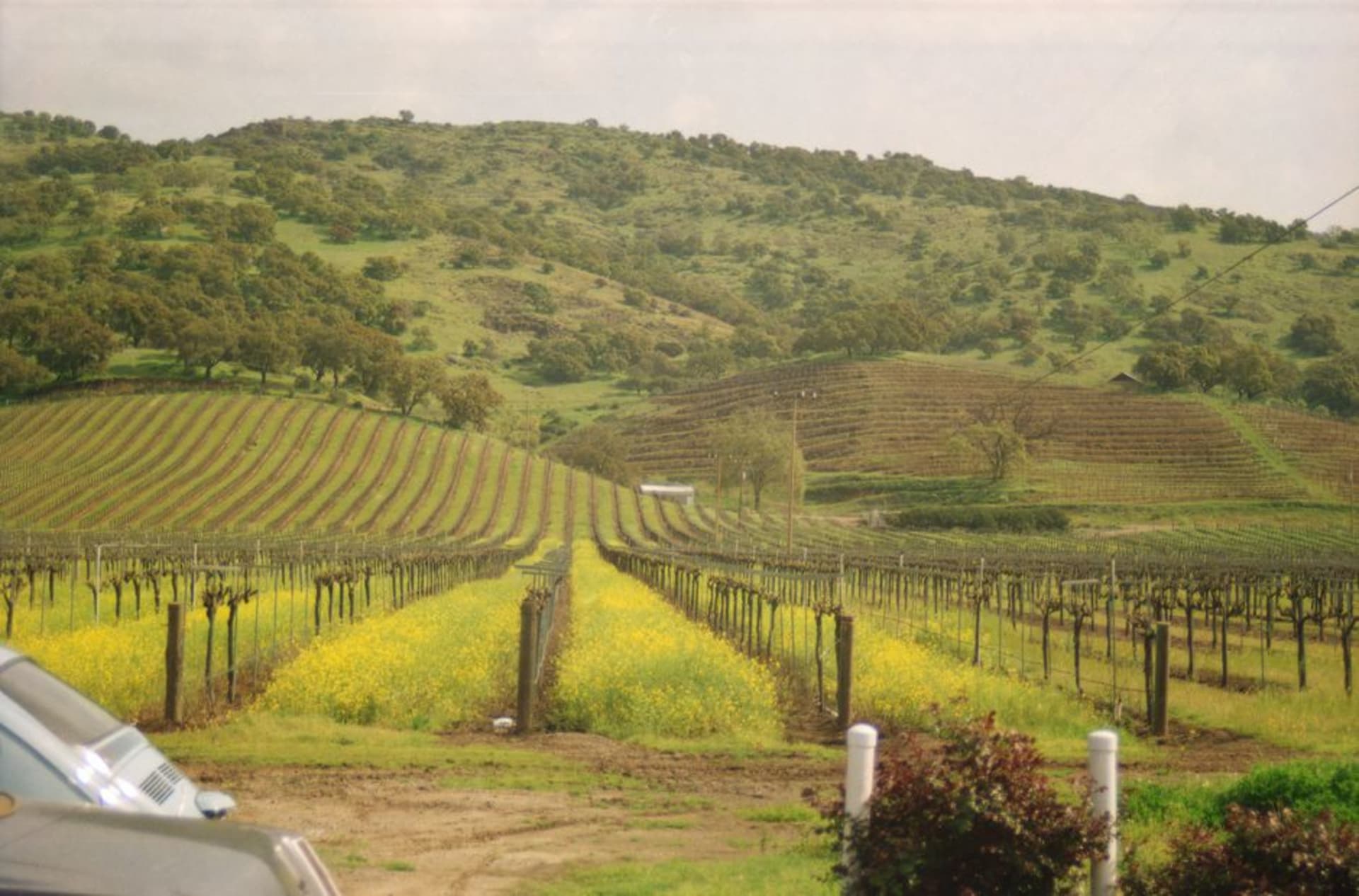
Sonoma
"In Sonoma nobody rushes you, and after a week we'd forgotten how to rush ourselves."
If Napa is the valley that dresses up, Sonoma is the one that stays in its work clothes, and we liked it the better for it. We crossed the low hills west from Napa and the change was immediate — the vineyards looser, the towns smaller, the whole rhythm slower. We rolled into the town of Sonoma at midmorning and found the plaza, a green square that anchors the whole place, shaded by old trees, ringed by adobe and brick. Lia bought a coffee and we sat on a bench and simply watched the town be itself: farmers unloading a truck, a dog asleep in a doorway, two old men arguing amiably in Spanish. Nobody was performing. It felt, after Napa’s gloss, like a long exhale.
The Plaza and the Last Mission
Sonoma’s plaza is the largest in California, and it’s the real heart of the town — eight acres of green with City Hall square in the middle and history stacked around every edge. On the north side stands Mission San Francisco Solano, the last and northernmost of the California missions, a low white adobe with a simple wooden cross. We walked its cool rooms in the morning quiet, then the old barracks nearby where the Bear Flag Revolt broke out in 1846 and California briefly declared itself a republic. Lia read every placard; I stood in the plaza shade and let the history settle. It’s a lot of consequence for such a sleepy square. But that’s Sonoma — genuinely old, genuinely lived-in, wearing its past without a fuss.
Out Among the Gentle Vineyards
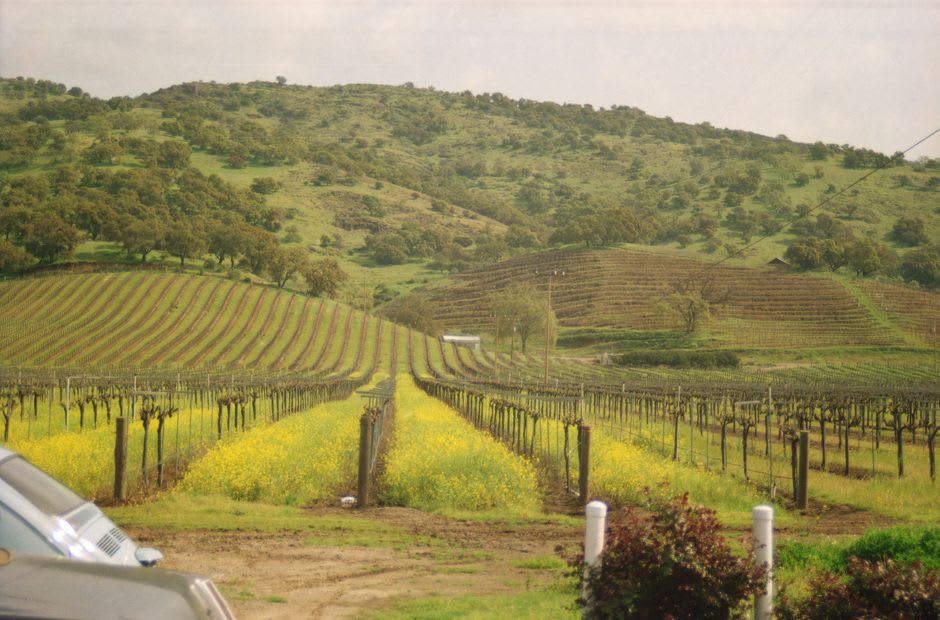
The wineries around Sonoma feel less like showrooms and more like farms, and we spent an afternoon drifting between a few of them on the back roads toward Glen Ellen. The hills here are gentler than Napa’s, oak-studded and folding softly, the vine rows following the contours instead of marching in rigid lines. We tasted zinfandel in a barn that smelled of oak and old wood, poured by a woman who’d grown up on the property. She sent us up the road to Jack London State Park, where the writer had his ranch — we walked the trails past the ruins of his burned dream house, the Wolf House, its stone arches standing roofless among the trees. Lia loved that; she’d read London as a girl. The whole day had an unhurried, wandering quality that Napa rarely allows.
Slow Mornings and the Long Table
What I’ll remember most about Sonoma is the food and the way people eat it — slowly, together, without ceremony. We took a picnic to the plaza one evening: bread and cheese from the local creamery, olives, a bottle of the zinfandel from the barn. Families spread blankets on the grass, kids ran between the trees, and the light went long and honeyed through the leaves. Lia leaned against me and said she could live here, and for a moment I believed her. The next morning we lingered over eggs and coffee at a corner cafe until the day was half gone and neither of us minded. Some places teach you to move faster. Sonoma quietly taught us to stop.
Getting There
Sonoma lies about an hour north of San Francisco, a straightforward drive up Highway 101 and east through the town of Sonoma, or over the hills from neighboring Napa if you’re touring both valleys. Fly into San Francisco or Oakland and rent a car — as in all of wine country, you’ll want a plan for the driving if you intend to taste, whether a designated driver or a local car service. The town is walkable once you arrive, with the plaza at its center, but the outlying wineries and Jack London’s ranch call for a car. Spring and early fall are loveliest; summer brings heat and crowds, though Sonoma stays calmer than Napa even at its busiest.