Sitka
"A bald eagle dropped past the church spire like it owned both the sky and the century."
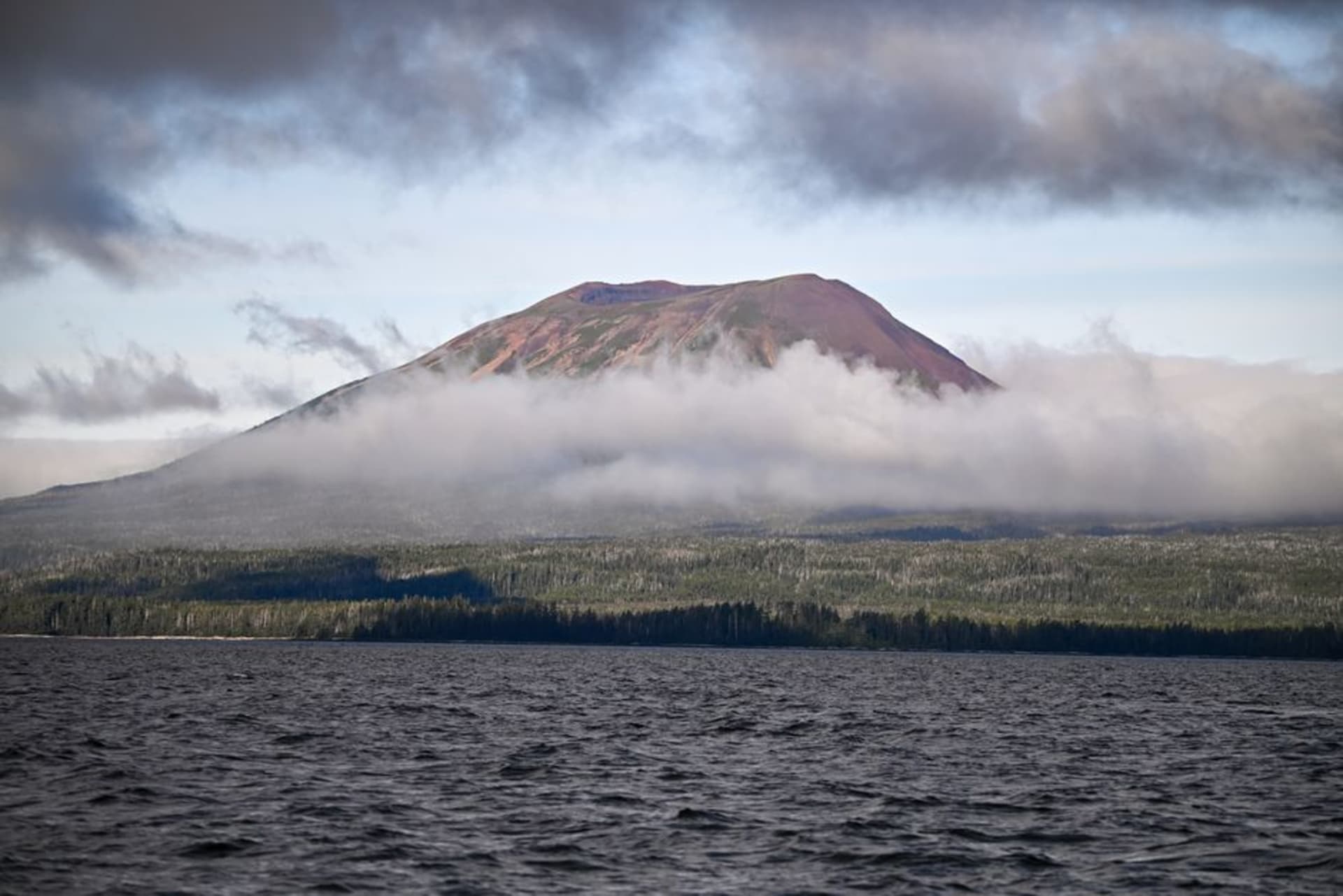
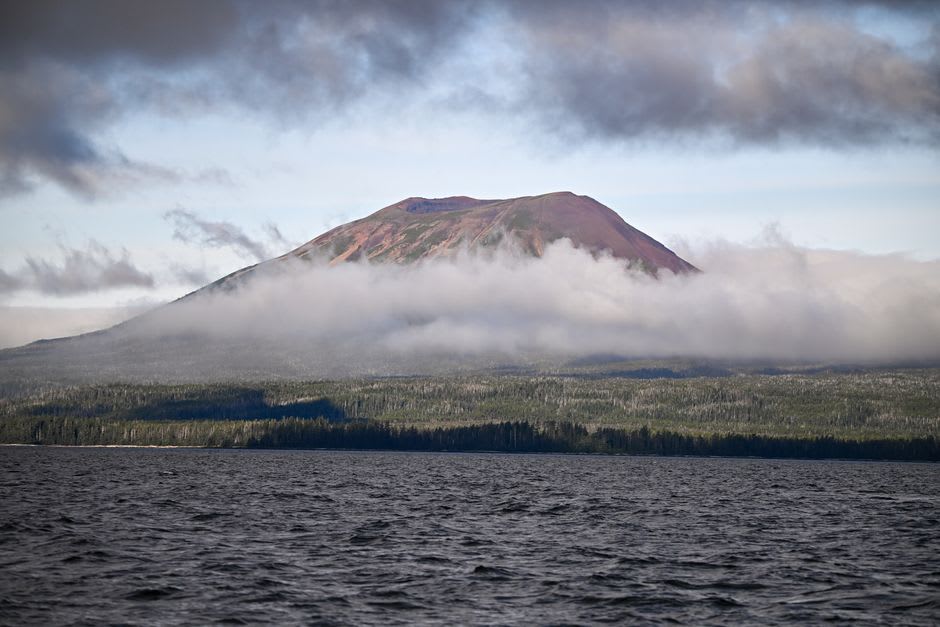
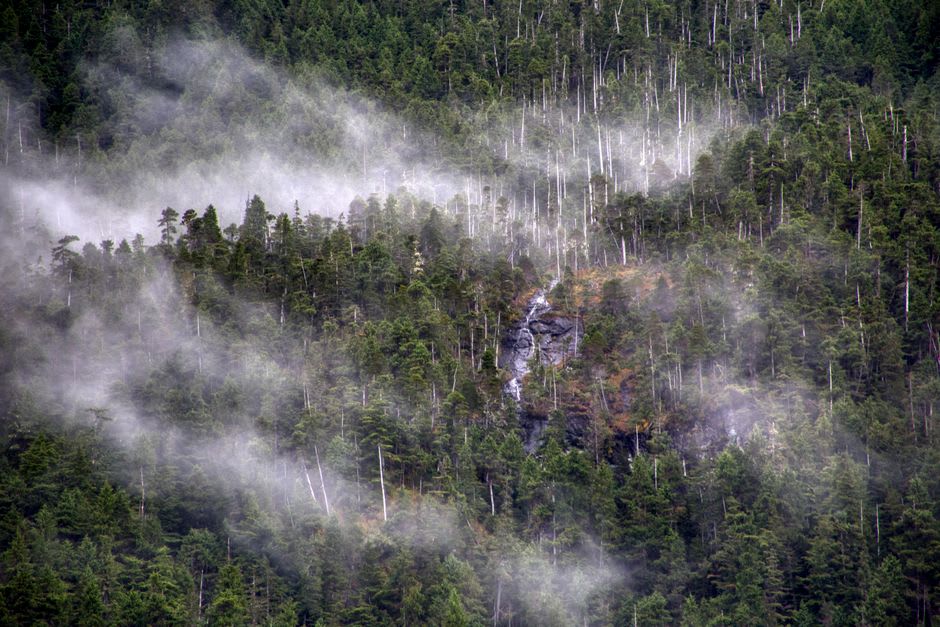
It was raining, of course, the fine steady rain that Sitka wears most of the year, when Lia and I first walked out toward the totem poles. The trail led into a coastal rainforest of huge spruce dripping with moss, and one by one the carved poles emerged from the green — ravens, bears, watchmen — standing in the mist as if they had grown there. Beyond the trees the Pacific heaved gray against the rocks, and across the sound the perfect white cone of Mount Edgecumbe, an actual volcano, floated above the cloud. I had not expected Alaska to feel this layered, this haunted, this quietly grand.
Sitka National Historical Park
The park protects the ground where Tlingit warriors and Russian traders fought in 1804, and it is the oldest federal park in Alaska. But you feel the history less as a battlefield than as a presence among the trees. We followed the loop trail as it wound between totem poles set along the shore, each one telling a story we only half understood, reading the small plaques and then just standing in the hush. At the visitor center a Tlingit carver was at work on a new pole, curls of cedar at his feet, and he talked with us for a while about whose stories the poles carry. Lia listened more than she spoke, which is how she pays her deepest attention.
The Russian Legacy
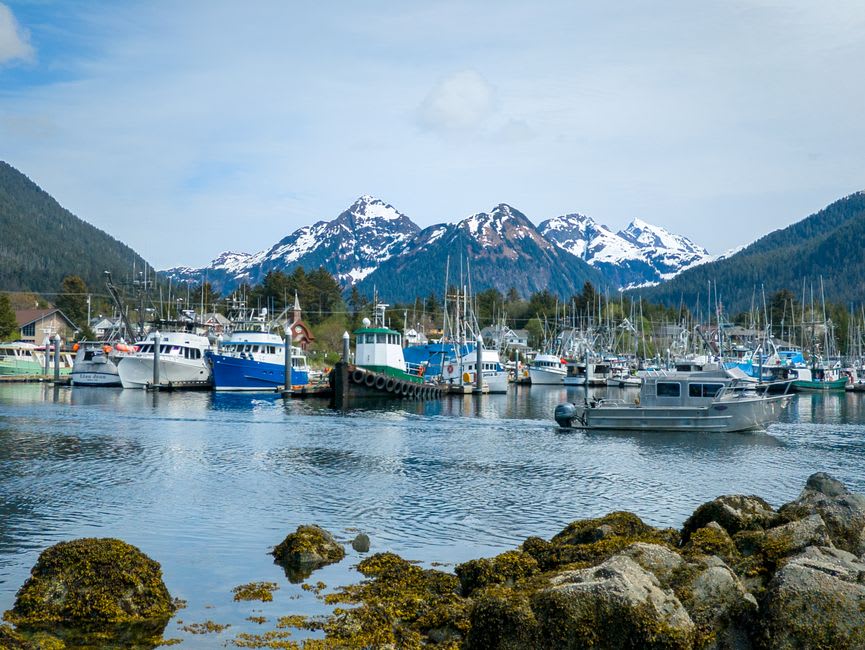
Downtown, the past takes a sharp turn. St. Michael’s Cathedral rises from the middle of Lincoln Street, an onion-domed Russian Orthodox church whose original burned in 1966 and was painstakingly rebuilt around its rescued icons. We stepped inside out of the rain, and in the dim gold light an old parishioner was lighting candles before paintings that had crossed an ocean two centuries ago. Up the hill, Castle Hill looks out over the harbor from where Russia formally handed Alaska to the United States in 1867. Standing there in the wind, watching fishing boats work the sound, we felt the sheer improbable reach of history that had washed up on this small, remote shore.
Eagles, Water, and the Edge of the Wild
Sitka is not connected to anywhere by road — you arrive by sea or air, and once there you feel pleasantly marooned. We spent our last day close to the water. At the Alaska Raptor Center we stood an arm’s length from bald eagles recovering from injuries, close enough to see the fierce yellow intelligence in their eyes, before some are released back to the wild. Then we walked the shoreline as real wild eagles wheeled over the harbor and dropped for fish, so common here that locals barely glance up. In the evening the clouds finally broke, Mount Edgecumbe glowed pink across the water, and Lia and I sat on the rocks not wanting the day, or the trip, to end.
Getting There
Sitka has no road to the outside world. You reach it by air, on daily jet service to Sitka’s airport (SIT) on nearby Japonski Island, or by sea aboard the Alaska Marine Highway ferry that threads the Inside Passage; many visitors also arrive by cruise ship in summer. Once in town, the compact center is walkable, though a rental car or bike helps for reaching the raptor center and trailheads a little further out. Pack genuine rain gear rather than hoping for sun — Sitka’s beauty and its weather are the same thing — and if the clouds lift for Mount Edgecumbe, drop what you are doing and look.