Savannah
"Savannah's squares slow you down until you're moving at the city's own genteel pace."
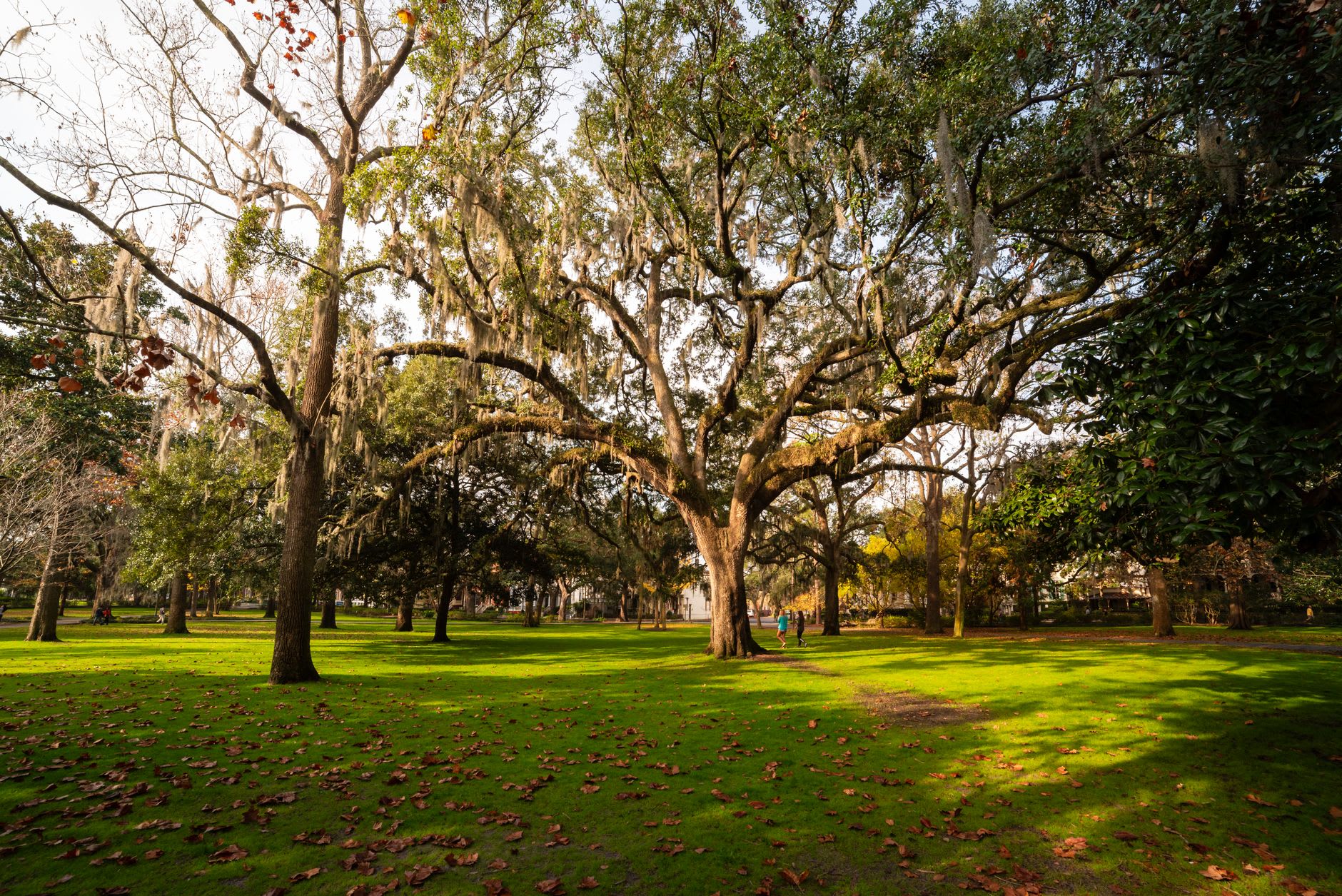
There is a particular quality to Savannah’s light in the late afternoon — amber and diffuse, softened by the Spanish moss that hangs from every live oak like the city forgot to take down its curtains. I arrived in early March expecting a pretty Southern town. What I found was something closer to a collective hallucination of the antebellum past, so well-preserved that standing at the center of Chippewa Square felt less like sightseeing and more like trespassing.
A City Built Around Its Silences
Savannah’s urban logic is unlike anywhere else in the United States. James Oglethorpe laid out twenty-two squares in the eighteenth century, and the city has honored that geometry ever since. Walking from Forsyth Park north along Bull Street, each square arrives like a pause between sentences — Lafayette, Madison, Johnson — each with its cast-iron fountain or war memorial, each ringed by townhouses the color of aged mustard and brick. Lia sat on a bench in Monterey Square while I circled the perimeter twice, trying to understand why the place felt so quiet. It took me a while to notice: no through-traffic cuts across the squares. The city bends around its own breathing room.
The smell is harder to explain — something green and faintly fungal from the moss, cut through by salt air drifting up from the Savannah River. On River Street, the old cotton warehouses have been converted into restaurants and bars built into the bluff, and in the evening the cobblestones hold the warmth of the day long after the sun is gone.
The Meal I Did Not Expect
I had been warned about Southern food in the abstract but nothing prepared me for a bowl of shrimp and grits at The Grey — a restaurant housed inside a restored 1938 Greyhound bus terminal on Martin Luther King Jr. Boulevard. The building alone would have been enough, all Art Deco terrazzo and rounded ticket windows. But the grits arrived the color of cream, tasting of stone-ground corn and something slow and mineral, with shrimp that had clearly never seen a freezer. It was the first time I understood why people speak about regional American food with the reverence usually reserved for wine.
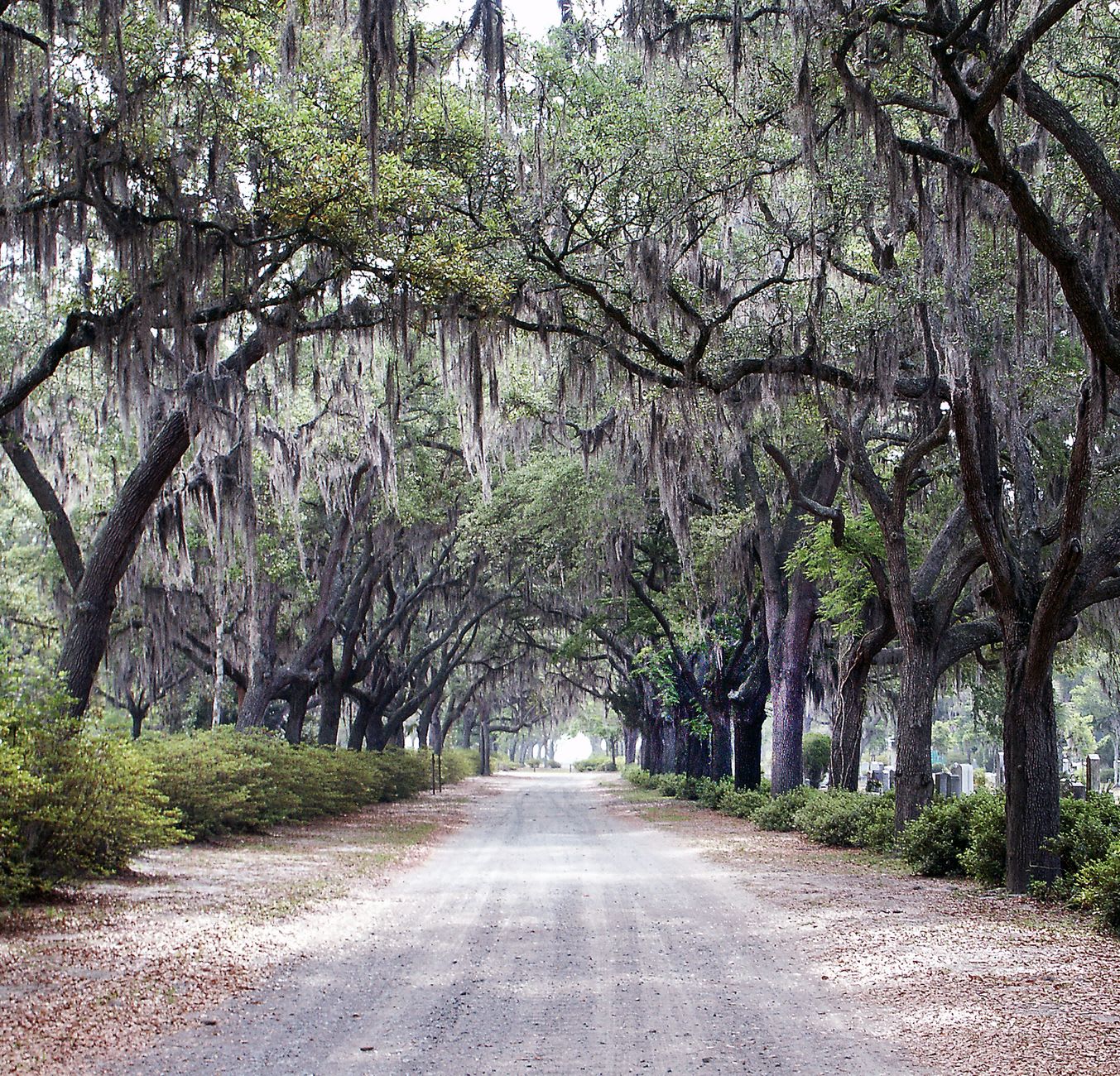
The unexpected discovery came the following morning: the cemetery. Bonaventure Cemetery sits four miles east of the historic district, and almost no one we mentioned it to had bothered to go. We rented bikes and rode out past Thunderbolt along the marsh. The oaks there are older and taller, the moss thicker, the light arriving in slow columns between the headstones. It was the most beautiful place I saw in Georgia.

When to go: March and April bring the azaleas into bloom around the squares and the heat has not yet turned oppressive — it is the city at its most photogenic and most livable. November is a quieter alternative, with low humidity and the tourist crowds thinned to something manageable.