Santa Barbara
"For a Frenchman, it was disorienting to feel this much like home so far from home."
Santa Barbara ambushed me with familiarity. Lia and I had driven up the coast from Los Angeles, and as we came into town — the red-tiled roofs, the white walls, the palms and the bougainvillea spilling over everything, and behind it all a steep green mountain wall — I actually said out loud that it looked like the south of France pretending to be California. Or the other way around. Either way, something in me relaxed. We rolled down the windows and the air smelled of eucalyptus and salt.
A City Dressed in Spanish White
The whole downtown is bound by a strict architectural code — white stucco, red tile, arched arcades — that the city adopted after a 1925 earthquake, and the effect is a place of unusual harmony. We spent our first afternoon wandering State Street, ducking through tiled passageways into hidden courtyards where fountains ran and jacaranda dropped purple flowers onto the paving. It is theatrical, yes, a bit of a stage set, but it’s a good one, and it has aged into something genuine.
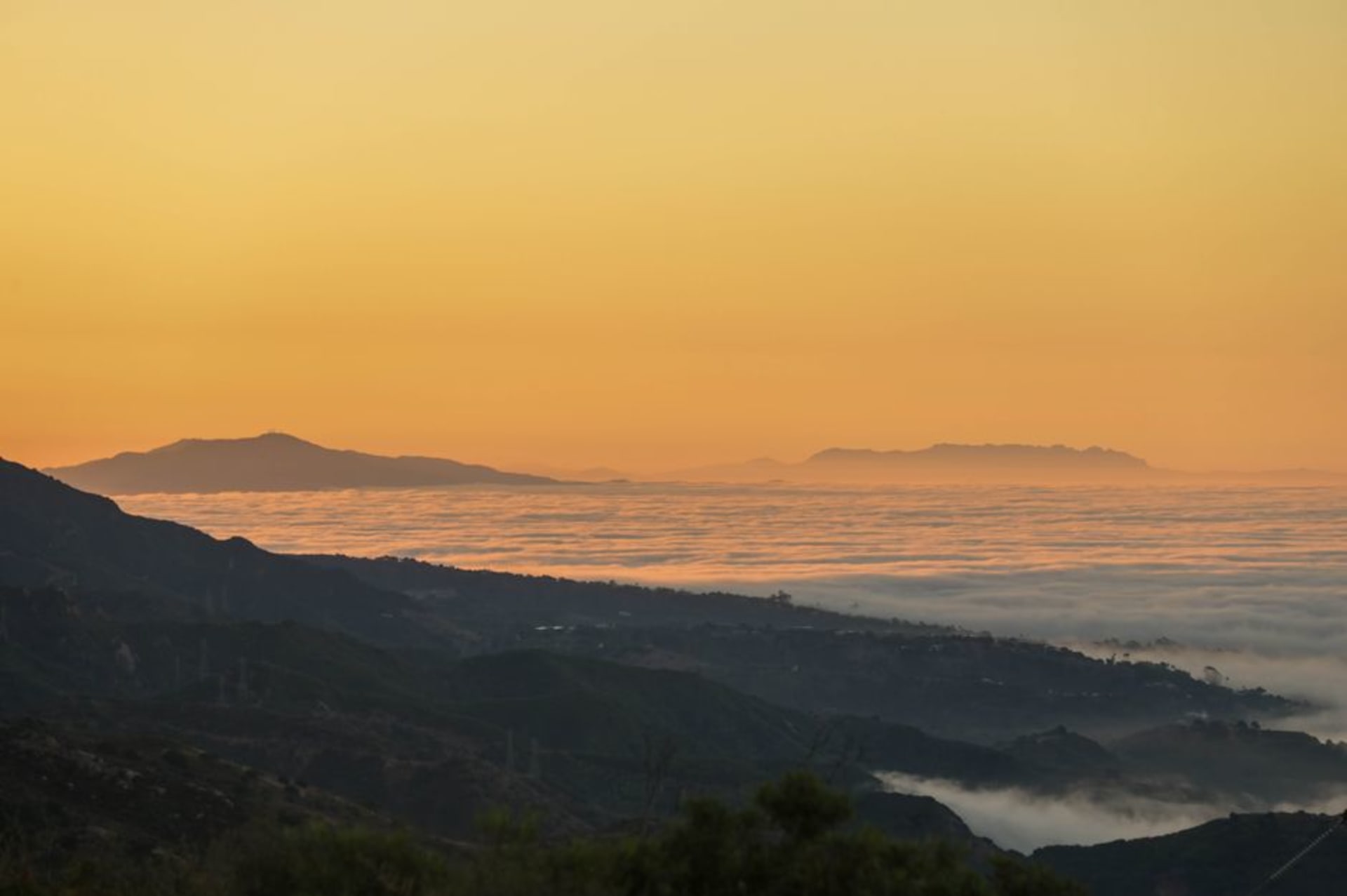
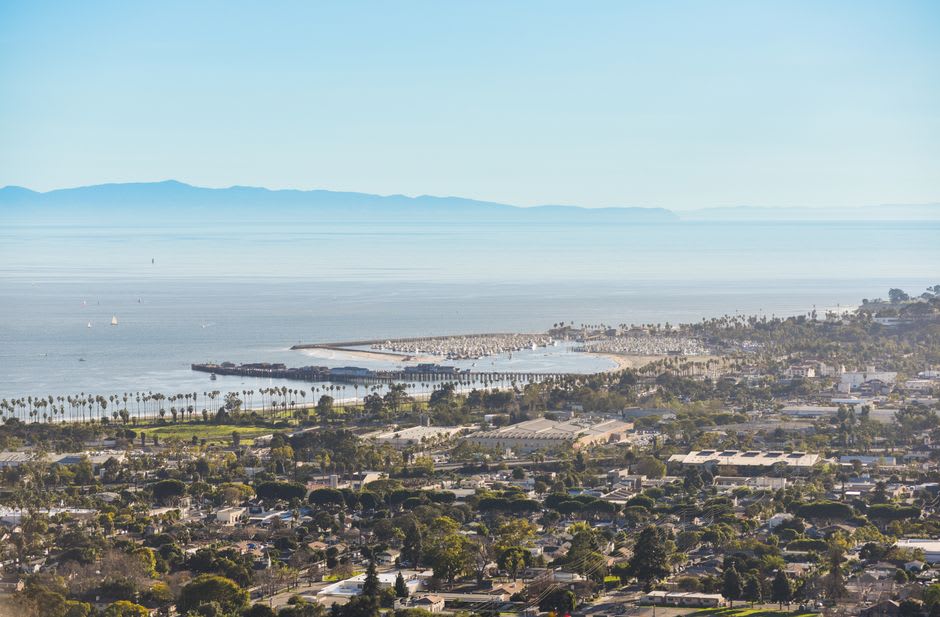
The heart of it is the county courthouse, which sounds like a dull thing to recommend and is anything but. It’s a Spanish-Moorish palace, really, with painted ceilings and a clock tower you can climb. From the top we looked out over the whole red-roofed city running down to the blue Pacific, the Channel Islands floating faint on the horizon. Lia said it was the prettiest view she’d had from any public building anywhere, and I couldn’t argue.
The Old Mission on the Hill
Above the town sits the Old Mission Santa Barbara, the “Queen of the Missions,” a rose-colored church with twin bell towers looking out over the city and the sea. We walked up in the late afternoon when the stone had gone warm and golden. There’s a formality to the place, a long façade and a fountain and rows of old olive trees, and it holds the deep, complicated history of the missions quietly in its walls.
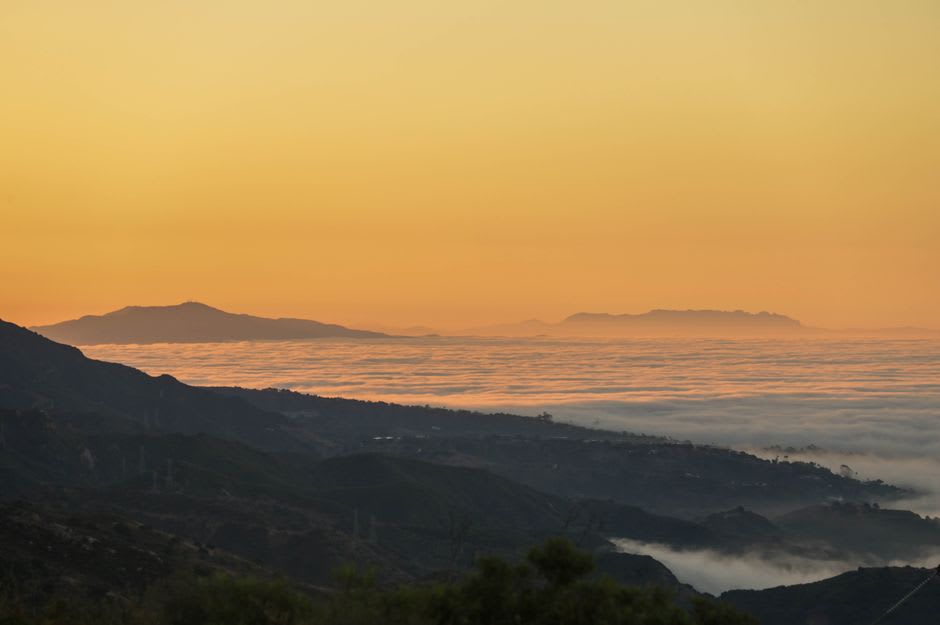
We sat on the grass in front for a while, watching the light change on the towers. A wedding party was assembling on the steps. From up there the whole geography of Santa Barbara made sense at last — the narrow shelf of land between mountain and ocean, the town threaded onto it, the Pacific opening out flat and enormous to the south. The city faces the sea from an unusual angle here; because the coast bends, you watch the sun set over the water to the west even though you’re on the west coast.
The Wharf and the Long Beach Evening
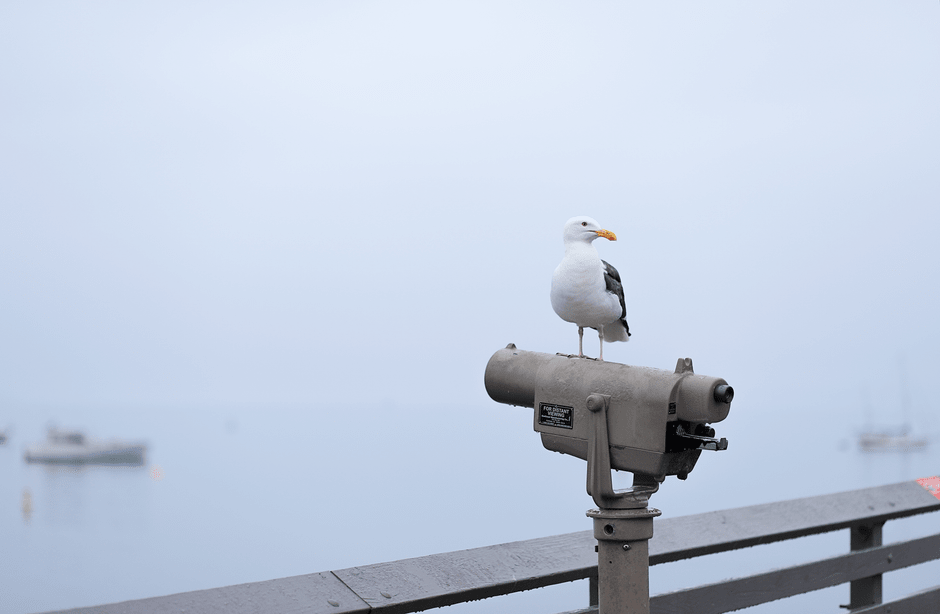
Our evenings belonged to the waterfront. Stearns Wharf, a wooden pier that has jutted into the harbor since 1872, became our ritual — we’d walk out over the water as the fishing boats came in, buy something fried and salty, and watch pelicans dive-bomb the shallows. Below us the sea slapped against the pilings. Lia trailed her hand along the weathered railing and said the whole town moved at exactly the right speed.
One evening we rented a couple of the surrey bikes and pedaled the palm-lined path along Cabrillo Boulevard, past the beaches and the swaying rows of trees, the mountains going purple behind us and the sun sinking gold over the water ahead. We stopped to watch it drop. It was the kind of ordinary, unremarkable happiness that a good place hands you without asking anything back — and Santa Barbara, of all the California coast, was the one that felt most like it wanted us to stay.
Getting There
Santa Barbara sits about 90 minutes up the coast from Los Angeles, and the drive itself is part of the reward — Highway 101 runs right along the ocean for long stretches north of Ventura. There’s a small airport with regional flights if you’d rather skip the drive, but I’d argue for the road. Better still, the Pacific Surfliner train from Los Angeles hugs the coastline the whole way and drops you a short walk from the beach, a genuinely lovely way to arrive without a car. Downtown and the waterfront are easily walkable, and a cheap electric shuttle runs along State Street and the beachfront, so you can happily go carless if you’re staying central. The weather is mild nearly year-round; late spring and early autumn bring the clearest skies, while May and June can be cloaked in coastal fog until midday.