Salt Lake City
"You can drink your morning coffee downtown and be standing in mountain snow before it's finished."
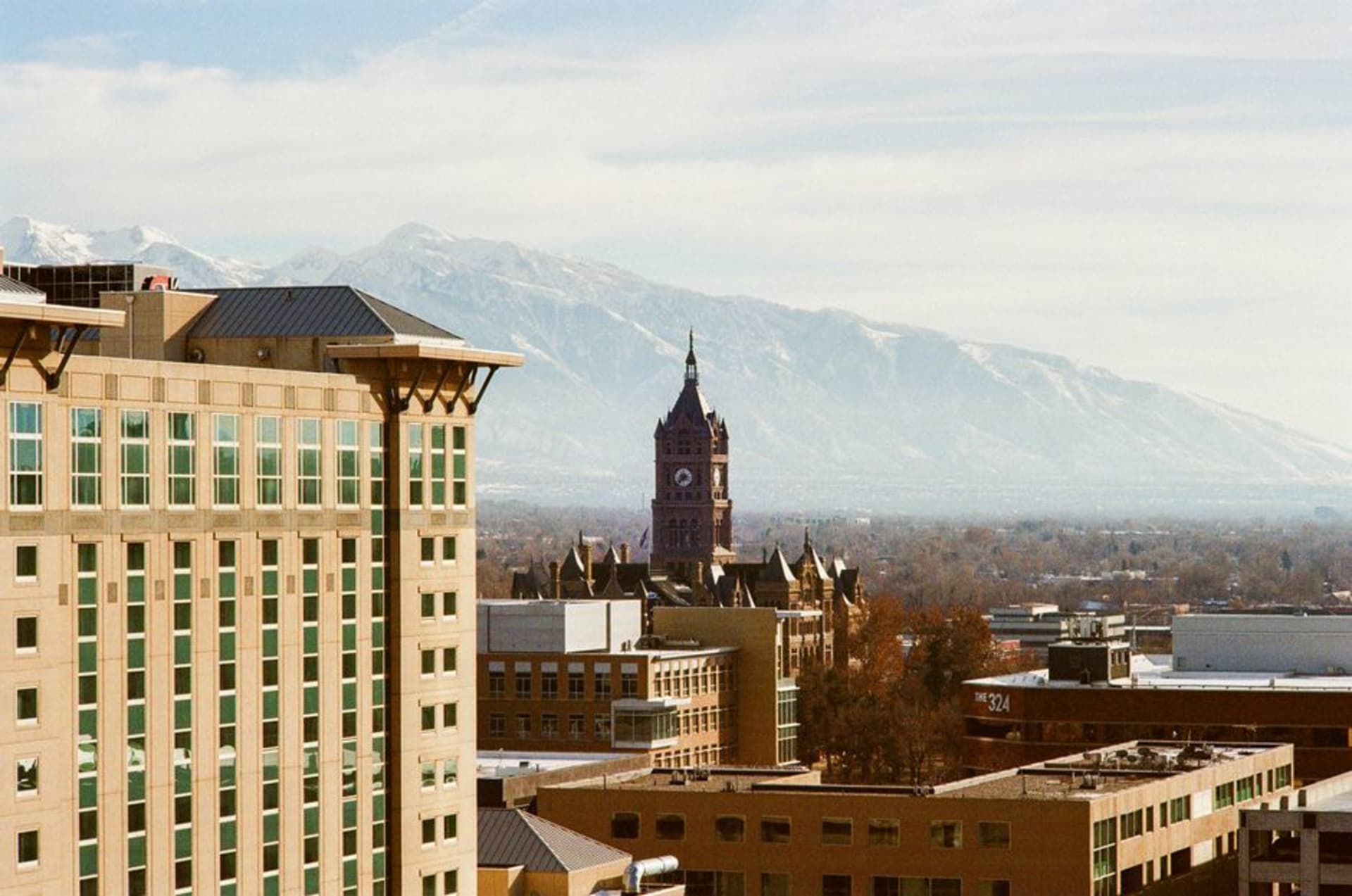
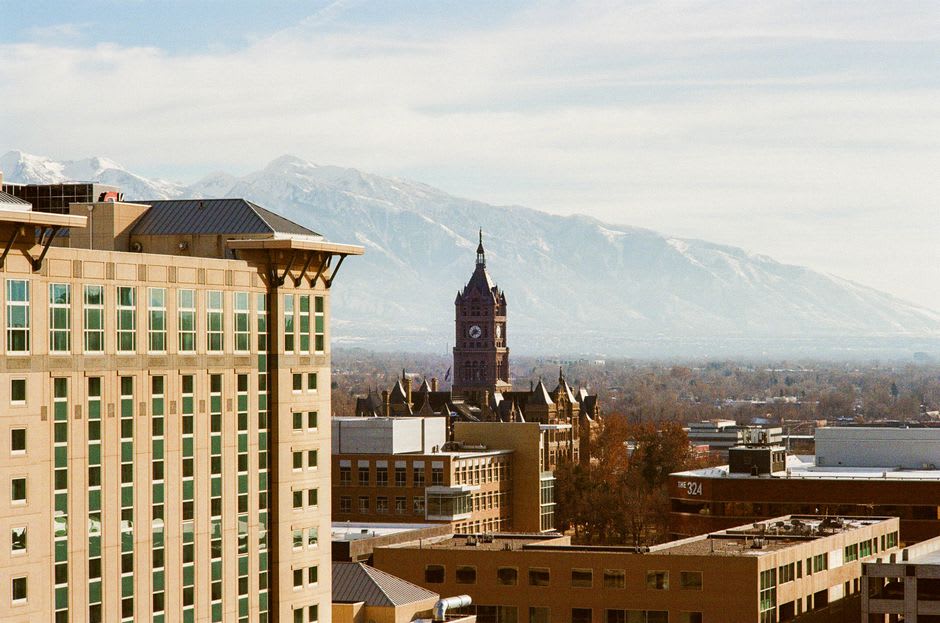
Salt Lake City surprised me by how close the wild is. We flew in over the enormous pale sheet of the Great Salt Lake, and by the time we’d checked in and walked a few blocks, I kept stopping mid-sentence because the Wasatch Mountains stand up at the end of nearly every street, so abrupt and so high they seem painted onto the sky. Lia said it felt like a city that had been dropped, gently, into a bowl of mountains. That first evening the peaks caught the last light and went rose-gold above the grid, and I understood at once why the pioneers, after a thousand hard miles, looked at this valley and said, this is the place.
Temple Square and the Pioneer Grid
The city radiates outward from Temple Square, and every address in Salt Lake counts its distance from that one corner — an oddly logical grid that makes the place impossible to get lost in. We walked the square in the morning, the granite Salt Lake Temple with its six spires taking forty years to build, and slipped into the domed Tabernacle where a volunteer dropped a pin from the pulpit and we heard it clearly from the back row, the acoustics are that famous. Whatever your feelings about the faith that founded the city, the sheer will of it — hauling this all out of the desert by handcart — is impossible not to respect.
The Canyons at the City’s Edge
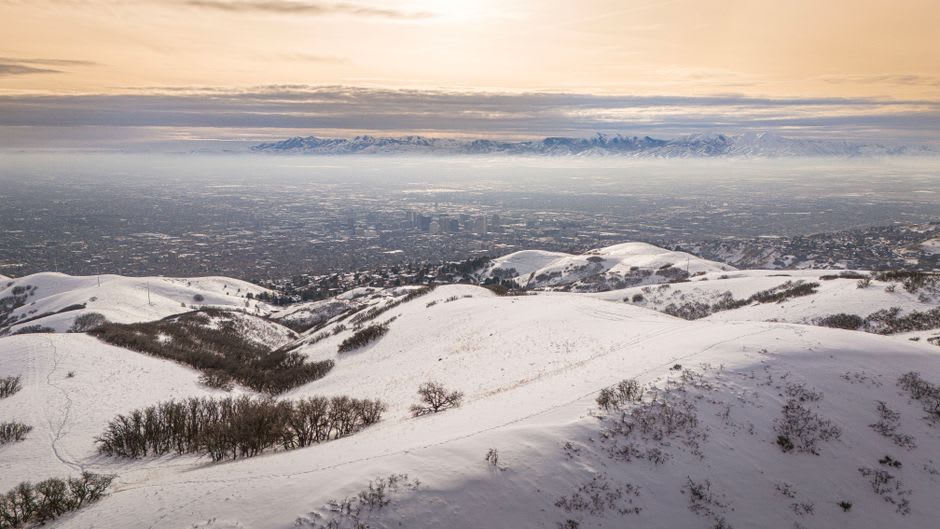
What makes Salt Lake unlike any other American capital is how fast you can leave it. We drove up Big Cottonwood Canyon after breakfast, and within thirty minutes the city was gone and we were among aspens and granite, the road switchbacking toward ski resorts that hold some of the driest powder on earth. In summer the same canyons open into wildflower meadows and alpine lakes; we hiked to one, ate our sandwiches on a slab of warm rock, and were back downtown for dinner. Little Cottonwood, its neighbour, is walled by the sheer granite that built the temple — the quarry scars still visible high on the cliffs.
The Lake and the Salt Flats
No visit is complete without the strange, briny lake itself. We drove out to Antelope Island in the late afternoon, a causeway running straight across the shallows to a bare hump of land where bison graze and the water is too salty for anything but brine shrimp and clouds of birds. The lake has no outlet, so it simply concentrates, and floating in it is like floating in nothing — you cannot sink. The far horizon dissolves where the pale flats meet the pale sky, and Lia and I stood on the shore in a silence broken only by wind and the cries of gulls, the mountains a distant blue line behind us.
Getting There
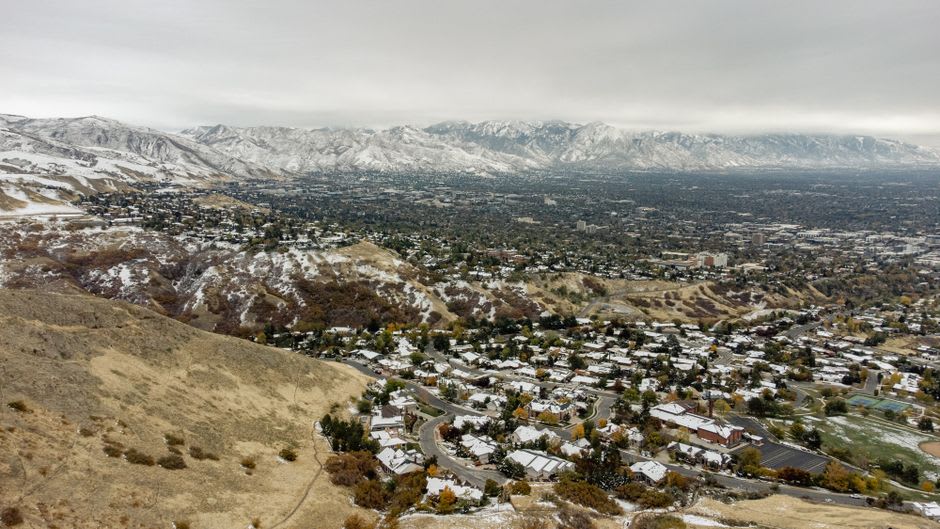
Salt Lake City International Airport is a major western hub with a light-rail line running straight into downtown in twenty minutes, and it is genuinely one of the easiest big-city airports I know. The city makes an ideal base: the ski resorts of the Cottonwood canyons are under an hour away, and Utah’s red-rock parks — Arches, Capitol Reef, Zion — lie within a half-day’s drive south. Winter is for powder and spring for the mountains greening up; summer days can bake in the valley but the canyons stay cool. We stayed three nights and used every one of them to go somewhere different, which is exactly what this city is built for.