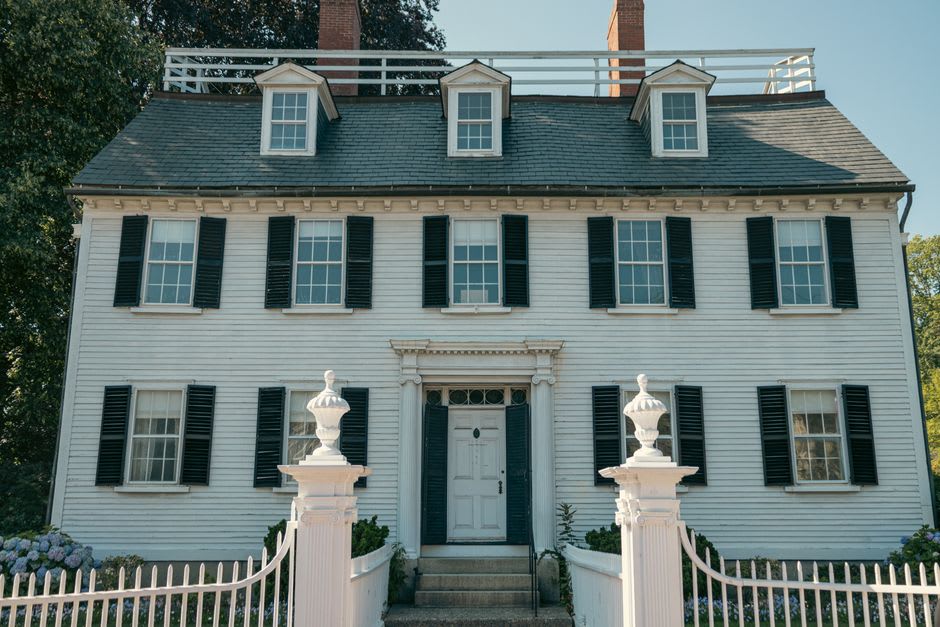
Lia and I arrived in Salem on a grey October afternoon, the kind where the light already feels borrowed. I had braced myself for kitsch — plastic cauldrons, men in capes handing out flyers — and there was plenty of that. But then we turned off the crowded pedestrian mall and the noise fell away, and we were suddenly standing in front of a row of Federal-era houses so severe and beautiful that I forgot the costumes entirely. Lia put her hand on a cold iron gate and said, quietly, that the town felt like it was holding its breath. It was. It has been, in a sense, since 1692.
The Weight of 1692
We walked to the Salem Witch Trials Memorial almost by accident, following a low stone wall until it opened into a small courtyard. Twenty granite benches, one for each person executed, cantilever out from the walls. The names and dates are carved into the threshold stones, and some of the victims’ final protests of innocence are inscribed underfoot — words that break off mid-sentence, deliberately, as if the speaker were cut short. Lia and I stood there a long time without talking. Next door, in the Old Burying Point, the slate headstones lean at angles, their winged skulls worn nearly smooth. This is not a place that traffics in fun scares. The real history is quieter and far heavier than any haunted attraction, and the memorial has the grace to simply let you sit with it.
Fortunes from the Sea
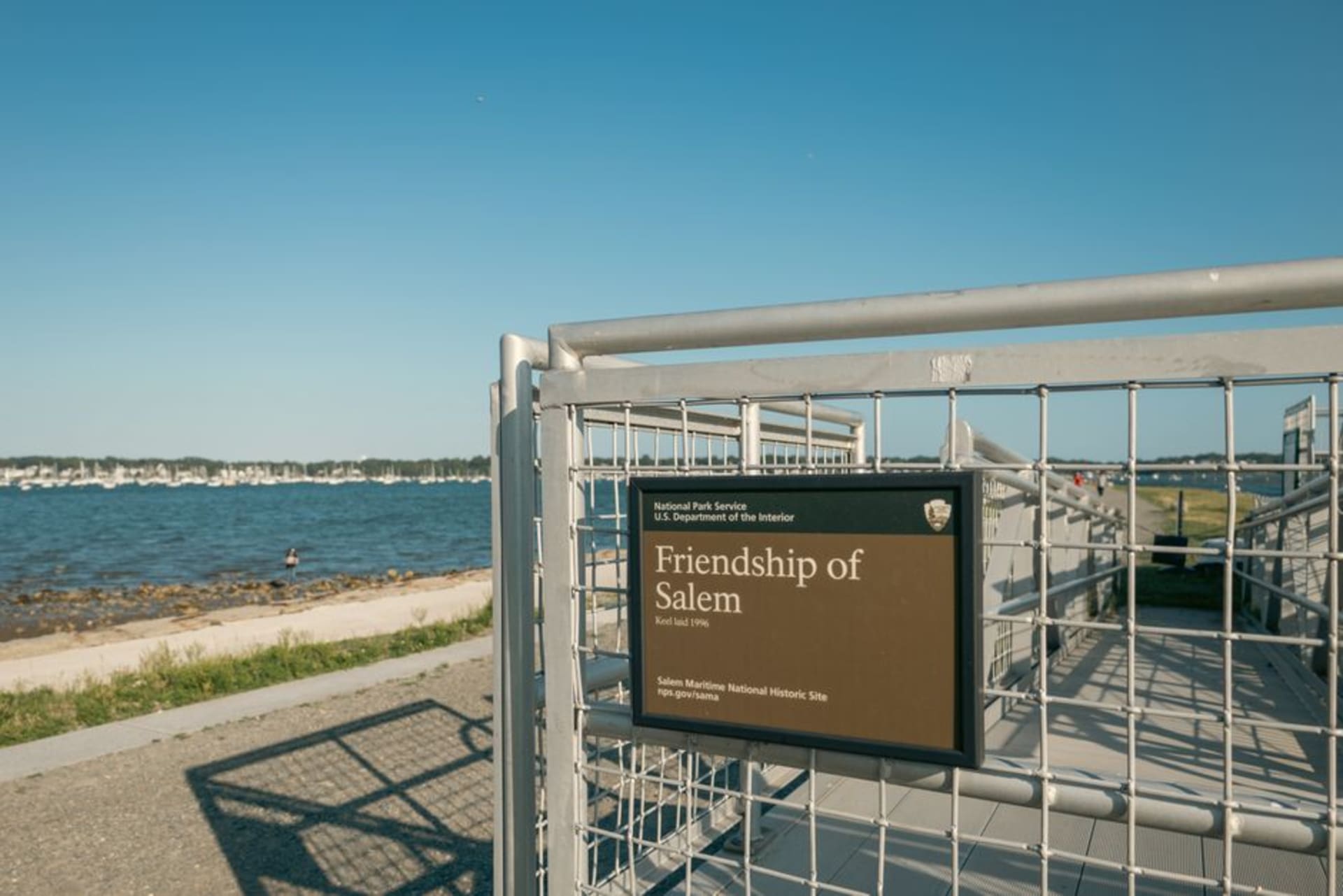
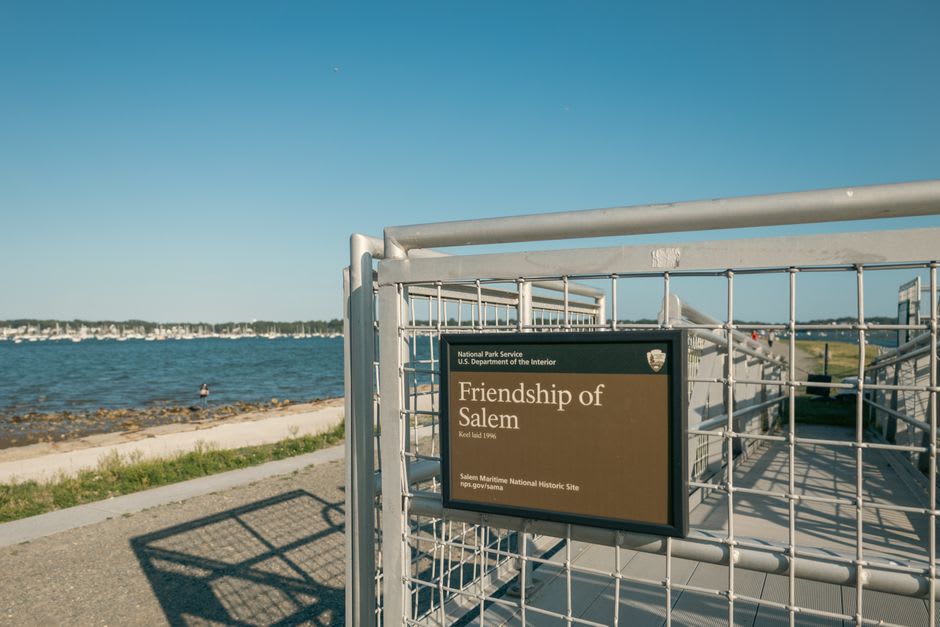
What surprised me most is how much of Salem has nothing to do with witches at all. Down at the waterfront, the Salem Maritime National Historic Site preserves the long finger of Derby Wharf and the customs house where a young Nathaniel Hawthorne once worked, bored and brilliant. For a few decades after the Revolution, Salem was one of the richest ports in America, its ships hauling pepper from Sumatra and porcelain from Canton. We climbed through the Custom House and out along the wharf to the little lighthouse at its end, wind snapping our jackets, and I finally understood the mansions we’d admired earlier — every one built on a captain’s gamble against the sea. The Peabody Essex Museum, a short walk back, holds the treasures those gambles brought home.
Streets Made for Wandering
We spent our last evening simply walking. Chestnut Street may be the most perfect residential street I have seen in America — a broad, quiet avenue of matched brick and clapboard houses, each door flanked by white columns, the whole thing glowing amber under old gas-style lamps. We found a corner tavern, ate chowder thick enough to stand a spoon in, and lingered. Later, back near the common, the crowds had thinned and the fog rolled up from the harbor, softening the streetlights into halos. Lia said it was the first time all day the town felt like it belonged to the people who actually live here. A black cat crossed ahead of us. We laughed, because of course it did.
Getting There
Salem sits about 25 kilometres northeast of Boston, and the easiest approach is the MBTA commuter rail from Boston’s North Station, which drops you a ten-minute walk from the common in roughly half an hour. In summer a seasonal ferry crosses directly from Boston’s waterfront, a lovely way to arrive by sea as the merchants once did. Driving is simple enough outside October, but during the Halloween season the town swells enormously and parking becomes a genuine ordeal — take the train, and give yourself a full unhurried day.