Sacramento
"Under all those trees, the whole city felt ten degrees cooler and a century slower."
We drove into Sacramento on a blistering Central Valley afternoon, the thermometer well past forty, and I braced for a hard, sun-hammered city. Instead the streets closed over us in green — enormous elms and oaks arching from both sides until whole blocks ran in shade, and the temperature seemed to drop as we entered. Lia rolled the window down and just breathed it in. They call it the City of Trees and mean it literally; the canopy is one of the densest in the world. That first evening we walked our leafy midtown block as the light went amber, sprinklers ticking on lawns, and I understood that this much-overlooked capital had been quietly hoarding one of California’s best-kept comforts.
Old Sacramento and the Gold Rush
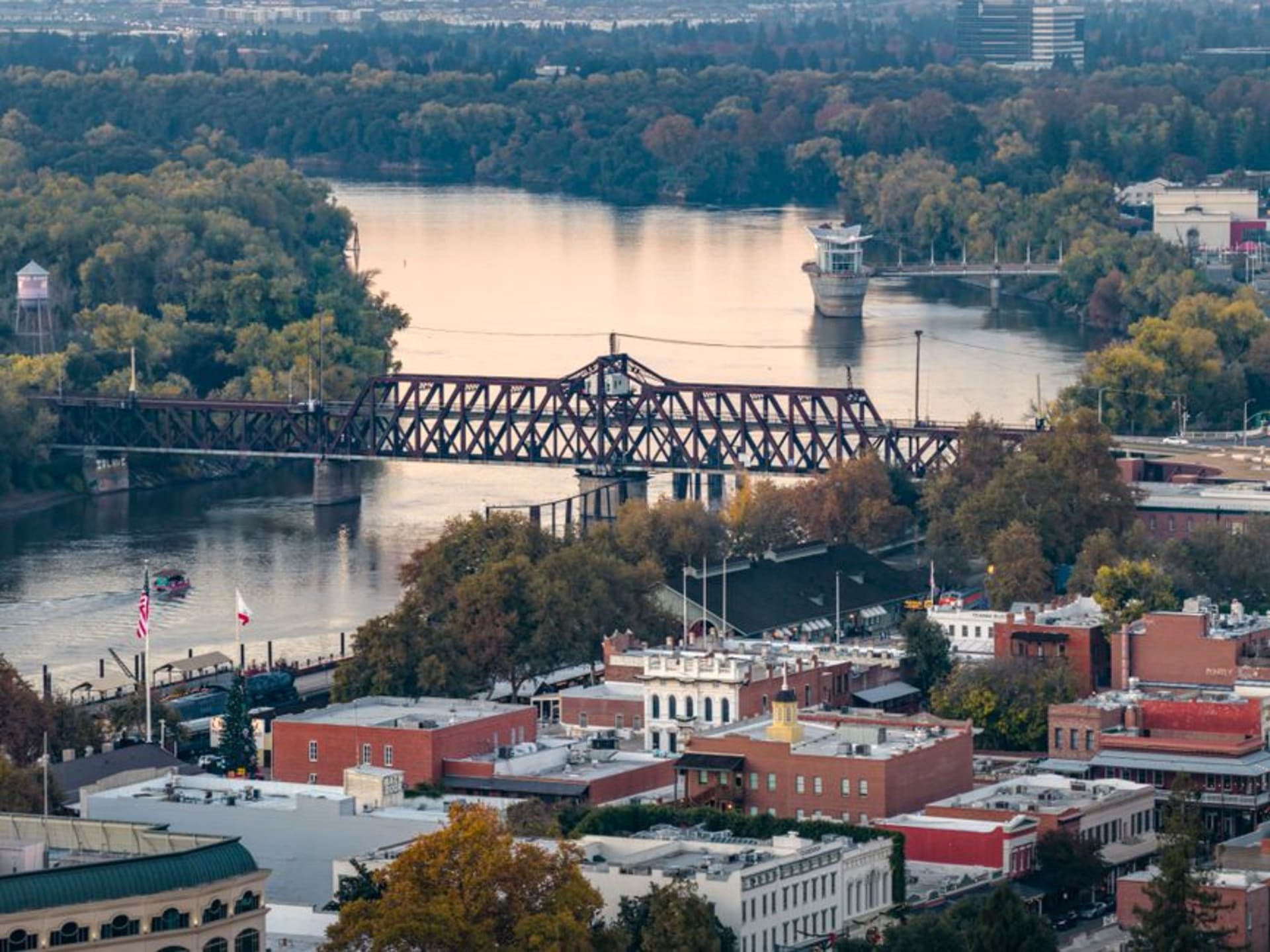
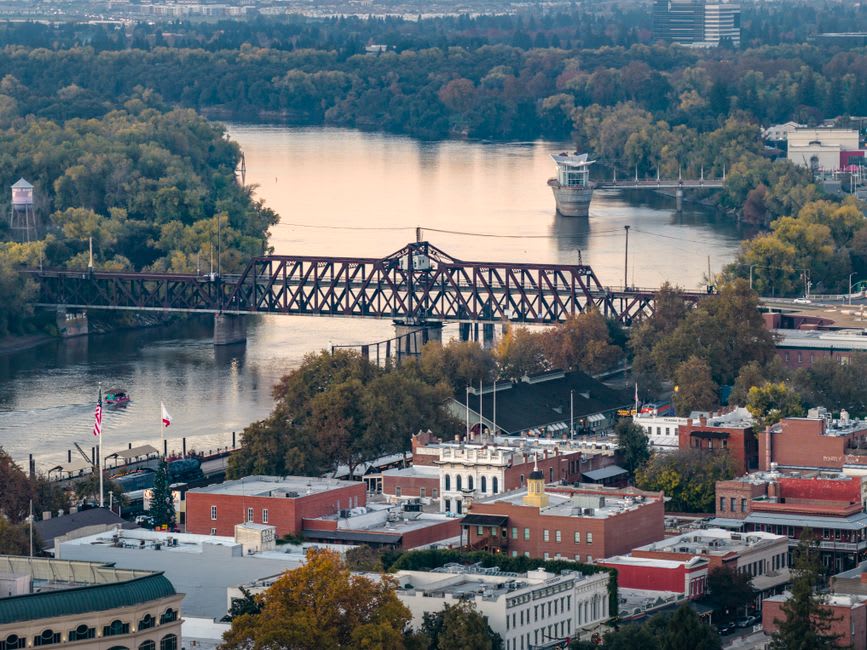
Down by the river, Old Sacramento is unabashedly a period set — wooden boardwalks, gas lamps, saloon facades — but it is built on the real thing, the raucous port where the gold rush unloaded its dreamers. We wandered the raised sidewalks (raised, a plaque explained, after the river drowned the town one too many times) and lost an hour in the California State Railroad Museum, which even I, no train enthusiast, found genuinely stirring — gleaming locomotives the size of houses, and a sleeping car that gently rocked as though moving. Lia rang a bell she was probably not supposed to ring. Outside, a paddle-wheeler idled at the wharf on the Sacramento River, and we ate ice cream on the levee watching it go.
The Capitol and Its Park
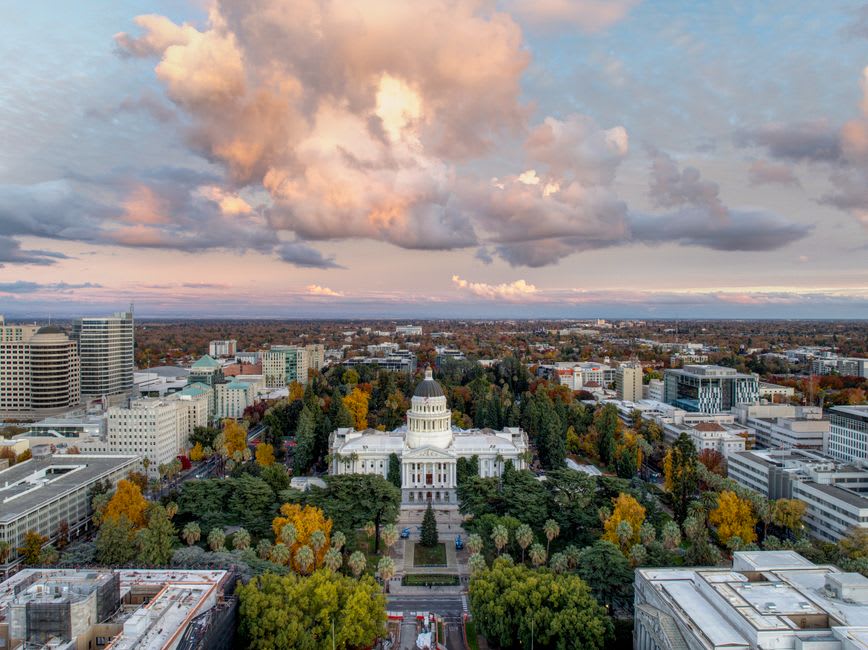
The California State Capitol is a proper wedding-cake of a building, white dome gleaming above a park that turned out to be our favourite green space in the city. We took the free tour — Lia loves a government building and I have learned not to argue — and walked the marble halls beneath the rotunda, all echo and cool air. But it was the surrounding Capitol Park that kept us: forty acres of trees gathered from all over the world, a rose garden, a sombre Vietnam memorial, squirrels utterly unafraid of anyone. We ate a picnic lunch under a redwood planted generations ago, watching state workers cross the lawns, and it felt like the calm civic heart the rest of California often seems too busy to have.
Farm-to-Fork and the Rivers
Sacramento calls itself America’s Farm-to-Fork Capital, and surrounded by the richest farmland in the country, it has earned the boast. We hit the midtown farmers’ market on a Sunday and it was overwhelming in the best way — peaches so ripe they perfumed the whole stall, heirloom tomatoes, a man selling nothing but garlic in twenty varieties. Lia bought a bag of cherries and we ate the lot before we reached the car. That night we splurged on a farm-to-table place in midtown where the menu named the farm for every ingredient. Later we walked to where the American River joins the Sacramento, the water low and slow in the summer heat, and watched kayakers drift past in the last of the light.
Getting There
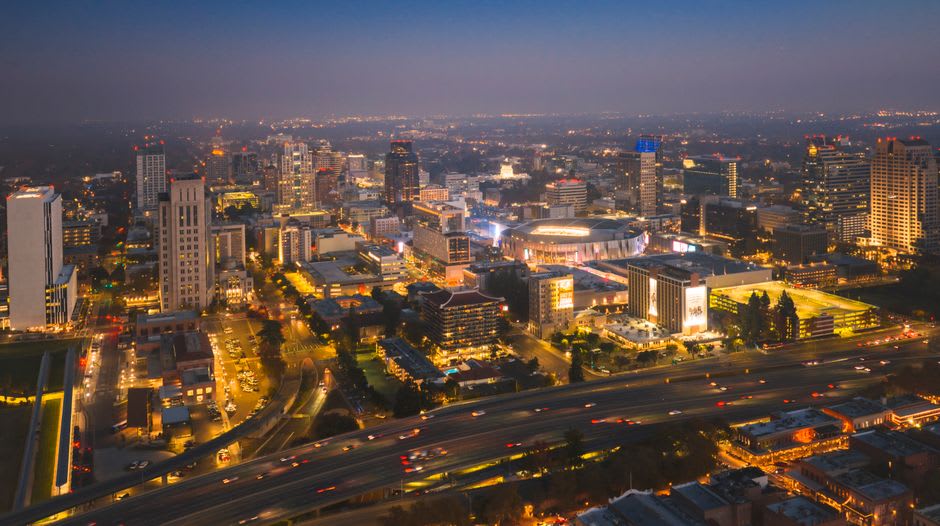
Sacramento International Airport lies about fifteen minutes northwest of downtown, with domestic flights from across the US — we flew in from Southern California, though many arrive by car, as the city sits at the crossroads of the interstates linking the Bay Area, Lake Tahoe, and the north. Downtown and midtown are flat, shaded, and eminently walkable or bikeable, and there is a light-rail system, but a car opens up the wine country of Amador, the delta, and the mountains beyond. Summers are genuinely hot; we survived on the tree canopy and river breezes, but spring and autumn are gentler, and spring brings the whole city into bloom.