Richmond
"A river with real rapids in the middle of a state capital — and a city learning to tell the truth about itself."
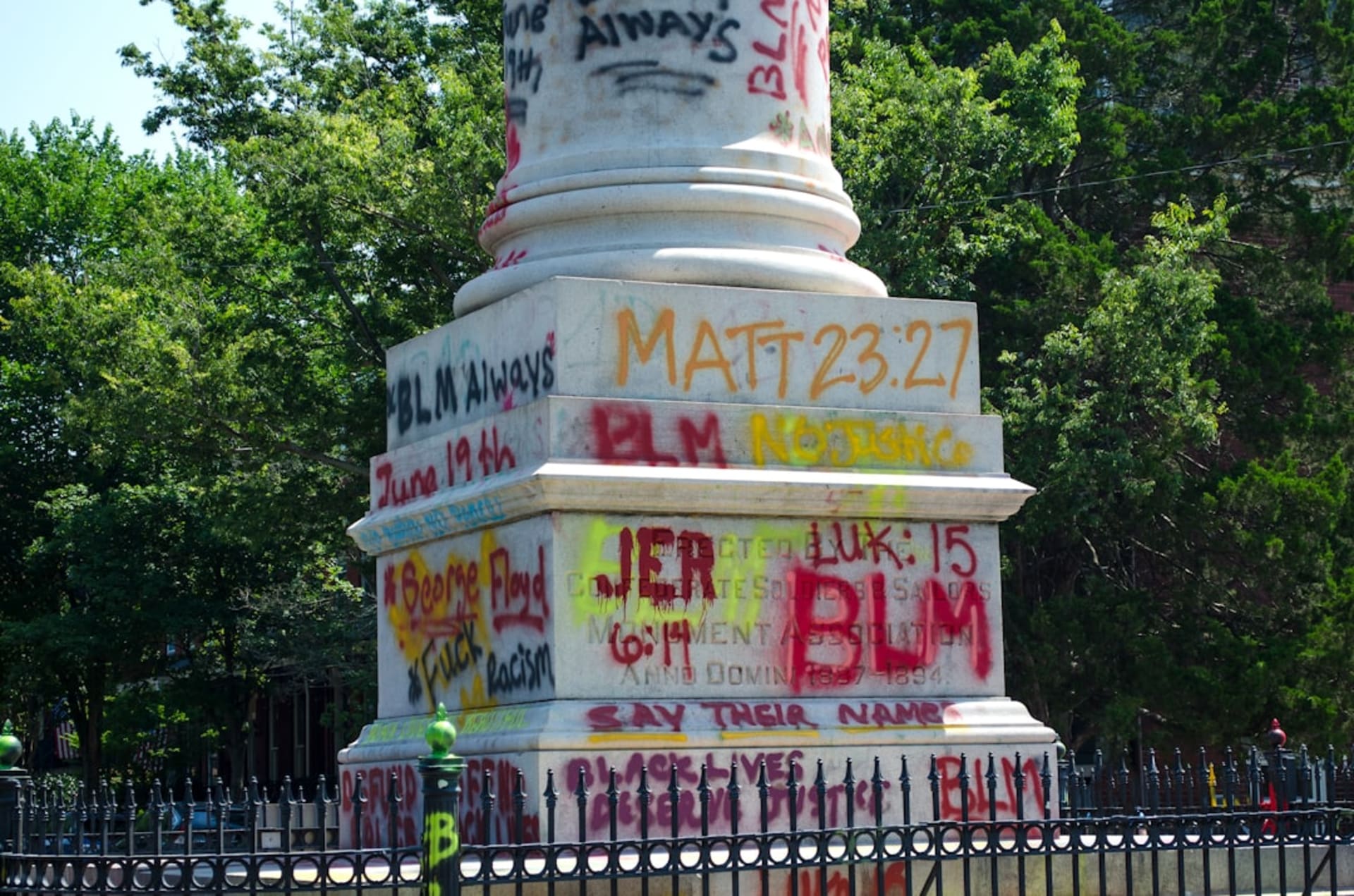
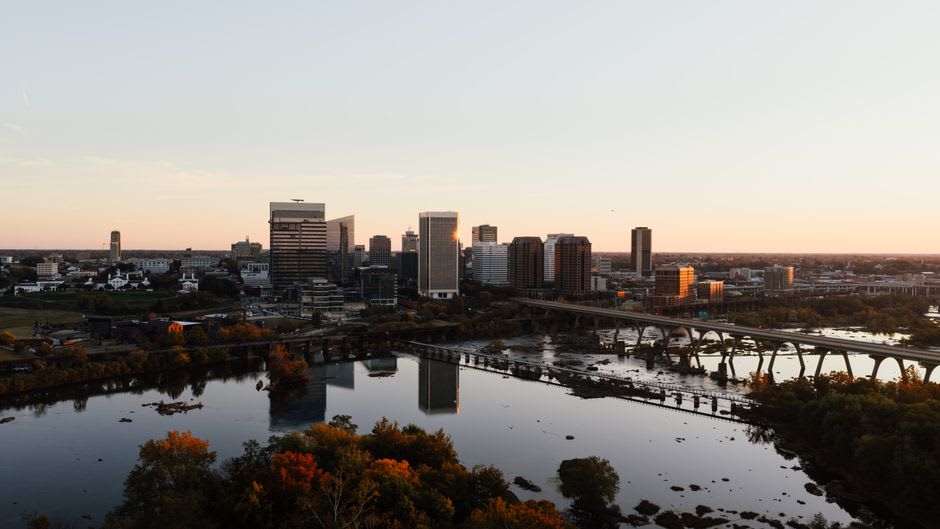
Lia and I stood on Belle Isle in the middle of the James River, downtown Richmond rising just beyond the trees, and watched a kayaker punch through a genuine whitewater rapid within sight of office towers. I didn’t know a city could do that. We’d come to Richmond braced for a heavy dose of history, and history is certainly here, but the first thing the place gave us was this improbable wildness — a river gorge threading straight through the heart of a capital, herons fishing the shallows while commuters crossed the bridges above.
The river runs through it
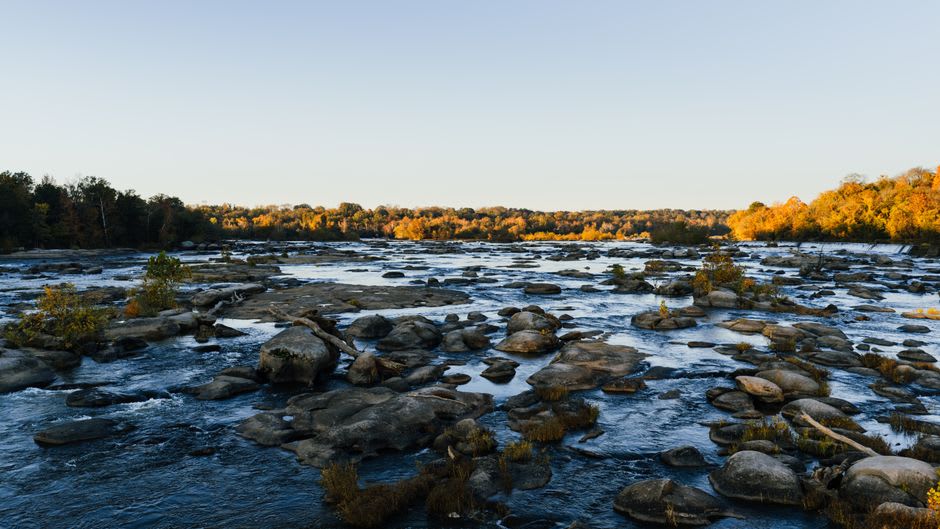
The James River is the soul of Richmond, and we spent our first full day on it. A footbridge slung beneath a railway trestle carries you out to Belle Isle, a scruffy island of granite quarries and old ruins where locals sunbathe on flat rocks in the middle of the rapids. We picked our way out to the water’s edge and ate a picnic with our feet in the current. Later we walked the pipeline trail, a strange catwalk bolted to the side of a water main, where blue herons nest almost within arm’s reach. Lia counted eleven of them. The city felt very far away, though it was fifty meters off.
Monument Avenue, changed
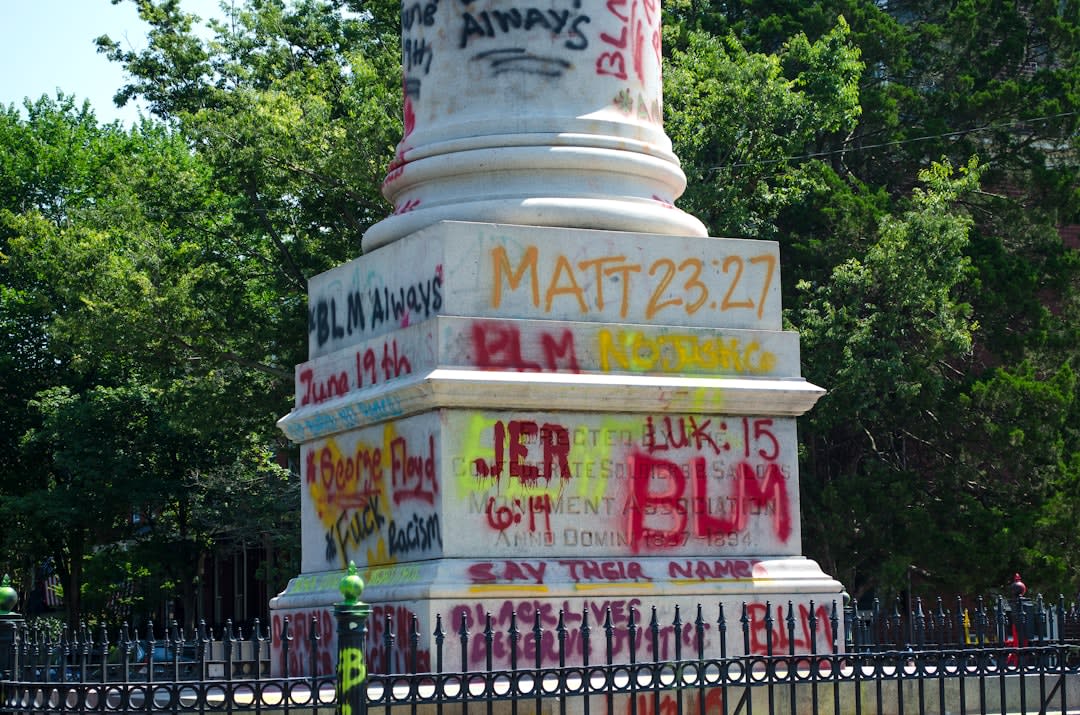
Then the harder history. Monument Avenue was once lined with towering Confederate statues, and we walked it knowing they had come down — the empty pedestals and reclaimed green spaces tell that story now, and standing there was more powerful than any statue could have been. Nearby, the enormous mural of tennis champion and Richmond son Arthur Ashe, and across the city an explosion of street art from the annual mural festival, walls answering the past in colour. We spent a long, quiet hour at the American Civil War Museum down at Tredegar, on the site of the ironworks that armed the Confederacy, and came out subdued and thinking. Richmond does not look away from itself.
Cobblestones and cooking
Not all of Richmond is weighty. We lost an evening happily in Shockoe Bottom and Church Hill, wandering cobblestone streets past St. John’s Church, where Patrick Henry made his “give me liberty” speech and where a costumed actor now reenacts it on summer Sundays. The food scene ambushed us — Richmond cooks far above its size, and we ate a dinner of Southern-tinged small plates that had Lia interrogating the waiter about the biscuits. We finished with a walk up to Libby Hill Park at dusk, where the view down the river is said to have reminded early settlers of Richmond upon Thames, and gave the city its name. The light went gold, then rose, then gone.
Getting There
Richmond International Airport is about fifteen minutes east of downtown and an easy arrival, though many travelers reach the city by train — Amtrak runs frequently down from Washington, D.C., in a little over two hours, and the Northeast Corridor makes it a simple add-on to a bigger trip. Downtown Richmond is compact and walkable, especially the historic districts of Church Hill, Shockoe Bottom, and the arts corridor along Broad Street, but you’ll want a car or a bike to reach the river islands and trails that make the place special. The James River Park System threads the whole southern edge of downtown; rent a bike, find Belle Isle, and give yourself an afternoon on the water.