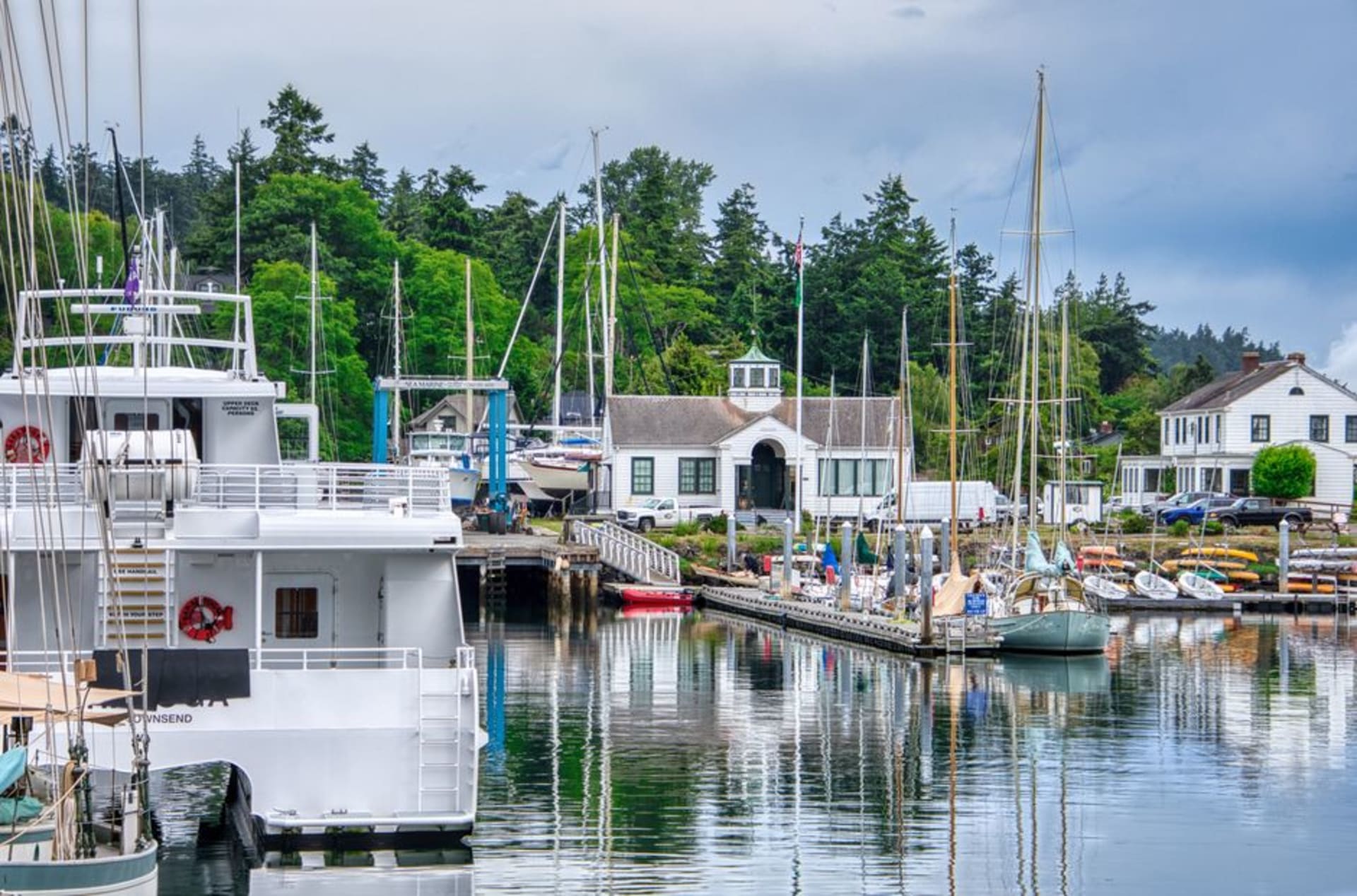
Port Townsend
"A town that dressed for a party its whole life, and never stopped waiting."
We arrived on the last ferry of a grey afternoon, and Lia said the whole place looked like it was holding its breath. She wasn’t wrong. Port Townsend was built in the 1880s by people who were certain the railroad would end here and make them all rich. The railroad went to Seattle instead. So the grand brick banks and the ornate cornices and the hillside mansions all got built for a future that never arrived, and then the town simply stayed as it was, a little astonished, for a hundred and forty years.
Down on Water Street
The lower town runs along the harbour in a single spine of red brick, and the first evening we just walked it end to end twice, because I couldn’t stop reading the dates carved above the doorways. Every one of them says 1889 or thereabouts. There’s a bakery where we bought a cardamom bun still warm enough to steam in the cold, and we ate it leaning on the rail above the marina while a sea lion barked somewhere out of sight. The Jefferson County Courthouse tower watches all of it from up the bluff, its clock keeping time it doesn’t really need to keep anymore.

Fort Worden and the bluff
The next morning we climbed to the upper town, where the money lived, and then out to Fort Worden. It’s an old coastal artillery post, all bunkers and battery emplacements set into a headland of yellow grass. Lia found the concrete gun batteries first and disappeared into one with her phone-torch, and I heard her laughing at the echo before I caught up. From the point you can see the whole shipping lane, the Strait of Juan de Fuca opening west toward the ocean, and on that day a container ship the size of a village slid past without a sound. The lighthouse at Point Wilson stands white at the tip, and we sat by it long enough to get properly cold.
Boats and the smell of tar
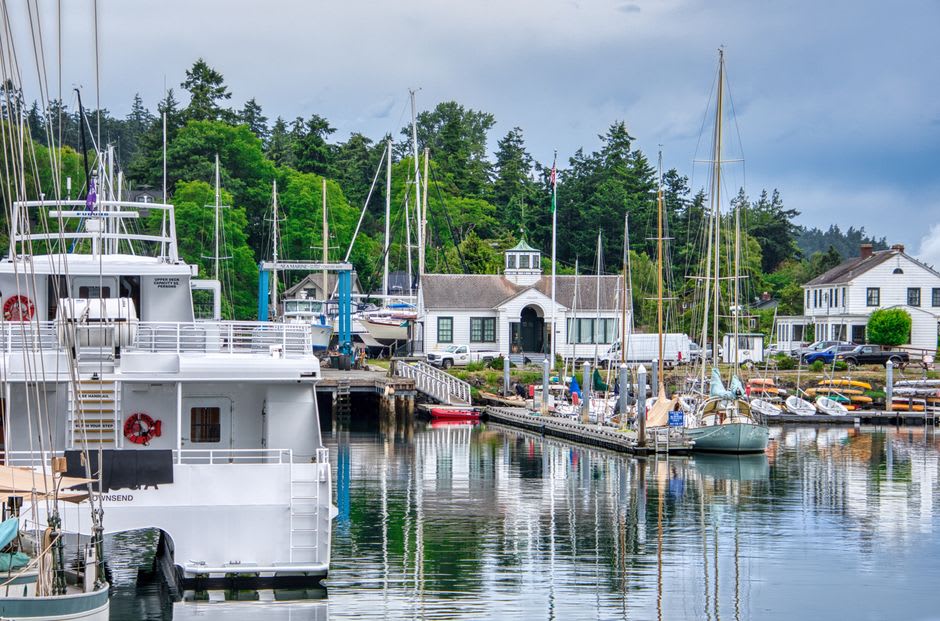
This is a wooden-boat town, unapologetically. The Northwest Maritime Center sits right on the water, and even in the off-season there were people in the sheds sanding hulls and steaming planks, and the whole waterfront smells of pine tar and varnish. We watched an old man fit a plank to a rowboat with the patience of someone who has all winter. Lia asked him what it was for and he said, “For rowing,” which felt like the most Port Townsend answer possible. We bought two coffees and stood in the doorway out of the drizzle, and I thought I could happily lose a week here doing nothing but watching wood become boat.

Getting There
Port Townsend sits at the northeast corner of the Olympic Peninsula. From Seattle we drove north and took the ferry from Edmonds to Kingston, then wound about ninety minutes across the peninsula; you can also come in on the little Coupeville ferry from Whidbey Island, which is the prettier crossing if the timetable is kind. There’s no train and no real airport, which is half the point. Come with a car, a warm coat, and no fixed plans.