Pittsburgh
"Pittsburgh does not hand you its view — it makes you ride an old cable car up a cliff to earn it."
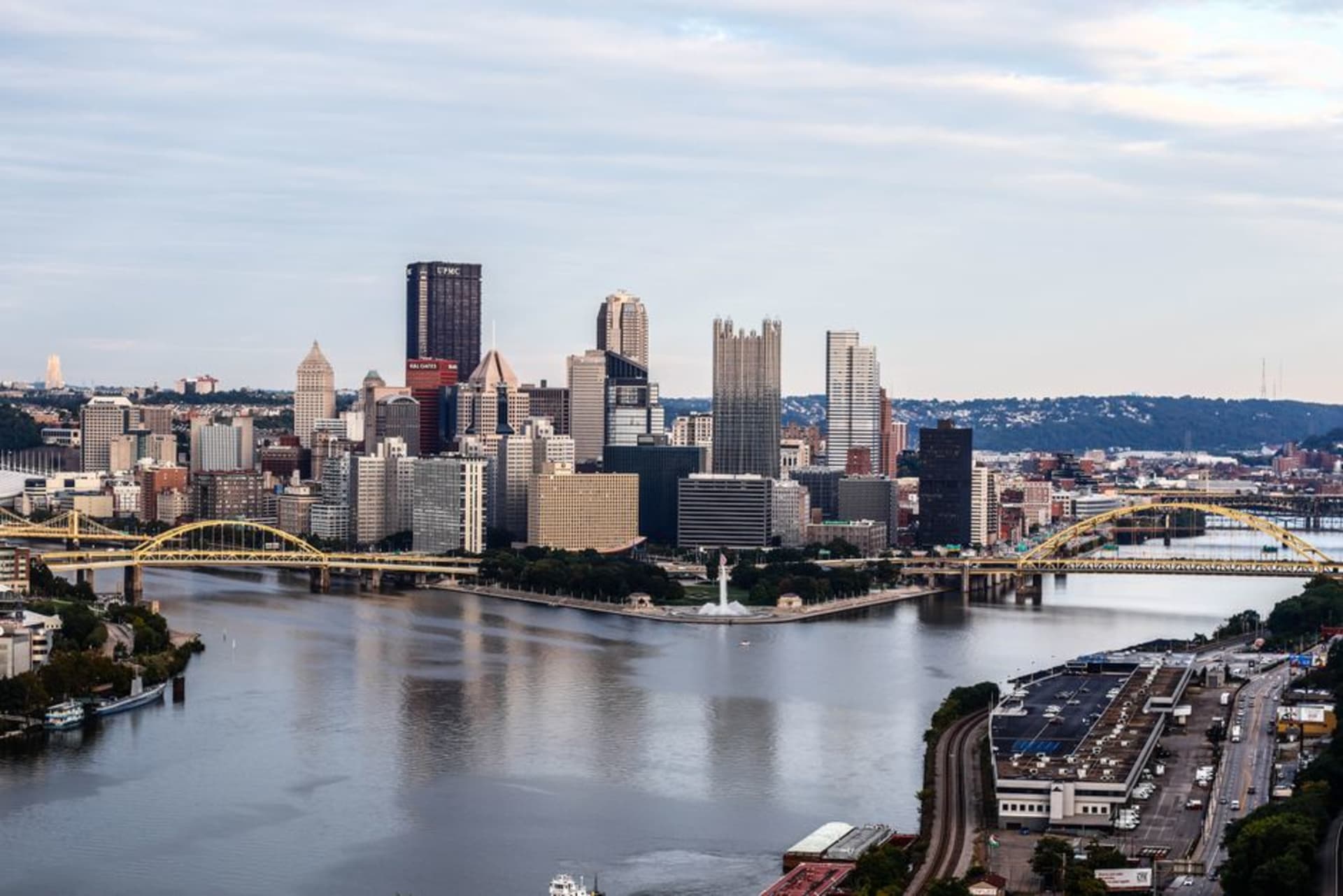
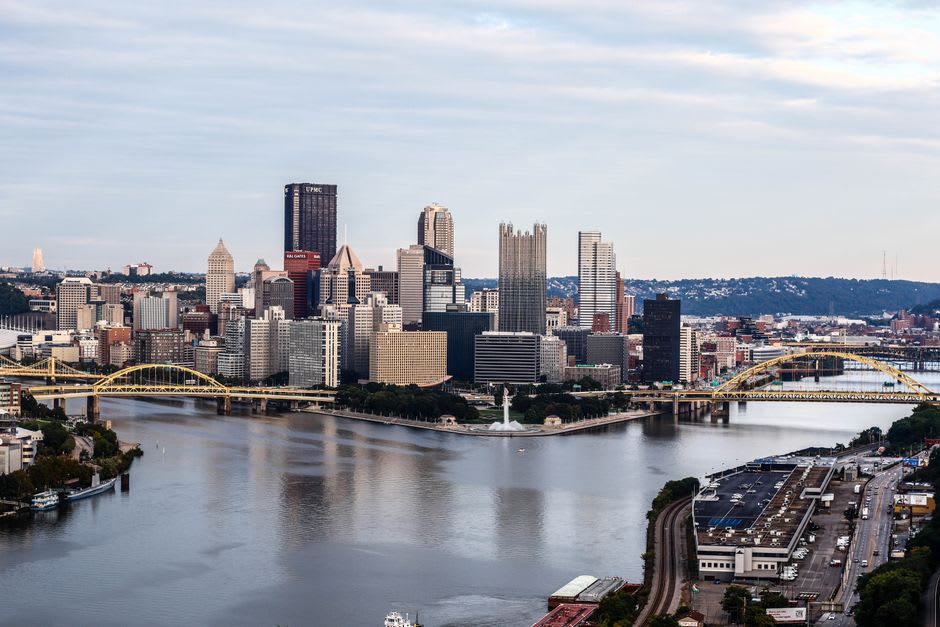
I will admit I had a lazy idea of Pittsburgh before we came: smokestacks, steel, a grey industrial ghost. Then the taxi came out of the Fort Pitt Tunnel and the whole city detonated into view all at once — three rivers meeting at a green point, the downtown towers packed onto a triangle of land, dozens of bridges glowing that particular municipal yellow. Lia actually gasped. It is the single most theatrical city arrival I have experienced in America, an entrance so abrupt and generous that it forces you to throw out whatever you thought you knew.
Riding the Duquesne Incline
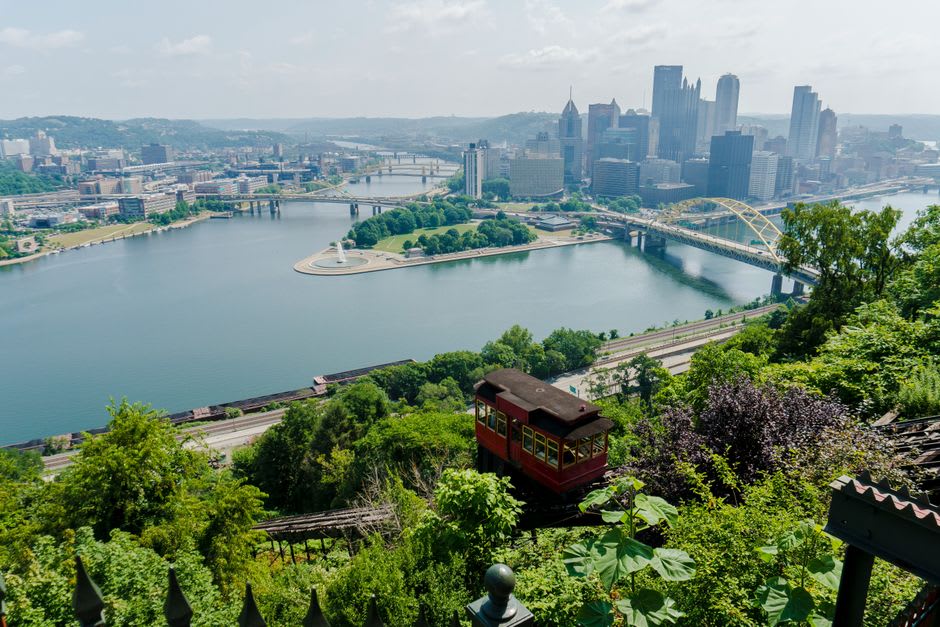
The next morning we rode the Duquesne Incline, a wooden funicular from 1877 that hauls you straight up the face of Mount Washington in a wonderfully creaky cable car. At the top, the observation deck delivers the postcard: the Golden Triangle of downtown, the Monongahela and Allegheny rivers merging into the Ohio, the bridges laced across the water like yellow stitching. We stayed up there far too long, watching a coal barge slide slowly downriver and the light shift across the glass towers. The incline itself is half the pleasure — the varnished old carriage, the exposed gears, the sense of riding a piece of the nineteenth century straight uphill.
Bridges, rivers, and the Strip District
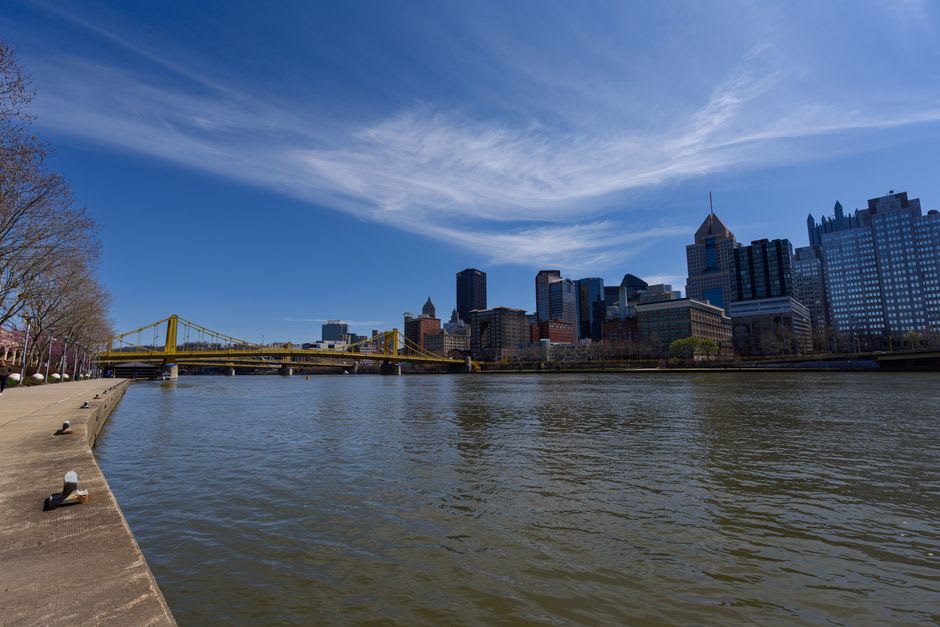
Back down at river level, Pittsburgh reveals itself as a city built for walking and cycling along the water. We crossed the Roberto Clemente Bridge — closed to traffic on game days, a river of yellow steel underfoot — and wandered the North Shore before doubling back into the Strip District. This is Pittsburgh’s belly: a raucous market corridor of Italian delis, Polish pierogi counters, fishmongers shouting prices, and coffee roasters perfuming the whole street. Lia and I grazed our way down it, a pierogi here, a cannoli there, and bought a bag of coffee from a man who told us, unprompted, the entire history of his family’s arrival from Abruzzo. Nobody in Pittsburgh, we learned, is in a hurry to end a conversation.
The Warhol and the reinvented city
Pittsburgh’s other great surprise is how seriously it takes art and reinvention. The Andy Warhol Museum — he was born and raised here — fills seven floors with silkscreens, films, and the strange, glittering machinery of his fame. We spent an afternoon inside, then crossed to the leafy university district of Oakland, where the University of Pittsburgh’s Cathedral of Learning rises like a gothic skyscraper, forty-two storeys of stone with a hushed vaulted study hall at its base. This is a city that turned steel mills into museums and riverfronts into parks without pretending the grit never happened. We ended the day with sandwiches from Primanti Bros — French fries stacked inside the sandwich itself, an act of carbohydrate ambition I respect enormously.
Getting There
Pittsburgh International Airport lies about thirty minutes west of downtown, with the 28X bus running a cheap and direct link into the city and Oakland. Pittsburgh also makes a scenic drive from the east — the Pennsylvania Turnpike winds through the Alleghenies before that spectacular tunnel reveal — and Amtrak’s Pennsylvanian connects it to Philadelphia and New York, though slowly. In the city itself, the compact downtown is walkable, the two inclines are genuine transit as well as attractions, and the riverfront trails make cycling between neighbourhoods a pleasure. We rented bikes for a day and never regretted leaving the car parked.