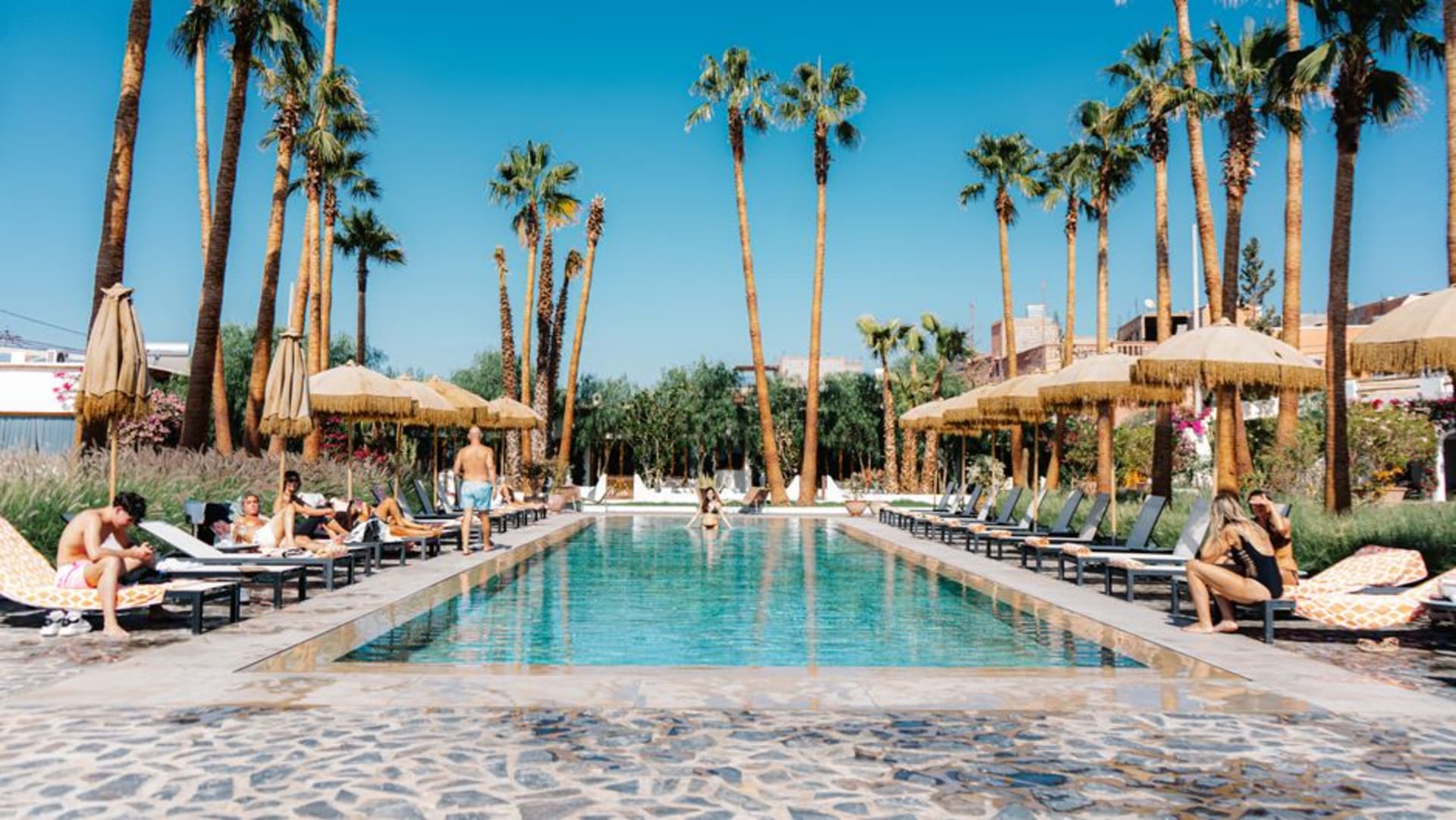
We came to Palm Springs to slow down, and the town met us halfway before we’d even unpacked. It was late afternoon in April, the heat already thick and dry, and the first thing Lia and I did was sit at the edge of the pool at our little motel — one of those low, breezeblock places from the 1950s that someone had lovingly restored — and simply stop. Behind us the San Jacinto mountains rose up almost vertically, bare and pink in the low sun. A mockingbird ran through its entire repertoire in a nearby palm. I felt my shoulders come down from around my ears.
The Town That Time Chose to Keep
Palm Springs is a shrine to midcentury modern design, and wandering its neighborhoods is like walking through an architecture magazine from 1962. We spent a morning driving slowly through the Movie Colony and the Twin Palms district, gawking at the clean flat rooflines, the walls of glass, the butterfly roofs floating over carports. This was where Hollywood came to escape, and the houses still carry that easy glamour — Sinatra had one here with a piano-shaped pool.
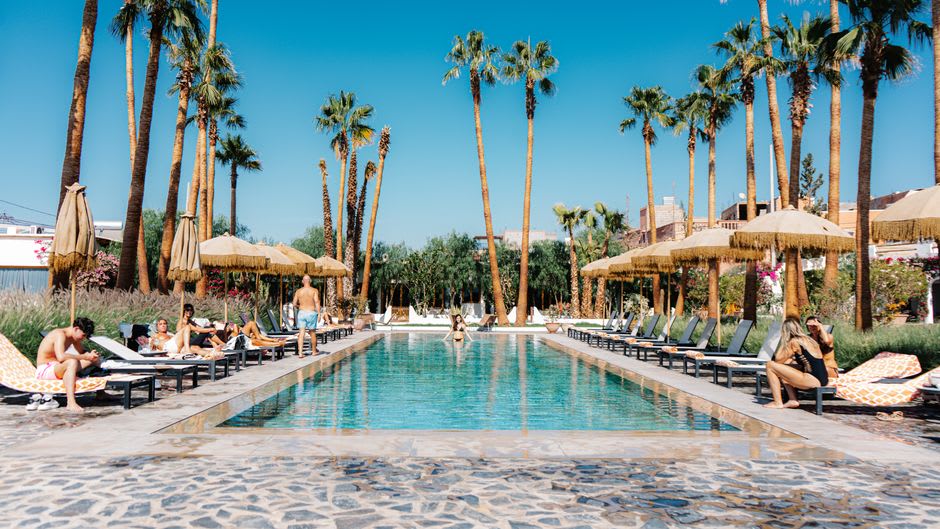
We stopped for coffee downtown on Palm Canyon Drive, where vintage neon signs hang over shops selling barware and sunglasses that never went out of style. There’s a knowing playfulness to the whole place, a town that decided on an aesthetic and simply never let go of it. Lia bought a pair of enormous sunglasses purely because the moment demanded them.
Straight Up Into the Cold
The strangest and best thing we did was ride the Palm Springs Aerial Tramway, which climbs from the hot desert floor up the sheer face of Chino Canyon to nearly 8,500 feet on Mount San Jacinto. The car rotates slowly as it rises, so the whole valley wheels below you, and the vegetation changes from cactus to pine as you ascend. We left the base in shorts, sweating; at the top there were patches of snow still in the shade, and the air was cold enough that we bought hot chocolate and laughed at ourselves.
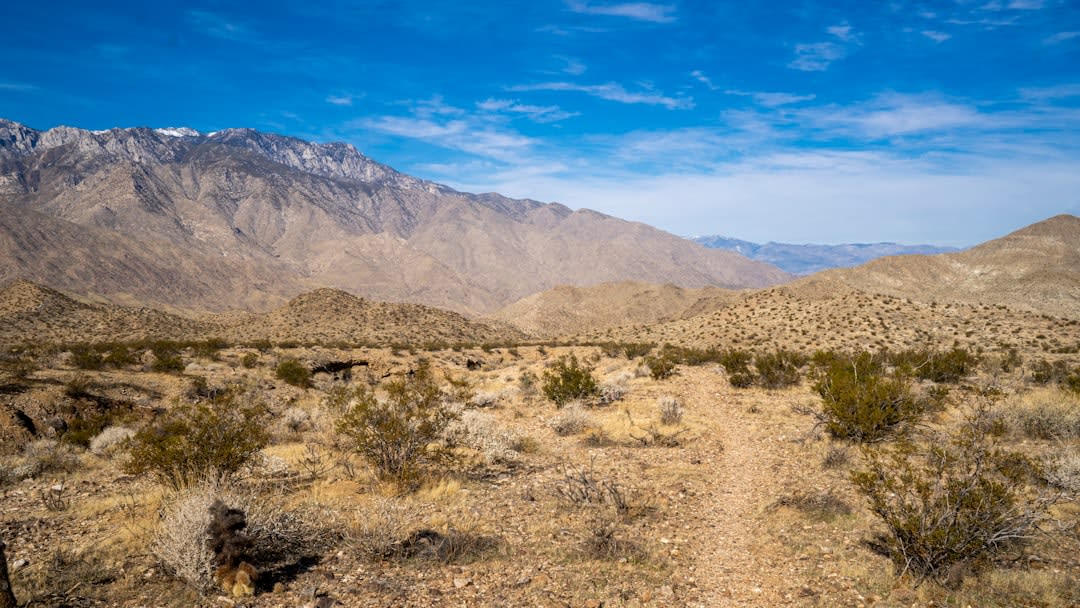
From the mountain station, trails run out into an alpine wilderness that feels a thousand miles from the pools and palms below. We walked a short loop through the pines, breathing the resinous cold air, and looked back down at the Coachella Valley shimmering in its heat haze, the town a grid of green among the tan. Two worlds stacked vertically, twenty minutes apart.
The Palms in Their Canyon
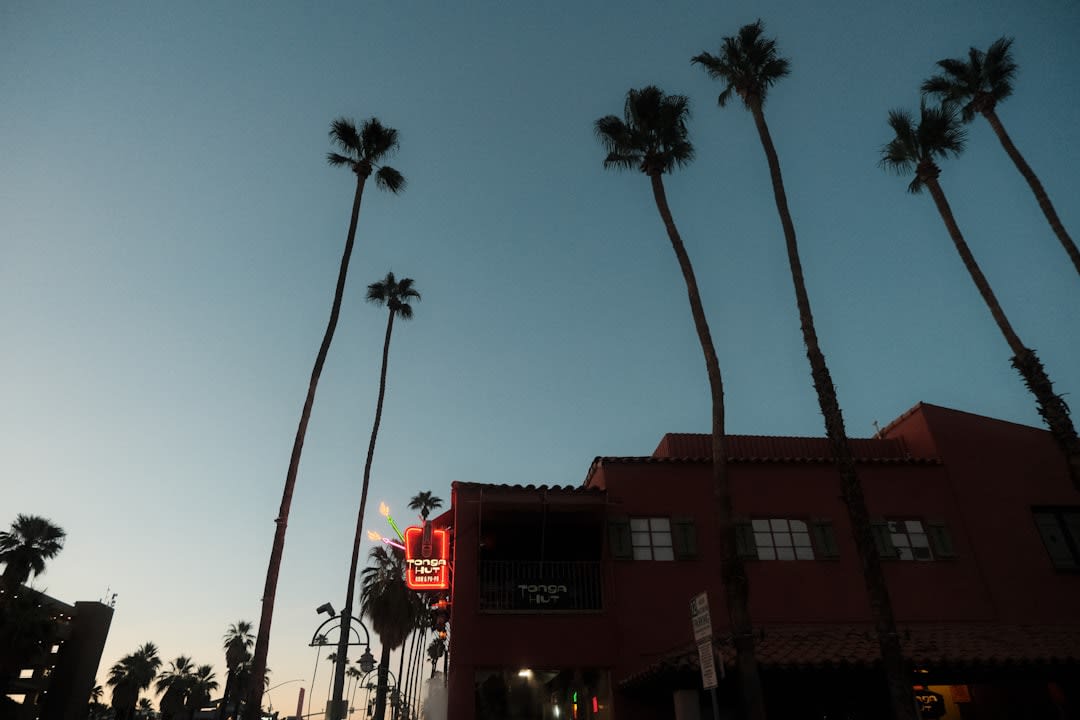
On our last morning we drove a few minutes south to the Indian Canyons, on Agua Caliente land, where the real desert oases hide. We walked down into Palm Canyon and there, following an unlikely stream, ran a dense grove of native California fan palms — thousands of them, shaggy with old fronds, casting deep cool shade in the middle of the bone-dry hills. It’s the largest such oasis in the world, and it explains at a glance why anything ever settled here.
We sat by the little stream in the green shade, the sound of running water improbable in all that stone, and I understood the town differently. Before the pools and the tramway and the neon, there was this: water in a hidden canyon, and palms growing thick around it. The whole idea of Palm Springs, distilled to its source.
Getting There
Palm Springs has its own small international airport right at the edge of downtown, which makes arriving delightfully painless — you can be poolside within twenty minutes of landing. Otherwise it’s an easy two-hour drive east from Los Angeles on Interstate 10, a straight shot through the pass at San Gorgonio with its army of wind turbines. A car is handy for reaching the Indian Canyons and exploring the wider Coachella Valley, though downtown itself is walkable and there’s a free shuttle along Palm Canyon Drive. The key is timing: spring and autumn are glorious, winter is mild and pleasant, but midsummer brings genuinely dangerous heat, often well over 40°C. We came in April and found it perfect — warm enough for the pool, cool enough for the mountain.