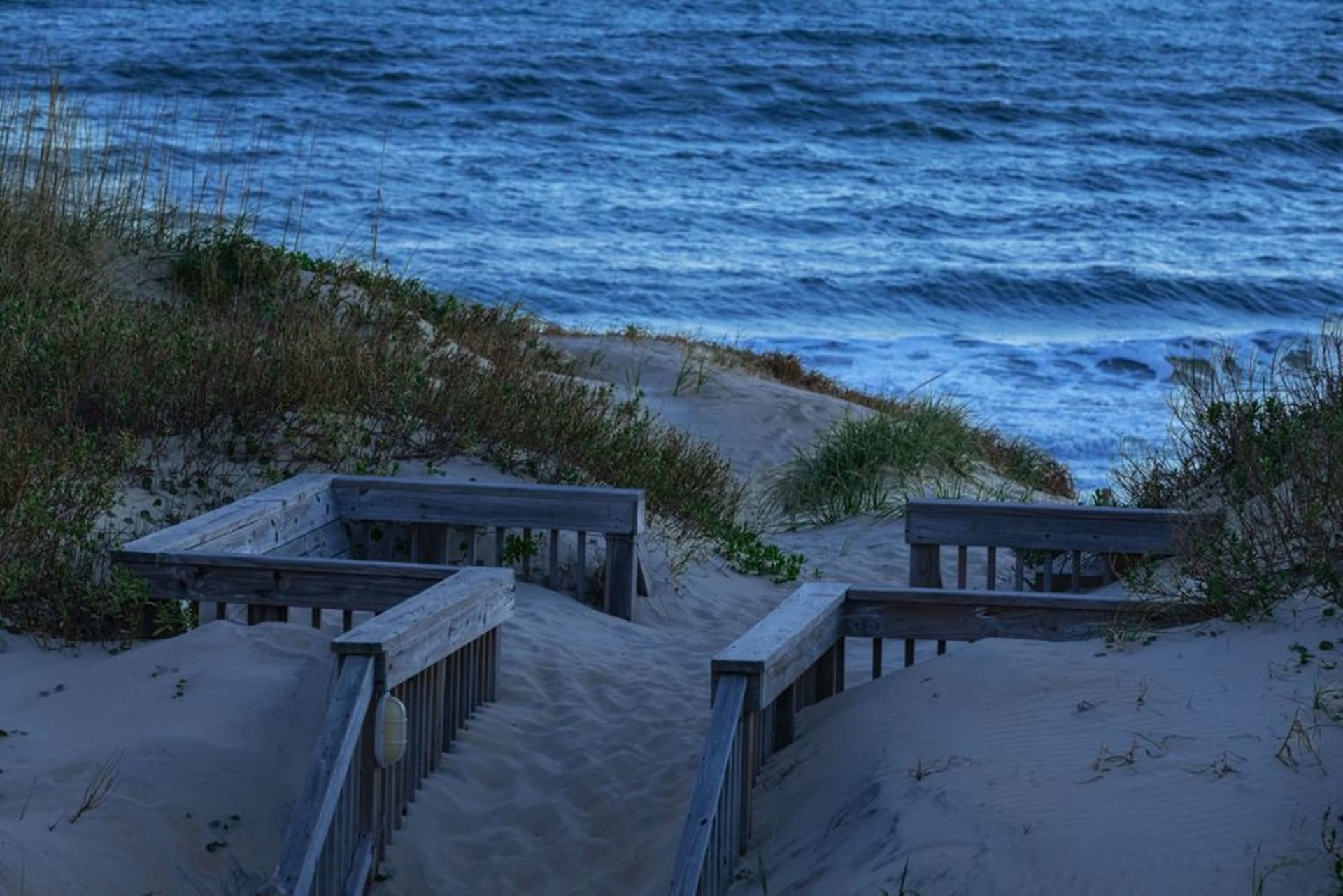
The first thing the Outer Banks taught Lia and me was that we didn’t understand wind. We’d driven down Highway 12 with the windows cracked, and somewhere past Nags Head the gusts started shoving the little rental car sideways, sand hissing across the asphalt in low ribbons. Lia gripped the door handle and laughed the kind of laugh you laugh when you’re not entirely sure it’s funny. By the time we stopped at a fish shack for a paper tray of hush puppies, my hair had set into something sculptural and permanent. The woman behind the counter looked at us and said, “First time?” It was that obvious.
Climbing Cape Hatteras
The lighthouse at Cape Hatteras is the tallest in America, and its black-and-white candy-stripe spiral is the image everyone carries home. What nobody tells you is the climb — 257 iron steps corkscrewing up a hot brick shaft, the whole thing smelling of rust and a century of sea air. Lia counted the landings out loud to distract herself. At the top the wind came at us like a physical argument, and the whole barrier island lay stretched below: a sliver of sand pinched between the grey Atlantic on one side and the pale, patient sound on the other. A ranger told us the entire lighthouse had been dragged half a mile inland in 1999 because the sea kept coming. Standing up there, you believe it.
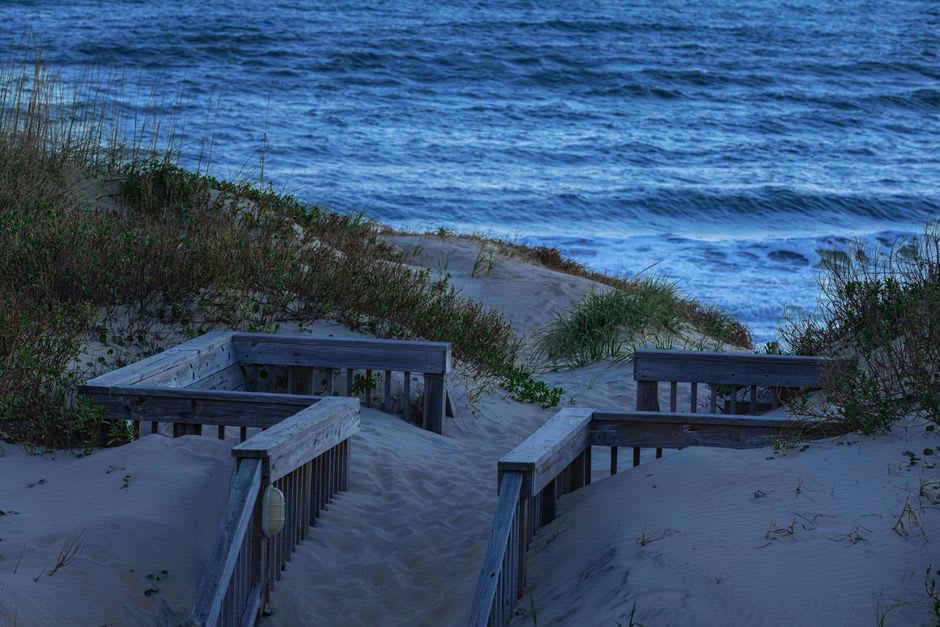
Wild horses and the road that ends
North of Corolla the paved road simply gives up. Beyond it lies a stretch of beach where wild Spanish mustangs — descendants of colonial shipwreck survivors, or so the story goes — still roam the dunes. We let the tyres down and drove the sand, which felt gloriously illicit, until Lia grabbed my arm: three horses, shaggy and unbothered, cropping the sea oats a hundred metres off. We killed the engine and just watched. One lifted its head, considered us with total indifference, and went back to grazing. No fences, no keepers, no ticket booth. Just animals living where a road couldn’t reach them, in the last empty corner of a crowded coast.
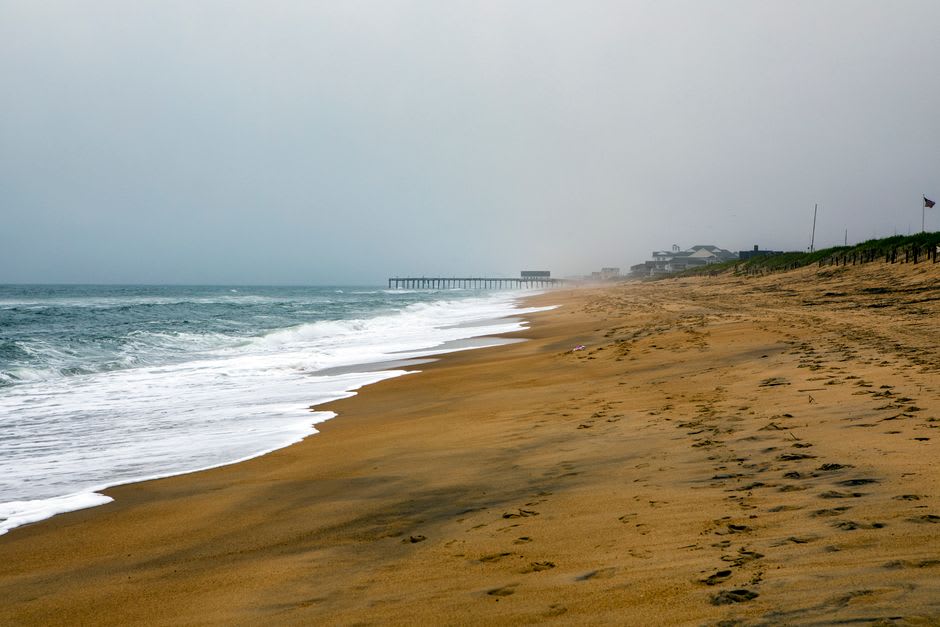
Where flight began
We saved Kitty Hawk for the last evening, half out of obligation and half because I’m a sucker for the moment when someone did the impossible. The Wright Brothers Memorial sits on Kill Devil Hills, and they’ve laid markers in the grass showing the exact lengths of the first four flights — twelve seconds, a hundred and twenty feet, less than the wingspan of the modern jet that carried us here. Lia paced it out heel to toe. We stood on the little rise where the machine lifted, watching hang-gliders ride the same reliable wind a couple of dunes over, and it struck me that the Outer Banks has always been about the wind. It wrecked the ships, built the dunes, and, one cold December morning, lifted the first men off the earth.
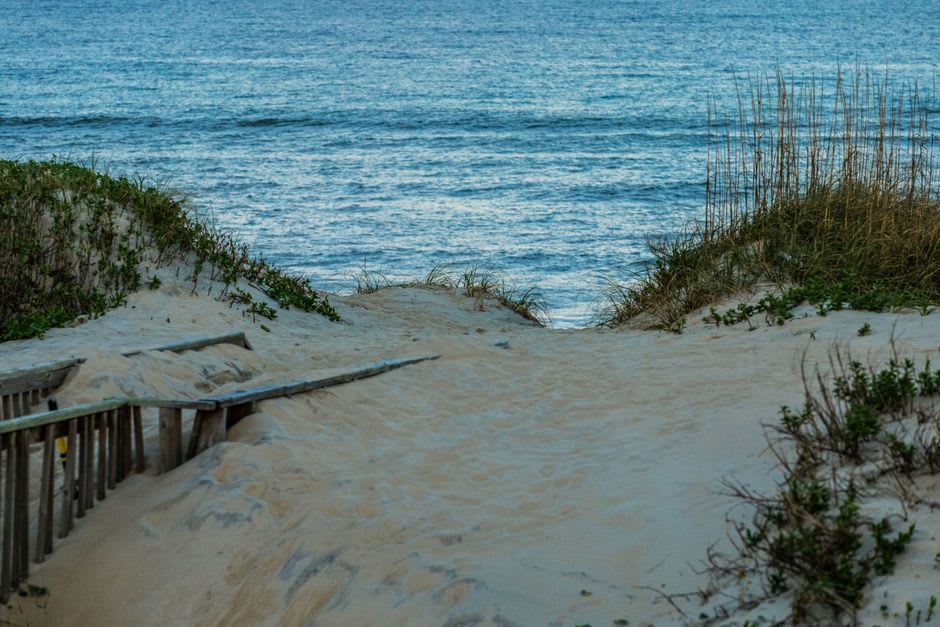
Getting There
The Outer Banks has no airport of its own worth the name; most travellers fly into Norfolk, Virginia, about ninety minutes north, and drive down over the causeways. From the south, a free state ferry crosses to Ocracoke Island — slow, salt-sprayed, and the best possible way to arrive. There’s one main road, Highway 12, threading the whole ribbon, and in summer it clogs; come in late spring or September when the water’s still warm and the crowds have thinned. Rent a car, bring more sunscreen than you think you need, and accept that everything you own will end up with a little sand in it.