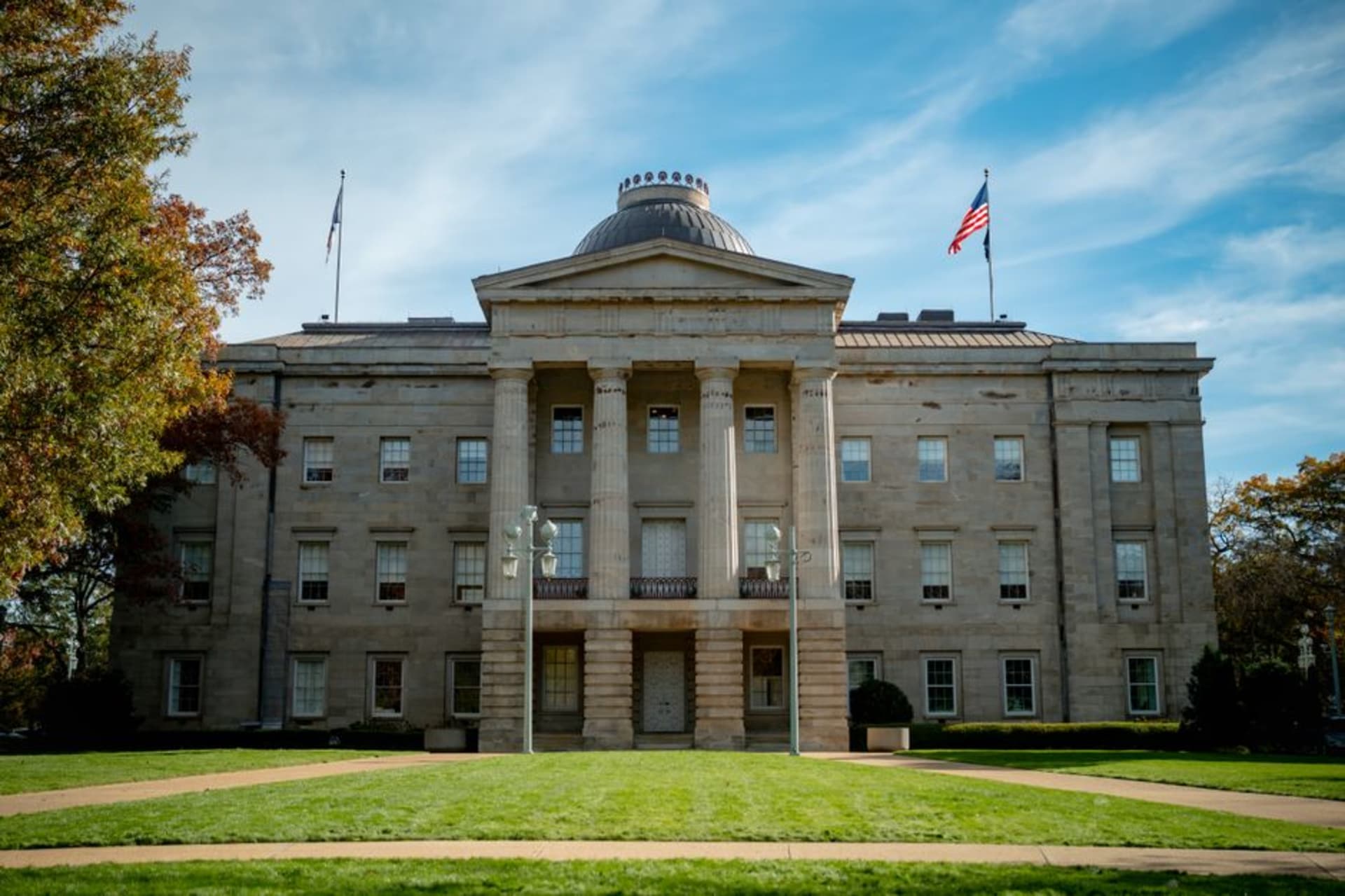
Raleigh
"A capital so green they call it the City of Oaks — and it earns the name on every street."
North Carolina's capital is greener and gentler than we imagined — a city under a canopy of oaks, where the best museums cost nothing and the surrounding research universities keep the whole place young and curious. We slowed right down and let it charm us.
Lia and I reached Raleigh at the tail end of a long southern road trip, tired and a little travel-worn, and the city seemed to sense it and offered us shade. They call it the City of Oaks, and they mean it literally — the streets downtown run beneath a continuous green canopy so dense that the July heat barely reached us. We parked, walked into the first free museum we found, and by the time we came out blinking into the afternoon we’d decided to give Raleigh two more days than we’d planned. It has that unhurried, unpretentious pull.
Museums that ask for nothing
The thing that genuinely astonished us is that Raleigh’s great museums are free — all of them. We spent a full morning in the North Carolina Museum of Natural Sciences, standing under the skeleton of a dinosaur nicknamed “Willo” with a fossilized heart, surrounded by school groups whose enthusiasm was contagious. Across the plaza, the Museum of History; a short drive away, the Museum of Art with its rolling sculpture park you can wander at dusk for nothing at all. Lia, who measures cities partly by their museums, was beside herself. We ran out of hours before we ran out of things to see, which almost never happens to us.
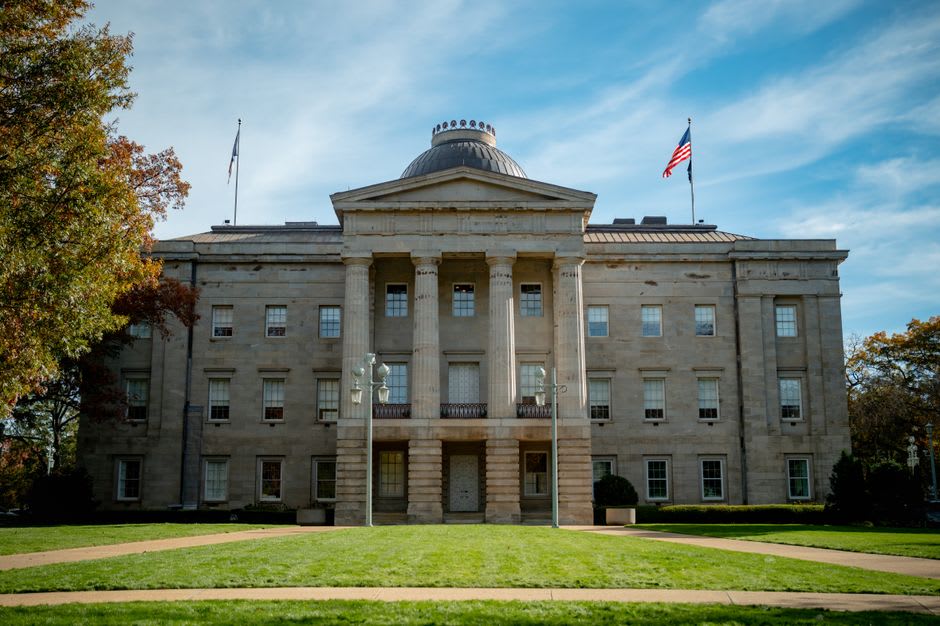
Under the canopy
Raleigh rewards aimless walking. We drifted through the Oakwood district, a neighborhood of Victorian houses in sherbet colors with wide porches and rocking chairs, where an elderly man tending his roses talked to us for twenty minutes about the trees. Then out to Pullen Park, one of the oldest public parks in the country, where a lovely old carousel still turns and paddle-boats drift on a small lake. We rode the carousel unironically, both of us laughing, then sat on the grass while families picnicked around us. The city’s soft, generous ordinariness is exactly its charm — nobody is performing here.
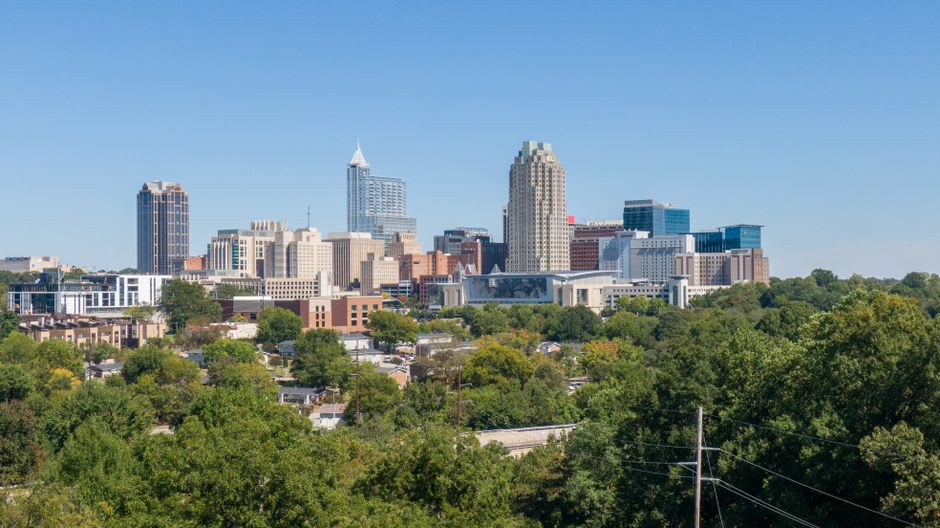
The buzz beneath the calm
Raleigh anchors the Research Triangle, and all those universities and labs give the quiet city a current of energy running just under the surface. We felt it most in the food and the evenings — a warehouse district downtown reborn with breweries and restaurants, students and researchers filling the tables, a farmers market so large it felt like a festival. We ate barbecue that started a friendly argument between two locals about eastern versus western North Carolina sauce, a debate we prudently declined to referee. On our last night we found a rooftop bar, watched the low skyline soften into evening, and toasted a city that had asked nothing of us and given quite a lot.
Getting There
Raleigh-Durham International Airport sits about twenty minutes northwest of downtown, roughly between Raleigh and Durham, and serves as the gateway to the whole Research Triangle. It’s a straightforward, well-connected airport with direct flights from across the country. You’ll want a car here — Raleigh is spread out and leafy rather than densely walkable, and the museums, parks, and neighboring towns of Durham and Chapel Hill all reward a short drive. That said, downtown Raleigh itself is very walkable once you’ve parked, with the museum plaza, the Capitol grounds, and the warehouse district all within an easy, shaded stroll of one another. Give yourself time to reach the sister cities of the Triangle, too — each has its own distinct flavor.
Keep exploring
More of North Carolina