
Brooklyn
"Manhattan is the city you visit. Brooklyn is the city that watches Manhattan and decides, quietly, that it prefers itself."
The borough that learned to look back at Manhattan — where brownstone streets give way to waterfront parks, the bridge lands on cobblestones, and the best pizza in New York starts an argument nobody wants to end.
We came to Brooklyn from the Manhattan side, which is the wrong direction for understanding it but the correct direction for experiencing the reveal. You cross the bridge — or in our case, the subway — and the density changes. Not less, exactly. Differently arranged. The buildings step back from the pavement. The trees have room. The sky, which in midtown exists only in narrow strips between towers, suddenly returns as an uninterrupted thing, and you remember that sky is supposed to be wide.
We emerged at Borough Hall and walked west toward the water, which in Brooklyn Heights means walking toward the view that has sold more apartments than any real estate agent in the history of New York.
Brooklyn Heights
The streets of Brooklyn Heights are the argument against everything you thought you knew about New York. The brownstones line up in rows of red brick and sandstone, each one with its iron railings, its window boxes, its stoop of worn steps leading to a door that was painted recently enough to suggest someone cares and long enough ago to suggest they do not care too much. The trees form a canopy over the pavement. The sidewalks are empty in the way that only expensive residential neighbourhoods manage — not abandoned, just unhurried.
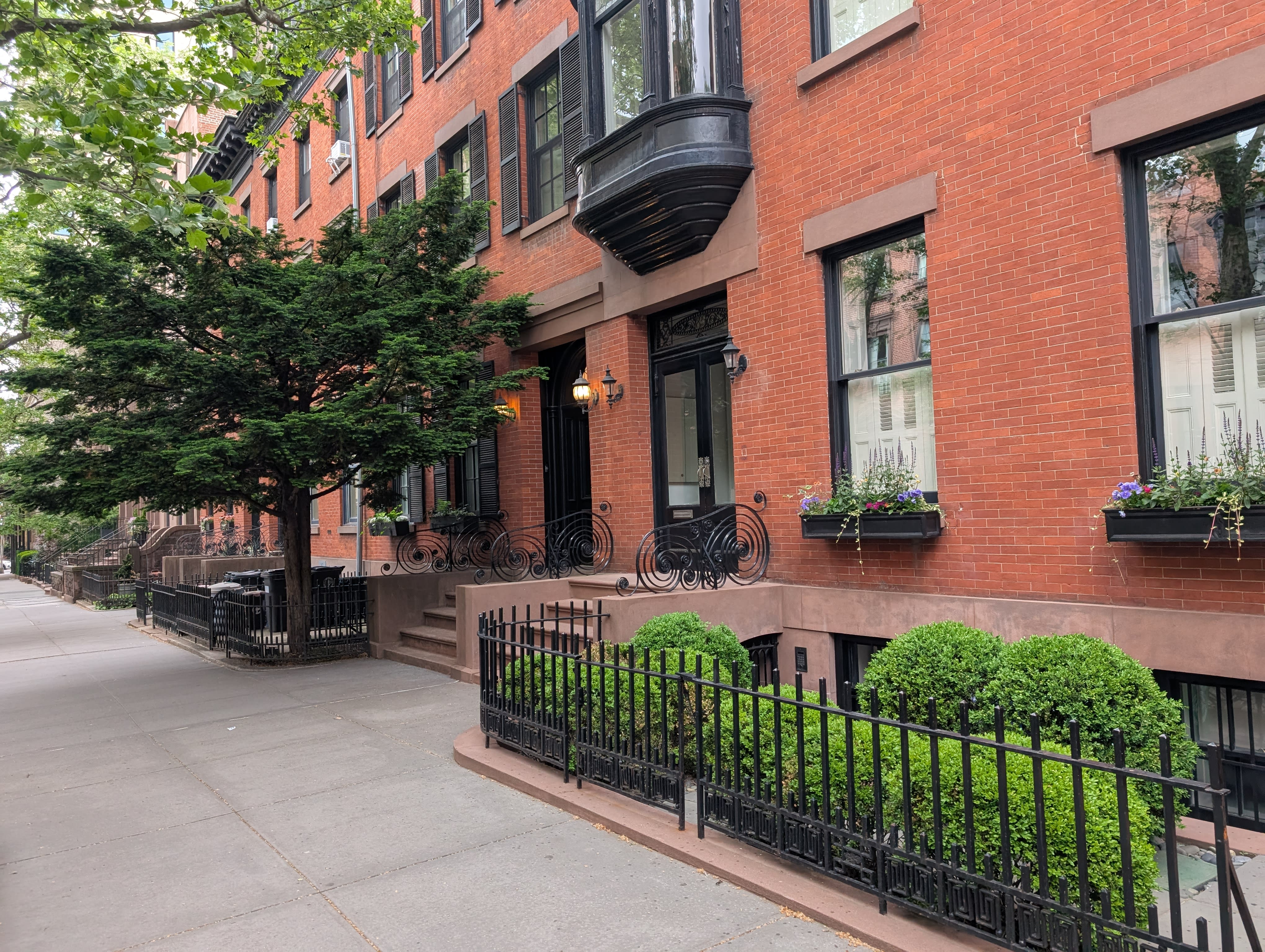
I stopped at number 83. The door was black, double-width, with brass hardware that caught the late afternoon light. The brownstone steps were the original sandstone — worn at the centre where a hundred and fifty years of feet had polished the grain smooth. The ironwork on the railings was ornate in a way that no contemporary fabricator would attempt: spirals and scrolls, each one slightly different from the next, the kind of detail that only exists when labour is cheap and craft is the default expectation.

Lia asked if I wanted to live here. I said I wanted to live in the version of myself that could afford to live here, which is a different thing. She said that was the most French answer I had given all week.
The Promenade
Brooklyn Heights ends, at its western edge, on a promenade that has no right to exist. It is a cantilevered walkway built over the Brooklyn-Queens Expressway in the 1950s — Robert Moses’ compromise with the neighbourhood, after the residents fought his plan to demolish their houses for a highway. The highway went below. The promenade went above. And from its railing, the entirety of Lower Manhattan presents itself across the East River like a postcard that someone forgot to make less dramatic.
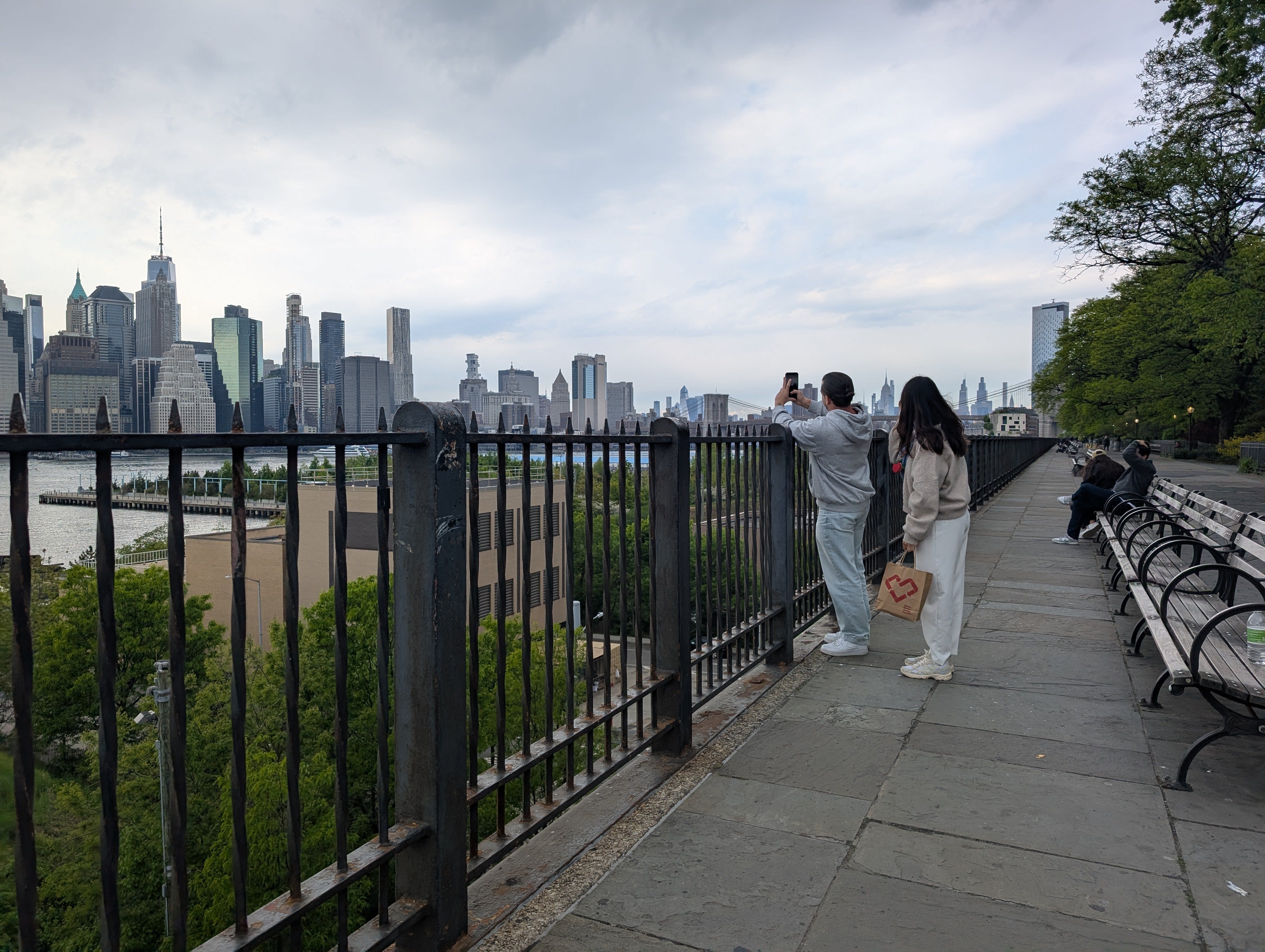
We stood at the railing with everyone else who had come to this exact spot for this exact reason. The view is not subtle. One World Trade Centre anchors the left side. The Financial District fills the centre. The Brooklyn Bridge cables cut across the right. And between the viewer and all of it — the river, wide and grey and indifferent to what stands on either bank.
I have seen Manhattan from many angles by now. From the hotel rooftop on our first night. From the seaport at water level. From the helicopter, which is an entirely different kind of seeing. But the Promenade view has something the others do not: distance. Enough distance that the city becomes a single composition rather than a collection of competing buildings. From here, Manhattan looks like it was planned. From inside it, you know it was not.
Brooklyn Bridge Park
We descended from the Promenade through the park, which is the thing that happened to the Brooklyn waterfront when someone decided that abandoned shipping piers could be something better. Brooklyn Bridge Park stretches along the East River from Atlantic Avenue to the bridge itself — a long green corridor of lawns, playgrounds, basketball courts, and carefully maintained gardens built on what was, twenty years ago, industrial rubble.
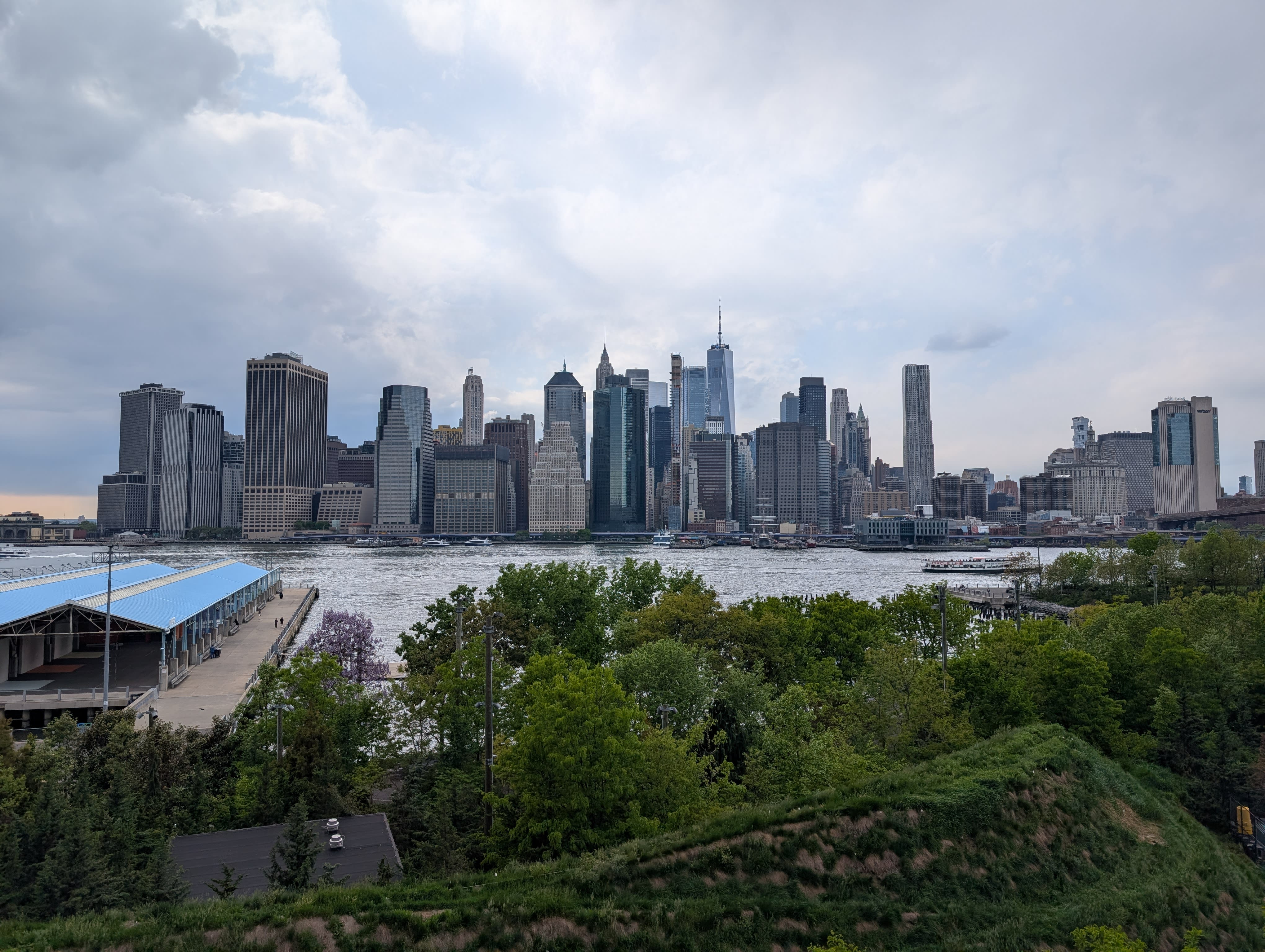
The skyline from here is the one that ends up on postcards and desktop wallpapers and the covers of books about cities. I understand why. The proportion is correct — the buildings are tall enough to impress, distant enough to compose, and the river gives them the foreground they need to be read as a single image rather than a crowd. The clouds were building behind them when we arrived, which gave the whole scene the quality of a painting by someone who understood that drama requires weather.
DUMBO
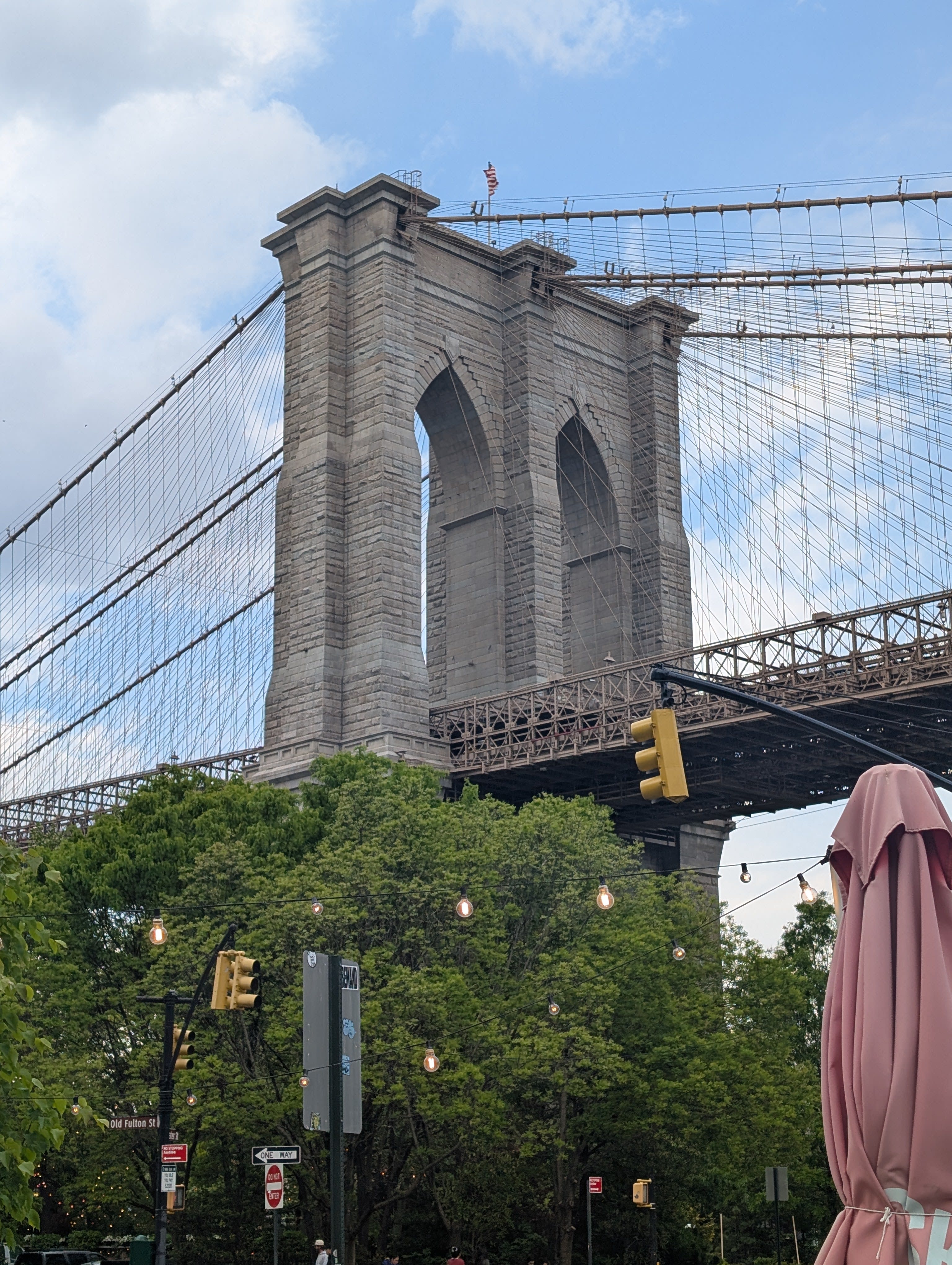
The acronym stands for Down Under the Manhattan Bridge Overpass, which is the kind of name that only New York would invent — descriptive, functional, and completely unromantic, attached to a neighbourhood that is now one of the most expensive per square foot in the borough. We entered from the south, walking along the cobblestones of Old Fulton Street, and the Brooklyn Bridge appeared above us with the casual enormity of a thing that has been there so long it has stopped trying to impress.
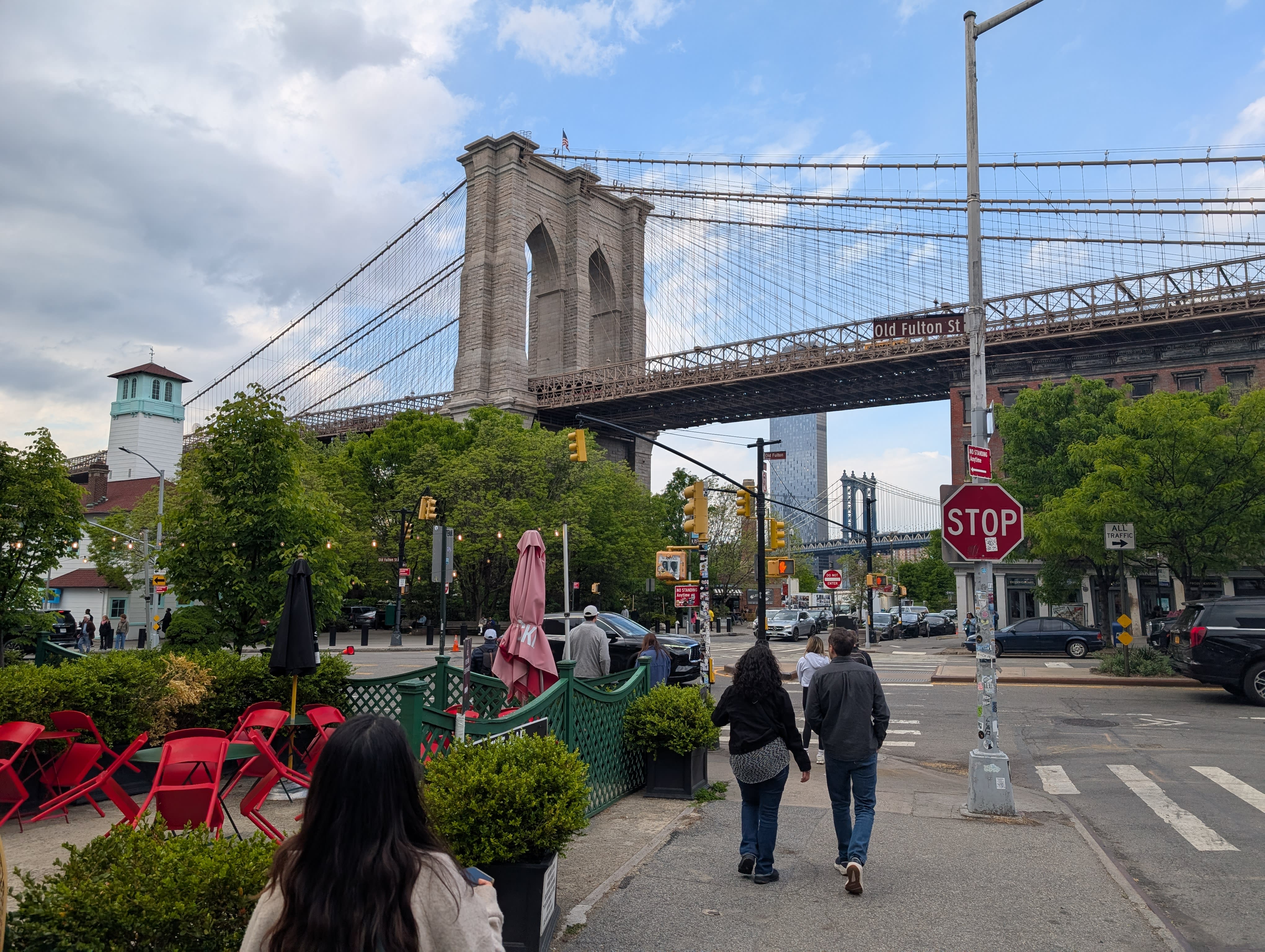
The bridge from below is a different object than the bridge from far away. From the Promenade, it is elegant — cables and arches, the geometric precision of Roebling’s engineering rendered decorative by distance. From directly underneath, on the cobblestones of DUMBO, it is massive. The stone tower fills the sky. The cables radiate outward like the rigging of a ship built for giants. The gothic arches — pointed, ecclesiastical, wildly out of place on a piece of nineteenth-century infrastructure — look down at you with the serene confidence of a cathedral that happens to carry traffic.
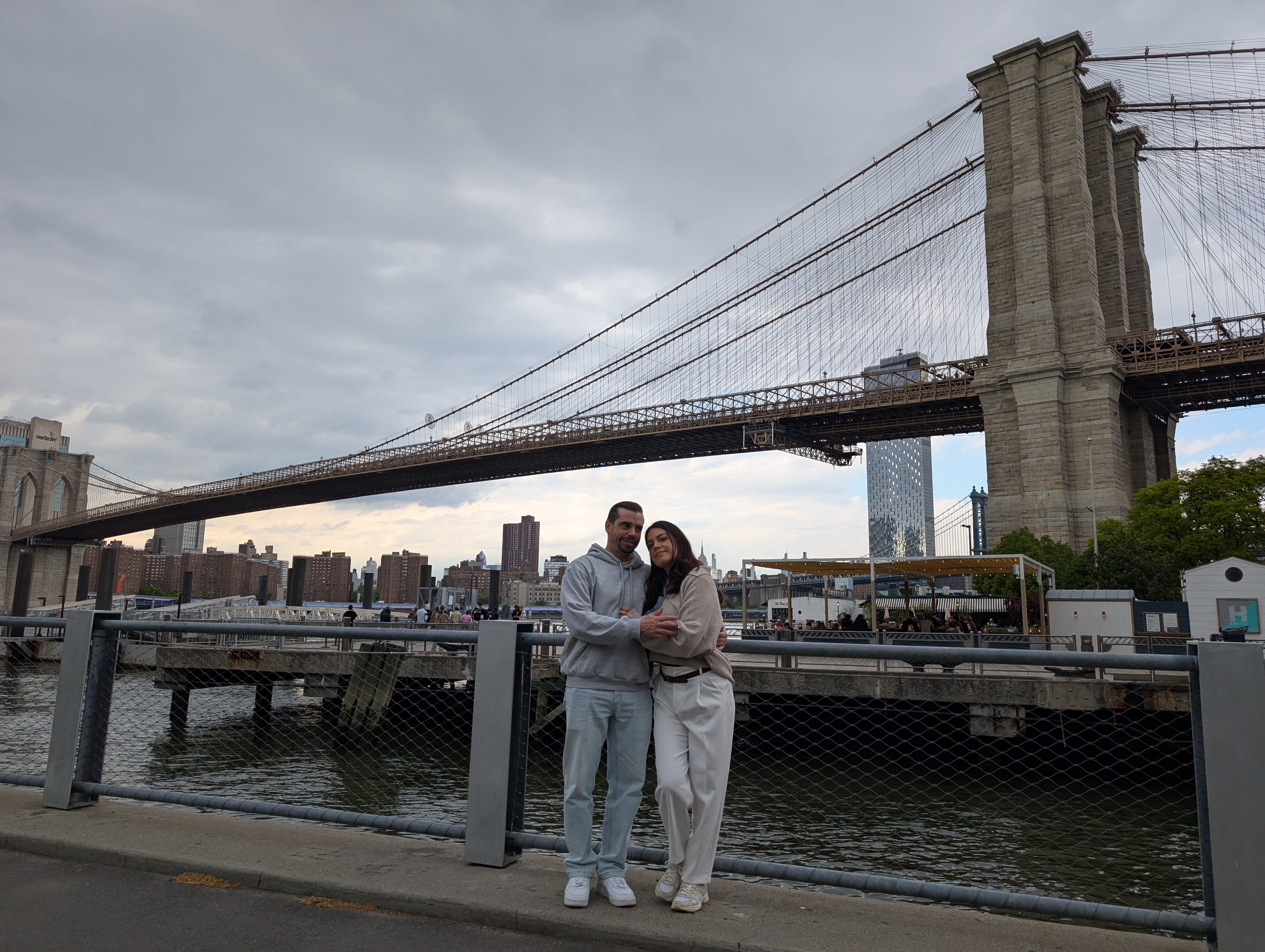
We walked to the waterfront. The bridge was behind us now, or rather above us — spanning the East River in its full length, the Manhattan side disappearing into the skyline, the cables catching the late afternoon light. Lia and I stood at the railing and someone offered to take our photograph, which is a thing that happens at this particular spot approximately every forty seconds, and which we accepted because the alternative was a selfie and the bridge deserves better than a selfie.
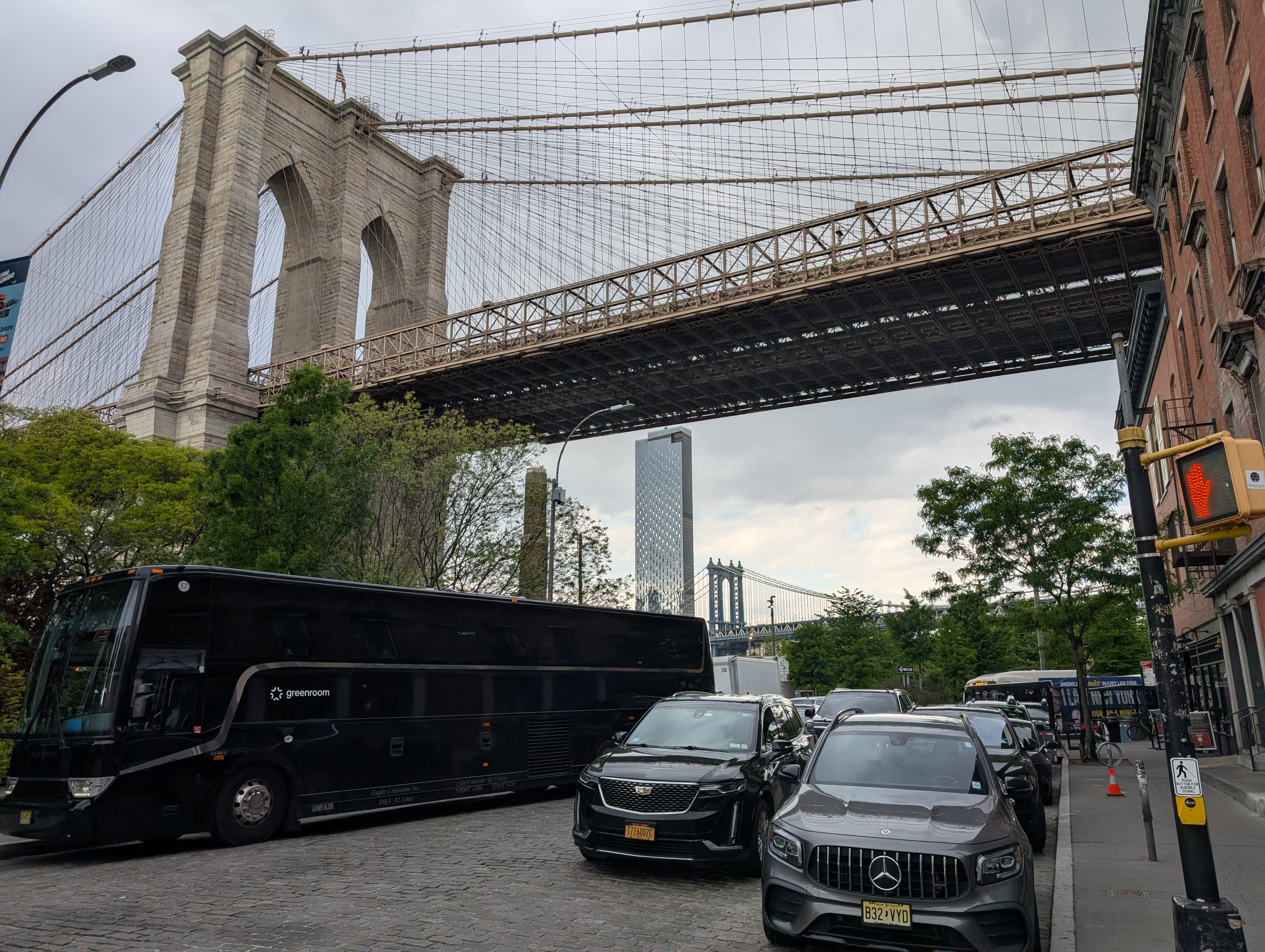
The cobblestone streets of DUMBO have the particular quality of a place that was industrial, became derelict, became expensive, and is now performing a version of its industrial past for the benefit of people who can afford the performance. The black tour buses parked on the cobblestones. The Mercedes SUVs. The Manhattan Bridge visible through the gap between the converted warehouses. None of this diminishes the neighbourhood. It simply explains it.
The Pizza
The argument about the best pizza in New York is an argument that nobody wins and nobody wants to. It is the city’s most democratic ongoing debate — every neighbourhood, every borough, every family has a position, and all positions are held with the conviction of people who believe they are stating facts rather than opinions. In DUMBO, the argument narrows to two establishments on the same block of Old Fulton Street, which is either a coincidence or the universe’s way of ensuring that no meal in this neighbourhood passes without controversy.
We chose. I will not say which one. The pizza arrived on a metal tray — a full pie, prosciutto and basil, the crust charred in the specific pattern that coal ovens produce: irregular, darkened in spots, the edge blistered and risen into the kind of cornicione that exists only when the dough has been handled by someone who has been handling dough longer than I have been alive.

I am from France. I have eaten pizza in Naples, in Rome, in the kind of small Provençal towns where the pizza is made by someone’s uncle and is either extraordinary or inedible with nothing in between. New York pizza is none of these things. It is its own tradition — the thin, foldable, slightly greasy architecture of a food that was adapted by immigrants into something the original country would not entirely recognise but cannot entirely deny. This particular pizza, from this particular oven on this particular block in DUMBO, was very good. I ate three slices and would have eaten a fourth if Lia had not pointed out that we had dinner reservations.
The River Café
The dinner reservations were at a place that I had been told about by three separate people in three separate countries, which is usually either a very good sign or a very bad one. The River Café sits at the edge of Brooklyn Bridge Park, directly beneath the bridge, in a low building surrounded by gardens that have no business being this beautiful in a city this dense. We arrived through the garden entrance and the Manhattan skyline appeared through the hanging flower baskets and the gas lamps like a backdrop that someone had ordered specifically for the occasion.
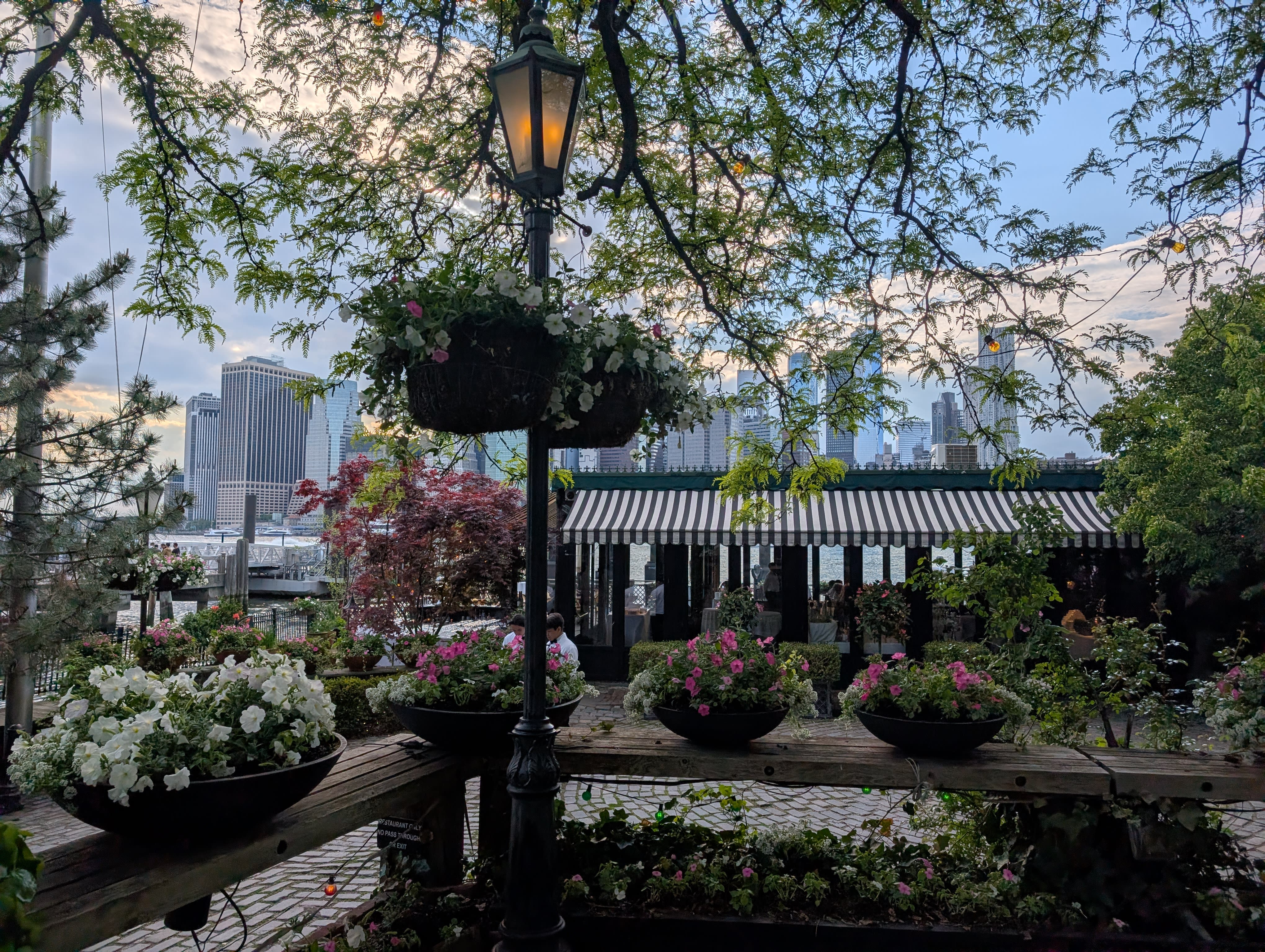
The terrace is the thing. The tables are set on a patterned metal surface — the kind of detail that announces, quietly, that this is not a casual establishment — and from every seat, the view is the same view that the Promenade offers, except closer, lower, and accompanied by oysters.
The oysters arrived on a platter of crushed ice — half a dozen, East Coast, each one a different shade of grey and cream, with lemon and cocktail sauce and the small fork that exists for no other purpose than to separate an oyster from its shell. I ate them in the correct order, which is to say the order in which they presented themselves, and each one tasted like the ocean filtered through something very cold and very clean.
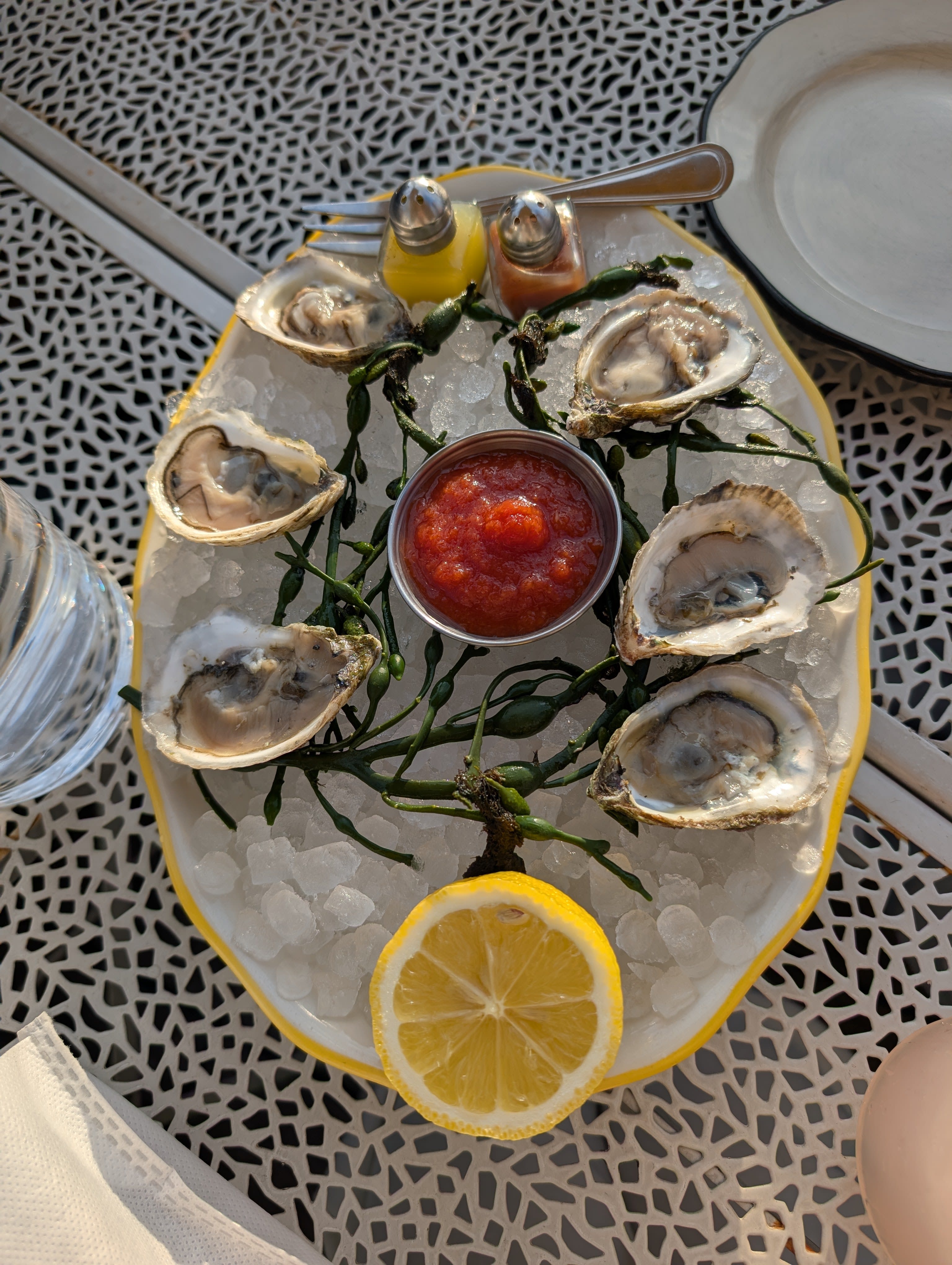
The meal continued. The light changed. The sky behind Manhattan went from grey to gold to the specific shade of pink that May evenings produce when the clouds cooperate, and the clouds cooperated.
The Bridge at Sunset
After dinner, we walked along the waterfront beneath the bridge. The sun was setting behind Manhattan, which meant that the skyline was backlit and the bridge was backlit and the river had turned the colour of old bronze. A ferry crossed the frame — the NYC Ferry, running its Brooklyn route — and for a moment everything arranged itself into the kind of composition that you would not believe if you saw it in a photograph.
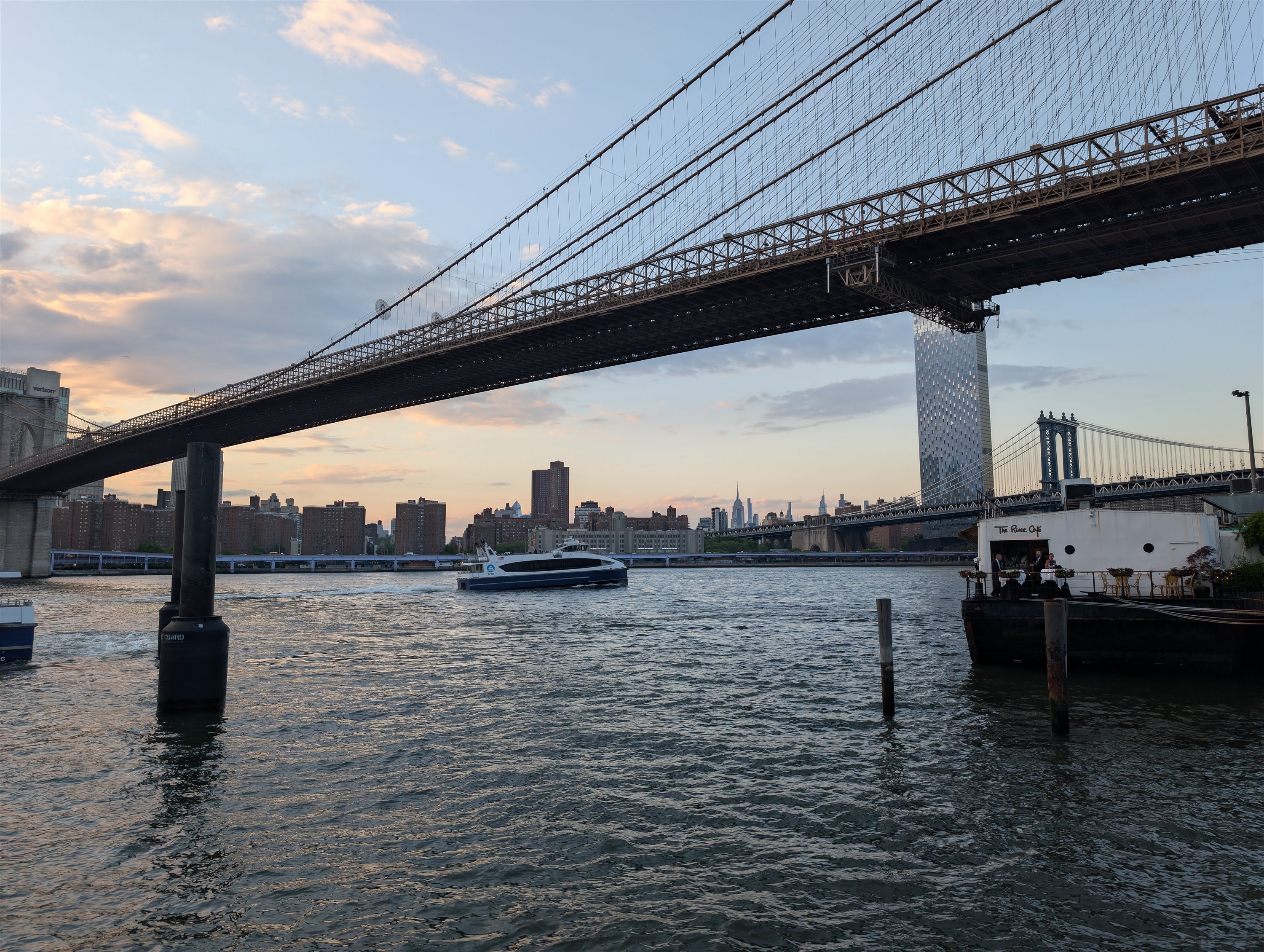
I believed it. I was standing in it.
Brooklyn does this. It gives you the distance to see Manhattan clearly, and then it gives you its own streets, its own food, its own particular light, and by the end of the evening you have forgotten that you came here to look at the other side. The bridge connects the two boroughs, but what it really does is give Brooklyn the option of looking back — and the confidence, increasingly, to look at itself instead.
When to go: May and early October, late afternoon into evening. Start in Brooklyn Heights around four, when the light is warm and the brownstone streets are quiet. Walk the Promenade before five, when the sun is still high enough to light the Manhattan skyline from the side. DUMBO for pizza around five-thirty — the lines are shorter on weekdays. The River Café requires a reservation, made well in advance, and is worth every logistical complication. Stay for sunset beneath the bridge. The last good light hits the water around seven-thirty in May, and you will want to be on the waterfront when it does.
Keep exploring
More of New York