Carlsbad Caverns
"Lia whispered, and the whisper came back to us from somewhere we couldn't see. That was when the size of it landed."
Beneath the ordinary scrubland of southern New Mexico opens a staggering underground realm of chambers and stalactites, silent and cool and impossibly large. You descend into it out of the desert glare and the world simply changes. It is the strangest thing we have walked into on this continent.
We chose to walk in rather than take the elevator, down through the Natural Entrance, and I recommend the humility of it. The trail switchbacks into a black mouth in the hillside, and within a few minutes the desert light is a bright coin far above and behind you, and the temperature drops, and the sound changes — every footfall softened, every voice pulled down to a hush. Lia, who does not love enclosed spaces, gripped my arm at the first steep turn and then gradually let go as the passage opened wider instead of tighter. By the time we reached the bottom, some seventy-five stories down, she was the one pointing ahead, into the dark, wanting more.
The Big Room
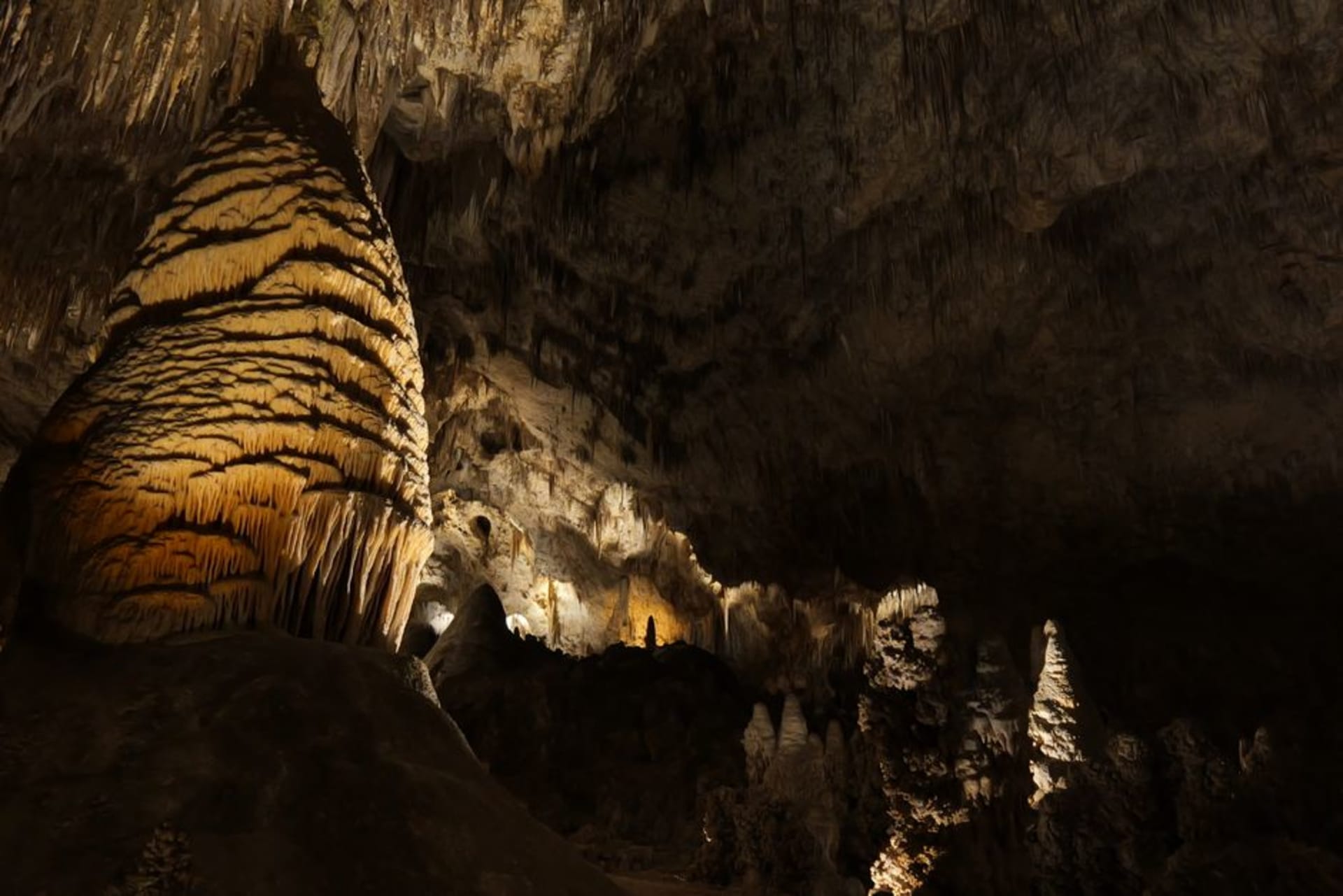
Nothing quite prepares you for the Big Room. It is a single chamber large enough to lose a cathedral in — the trail around its edge runs more than a mile — and it is filled with formations that took the slow drip of mineral water hundreds of thousands of years to build. There is a stalagmite they call the Rock of Ages, columns fusing floor to ceiling, curtains of stone that look poured rather than grown. The lighting is deliberately dim and warm, so you move from pool of amber to pool of amber with darkness pressing in between, and the effect is less like sightseeing than like being let in on a secret the earth had been keeping. We spoke barely at all. There was nothing adequate to say.
The Silence, and the Water
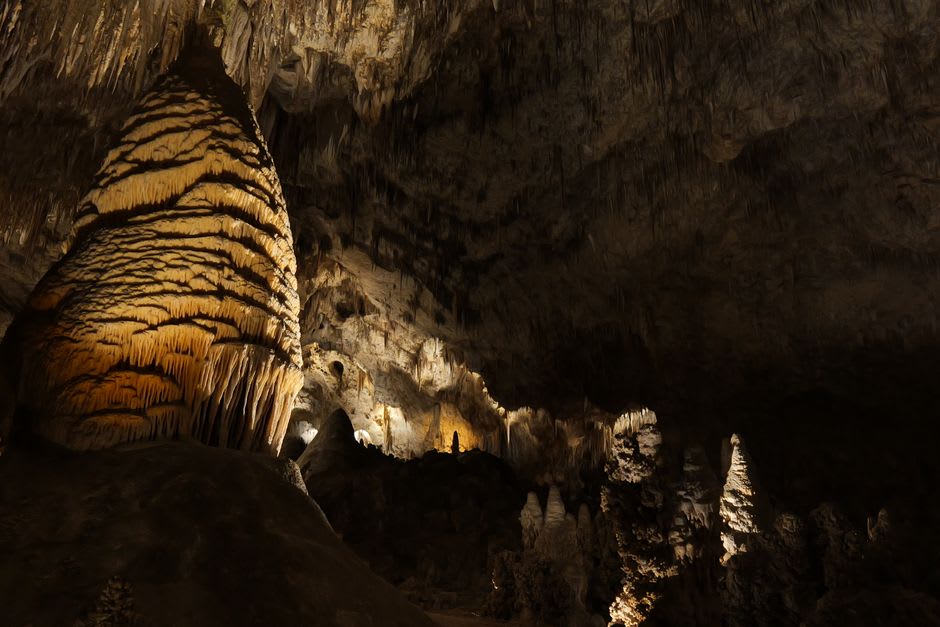
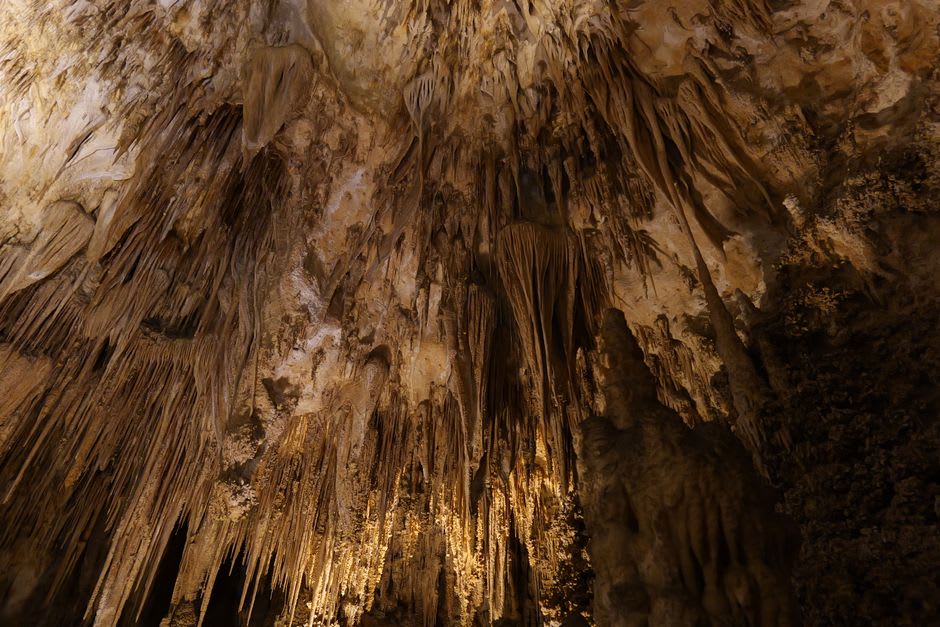
What stays with me is the quiet. Deep in the caverns there are places where you can stand and hear, genuinely, nothing at all — except, if you’re still enough, the tick of a single drop of water falling into a pool it has been feeding for millennia. We found a bench near a formation called the Bottomless Pit and simply sat. A ranger had told us that the cave is still forming, still wet, still moving at its geological crawl, and sitting there you can believe it — the whole place feels less like a monument than like a living thing caught mid-breath. Lia said it was the most silent place she had ever been. I’ve thought about that since.
The Bats at Dusk
If you time it right, the day ends with something the caves are equally famous for. From late spring into autumn, hundreds of thousands of Brazilian free-tailed bats spiral up out of the Natural Entrance at dusk to hunt, a rising black vortex that pours into the sky for a solid half hour. We sat in the stone amphitheater near the mouth with a hushed crowd, and as the light failed the first bats came — a trickle, then a river, then a torrent, wheeling counterclockwise up and out over the desert with a dry papery rush of wings. No photos allowed, which is right; you just watch. Lia held my hand and neither of us moved until the last of them had gone and the stars came out over the Guadalupes.
Getting There
Carlsbad Caverns National Park lies in the Guadalupe Mountains of southeastern New Mexico, about a thirty-minute drive southwest from the town of Carlsbad on US-62/180. The nearest sizeable airports are El Paso, Texas (roughly two and a half hours west) and Roswell, New Mexico. A car is the only practical way in. Timed-entry reservations are required in advance — book online before you go. Bring a light jacket even in July; the cave holds a steady chill around 13°C year-round. For the bat flight, check the ranger program schedule, as it runs only during the warmer months when the colony is in residence.
Keep exploring
More of New Mexico