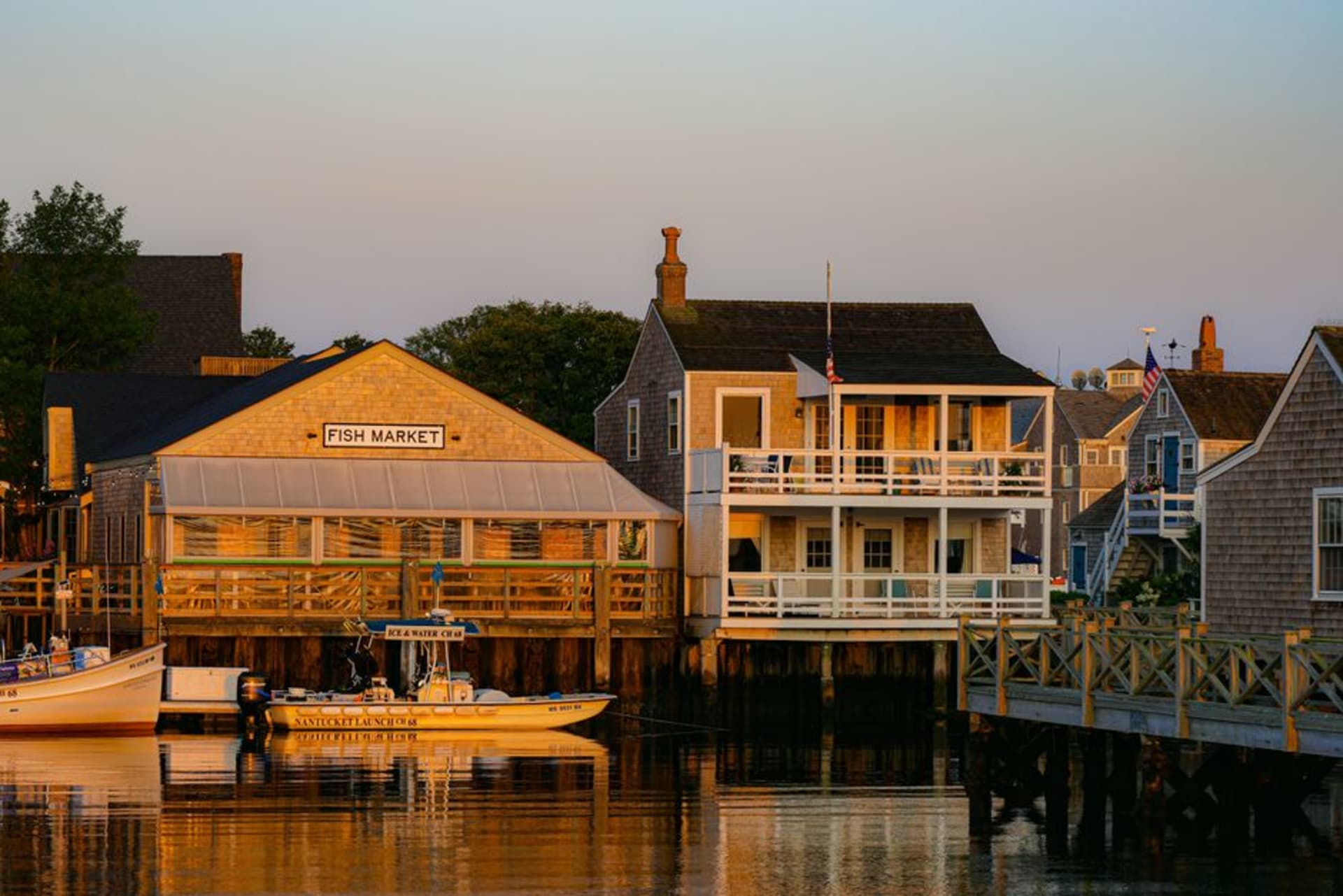
Nantucket
"Everything here is the colour of driftwood, and I mean that as the highest praise."
The ferry out to Nantucket takes a couple of hours across open water, and somewhere in the middle of the crossing the mainland vanishes and there’s nothing but grey swell and the cry of the gulls trailing our wake. Lia went green and stood at the rail breathing carefully; I bought us both a coffee we didn’t finish. Then the island rose out of the haze — first the little white pepper-pot of Brant Point Light, then the grey wall of the town, wharves and steeples and the masts of a hundred boats. As we slid into the harbour Lia’s colour came back all at once, and she gripped my sleeve and said, “Oh.” Just that. It’s the right response to Nantucket.
The cobbled town
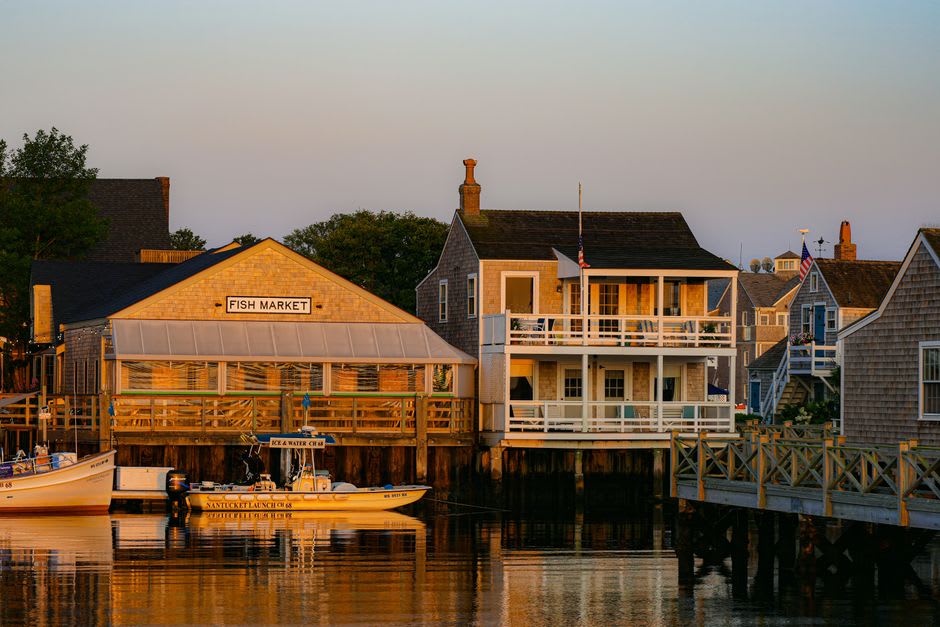
Nantucket town is a museum that forgot to stop being a town. The whole centre is protected — grey cedar-shingle houses gone silver with age, brick captains’ mansions built on whale oil, and Main Street paved in cobbles hauled over as ballast two hundred years ago. Lia’s ankles filed a formal complaint about the cobbles within the hour. We wandered without a map, which is the only way, past window boxes spilling geraniums and a fragrance of salt and roses and old wood. At the Whaling Museum we stood under the skeleton of a sperm whale that had beached on the island, sixteen metres of bone hung from the ceiling, and read the log of a captain who’d been away from home for four years at a stretch. It reframed my complaints about a long ferry.
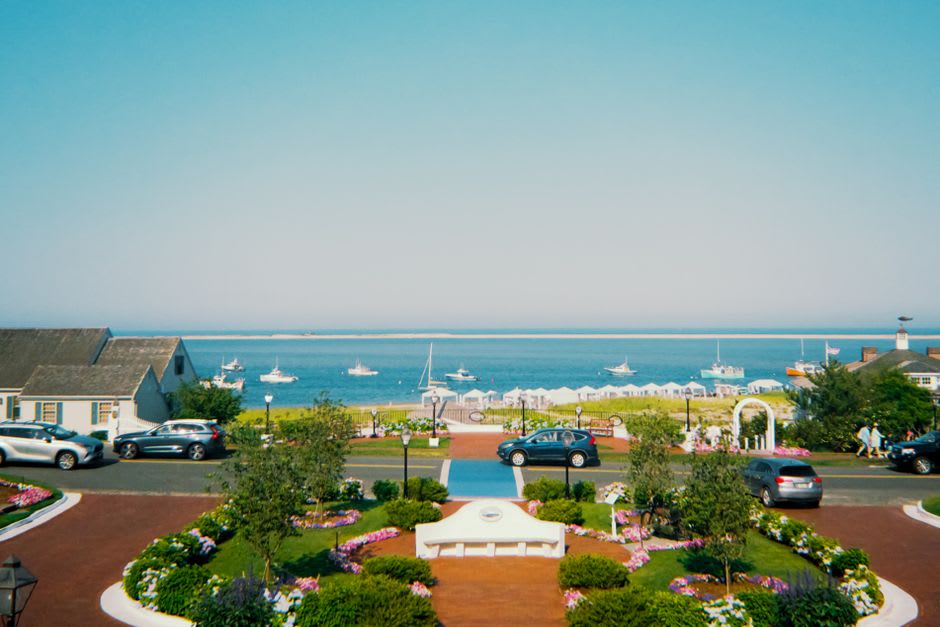
Sconset and the bluff
We rented bikes — everyone rents bikes — and pedalled the flat path out to Siasconset, “Sconset” to anyone who’s spent five minutes here, at the island’s eastern edge. It’s a village of tiny fishermen’s cottages so smothered in climbing roses that the walls disappear behind them, each one named rather than numbered. From there the Bluff Walk runs along the top of the sea cliff, a public path threading right through the back gardens of houses that must cost the earth, the owners having agreed generations ago that the view belongs to everyone. Lia and I walked it slowly, the Atlantic on one side and impossibly beautiful lives on the other, and neither of us said much.
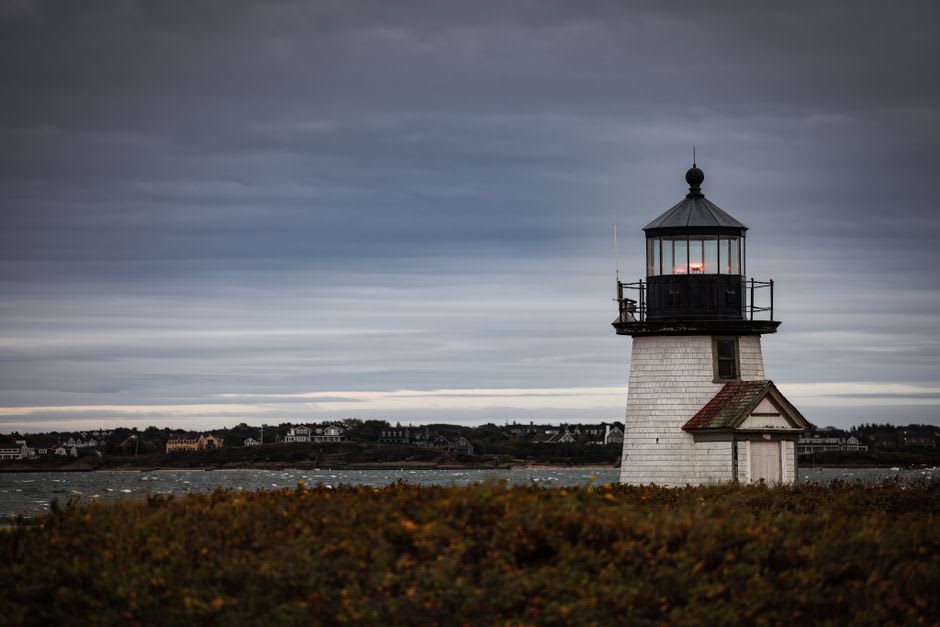
Light at the edge
On our last evening we cycled out to Brant Point, the little lighthouse at the harbour mouth, to watch the ferries come and go in the low sun. It’s the shortest lighthouse in New England, hardly taller than a house, but it’s the one every departing sailor sees last and every returning one sees first, and there’s a tradition of tossing a penny overboard as you pass it to guarantee you’ll come back. Lia made me promise we would. The light went gold, then rose, then that particular dove-grey the island seems to manufacture on demand, and a returning fishing boat slid past close enough that we could see the exhaustion and satisfaction on the crew’s faces. I understood, right then, the pull of this place.
Getting There
Nantucket lies thirty miles off Cape Cod, and there’s no bridge — you come by boat or small plane. Most people take the ferry from Hyannis: the slow traditional boat runs a couple of hours and carries cars, while the fast ferry does it in about an hour, passengers only. Leave your car on the mainland if you can — the town is walkable, bikes reach everywhere, and parking on-island is a genuine ordeal. Book accommodation far ahead and expect to gasp at the prices in July and August; late September is quieter, cheaper, and if anything more beautiful, with the light going long and the roses hanging on. Bring a windproof layer and comfortable shoes for those cobbles.