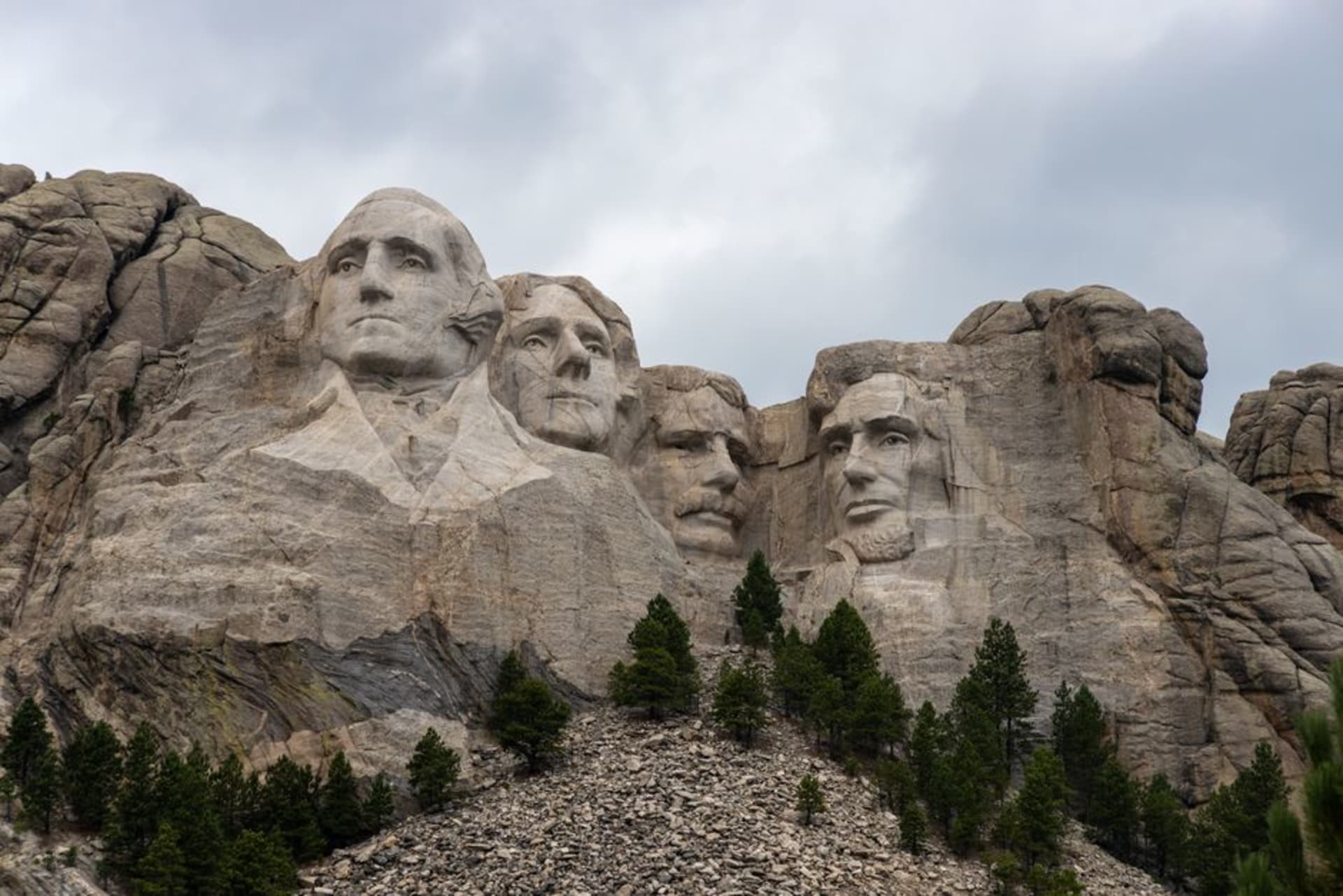
Mount Rushmore
"I'd seen it a thousand times in pictures and still wasn't ready for the size of it."
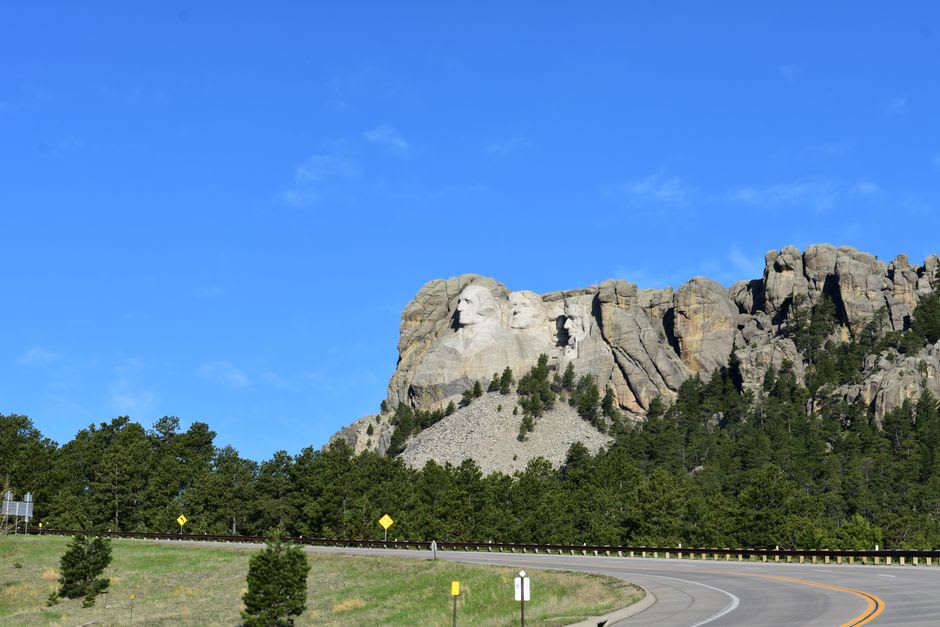
I’ll admit I was a little cynical driving in. Mount Rushmore is so photographed, so stamped onto postcards and films, that I half-expected to feel nothing but recognition. Then the road through the Black Hills turned a corner and the faces appeared through a gap in the pines, and I actually slowed the car. Lia leaned forward against the dashboard. They are enormous — each head as tall as a five-story building — and hanging there in the raw granite, half-finished at the edges, they have a weight that no reproduction carries. We parked, walked up through the avenue of state flags, and stood at the viewing terrace mostly in silence, tourists and skeptics alike, all craning our necks.
The Sculpture Up Close
The best way to shrink the crowds and grow the mountain is the Presidential Trail, a loop of boardwalk and stairs that winds right up under the cliff. From directly below, the scale becomes almost absurd — you can see the tool marks in the stone, the sheer drops, the way Washington’s face emerges from rough rock into polished detail. Lia and I traced the whole loop slowly, reading the plaques about the fourteen years of dynamite and drilling it took to carve. What struck me most was how the sculpture seems to change character as you move: stern from one angle, thoughtful from another, the light shifting across the granite as clouds passed overhead.
The Black Hills Around It
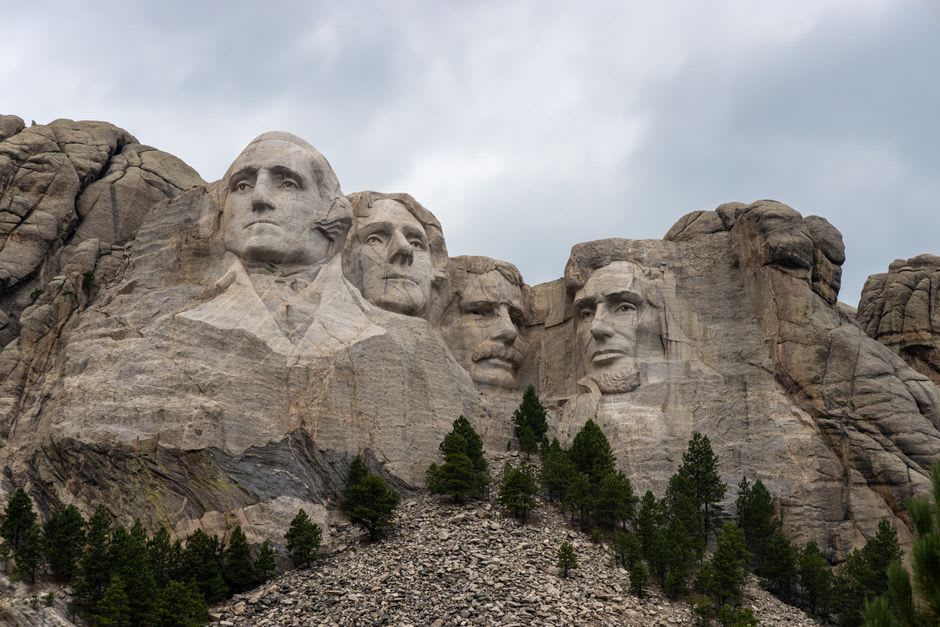
We made the mistake, on our first pass, of treating Rushmore as a quick stop — and then spent two more days in the Black Hills because the land around the monument turned out to be the real revelation. We drove the Iron Mountain Road with its pigtail bridges and tunnels framing the faces, and through nearby Custer State Park, where a herd of bison ambled across the road and stopped traffic entirely. A pair of mountain goats picked their way along a granite outcrop near Rushmore itself. The Black Hills are dark with pine and older than almost anything, sacred ground to the Lakota, and knowing that added a quiet complexity to standing beneath a monument carved into them.
After Dark
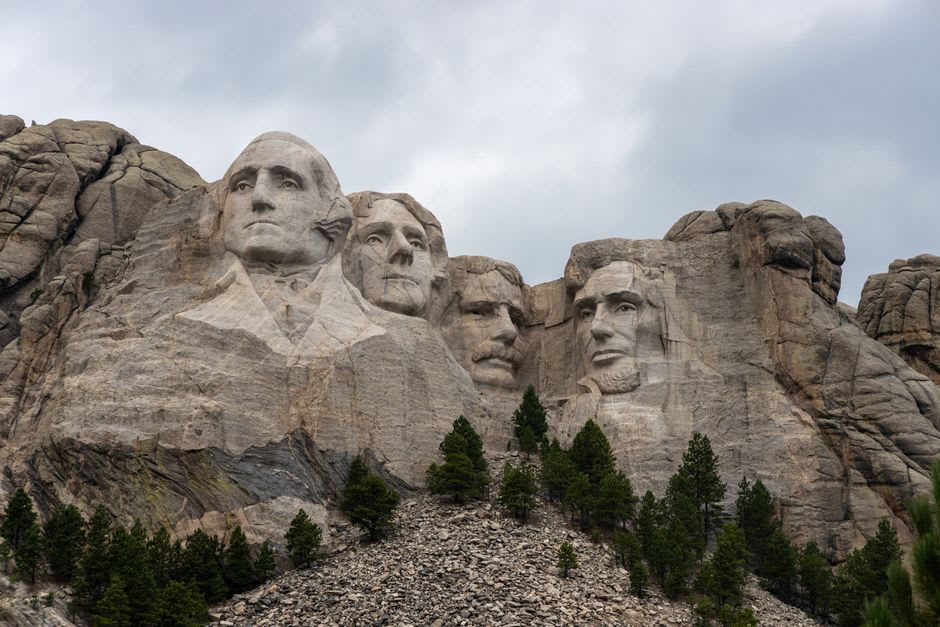
We came back in the evening for the lighting ceremony, unsure whether it would feel hokey. It didn’t, quite. As dusk settled and the pines went black, the terrace filled up, and when the lights came on the four faces glowed pale gold out of the darkness — softer, more human somehow, than in the flat glare of noon. Lia and I sat on the granite steps with the cool night air coming down off the hills, and I found myself thinking less about presidents than about the strangeness and ambition of the whole thing: people deciding to carve a mountain, and mostly pulling it off. We lingered until the crowd thinned and the faces hung there, lit and quiet, above the dark trees.
Getting There
Mount Rushmore National Memorial sits in the Black Hills of South Dakota, about a 40-minute drive southwest of Rapid City, which has the nearest airport. There’s no entrance fee but a parking charge applies. Give yourself more than a quick photo stop: pair the monument with a drive on the Iron Mountain Road and a loop through Custer State Park’s wildlife, and time your visit to catch both the daytime detail and the evening lighting. Bring layers for cool Black Hills evenings, and comfortable shoes for the Presidential Trail’s stairs.