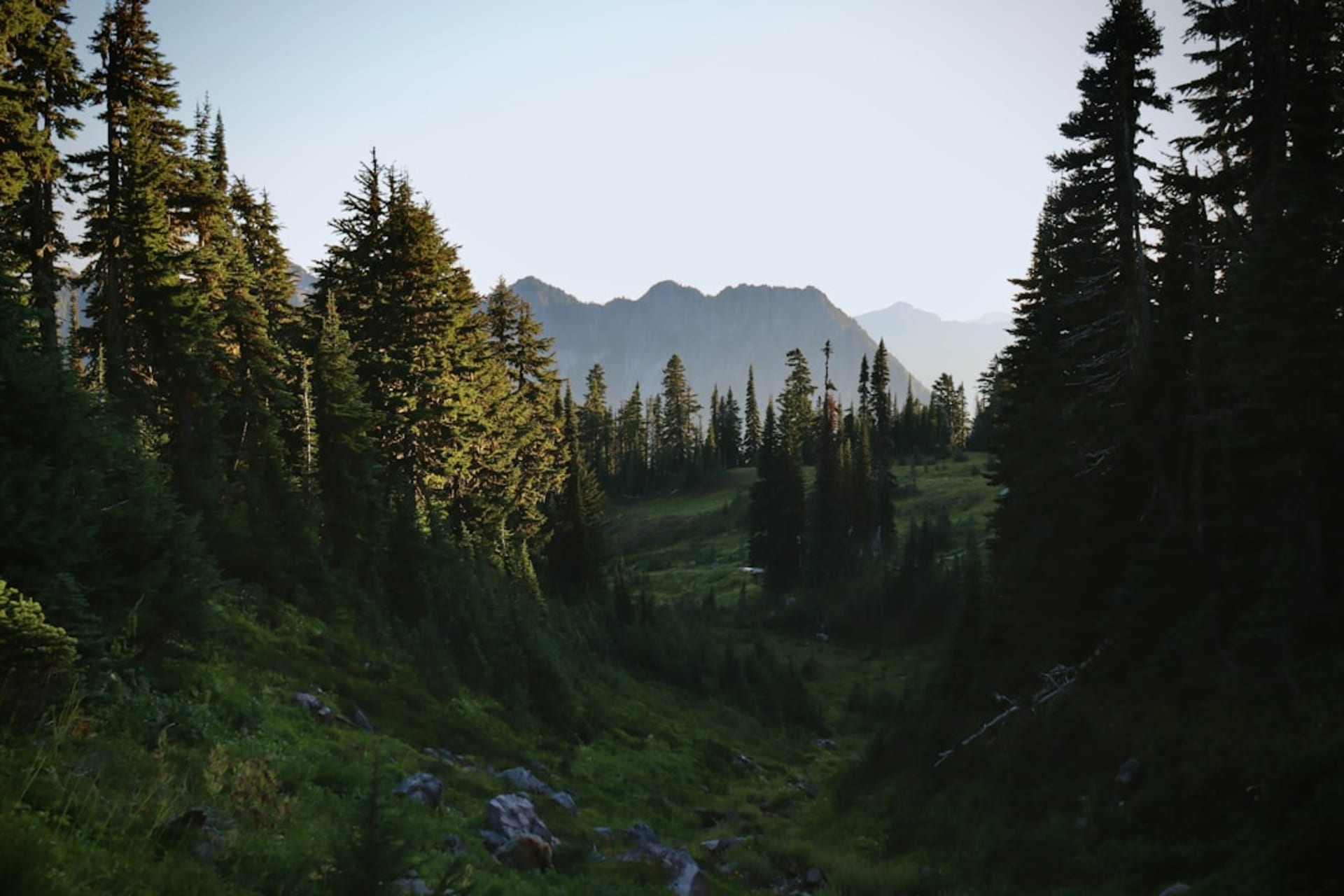
Mount Rainier
"The clouds tore open for ten minutes, the mountain appeared, and I forgot to take a single photo."
For two days the mountain refused to show itself. Lia and I had driven up from Seattle in that famous Pacific Northwest drizzle, and Rainier stayed hidden behind a wall of grey, a rumour more than a peak. Locals talk about the mountain being “out” as if it were a shy animal, and I began to think we’d never see it. Then on the third morning, hiking up at Paradise, the cloud simply peeled back like a curtain — and there it was, so much bigger and closer and whiter than I had let myself imagine, that I actually laughed out loud. It fills the sky. Photographs lie about it entirely.
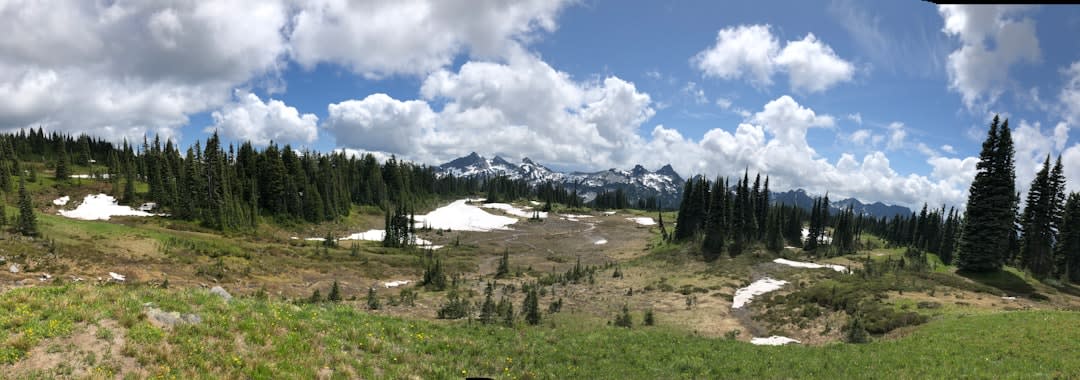
The Meadows at Paradise
The heart of the park, and the wonderful irony, is a place literally named Paradise, a high shoulder of the mountain where subalpine meadows explode into wildflowers through July and August. We walked the Skyline Trail loop through fields of lupine and paintbrush and pale avalanche lilies, the glaciers hanging directly above us, close enough that we could hear them cracking and settling in the sun. A marmot whistled from a rock. Lia knelt among the flowers to breathe them in, and I stood there feeling absurdly, uncomplicatedly happy, the mountain looming over the whole scene like something out of a dream.
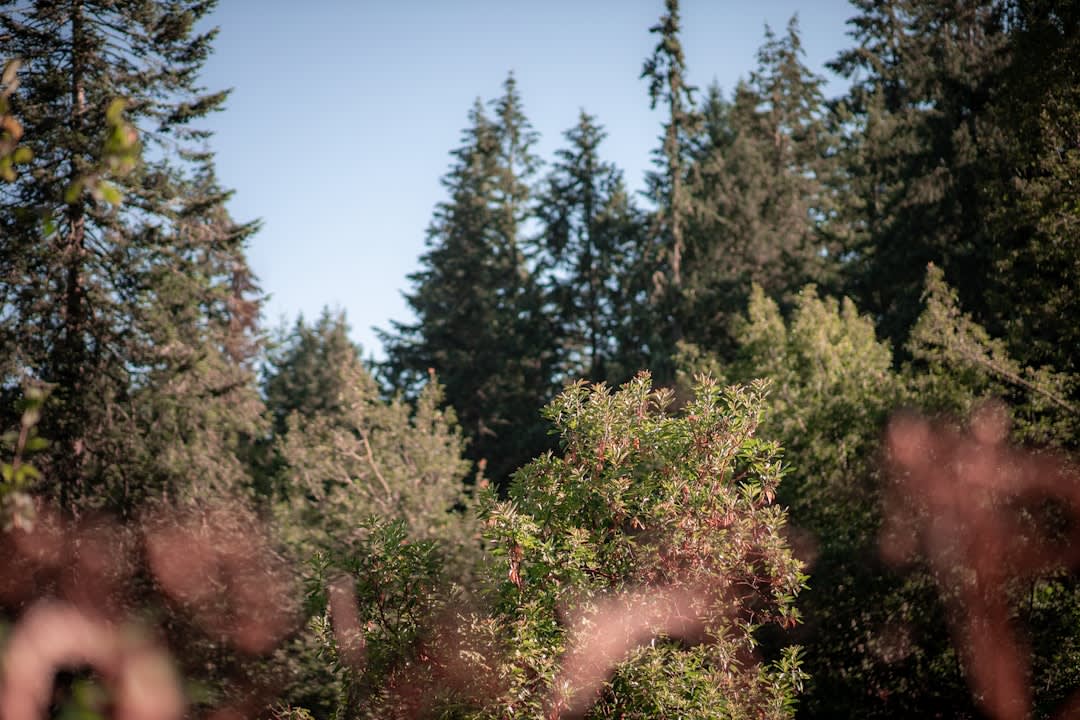
Old-Growth Forest and Grove of the Patriarchs
Lower down, the park is all deep green forest, and we spent an afternoon among trees that were old when Europe was still building cathedrals. At the Grove of the Patriarchs, a footbridge over the milky Ohanapecosh River leads to an island of ancient Douglas firs and red cedars, some over a thousand years old, their trunks so wide the two of us together couldn’t reach around them. The light comes down soft and green through the canopy, the river runs cold and pale with glacial silt, and the whole grove smells of wet earth and cedar. We barely spoke. Some places ask you to be quiet.
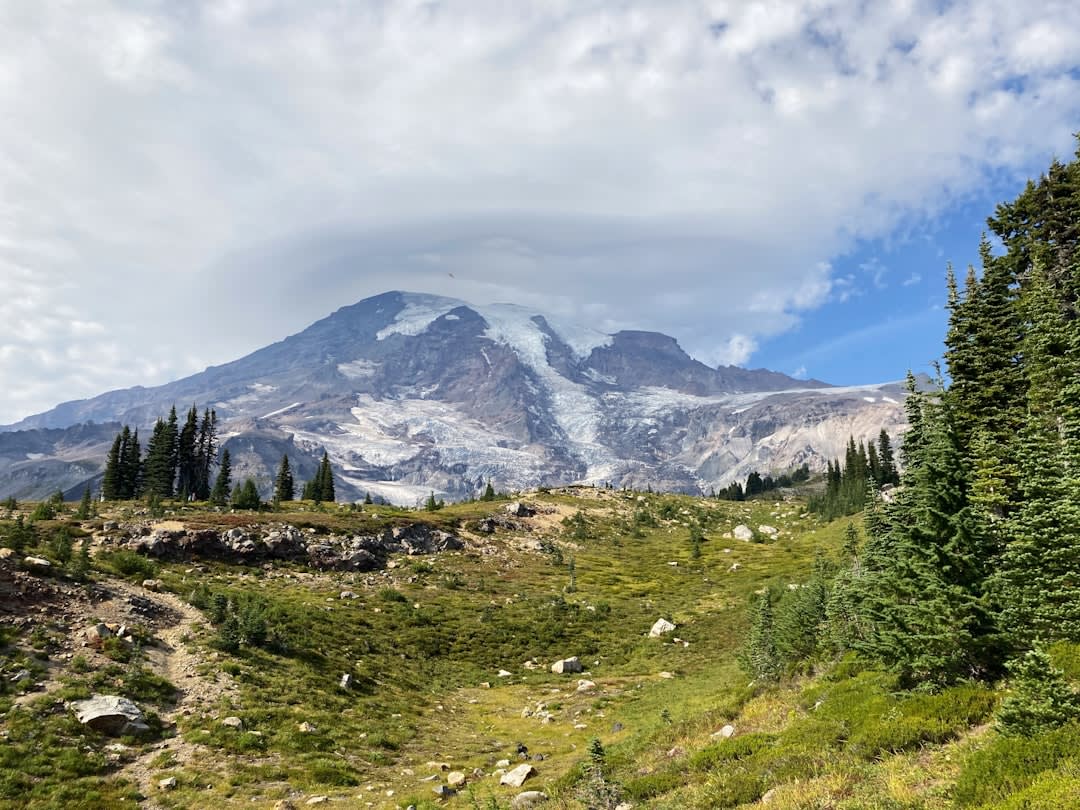
Sunrise and the High Country
For our last day we drove to Sunrise, the highest point you can reach by car, on the drier northeast side of the mountain. Up here the air is thin and the meadows give way to open tundra, and Rainier stands so near you feel you could reach out and touch the Emmons Glacier pouring down its flank. We hiked out along the ridge as the afternoon light turned the snow to gold and pink, deer grazing unbothered a few metres off the trail. Lia said it was the closest she’d ever felt to a mountain without climbing one, and I knew exactly what she meant. You don’t conquer Rainier. You just get to stand near it, briefly, and be grateful.
Getting There
Mount Rainier sits about two hours southeast of Seattle by car, and the Nisqually entrance in the southwest corner stays open year-round, giving access to Paradise. The Sunrise road on the northeast side only opens in summer, so check ahead. There is no public transport worth relying on; you’ll want your own vehicle. We based ourselves in the tiny town of Ashford just outside the Nisqually gate, though the historic Paradise Inn inside the park is worth every penny if you can book it. Come prepared for all four seasons in a single day — this mountain writes its own weather.