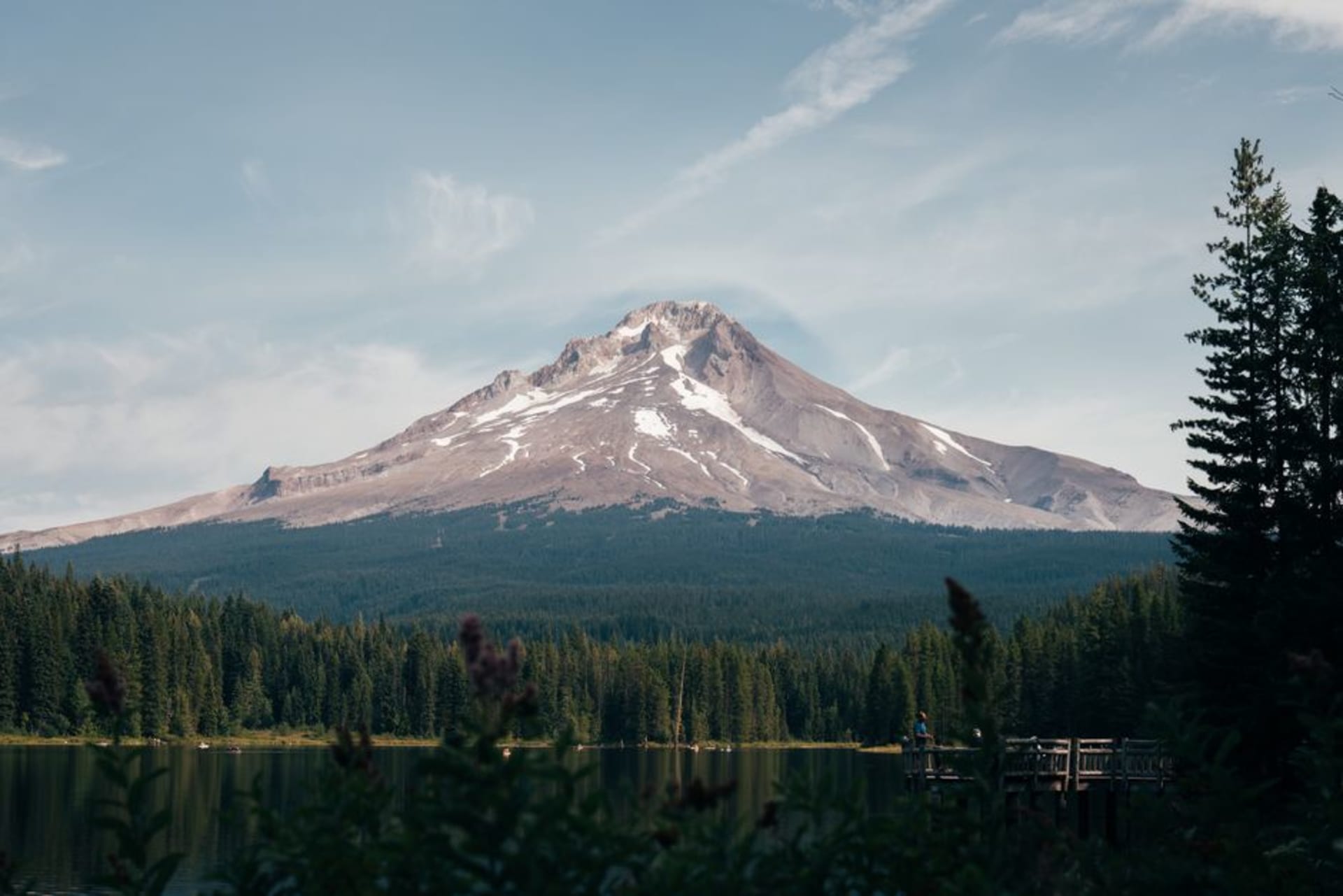
Mount Hood
"It appeared between two firs on the drive up, and Lia braked without meaning to — some things stop the foot before they reach the brain."
We had been driving through forest so thick the sky was rationed out in strips, and then the road bent and the trees stepped aside and there it was: eleven thousand feet of white cone hanging above the green like something the land had exhaled. Lia braked without meaning to. There was no view point, no sign, nothing to justify stopping — just the mountain, suddenly and entirely present, and the two of us sitting in the middle of a forest road with the engine ticking, not talking. In France we have mountains that reveal themselves slowly, foothill by foothill. Hood does not do this. Hood simply arrives.
Timberline and the Lodge
We wound up to Timberline Lodge at six thousand feet, where the trees give out and the mountain gets serious. The lodge is a Depression-era thing, built by hand in the 1930s — huge stone hearths, hand-forged iron, timber beams the size of boats. It smells of woodsmoke and wet wool and coffee. We sat by the fire with the wind hammering the windows while, outside, skiers came down a glacier that never fully melts. That is the strange thing about Hood: you can ski here in July, in a T-shirt, on snow that has been there since before the lodge. Lia bought a postcard she never sent and I drank a coffee I didn’t need, both of us reluctant to leave the warmth for the white glare outside.
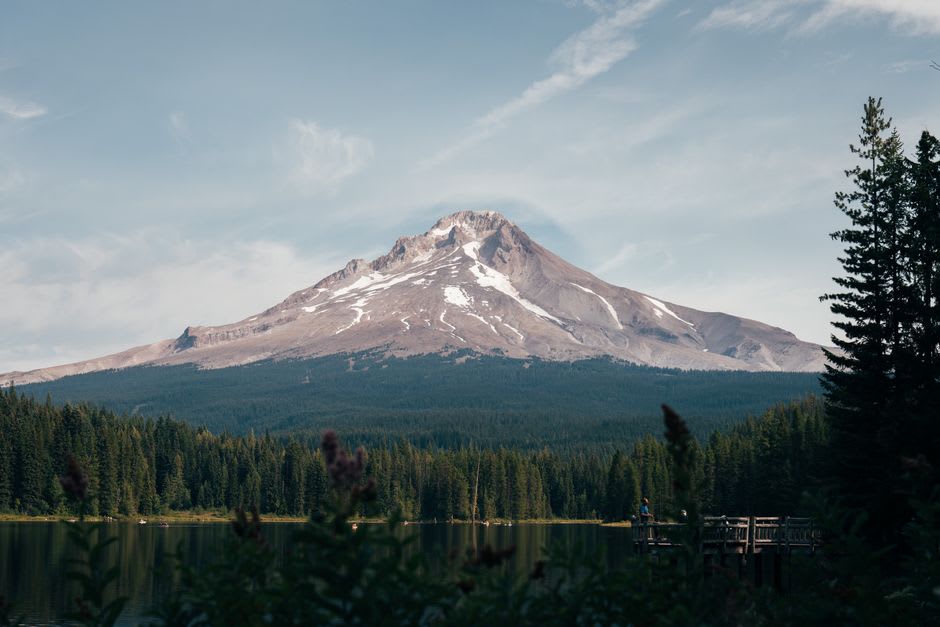
Trillium Lake and the Reflection
Everyone photographs the mountain from Trillium Lake, and I understand exactly why, and I refuse to be ashamed of joining them. We walked the easy loop around the water in the early evening, when the wind finally dropped and the lake went to glass. The whole mountain lay in it, doubled, perfect, upside down among the reeds — and when a fish rose the reflection shivered into a thousand pieces and then slowly reassembled itself, as if reconsidering. A family was grilling something on the far shore and the smell drifted across the water. We stayed until the color drained out of the snow and the first star came out over the summit.
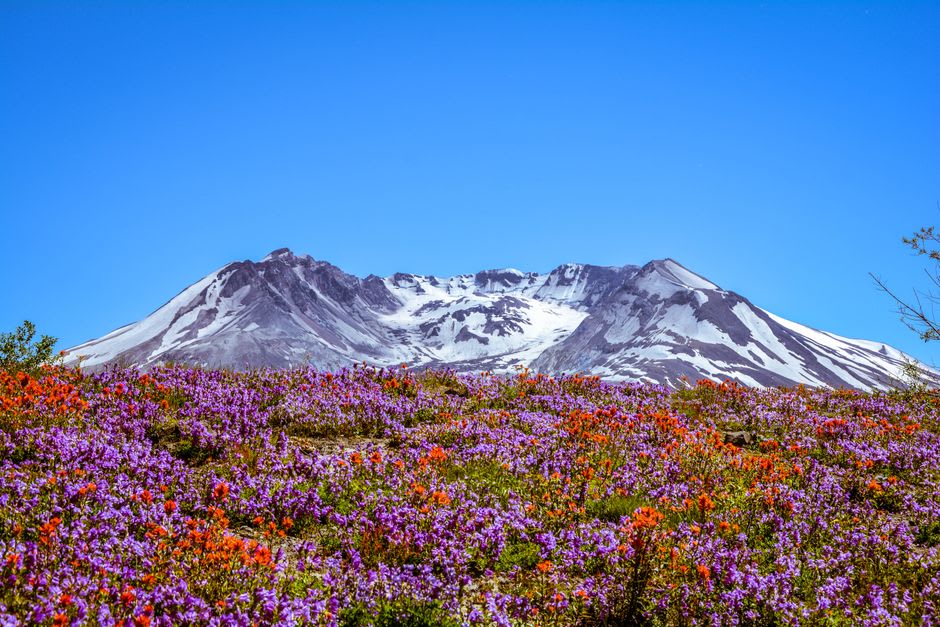
The Fruit Loop Below
Down off the mountain, on the eastern flank toward Hood River, the land softens into orchards. They call it the Fruit Loop — a country road strung with farm stands, cideries, and pear trees marching in rows toward the volcano. We stopped at a stand where a woman sold us a bag of cherries and a jar of something she made from lavender, and we ate the cherries leaning on the truck with Hood filling the whole windshield. There is a particular pleasure in eating fruit grown in the shadow of a mountain that could, geologically speaking, erase the whole valley. Nobody here seems worried. The pears keep coming.
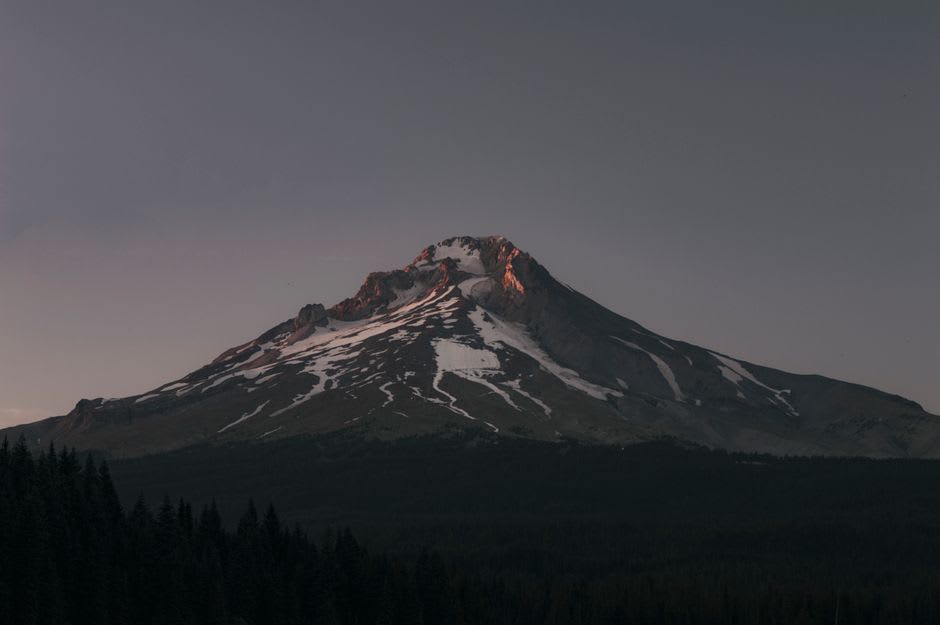
Getting There
Mount Hood is about an hour and a half east of Portland on US-26, an easy and gorgeous drive. Timberline Lodge sits at the end of a paved spur off the highway; Trillium Lake and the orchards of the Fruit Loop are short detours nearby. Summer brings wildflowers and warm hiking; winter turns the whole massif into a ski region. Bring layers whatever the season — the parking lot can be sun and the summit blizzard on the same afternoon.