Mono Lake
"The towers rose out of the water like something the earth had been growing in secret, and forgotten to hide."
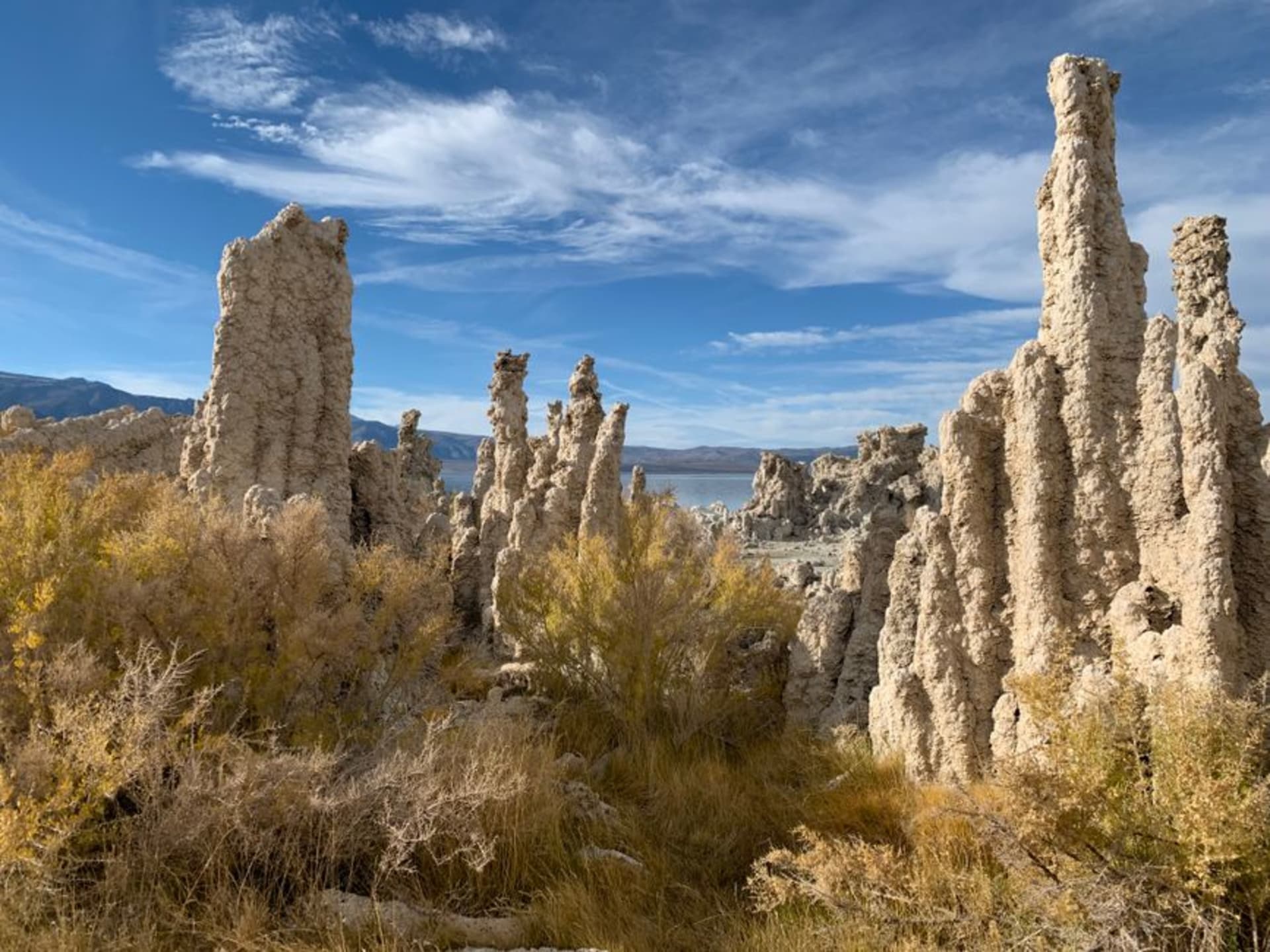
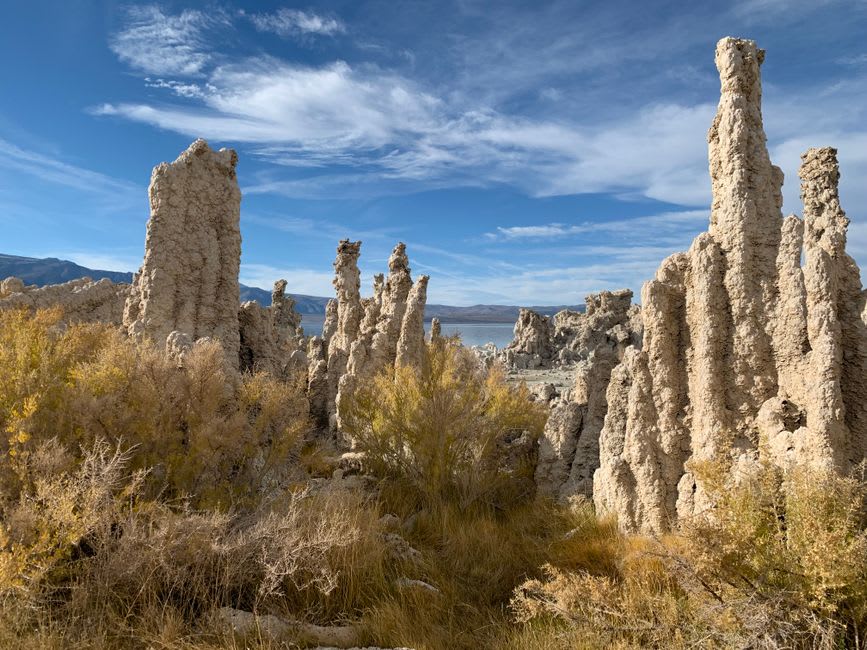
We drove down out of the Sierra through Tioga Pass with the light failing, and Mono Lake appeared below us as a sheet of pewter set in a bowl of desert, unnaturally still. By the time we reached the South Tufa shore the sun was nearly gone, and what it left behind stopped us cold: dozens of pale limestone towers standing in and out of the water, knobbled and porous, glowing faintly pink. They looked less like rock than like something grown — coral, or bone, or the drip-castles children build on a beach. Lia walked ahead of me between them, her footsteps loud on the crust, and the whole place was so quiet we could hear the hum of a million brine flies along the shoreline. It felt less like arriving somewhere and more like trespassing on a scene that predated us by aeons.
The Tufa Towers
The tufa is the reason people come, and up close it is stranger than any photograph prepares you for. These towers form underwater, where freshwater springs bubble up through the alkaline lake and calcium meets carbonate and slowly, over centuries, builds spires of limestone. They only became visible when the lake level dropped — much of it drained off decades ago to slake the thirst of distant Los Angeles — and so this ghostly forest of stone is partly a natural wonder and partly a scar. We wandered the South Tufa boardwalk and shoreline at dusk as the towers threw long shadows, some of them taller than we were, their surfaces pocked and coral-like to the touch. A photographer had set up a tripod and stood motionless, waiting for the alpenglow to catch the Sierra behind. We waited with him. It came, and everyone went quiet.
A Sea of Flies and Gulls
Mono Lake looks lifeless and is anything but. Nothing with a backbone can live in water this salty and alkaline, but what does live here does so in staggering numbers. The shoreline was black and shifting with alkali flies — harmless, and they part around your feet in a soft wave as you walk, a phenomenon Mark Twain wrote about with disgust and I found oddly delightful. Trillions of brine shrimp cloud the water each summer, and together they feed one of the great bird spectacles of the West: nesting gulls, phalaropes spinning on the surface to stir up food, and grebes by the tens of thousands staging here on their migration. We sat on a rock and watched the birds work the water in the last light, the lake so still it doubled every one of them.
Floating and the Morning After
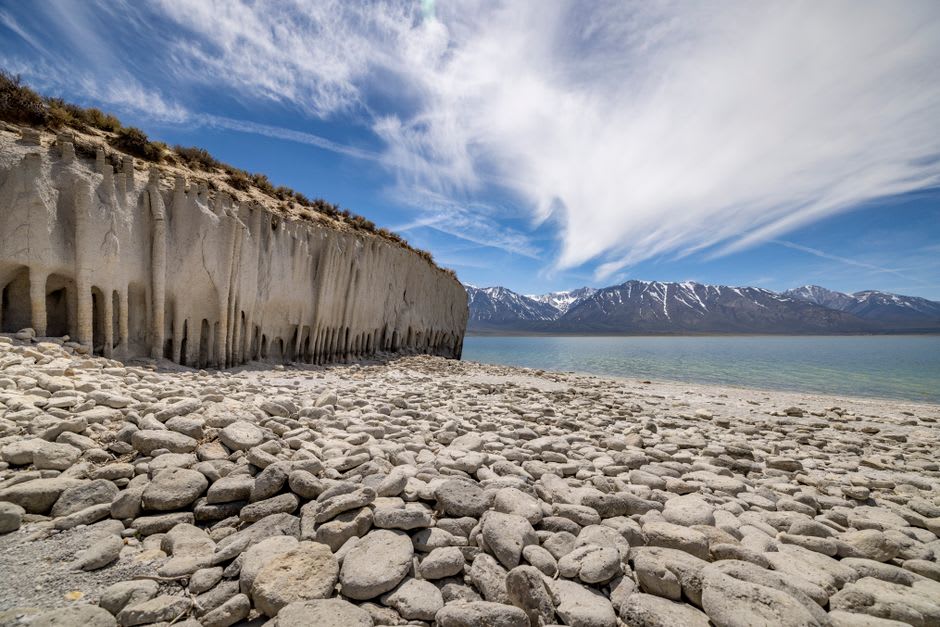
The next morning we came back early, when the lake was glassy and cold and the tufa stood mirrored in perfect stillness. On a whim we waded in from the sandy stretch near Navy Beach — the water is so dense with salt and soda that you cannot sink, and I lay back and floated with absurd ease, arms out, staring at a cloudless desert sky while Lia laughed at how ridiculous I looked bobbing there like a cork. The water left our skin slick and faintly soapy, the way the old accounts describe. Afterward we sat drying on the warm sand, watching the towers change color as the sun climbed, and I thought that of all the strange places the Sierra hides in its rain shadow, this quiet, salty, ancient lake might be the one I’d most want to return to.
Getting There
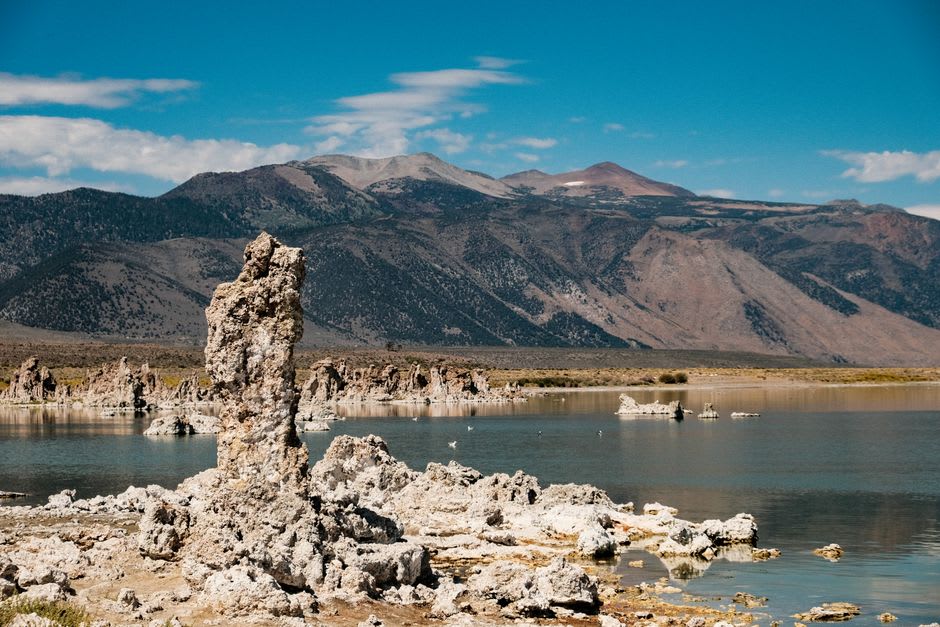
Mono Lake lies just east of Yosemite, beside the town of Lee Vining on Highway 395 in California’s Eastern Sierra. In summer you can reach it directly from Yosemite Valley over Tioga Pass, a spectacular drive; the pass closes with snow from roughly November into spring, when you must approach from the north or south along 395. Start at the Mono Basin Scenic Area Visitor Center above town, then drive to the South Tufa reserve for the best concentration of towers — sunrise and sunset are magic there. Bring water and sun protection, since the basin is high desert, and wear shoes you don’t mind getting salty if you plan to float.