Minneapolis
"Minneapolis taught us that a city can be organised entirely around its lakes and be all the better for it."
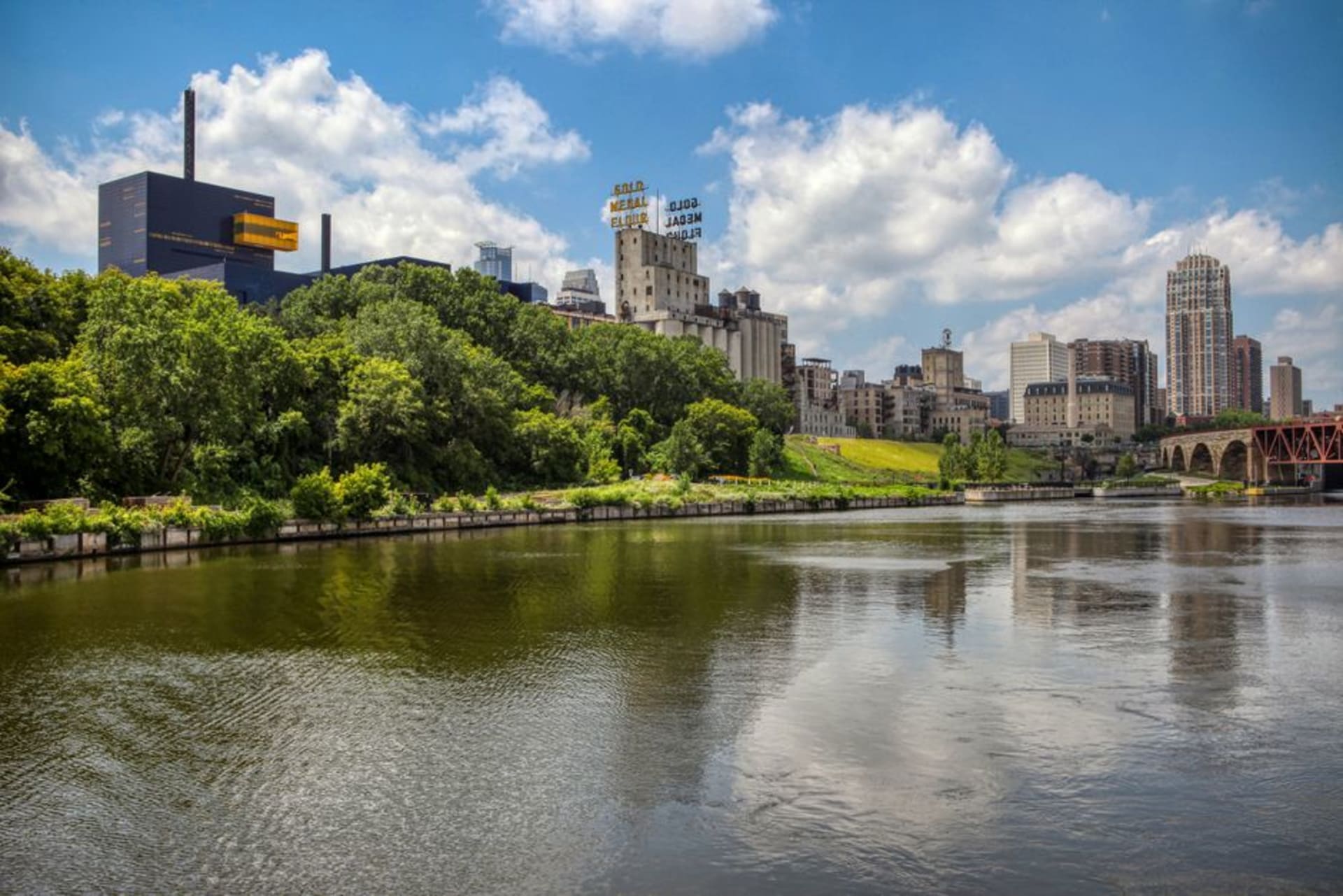
We arrived in Minneapolis on a bright, sharp morning and within an hour were walking the shore of Bde Maka Ska, one of the chain of lakes that sits right inside the city like a string of blue beads. Joggers, paddleboarders, families with strollers, a man playing saxophone to nobody in particular — the whole population seemed to have decided, collectively, to be outside. Lia turned to me and said this did not feel like any American city we had visited, and she was right. Minneapolis wears its northern calm openly. It is a place that has made peace with its long winters by squeezing every drop out of the warm months.
The Chain of Lakes
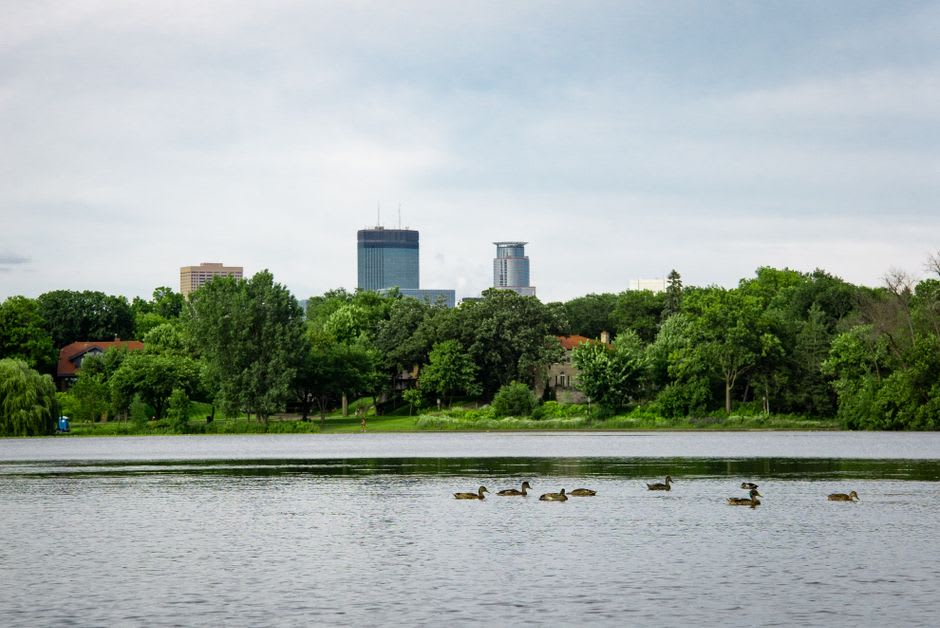
The lakes are the soul of Minneapolis, and the best way to understand the city is to walk or cycle between them. We rented bikes and followed the trail linking Bde Maka Ska to Lake Harriet, where a small ornamental bandshell hosts free concerts and sailboats lean across the water. The paths are separated for cyclists and walkers — a small civic kindness that told me a lot about how this city thinks. We stopped at a lakeside café, watched a heron stalk the shallows, and let the afternoon dissolve. It is rare to find wild-feeling water so completely woven into an urban grid, and Minneapolis treats it as the ordinary birthright it has quietly become.
The riverfront and the old mills
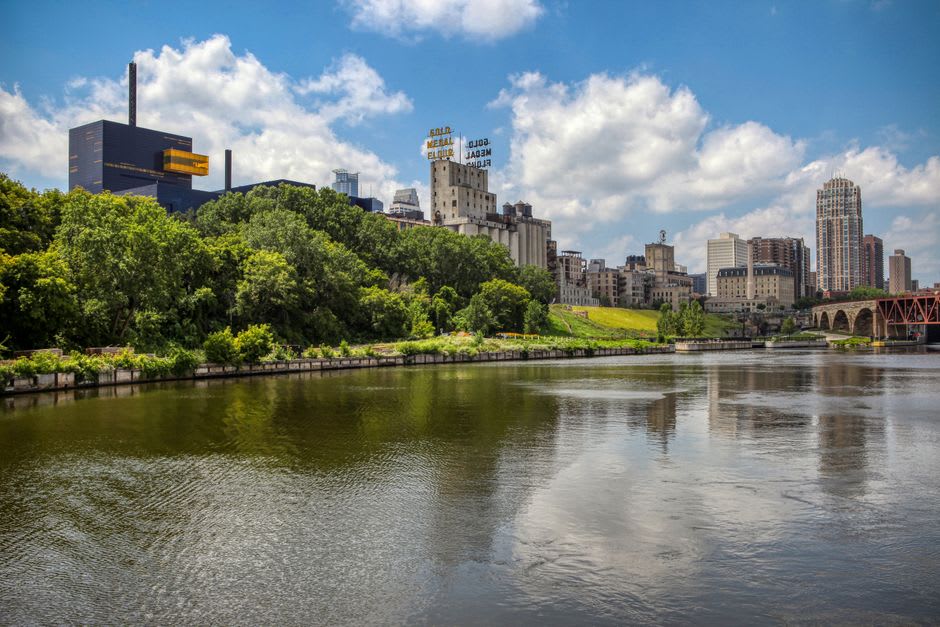
The Mississippi runs through the heart of Minneapolis, and near the Stone Arch Bridge you can read the city’s entire industrial history in ruined limestone. This was once the flour-milling capital of the world, and the Mill City Museum is built inside the burnt-out shell of the largest mill, its old machinery and grain elevators preserved like relics. Lia and I walked the graceful curve of the Stone Arch Bridge at golden hour, the St. Anthony Falls churning white below us and the downtown towers catching the last light. A folk trio busked at the far end. It was one of those evenings where a city seems to be actively trying to be beautiful, and succeeding without any apparent effort.
Art, theatre, and the indoor city
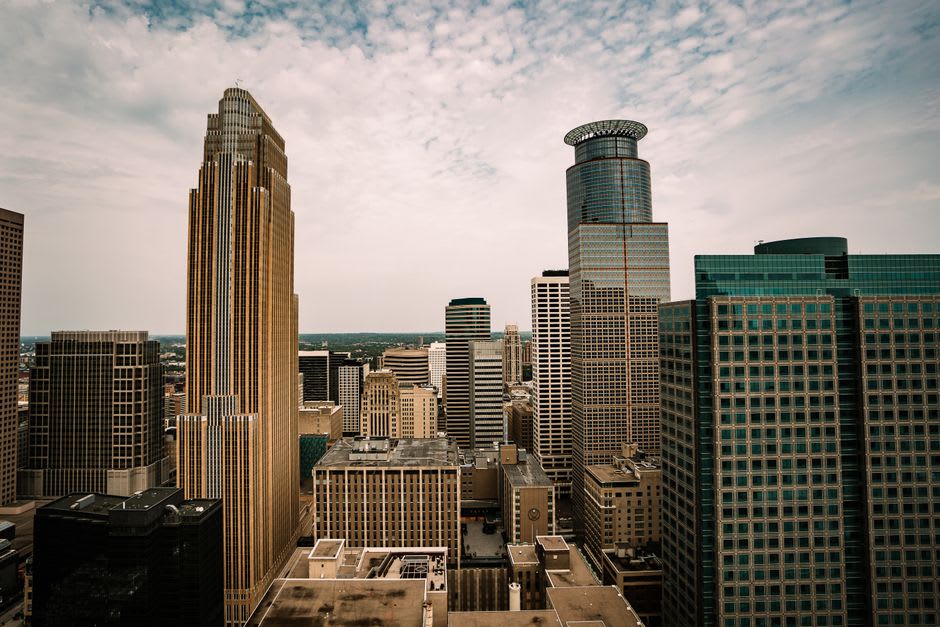
For a city its size, Minneapolis takes art almost startlingly seriously. The Walker Art Center and its adjoining Sculpture Garden anchor a scene that rivals cities twice as large — we spent a slow afternoon among the sculptures, ending, inevitably, at the giant Spoonbridge and Cherry that has become the city’s cheerful emblem. The Guthrie Theater juts out over the river in cobalt-blue steel, its cantilevered “Endless Bridge” offering a free view worth the trip alone. And when the wind turned cold, we ducked into the skyway system — an eleven-kilometre network of enclosed second-floor bridges linking downtown blocks, a whole climate-controlled city above the streets. It is deeply strange and entirely sensible, which is Minneapolis in a phrase.
Getting There
Minneapolis–St. Paul International Airport sits between the twin cities and connects to downtown Minneapolis by the METRO Blue Line light rail in around twenty-five minutes — clean, cheap, and effortless with luggage. Minneapolis is also a natural hub for Midwest road trips, and Amtrak’s Empire Builder stops here on its long haul between Chicago and the Pacific Northwest. In the city, the lakes and riverfront are best explored by bike — rentals are everywhere — while the light rail and the famous winter skyways handle everything else. We happily skipped a car for our whole stay.