Marfa
"In Marfa the art doesn't hang on walls — it lives in the landscape and the light."
There are towns that wear their strangeness lightly, and then there is Marfa — a former railroad depot sitting at 1,500 meters in the Chihuahuan Desert, population around 1,800, where a New York sculptor arrived in the 1970s and decided the land itself was the gallery. I had been skeptical of Marfa’s mythology long before I got there. Too curated, I thought. Too art-world precious. I was wrong before I even reached the city limits.
The Weight of Empty Space
The drive in on US-90 does something to the mind. The horizon pulls away from you in every direction, the mountains at Presidio a blue smudge that never seems to get closer, the roadside grass silver-bleached and ringing faintly in the wind. By the time we turned onto Highland Avenue and found a parking spot near the old Presidio County Courthouse — that improbable pink dome rising over one-story storefronts — I understood why Donald Judd couldn’t leave. The desert here has the same quality as his concrete boxes: an insistence on being exactly what it is.
The Chinati Foundation holds Judd’s permanent installations in converted artillery sheds on the edge of town. Walking through those aluminum boxes arranged in the long light of afternoon — one hundred of them, each identical, each catching the sun at a slightly different angle — felt less like looking at art and more like being inside a sustained thought. Lia stood at the far end of one shed for a long time without speaking. I understood.
A Town of Useful Surprises
Marfa’s most honest pleasures are smaller than the galleries. Breakfast at Squeeze Margarita & Burger on San Antonio Street: migas folded with jalapeño and cotija, eaten at a plastic table while a cattle dog watched from the sidewalk with professional patience. The smell of creosote after a brief afternoon rain, resinous and ancient, drifting through the open window of our room at the Thunderbird. The way every conversation at Frama — the coffee counter on Highland — eventually turns to water rights or light pollution or someone’s upcoming residency.
The unexpected discovery came on our second evening. We had heard about the Marfa Lights, the unexplained orbs that appear southeast of town on US-67, and had parked at the official viewing area half-expecting disappointment. What I hadn’t expected was to feel genuinely unsettled — three pale lights drifting and separating against the Chinati Mountains in the dark, offering nothing in the way of explanation and apparently uninterested in providing one.
On the Ground
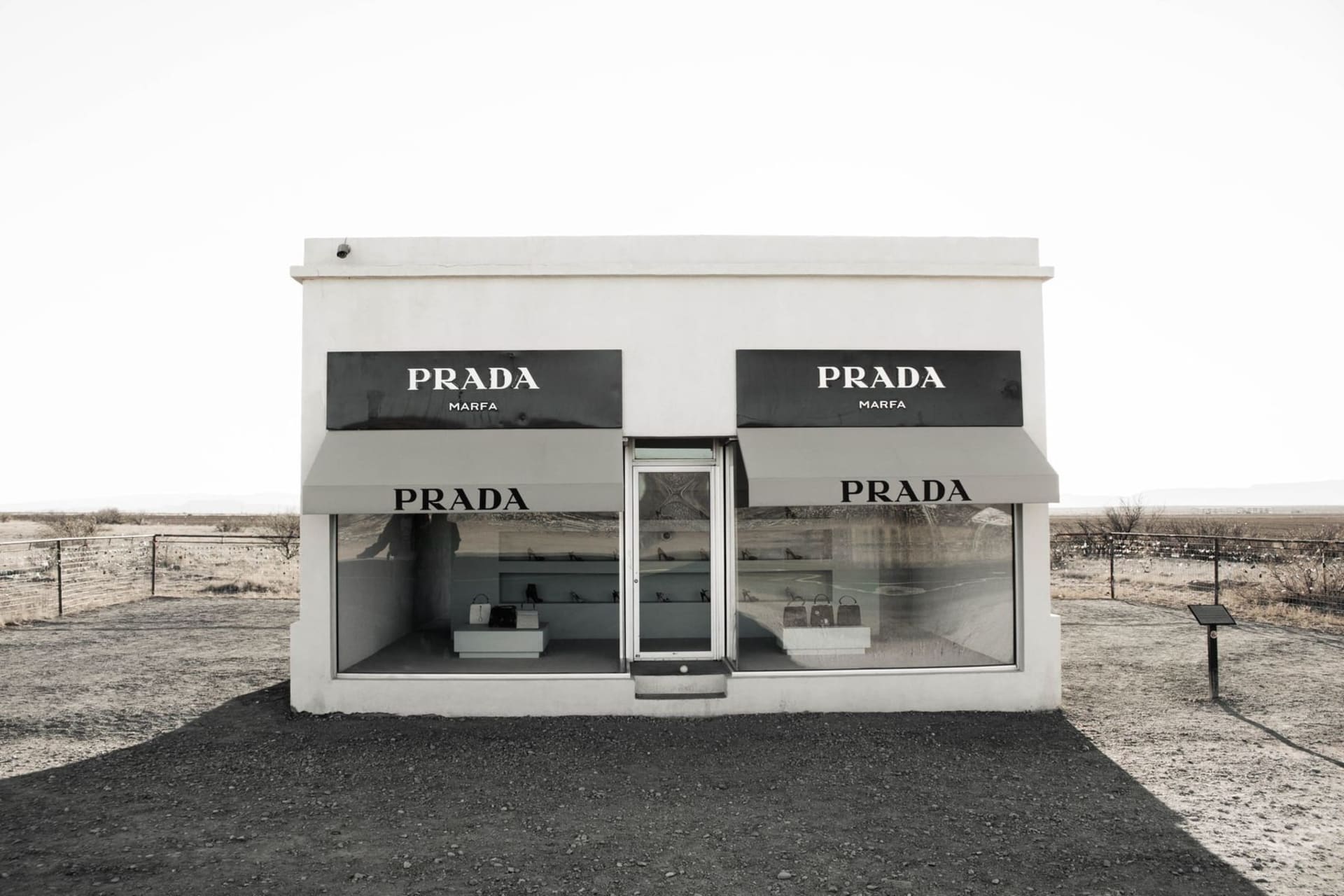
Marfa rewards slow mornings and long drives. The Prada Marfa installation on US-90 toward Valentine is worth the fifteen-minute detour — absurd, precise, and oddly moving standing alone in the creosote flats.
When to go: March through May brings mild temperatures and open skies before the summer heat arrives; October and November offer the same clarity with cooler nights and the particular amber light that makes the desert look painted.