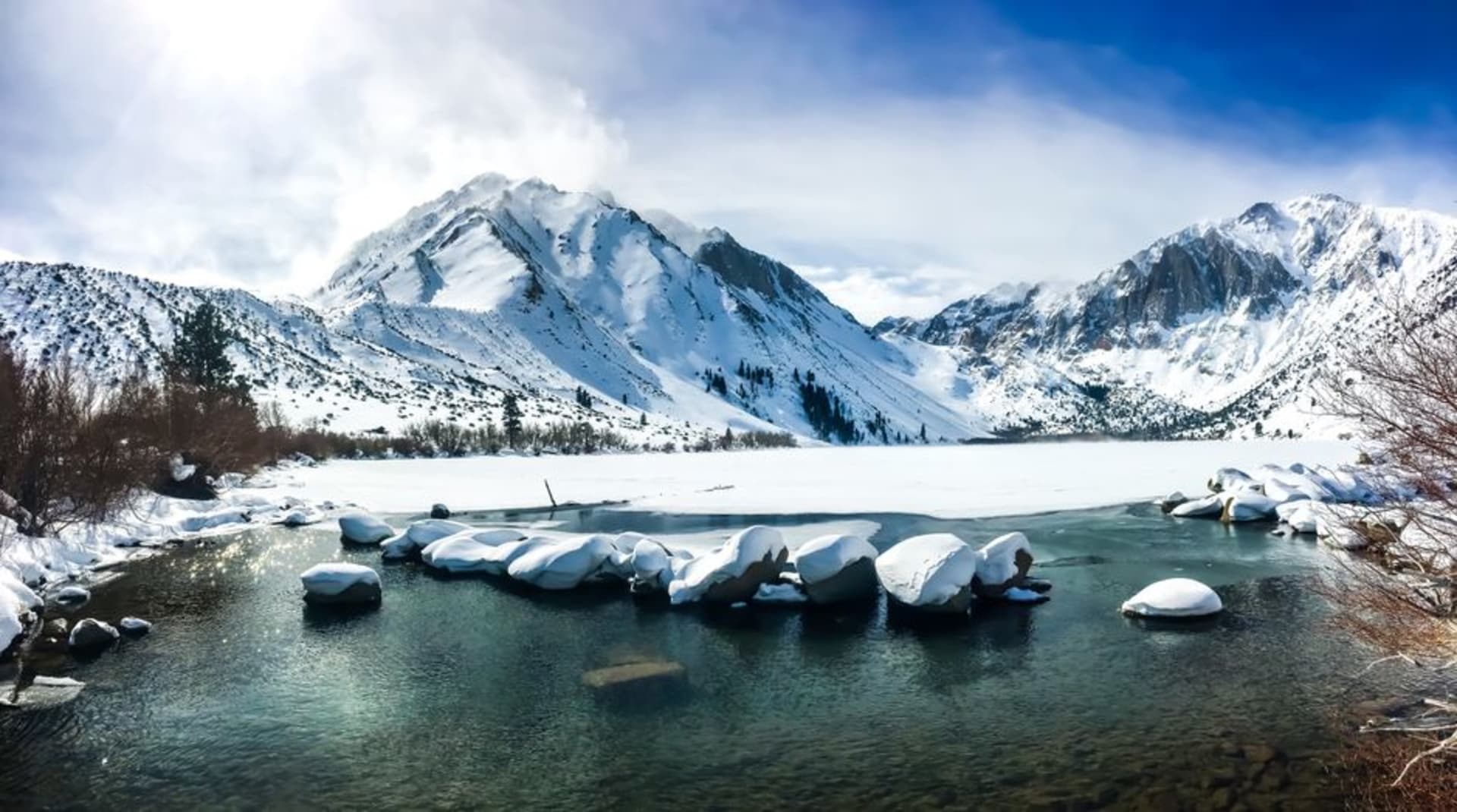
Mammoth Lakes
"Everything here sits a little too high, and your body knows it before your eyes do."
We felt Mammoth before we saw it. Driving up Highway 395 through the long dry valley on the eastern side of the Sierra, the road kept climbing, and by the time we reached the town at nearly 8,000 feet, Lia and I were both slightly breathless walking from the car to a coffee shop. It’s the altitude, of course. But it also felt like the landscape itself was pitched at a higher key up here — bigger, sparser, the light harder and cleaner than anywhere on the coast.
The Lakes That Give the Town Its Name
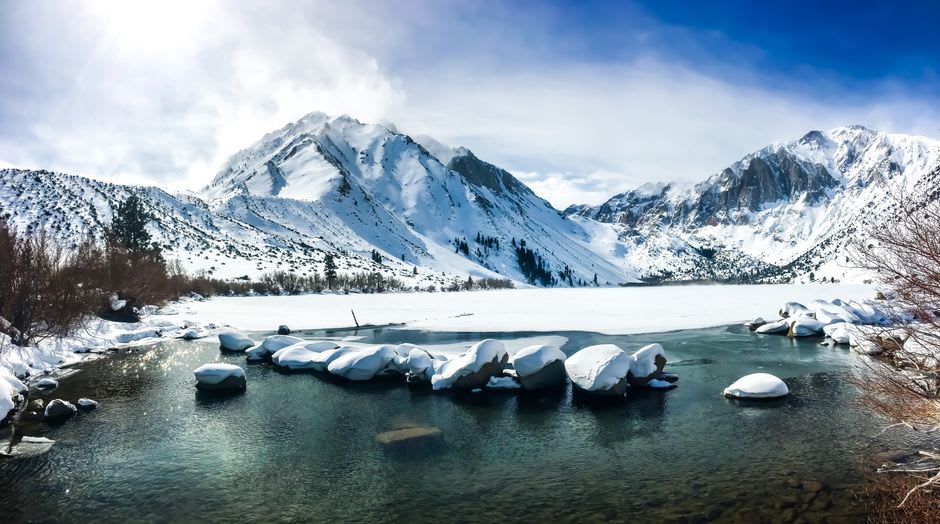
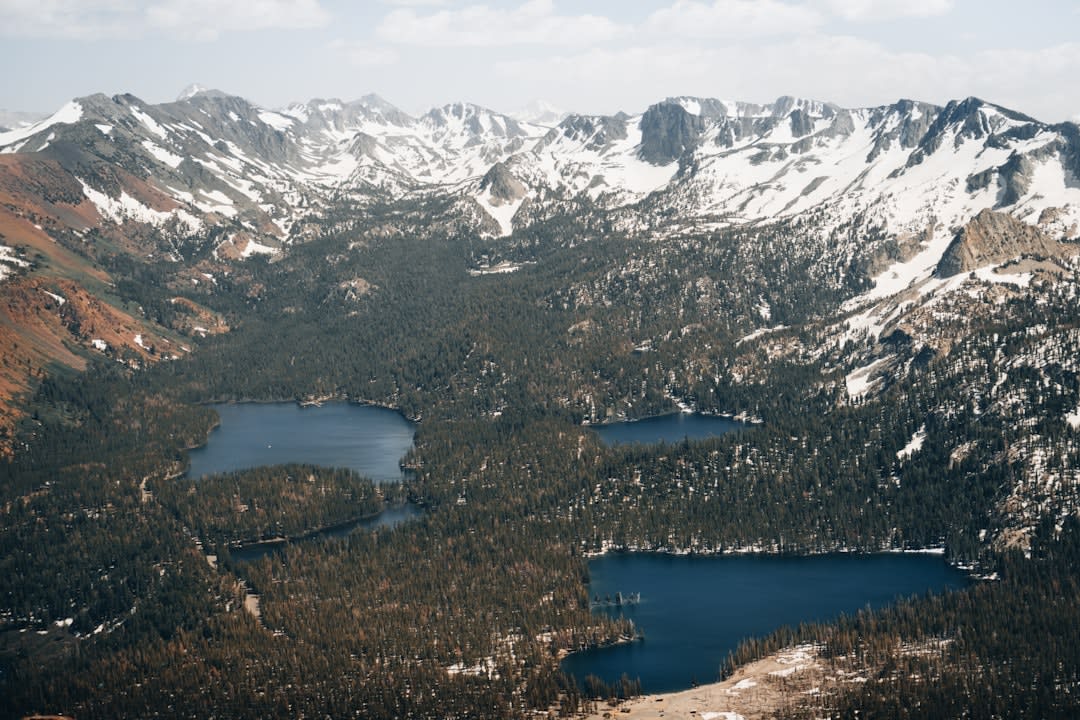
The Mammoth Lakes Basin is a short drive up from the town, a chain of alpine lakes strung through the pines beneath jagged peaks. We spent a whole day just moving between them — Twin Lakes, Lake Mary, Lake George — each one a different shade of cold blue-green, ringed with granite and reflecting the sky so cleanly it doubled the mountains. At Twin Lakes there’s a small waterfall spilling between the two basins, and we sat on a log and watched it for longer than either of us would admit.
The air smelled of warm pine pitch and cold water at the same time, which is a very specific high-Sierra smell that I now associate entirely with happiness. A family was fishing off a wooden dock. Somewhere a woodpecker was working a dead trunk. We ate the sandwiches we’d brought and did absolutely nothing productive, and it was one of the best afternoons of the trip.
Down Into Devils Postpile
A few miles from the ski area lies one of the strangest things I’ve seen in the Sierra — Devils Postpile, a cliff of dark basalt columns so regular they look manufactured. They formed when a lava flow cooled and cracked into these tall hexagonal posts, and standing at the base of them you feel the vertigo of a thing that shouldn’t be natural but is. We climbed the short trail to the top, where the tops of the columns are polished flat by ancient glaciers into a tiled floor, like a courtyard laid by a mad geometer.
From Postpile we walked on to Rainbow Falls, where the San Joaquin River drops over a lip of the same volcanic rock and throws up spray that, in the late-morning sun, held a genuine rainbow at its base. Lia stood in the mist grinning. This whole region sits on a still-restless volcanic system, and you feel that history everywhere — in the black rock, the hot springs, the sense that the ground has a temper.
Soaking Under the Stars
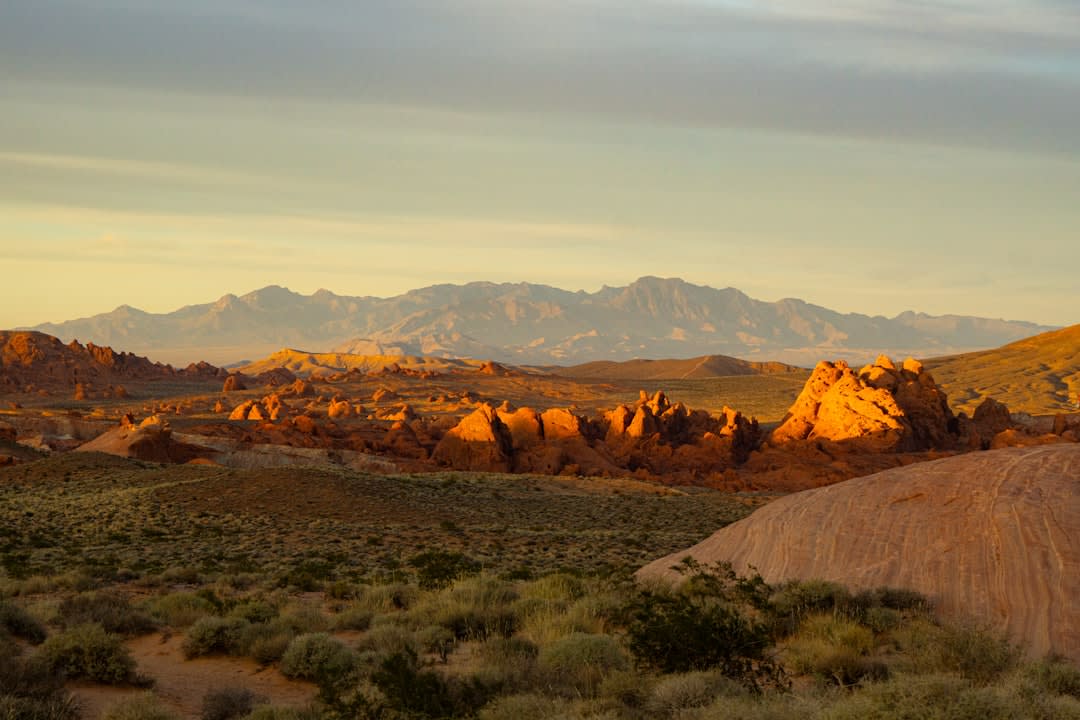
Our last evening, we did the thing everyone quietly tells you to do in Mammoth: we drove out to the natural hot springs scattered across the sagebrush flats near the airport, south of town. There are a handful of them, some rough and some improved, all fed by the same geothermal heat that built the whole landscape. We found one just as the sun was going down, a simple pool of hot mineral water in the middle of a vast open plain, the Sierra crest turning pink to the west.
We sat in the water as the sky went from gold to violet to black, and the stars came out with a clarity you only get at altitude, thick and close and uncountable. It was cold enough outside the water that our shoulders steamed. Somewhere far off a coyote started up. Neither of us spoke much. It was, I think, the purest single hour of the whole Eastern Sierra for me.
Getting There
Mammoth Lakes sits along Highway 395 on the eastern side of the Sierra, and how you reach it depends heavily on the season. In summer, the most spectacular approach is over Tioga Pass through Yosemite from the west — but that road closes with the first heavy snow and often doesn’t reopen until late spring. The rest of the year you come up 395 from the south (about five hours from Los Angeles) or the north from Reno (roughly three hours). There’s a small airport in Mammoth with limited seasonal flights, but most visitors drive. A car is essential for reaching the lakes basin and the hot springs, though a free town trolley and the summer shuttle to Devils Postpile help once you’re settled. Come in summer for the lakes and trails; come in winter for some of the deepest, most reliable snow in California.