Mammoth Cave
"Four hundred miles mapped, the ranger said, and they find more every year. Lia asked how it ends. It doesn't. Not yet."
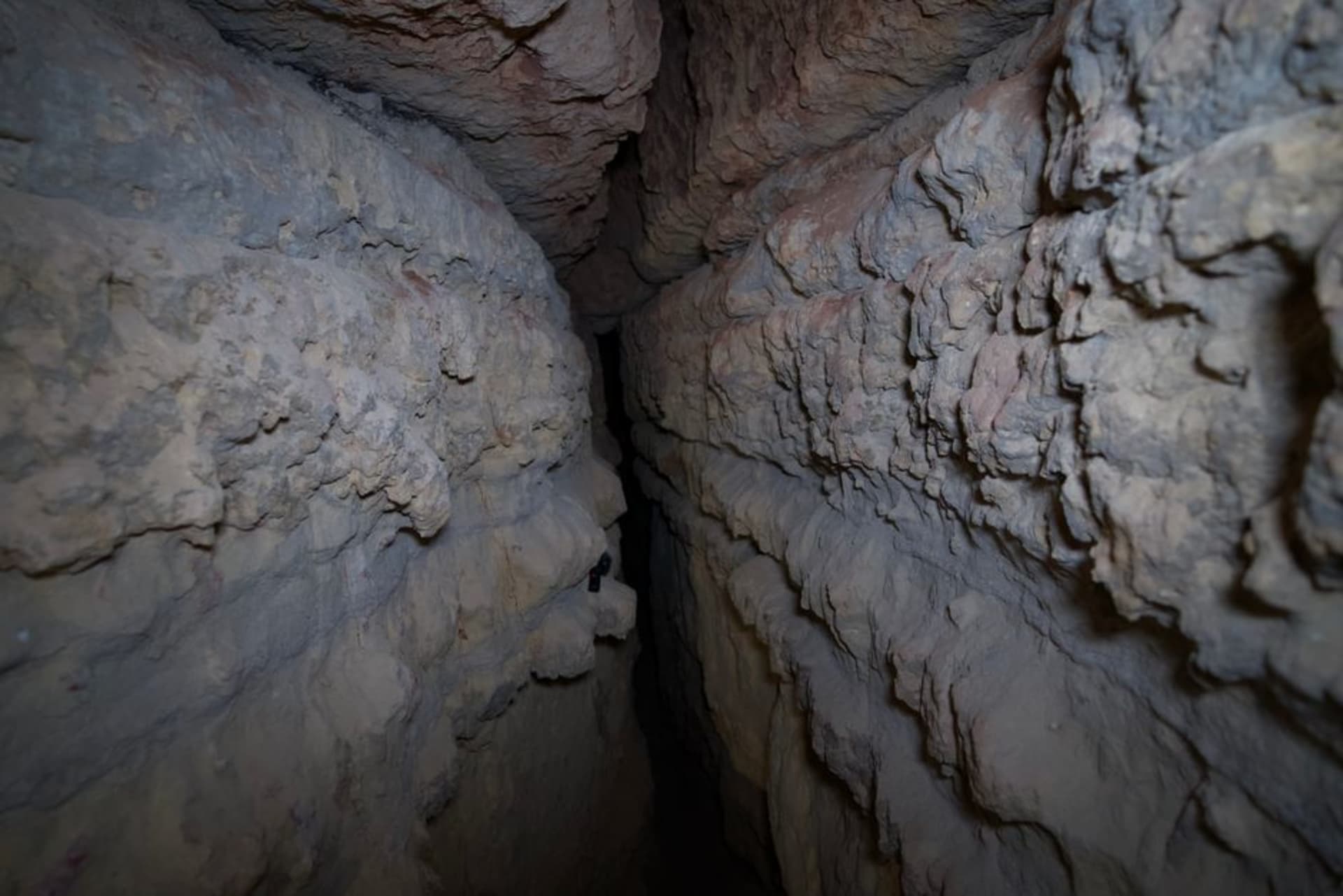
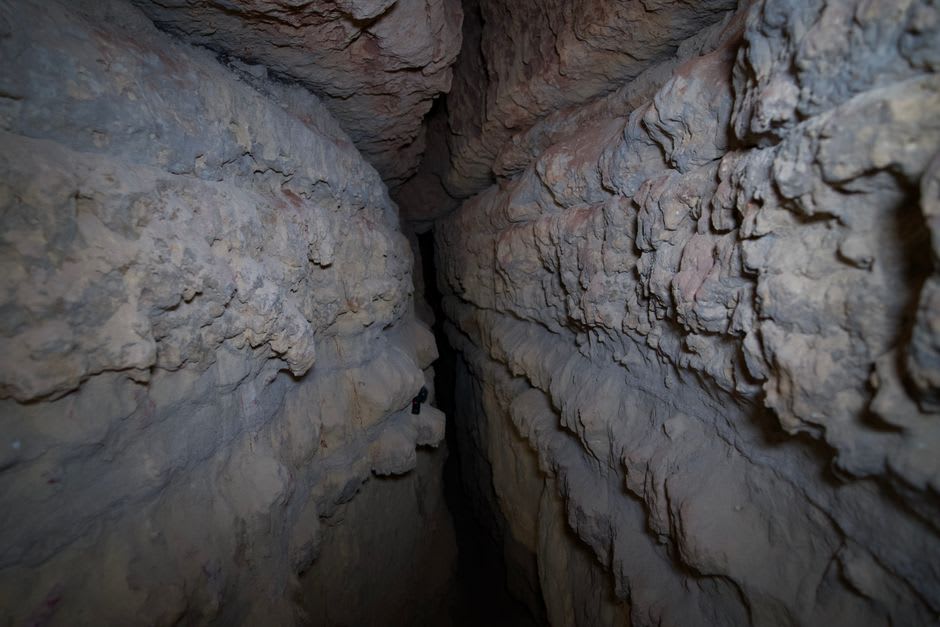
We came up out of the wet Kentucky heat into the shade of the Historic Entrance, where a stream of cold air pours out of the hillside so strongly you feel it before you see the cave mouth — the whole underworld exhaling. Lia stood in that cold draft with her eyes shut, arms out, drying the sweat off, and a ranger passing by laughed and said everyone does that. Then we followed him down through the natural entrance into a place that immediately stops being a novelty and starts being genuinely disorienting: passages branching off passages, the beam of light showing corridor after corridor of dry grey stone, and the growing understanding that this goes on, and on, further than anyone has ever walked.
The Historic Tour and the Bottomless Pit
We took the Historic Tour, which threads through the parts of the cave people have been visiting for two centuries — you can still see the wooden pipes and stone vats where enslaved workers mined saltpeter for gunpowder during the War of 1812, and the smoke-signatures where nineteenth-century visitors wrote their names on the ceiling with candle flame. The passage narrows at a spot called Fat Man’s Misery, where you turn sideways and squeeze through a sinuous slot worn smooth by a hundred thousand shoulders, and opens over the Bottomless Pit, a black shaft crossed by a bridge. Our guide switched off the lights for a moment — the true, total, absolute dark of underground — and in it Lia found my hand without needing to look. You cannot see your own fingers against your face. It is a darkness with weight.
Frozen Niagara
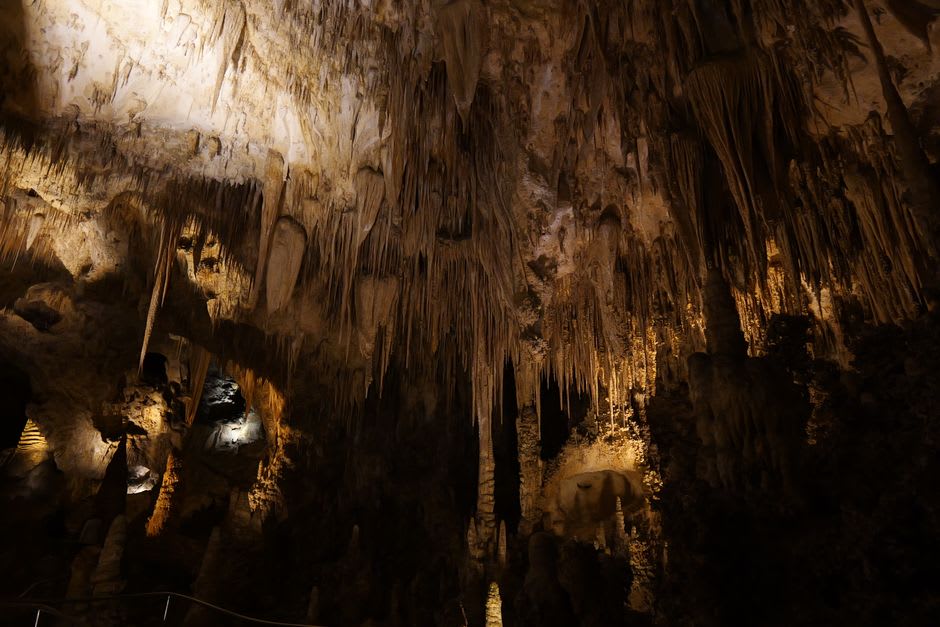
A different tour took us to Frozen Niagara, and here the cave changes character entirely — from dry grey corridor to a chamber draped in flowstone, great cascades of mineral deposit that really do look like a waterfall stopped mid-plunge and turned to stone. Stalactites hang in rippled curtains, tinted rust and cream by iron and other minerals in the seeping water, and a lit stairway lets you descend right into the throat of it. Lia, who had braced herself for the whole cave to be austere and colorless, stood in front of that frozen orange cascade genuinely delighted. It is slow art — every millimeter of it the work of a single mineral-laden drop, repeated for ages beyond counting, in the dark, with no one to see.
Back Up Into the World
What surprised me most was the contrast at the end — the way you climb back toward the entrance and the first hint of daylight arrives not as light but as sound and smell: birdsong, the drone of cicadas, the green wet breath of the summer forest, all of it rushing in before your eyes have adjusted. We came out blinking onto the wooded hillside above the Green River and everything was almost aggressively alive after the still grey hours below. We drove down to the river afterward and sat on the bank while the light softened, saying not much, both of us still a little rearranged by the size of the emptiness under our feet — hundreds of miles of it, dark and silent, running on beneath the ordinary hills.
Getting There
Mammoth Cave National Park sits in the rolling karst country of central Kentucky, near the town of Cave City, just off Interstate 65 roughly midway between Louisville and Nashville, Tennessee. Either city’s airport works as a gateway, each about a ninety-minute to two-hour drive; a car is essential. You cannot enter the cave on your own — all trips are ranger-guided, and tickets sell out in summer, so reserve online well ahead and choose your tour by how much walking and squeezing you’re up for. The cave holds a steady cool around 12°C year-round, so bring a layer whatever the season, and wear real closed shoes for the damp, uneven stone.