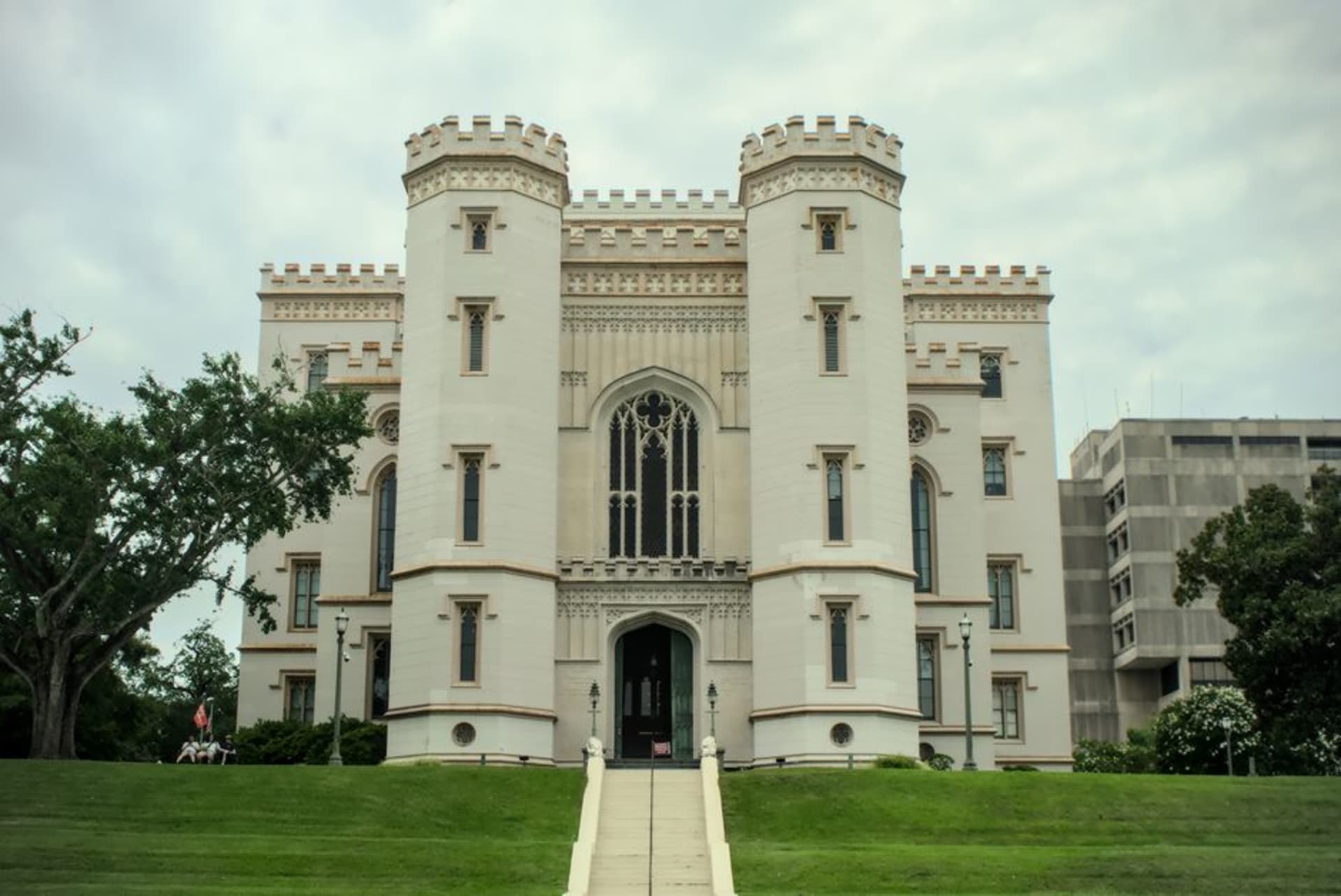
Baton Rouge
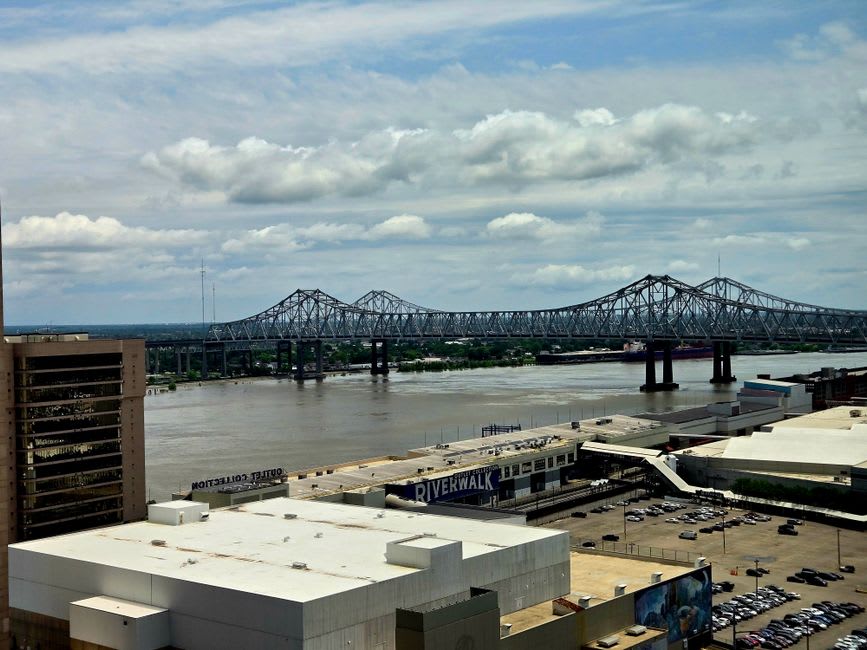
"The river was the colour of coffee with too much milk, and I could have watched it all day."
Louisiana's capital sits on a high bluff above the wide brown Mississippi, crowned by the tallest state house in the nation. It is a river town of Cajun and Creole flavours, of live music leaking from doorways and gumbo simmering somewhere just out of sight.
The French named it — le bâton rouge, the red stick, a boundary marker some early explorer spotted on the bluff — and there is something fitting in arriving as a Frenchman to a place my own language christened three centuries ago. Lia and I came up the river road from New Orleans with the Mississippi on our left the whole way, vast and silt-brown and indifferent, and rolled into Baton Rouge as the sun caught the tower of the Capitol and turned it gold. We had no plan beyond gumbo and music. Both, it turned out, were easy to find.
The Tallest Capitol in the Land
You cannot miss the State Capitol; it is a thirty-four-storey Art Deco skyscraper, the tallest state house in the country, built by the populist governor Huey Long in the boom before his assassination in its own corridors. We rode to the observation deck on the twenty-seventh floor and looked out over the river uncoiling toward the Gulf, the refineries steaming in the distance, the gardens below laid out in geometric calm. Downstairs, our guide showed us the bullet marks still visible in the marble where Long was shot in 1935 — history left frankly on display. Lia found the whole building thrilling and slightly sinister, a monument to ambition that outran its maker. I found it hard to look away from that view of the river.
Along the Levee
We spent a slow morning walking the levee downtown, where the path runs high above the water and old warehouses have turned into museums and cafés. The USS Kidd, a World War II destroyer, sits moored against the bank, its grey hull startling among the brick. We climbed aboard and clambered through its cramped steel guts, Lia banging her head twice and swearing musically in French. Below, the river traffic pushed by — barges the length of city blocks, shoved along by squat tugs. There is no romance to the working Mississippi here, only its enormous patient labour, and I found that more moving than any postcard version could be.
Gumbo, Boudin and a Night of Music
But Baton Rouge earns its keep at the table and after dark. This is the edge of Cajun country, and we ate accordingly — a bowl of dark, deep gumbo thick with sausage and okra, links of boudin bought from a gas-station counter that shamed half the restaurants I know, crawfish étouffée that left our fingers stained and happy. In the evening we followed the sound of a fiddle into a bar off Third Street where a band was playing zydeco, accordion pumping, an older couple two-stepping with the ease of fifty years’ practice. Lia pulled me up. I am a hopeless dancer, but nobody there cared, and the room was too warm and too joyful to sit out.
Getting There
Baton Rouge Metropolitan Airport handles regional flights, but most visitors arrive from New Orleans, an easy hour and a quarter west on I-10 — and I would urge you to take the slower river road at least one way, following the Mississippi past the old plantation houses. The city centre is walkable around the Capitol and the levee, though a car helps for reaching the Cajun country beyond. Give it a night on your way between New Orleans and the wider South; Baton Rouge is not a place that shouts, but it feeds you well and sends you off dancing.
Keep exploring
More of Louisiana