Lone Pine
"We stood among the boulders at dawn and watched the highest mountain in the country catch fire."
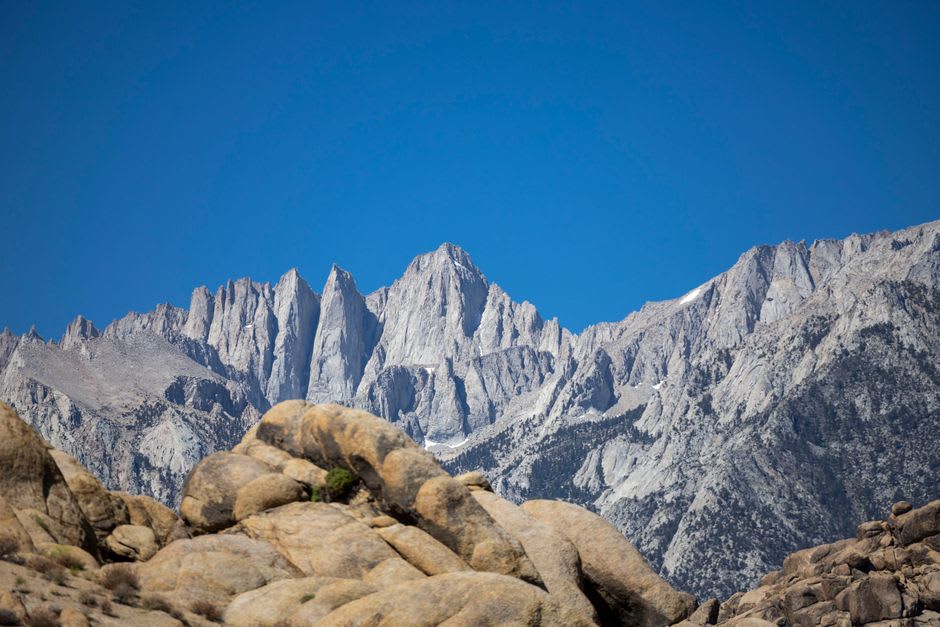
We set an alarm for something cruel, drove out of Lone Pine in the dark, and parked among the boulders of the Alabama Hills to wait. Then the sun came up behind us and hit the Sierra crest, and Mount Whitney — 14,505 feet, the highest point in the contiguous United States — turned from grey to rose to burning gold while the valley floor was still in shadow. Lia had coffee going on the little stove and we didn’t speak. Some places earn the early alarm. This one earns it twice.
The Alabama Hills, where the West was invented
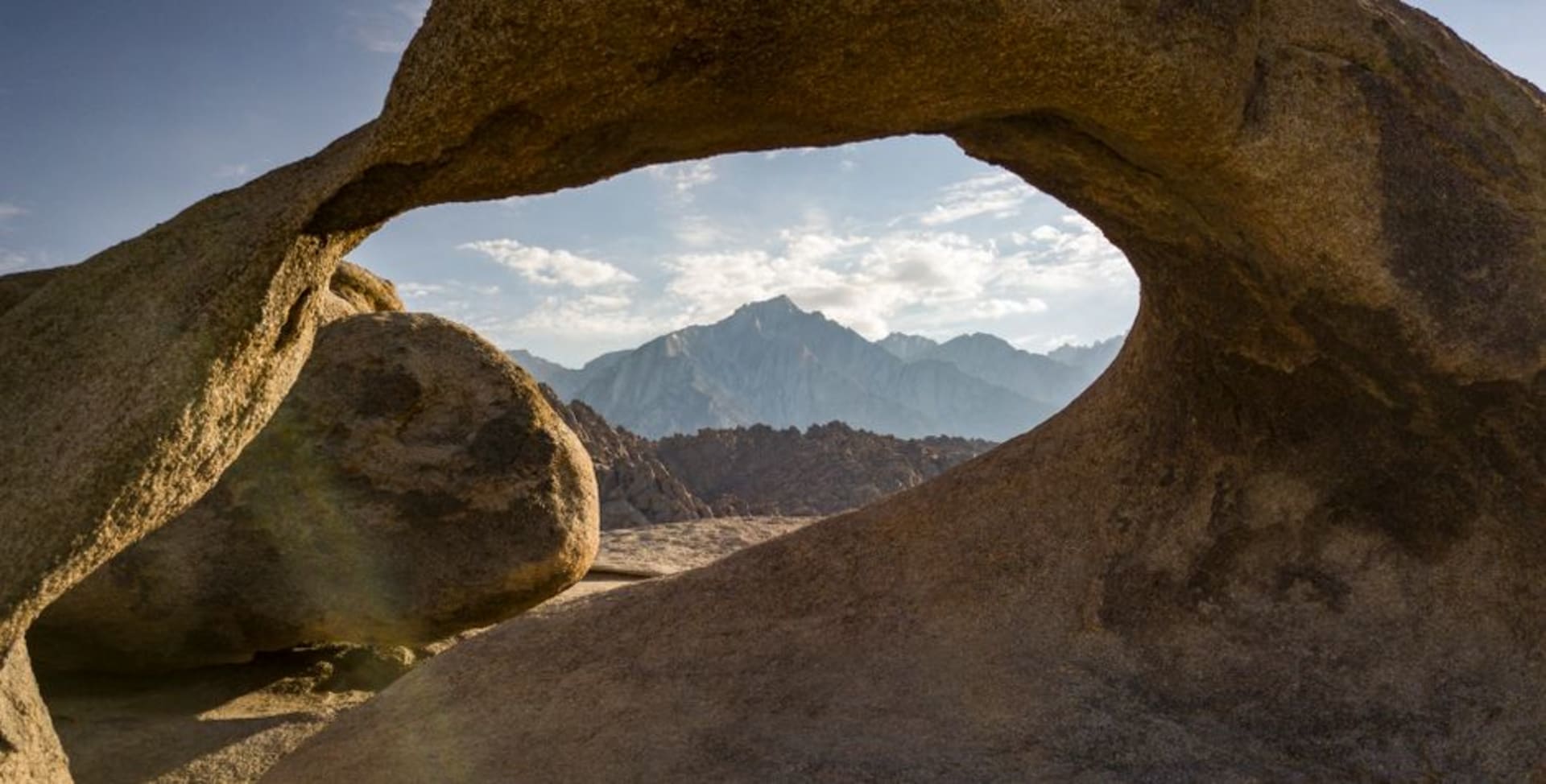
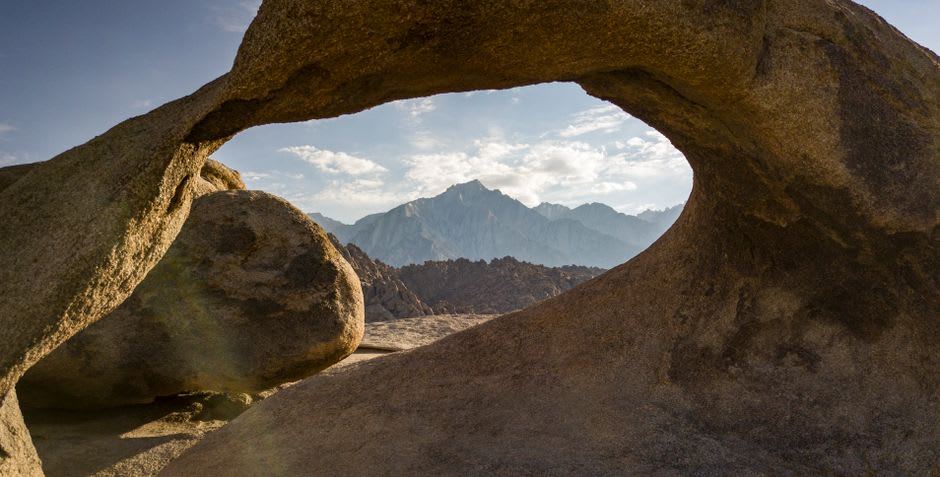
The Alabama Hills are the strangest landscape I know: a field of rounded, orange-gold granite boulders heaped between the desert floor and the wall of the Sierra, glowing warm against the cold blue peaks. Hundreds of Westerns and adventure films were shot here — you round a corner and recognize a rock from a movie you half-remember. We walked the trail to Mobius Arch, a natural stone window that frames Mount Whitney perfectly, and understood why every photographer in California seems to end up here. The rocks are made for scrambling, warm to the touch even in the cool morning, and you can lose hours just wandering among them.
The town, and the movies
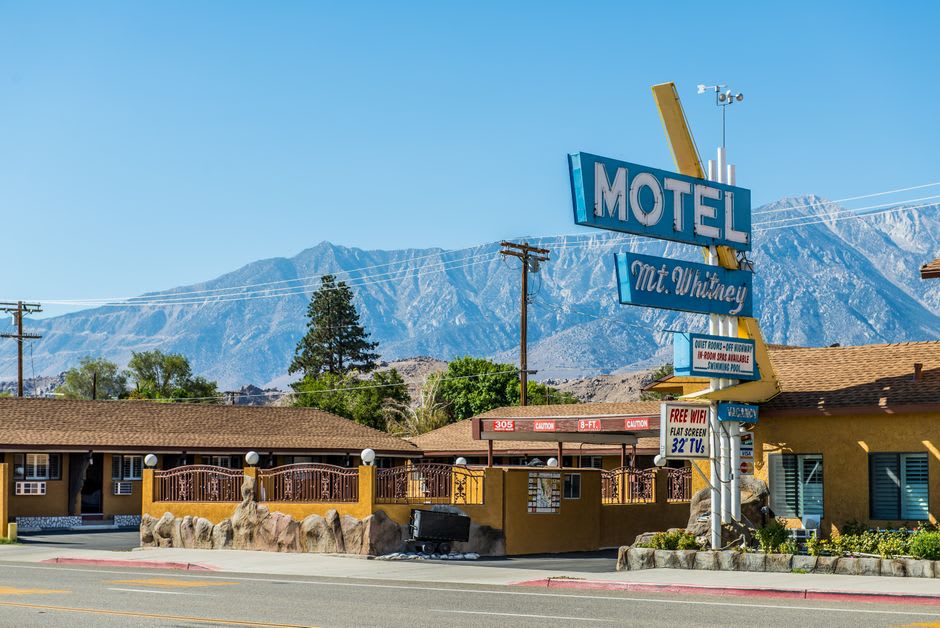
Lone Pine itself is barely more than a wide spot on Highway 395, but it wears its film history proudly. The Museum of Western Film History, at the edge of town, is a genuine delight — stills, costumes, old cars, and the sense of a small place that knows exactly what it is. We spent an hour there, then wandered the main street, which still has the frontier-town proportions the cameras loved. There’s a good chance the diner you eat lunch in served Gene Autry or Humphrey Bogart between takes. It’s a town that has spent a century watching famous people come and go, and it carries that lightly.
The road up to Whitney Portal
From town, the Whitney Portal Road climbs straight at the mountain, switchbacking from desert sagebrush to pine forest in a dozen dizzying miles. It ends at 8,300 feet at the trailhead where climbers set off to summit Whitney — a brutal day-hike we did not attempt. But you don’t have to summit anything to be moved. We drove up in the cool of late afternoon, walked a short way along the stream past the waterfall near the portal, and stood there with the granite towering overhead and the whole Owens Valley spread out gold and hazy below. On the way down, the light went long and the boulders of the Alabama Hills lit up one last time.
Getting There
Lone Pine sits on Highway 395 in the Owens Valley, about 210 miles north of Los Angeles — a three-and-a-half to four-hour drive — and roughly an hour south of Bishop. There’s no train and no nearby airport of consequence, so like the rest of the Eastern Sierra it’s a road-trip town, reached along one of the country’s great highways. The Alabama Hills are free to explore and open at all hours, which makes the dawn pilgrimage easy; the Whitney Portal Road, by contrast, closes with winter snow. Bring layers, plenty of water, and a full tank — services thin out fast once you leave the highway.