I did not expect the water to be so clear. Lia and I had driven up into the Adirondacks with modest hopes — a nice lake, some trees — and instead we found ourselves leaning over a dock at the village of Lake George, staring down through several metres of glass-green water at the rocks below as if there were no water at all. A local told us, with obvious pride, that it’s among the cleanest lakes of its size in the country, fed by mountain springs. The village at the southern tip is frankly touristy, all mini-golf and ice cream, but you forgive it instantly the moment you turn and face the lake, thirty-two miles of it stretching north between the mountains and vanishing into haze.
Out on the Water
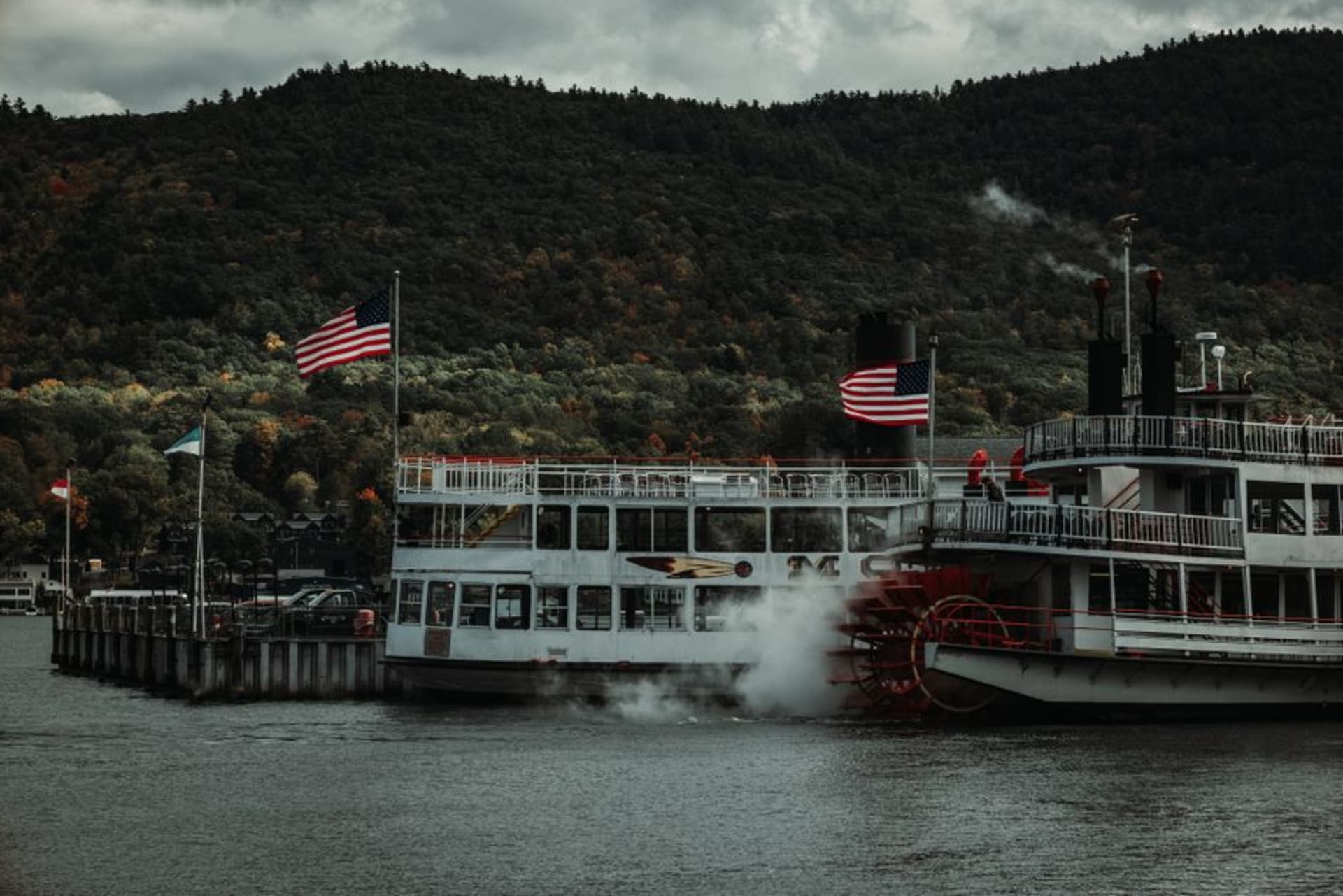
The only real way to understand Lake George is from its surface, so we booked passage on one of the old steamboat-style cruisers that have worked this lake for generations. Ours churned north from the village, and the shoreline unspooled — great camps half-hidden in the pines, bare granite cliffs, and everywhere the islands, more than a hundred and fifty of them, some no bigger than a picnic blanket. The captain narrated the water’s violent colonial past over a crackling speaker while Lia and I simply watched the light move on the surface. Midway up, the lake widens into the Narrows, a maze of forested islands where kayakers threaded between rocks. I have taken many boat trips I forgot by dinner; this one stayed with me.

The Fort at the Foot
Back on land, we walked up to Fort William Henry, the reconstructed British fort at the lake’s southern end, its wooden palisades and log bastions overlooking the water. This is the fort of The Last of the Mohicans, and its history — the 1757 siege, the massacre that followed — is genuinely grim. But the reconstruction is done with care, cannons still pointed at the lake, and a guide in period wool fired a musket for us that cracked across the water and set the gulls screaming. Lia found the museum’s dug-up artifacts more moving than the theatrics: worn buttons, a bent spoon, small human things left in the earth. From the ramparts the lake looked exactly as it must have to a frightened soldier two and a half centuries ago, beautiful and utterly indifferent.
A Climb and a Swim
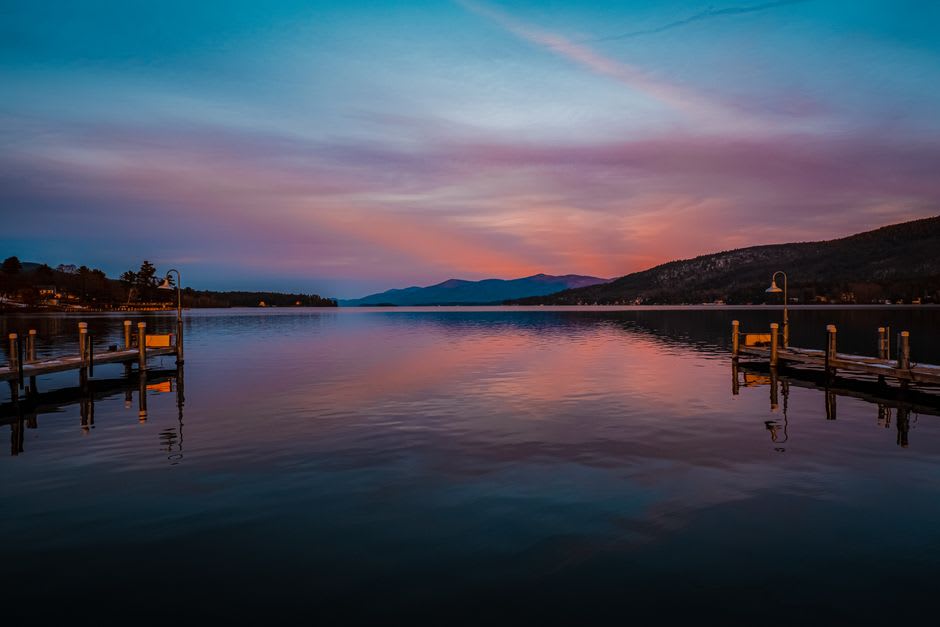
On our last morning we drove a short way south and hiked up Prospect Mountain, trading the crowds for a quiet trail through hardwood forest. The summit opens onto a view that stopped us both — the entire lake laid out below like a blue ribbon between green ridges, the islands mere freckles, the far mountains fading toward Vermont. We had it almost to ourselves. Afterward, sweaty and pleased, we found a small public beach along the eastern shore and swam. The water was bracingly cold and so clear that Lia kept diving down just to look at her own shadow on the sandy bottom. We dried off on warm rocks, ate the peaches we’d bought that morning, and agreed the Queen of American Lakes had earned her title.
Getting There
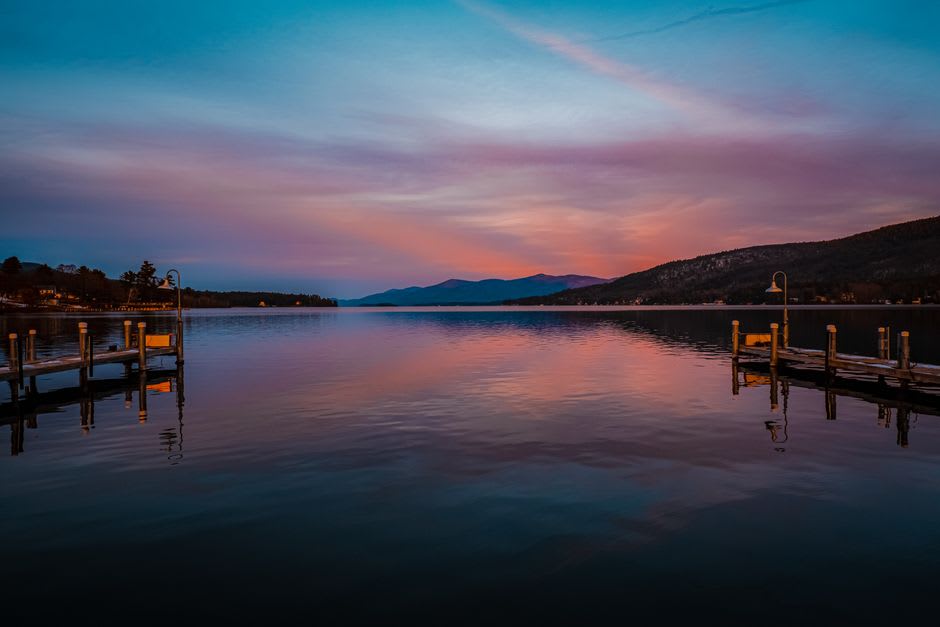
Lake George village sits just off Interstate 87, the Adirondack Northway, about an hour north of Albany and roughly four hours from New York City by car. Amtrak stops at nearby Fort Edward–Glens Falls, a fifteen-minute drive from the lakeshore, where you’ll want a car to explore the surrounding mountains. Summer is the lively high season, when the steamboats run most often; come in late September and you trade the crowds for cool clear days and the first flush of Adirondack color across the hills.