Knoxville
"Knoxville wears its golden globe like a small city that once threw a big party and never quite got over it."
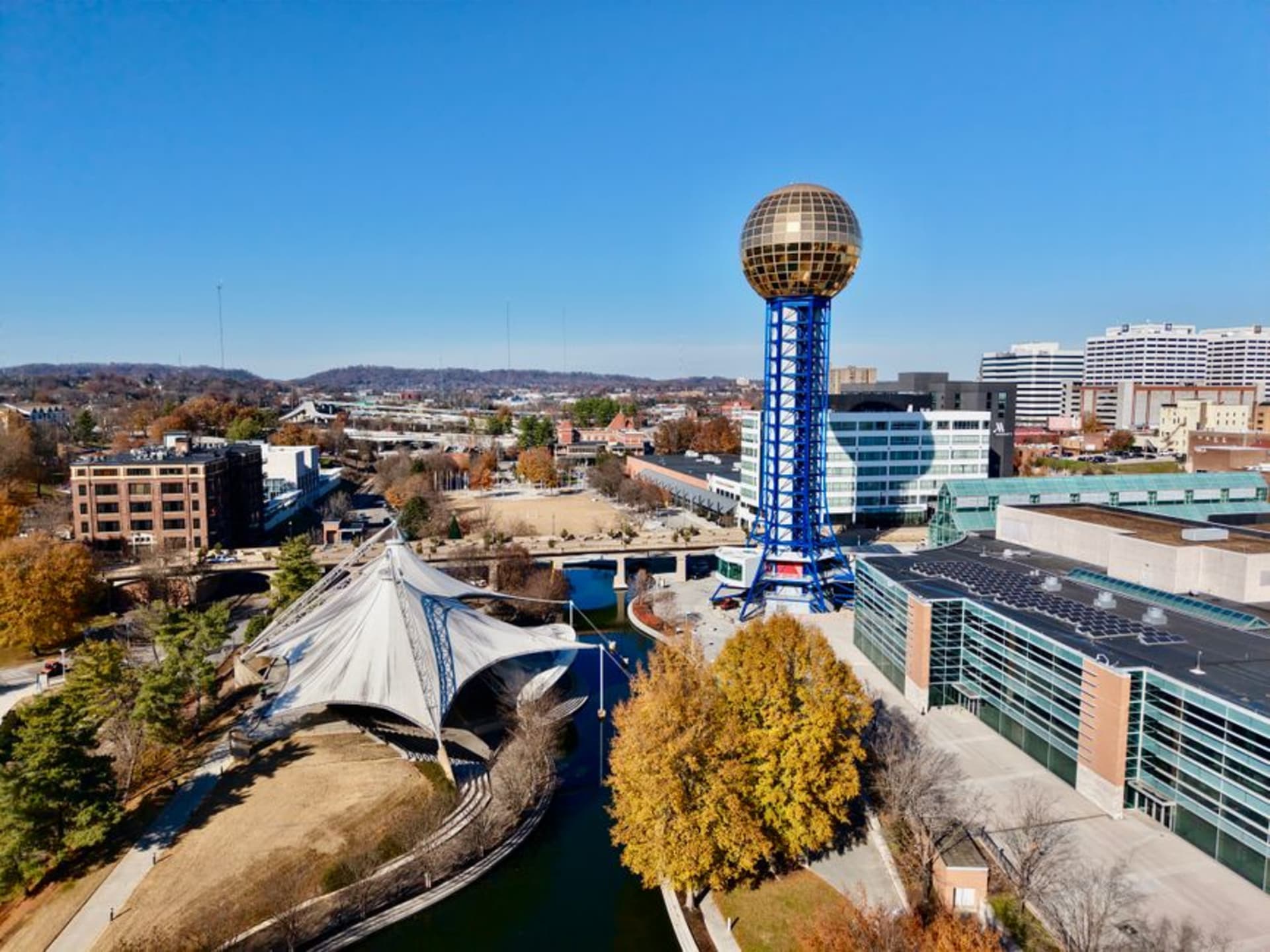
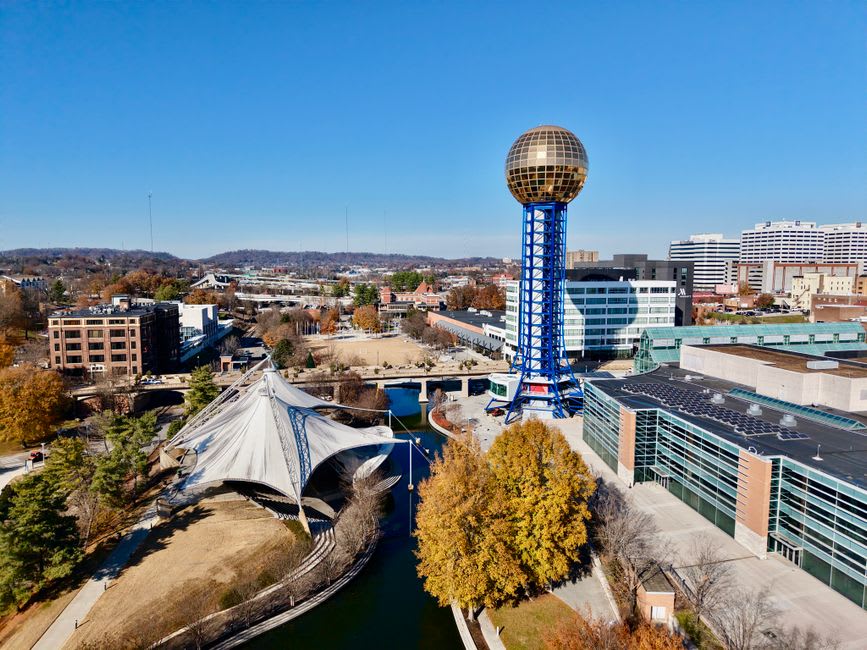
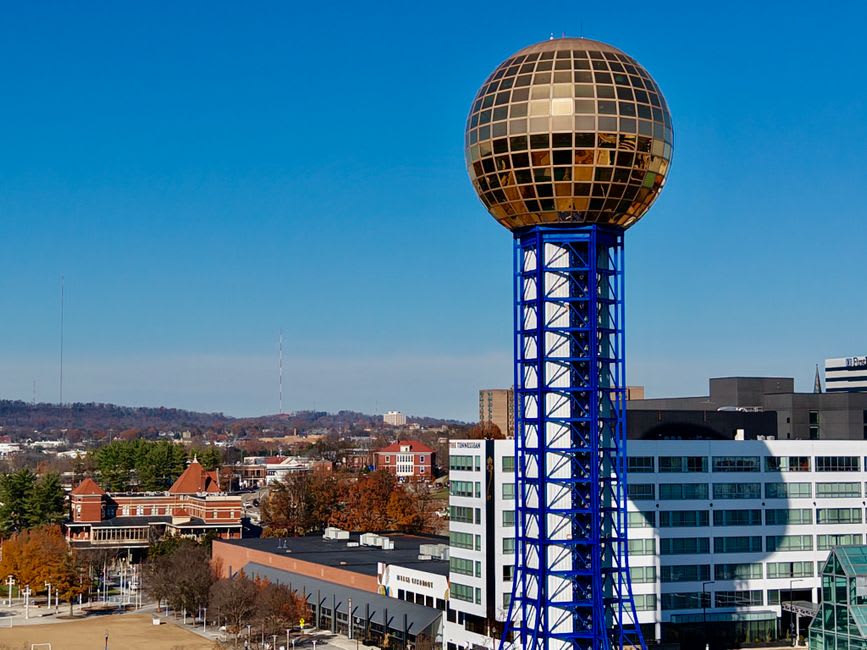
The first thing you notice arriving in Knoxville is the golden ball floating above the skyline — the Sunsphere, a tower topped with a mirrored gold sphere, built for the 1982 World’s Fair and never taken down. Lia spotted it from the highway and refused to believe it was real until we stood beneath it. There is something wonderfully human about a city that hosted a world’s fair, kept the strangest souvenir, and simply carried on around it. Knoxville, we quickly learned, is like that all over — unpretentious, a little offbeat, and much more charming than its modest reputation suggests. We rode the elevator up the Sunsphere on our first afternoon and got the whole valley laid out below us, the river, the campus, the Smokies smudged blue on the horizon.
Market Square and the old city
Downtown Knoxville centres on Market Square, a pedestrian plaza of nineteenth-century brick buildings that has become the city’s living room. We arrived to find a farmers’ market in full swing — Tennessee tomatoes, sourdough, a bluegrass trio sawing away in one corner — and locals sprawled at café tables in the sun. Lia and I drifted from stall to stall, then wandered into the adjacent Old City, a district of restored warehouses now full of coffee roasters and record shops. What I liked was the total absence of pretension; people said hello on the street, shopkeepers chatted without trying to sell us anything, and the whole place moved at the gentle pace of a town rather than a city. We ate barbecue on a patio and lost an entire afternoon to doing very little.
The river and the greenways
Knoxville sits on the Tennessee River, and the city has built a genuinely lovely network of greenways along its banks. We rented bikes and followed the waterfront trail out to the University of Tennessee, past the enormous Neyland Stadium — the football cathedral that turns the whole city orange on autumn Saturdays — and on beneath the bluffs. On the south bank we crossed to Ijams Nature Center, a pocket of forest, quarry lakes, and cliff-top trails astonishingly close to downtown. Lia swam in an old flooded marble quarry there, the water cool and green and ringed by rock walls, while I sat on a ledge and watched kayakers paddle across. That a city could keep such wildness within its own limits felt like a quiet Knoxville boast.
Gateway to the Smokies
Of course, Knoxville’s greatest asset lies an hour to the southeast, where the Great Smoky Mountains roll up into the most-visited national park in the country. We used the city as a base, driving out one morning through the foothills and into the misted ridges, the “smoke” of the name hanging in real veils across the forested slopes. But it was the return that stayed with me — coming back down out of the mountains at dusk, the golden Sunsphere reappearing over the river, a city glad to have you back. Lia said Knoxville was the sort of place you underestimate and then quietly miss, and after four days there I could not argue.
Getting There
Knoxville’s McGhee Tyson Airport lies about twenty minutes south of downtown and connects to most major hubs, making it the usual way in. The city also sits on Interstate 40, an easy drive of roughly three hours from both Nashville and Atlanta, and it is the standard road gateway to the Great Smoky Mountains, so a car is close to essential for exploring the region. Downtown itself is compact and walkable, with a free trolley looping between Market Square, the Old City, and the university, and the riverfront greenways make cycling a genuine pleasure. We kept the car for the mountains and left it parked the rest of the time.