
Fort Scott
"Fort Scott saw Bleeding Kansas up close, years before the rest of the country caught up to the fight."
A restored frontier fort where soldiers, abolitionists, and Bleeding Kansas history all collided decades before the Civil War officially began. Lia and I walked the parade ground at dusk and felt the weight of it more than we expected.
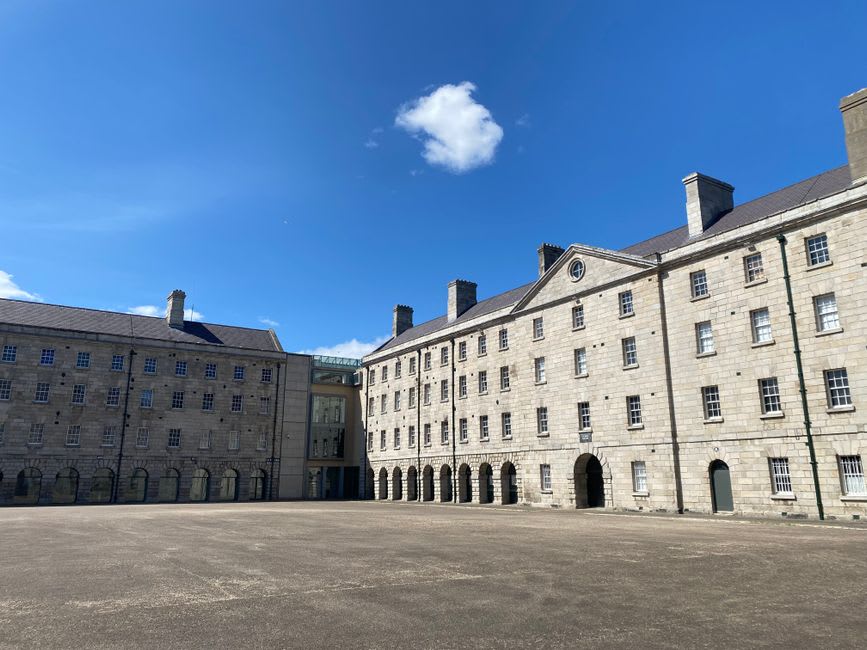
Fort Scott gets less attention than it deserves, probably because it sits in the southeastern corner of Kansas, off the routes most road trips actually take. The town grew up around an 1842 military post built to keep peace on the frontier, and by the 1850s it had become one of the flashpoints of Bleeding Kansas, the violent proxy conflict over slavery that erupted here years before the Civil War formally began elsewhere. Walking the restored parade ground at Fort Scott National Historic Site, original limestone barracks on either side, that layered, uncomfortable history felt closer and more specific than it does in a textbook.
Inside the restored fort
The National Park Service has restored several of the fort’s original 1840s buildings — officers’ quarters, a dragoon barracks, a guardhouse with graffiti carved by bored 19th-century soldiers still visible on the walls. A ranger walked us through the powder magazine and explained how the fort’s mission shifted over decades, from protecting the frontier, to policing the pro- and anti-slavery violence of the 1850s, to serving as a Union supply depot during the Civil War itself. Standing in the empty parade ground as the sun dropped, long shadows from the flagpole stretching across the grass, Lia said it was one of the few historic sites that had actually made her feel something instead of just informed her.
Downtown along the Marmaton
Fort Scott’s downtown, just a few blocks from the fort, has a solid stretch of well-preserved late 1800s commercial architecture along Main Street, including the Bourbon County Courthouse and several restored storefronts now housing antique shops and cafes. We had lunch at a spot overlooking the Marmaton River, which cuts quietly through the edge of town, and talked with the owner about how much of the town’s identity still runs through that fort — reenactors, a living history museum, a genuine sense that the 1850s never fully left.
Getting There
Fort Scott is about 90 minutes south of Kansas City and its international airport (MCI) via US-69, and roughly two hours northeast of Wichita. A car is essential — there’s no public transit connecting the town to anywhere else — but the drive down through the Osage Cuestas region of eastern Kansas is a quietly scenic one.
Keep exploring
More of Kansas