Joshua Tree National Park
"After midnight in Joshua Tree, the stars are so thick the sky forgets to be dark."
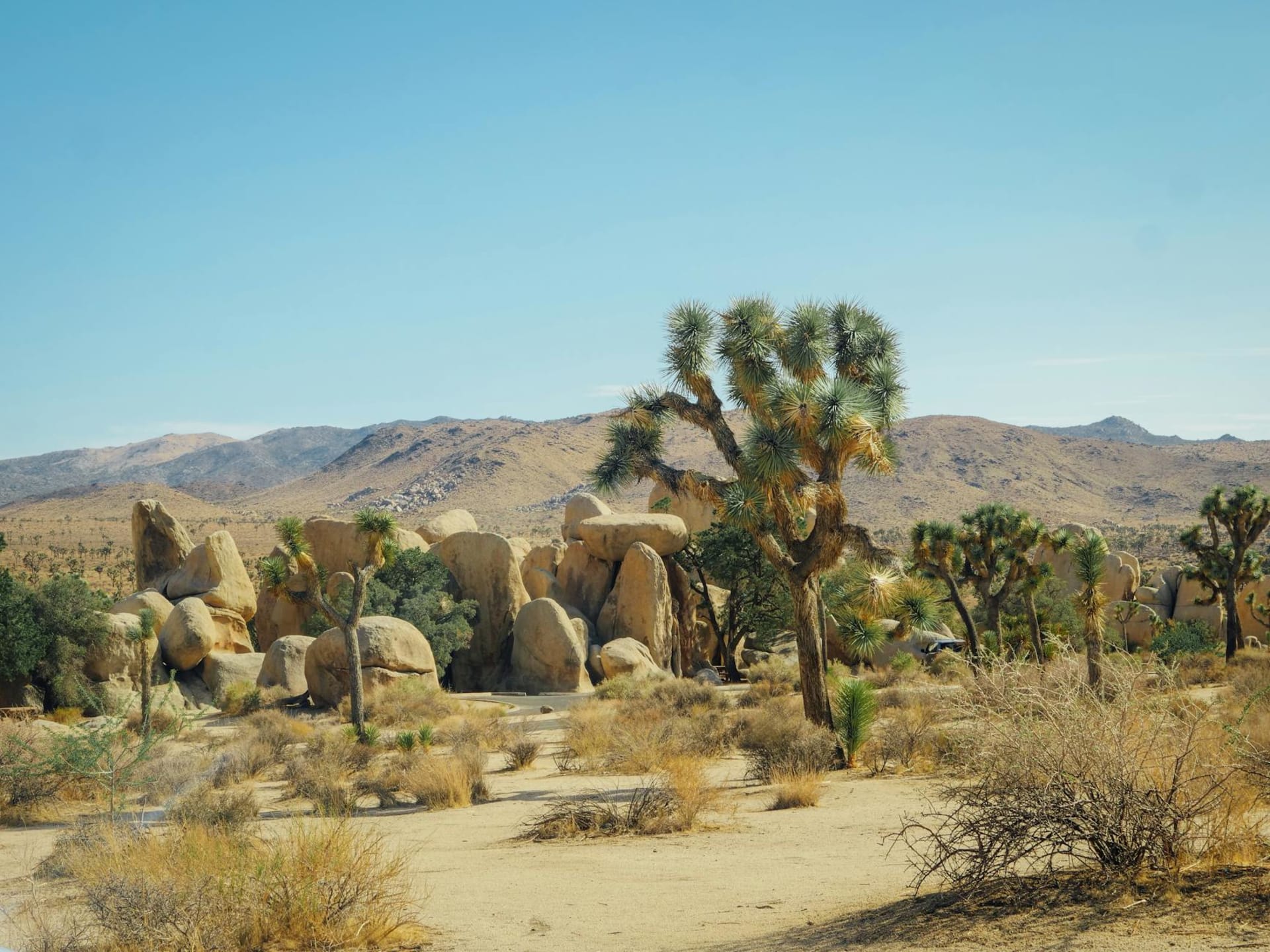
We drove in from the south entrance off Cottonwood Springs Road, late afternoon, and I remember the exact moment the desert stopped looking like a backdrop and started looking like a place someone had arranged deliberately — the boulders too massive, the trees too strange, the whole landscape operating by rules I hadn’t been given.
The Trees That Shouldn’t Exist
Joshua trees are not trees. Technically they’re yuccas, which is to say they’re related to the agave plants I see outside my window in Mexico. But knowing that doesn’t prepare you for them. Each one is different — arms torqued in different directions, some reaching ten meters, some stubby and dense and almost aggressive-looking. The Mormons named them after the prophet because they thought the raised arms suggested supplication. What I saw was something older than religion, something that had arrived at its own shape through centuries of wind and drought and pure stubbornness.
I walked the Boy Scout Trail in the early morning while Lia slept in. The air smelled of warm granite and something faintly sweet I couldn’t identify — creosote, I later learned, which releases that particular desert perfume only after rain. It hadn’t rained in weeks. I wasn’t sure what I was smelling but I wasn’t going to argue with it.
Boulders and the Art of Getting Lost
The rock formations at Skull Rock along the main park road are the obvious stop — the skull shape, the tourist pull-outs, the selfies — and they’re genuinely strange enough to earn the attention. But the more interesting thing I did was simply walk into the Wonderland of Rocks without a fixed route, which is somewhere between hiking and trespassing on a geology experiment. The boulders pile on each other in ways that look architectural. I found a small natural basin filled with collected rainwater, reflecting the sky, perfectly still. Unexpected. Nobody else around.
What Happens After Dark
We stayed at a campsite near Jumbo Rocks, and I want to be precise about what the sky looked like at two in the morning: it was not the sky I know from cities or even from rural France. The Milky Way wasn’t a suggestion — it was a statement. The horizon glowed faintly in every direction from distant towns, but overhead there was no competition, and the stars filled the space so completely that the darkness felt secondary. Lia woke up at some point, came out of the tent without a word, and we both just stood there for a while. There wasn’t anything useful to say.
When to go: October through April keeps temperatures bearable — summer pushes well past 40°C in the lower elevations and the park becomes genuinely hostile by midday. Spring brings wildflower blooms in wet years, but the night skies are worth the trip in any season when the air is clear and cold.