Jacksonville
"A city so spread out we measured it not in blocks but in bridges crossed."
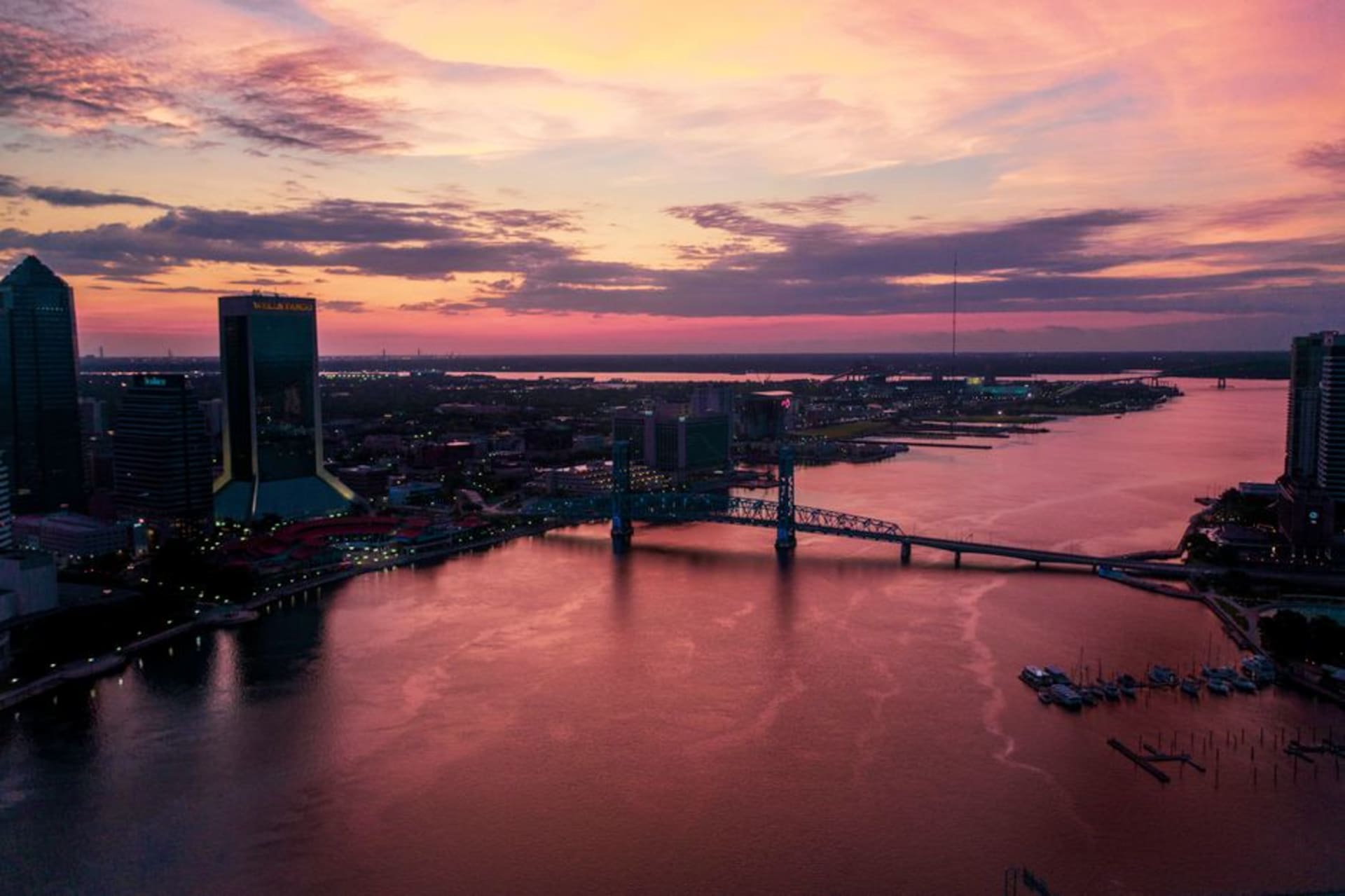
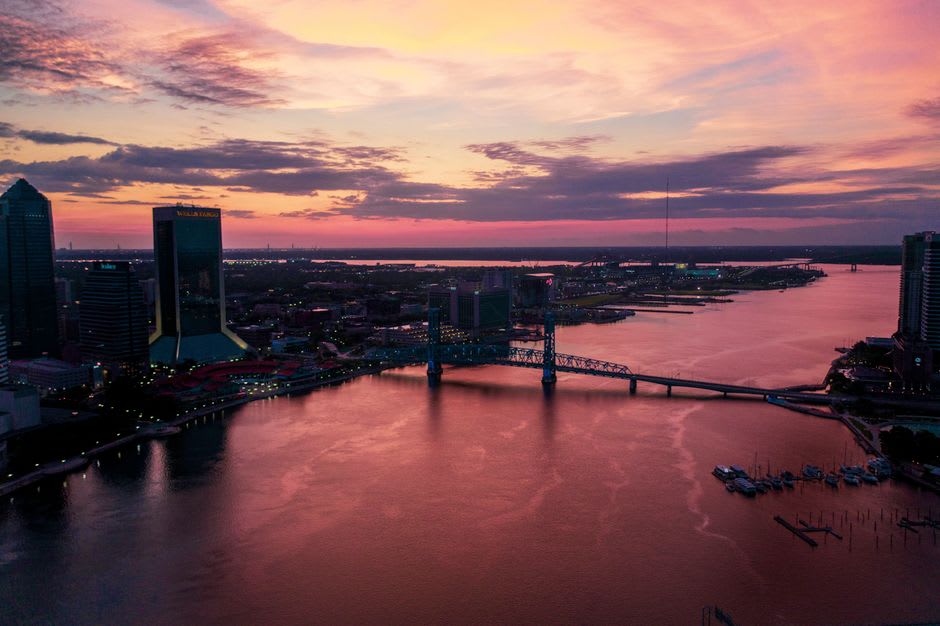
We arrived expecting a downtown and found instead a river with a city loosely draped around it. Lia had circled Jacksonville on the map as a one-night stop, and we ended up staying four, because every time we thought we had its measure it unfolded another arm of water, another drawbridge, another quiet beach where nobody seemed to be in a hurry. The first evening we stood on the Main Street Bridge as the St. Johns turned the colour of weak tea under a pink sky, and I understood this was a place that made you slow down whether you meant to or not.
The River and Its Bridges
The St. Johns is one of the few rivers in North America that flows north, and there is something quietly stubborn about that fact that I came to love. It runs enormous and unhurried through the middle of everything. We walked the Riverwalk on the Southbank one morning, coffee in hand, watching pelicans fold themselves into the water like badly packed umbrellas. The bridges are the city’s real landmarks — the blue Main Street Bridge, the great steel span of the Hart Bridge that locals call the Green Monster, the Acosta with its train tracks. Lia counted seven crossings before lunch and gave up. We took the little Skyway monorail across for the novelty and rode the free St. Johns River Taxi back, letting the water do the work.
Salt Marsh and the Beaches
East of downtown the land dissolves into salt marsh, and this is where Jacksonville stopped being a city to me and became a coastline. We drove out to the Timucuan Preserve and walked among the shell mounds at the Kingsley Plantation, the oldest surviving plantation house in Florida, its cluster of tabby slave cabins standing in the heat with a weight that silenced us both. Further on, the beaches begin — Atlantic, Neptune, Jacksonville Beach — wide and flat and pale, less polished than Miami and better for it. At Hanna Park we swam in the morning and had the dunes almost to ourselves. Lia collected coquina shells; I got sunburnt in exactly the shape of my shirt collar.
Riverside, Murals and Slow Evenings
Our favourite hours were in Riverside and the neighbouring Five Points, where live oaks drop their shade over brick bungalows and the coffee is taken seriously. We spent an afternoon wandering the Cummer Museum’s riverside gardens, then drifting through the boutiques and murals until the light went gold. Jacksonville has a mural habit — whole walls of colour tucked down side streets — and we made a game of finding them. In the evening we ate shrimp and grits at a porch table while cicadas roared, and a stranger at the next table told us, unprompted, the entire history of his fishing boat. That is Jacksonville: unhurried, a little sprawling, generous in ways you don’t expect.
Getting There
Jacksonville International Airport sits about twenty minutes north of downtown, with direct flights from most major US hubs. If you are driving, I-95 runs straight through the city north to south, and I-10 arrives from the west — this is where that great interstate finally meets the Atlantic. You will want a car; Jacksonville is too spread out to manage otherwise, and half its pleasures are at the ends of long causeways. From here it is an easy hour and a half up to St. Augustine, or south along the coast toward the quieter Florida you came looking for.