Jackson Hole
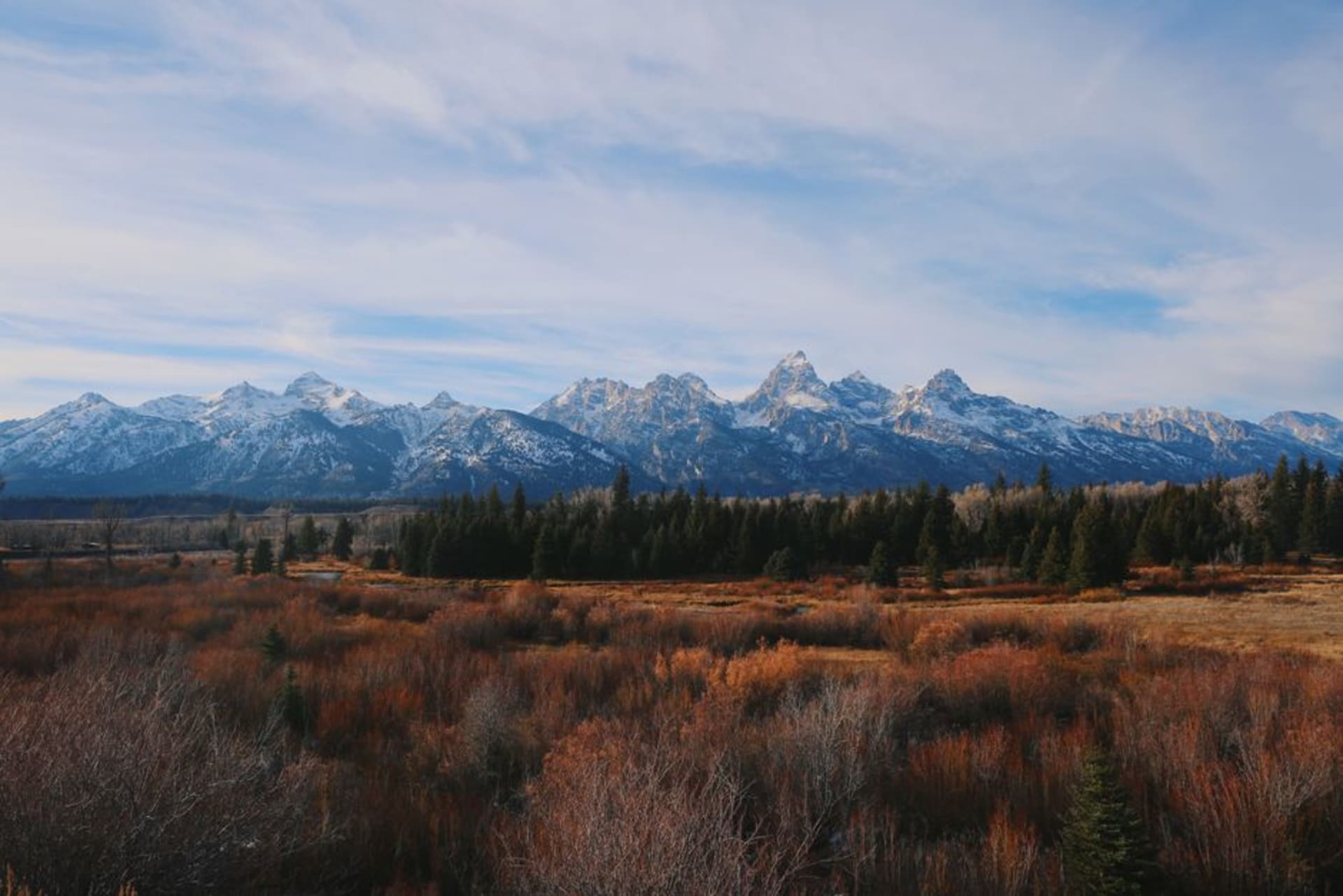
"The mountains rose straight out of the flat like a wave that had forgotten to break."
There are mountains you approach slowly, gaining altitude by degrees until you’re among them, and there are the Tetons, which do no such thing. Lia and I came up from the south through flat sagebrush country, and the range simply appeared — a jagged grey wall thrown up from the valley floor with no foothills to soften it, snow still clinging to its spires in June. She actually said “no” out loud, as if the view were unreasonable. In the town of Jackson we parked by the square, where arches built entirely of shed elk antlers frame each corner, and stood a long while just tilting our heads back at that skyline. It never quite stopped feeling unreal.
The antler arches and the town
Jackson itself is small and knows exactly what it is — a Western town that has become a mountain town without entirely letting go of its cowboy bones. The Town Square is anchored by four great arches woven from thousands of elk antlers, shed each winter on the nearby refuge and gathered by local scouts. We wandered the wooden boardwalks past galleries and outfitters, and Lia dragged me into the Million Dollar Cowboy Bar, where the barstools are saddles and you sit astride them to drink. An old rancher beside us, entirely serious, explained the difference between elk and moose antlers while I nodded and pretended I’d understand it later.
Into Grand Teton
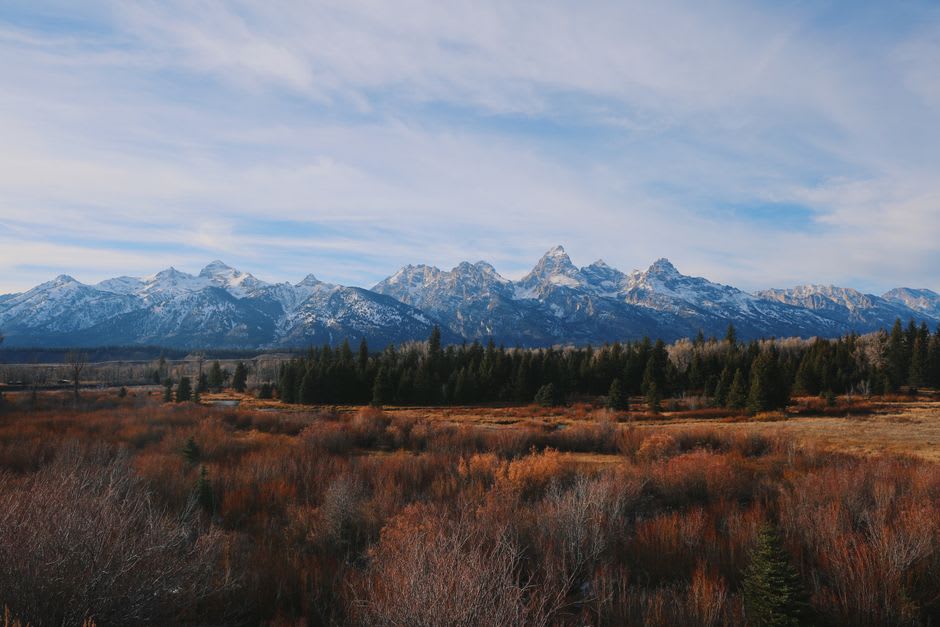
We spent our second day in Grand Teton National Park, just north of town, and it undid us a little. We drove to Jenny Lake and took the small shuttle boat across its impossibly clear green water, then hiked up to Hidden Falls and Inspiration Point with the peaks looming so close they seemed to lean over the trail. A marmot watched us eat lunch with open contempt. On the way out we stopped at Schwabacher Landing, where the Tetons doubled themselves in the still water of a beaver pond, and a moose waded through the reeds without the slightest interest in us. Lia whispered that this was the most beautiful place she had ever stood. I didn’t argue.
The tram and the top of the world
On our last morning we rode the aerial tram at Teton Village, which climbs more than four thousand feet in twelve minutes to the summit of Rendezvous Mountain. We stepped out into thin, cold air and a view that ran clear to the horizon in every direction — valley, range, and the distant haze of Yellowstone beyond. At the top there is a waffle hut, absurdly, and we ate warm waffles with brown sugar and butter while our breath fogged. A ski patroller off duty pointed out peaks by name and told us that on a clear winter dawn you can see the curve of the earth. Standing there, wind-numbed and grinning, I believed him.
Getting There
Jackson Hole has its own small airport — remarkably, the only commercial airport inside a US national park — set right on the sagebrush flats with the Tetons filling the windows as you land. From there it’s a fifteen-minute drive into town. Most visitors, though, come by car, either the long haul across Wyoming or the spectacular road down from Yellowstone just to the north. A rental is close to essential here; the park and the ski village lie beyond walking distance, though the town itself is compact and easily strolled. Come in summer for hiking and long light, or in winter for the deep, dry snow that made this valley famous.