Indianapolis
"We heard the racetrack before we ever saw it — a memory of engines in a city that keeps its calm."
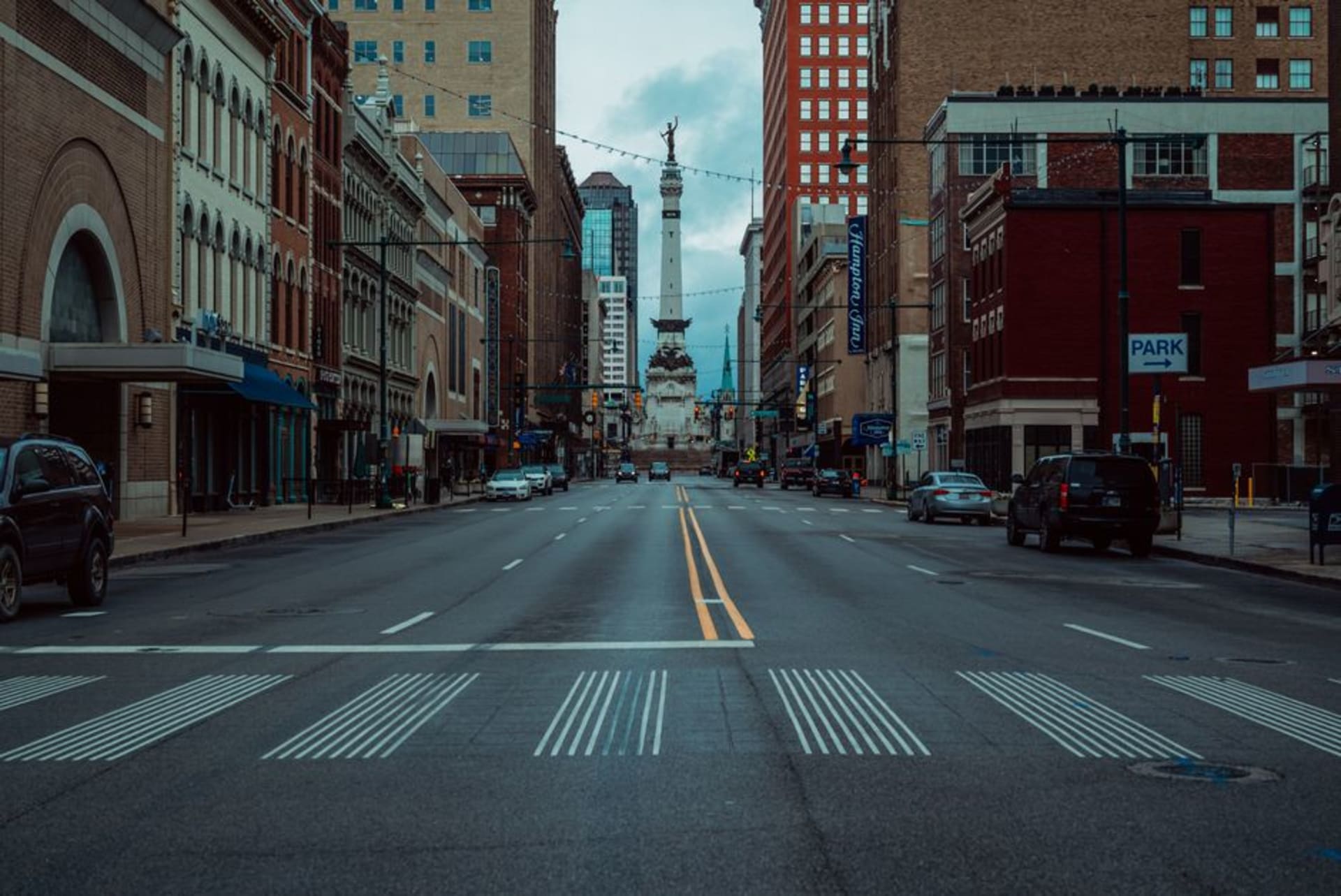
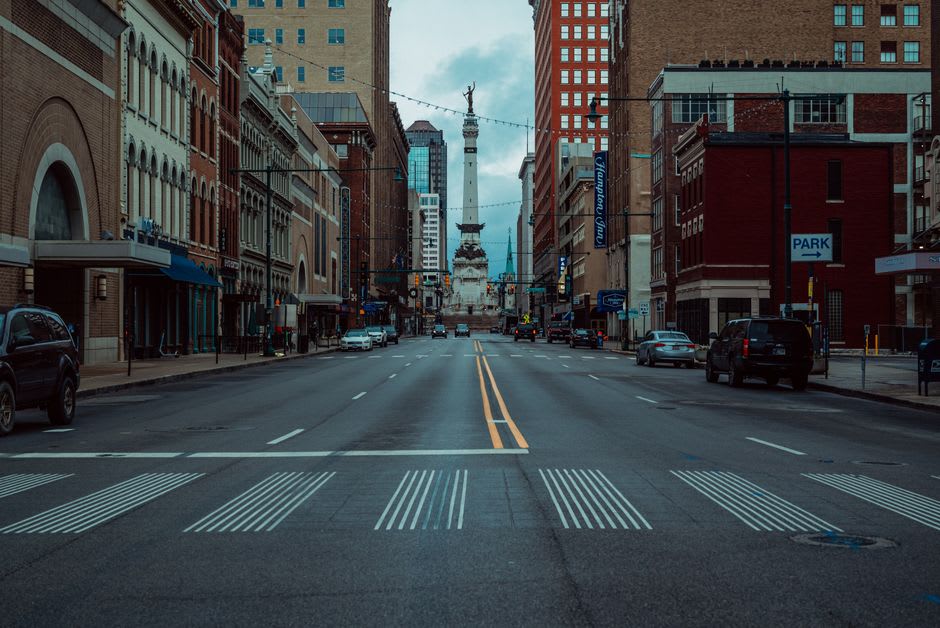
Lia and I arrived in Indianapolis on a warm Thursday with no plan beyond the racetrack, and within an hour we’d given up hurrying entirely. We stood in the middle of Monument Circle while a busker tuned a guitar under the Soldiers and Sailors Monument, and a woman at the coffee cart told us, unprompted, exactly where to get the best breaded pork tenderloin in town. That’s the thing about this place — it’s a big capital that behaves like a small town, and it disarmed us immediately.
The Speedway and its ghosts
You don’t understand the scale of the Indianapolis Motor Speedway until you’re standing on the bricks at the start-finish line, that famous yard of old paving they left in place, and the grandstands curve away from you like the walls of a stadium built for giants. We took the track tour on a grey morning, nearly alone, and our guide’s voice echoed. Lia pressed her palm to the bricks — everyone does, it’s tradition — and I found myself oddly moved by the emptiness of it, 250,000 seats holding their breath until May. The museum inside the oval smells of oil and old leather, and I lingered too long over the pre-war cars.
Walking the canal
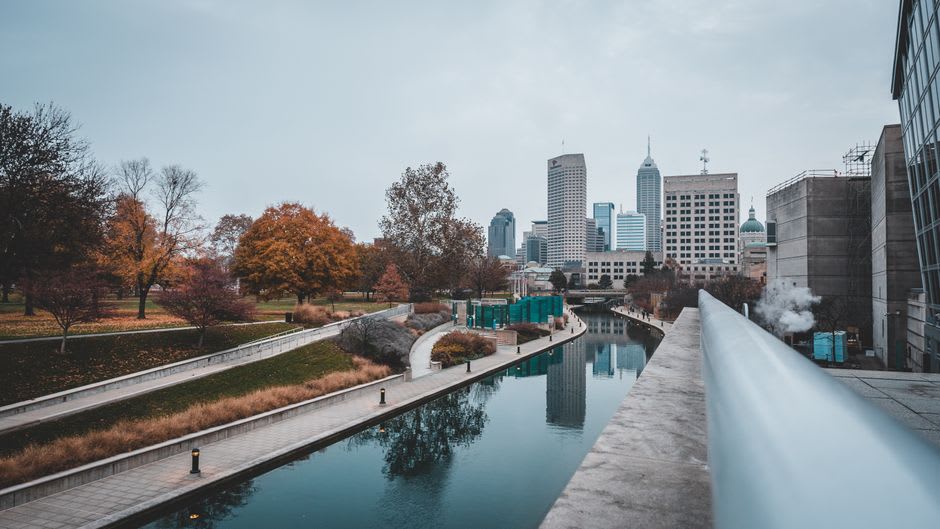
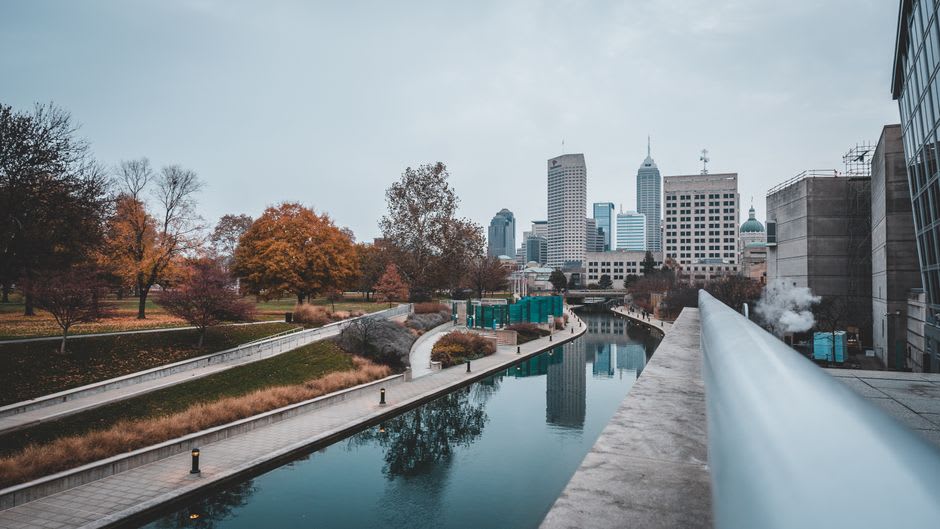
By afternoon we’d traded engines for water. The Central Canal cuts a slow ribbon through downtown, and we walked its length as paddle-boats wobbled past and university crews carried their shells to the launch. It felt borrowed from a gentler city. We stopped at the USS Indianapolis memorial, a plain granite slab that tells a story so hard I had to read it twice, and then wandered up into White River State Park where the skyline stacks itself neatly beyond the trees. Lia bought a lemonade; I bought nothing and was happy. The light on the water at five o’clock is the kind that makes you forgive a place anything.
Monuments and quiet corners
Indianapolis calls itself a city of monuments, and it’s not exaggerating — apparently only Washington has more war memorials. We climbed the narrow interior stairs of the central monument for the view, breathless and laughing, and afterward drifted into the hushed vastness of the Indiana World War Memorial, all red marble and a single enormous flag. But my favorite hour was smaller: a slow lap of the Indianapolis Museum of Art’s grounds at Newfields, where the formal gardens run down toward the woods and hardly anyone was about. We sat on a bench and ate the pork tenderloin sandwich the coffee-cart woman had promised us. She was right.
Getting There
Indianapolis International Airport sits about twenty minutes southwest of downtown, and it’s an easy, uncrowded arrival — we were in the city before we’d finished our first coffee. The airport express bus runs straight to the center if you’d rather not rent a car, though we found driving here refreshingly painless, with wide streets and cheap parking. Downtown itself is genuinely walkable: the Circle, the canal, White River State Park and the sports arenas all sit within a compact core you can cross on foot in twenty minutes. For the Speedway, it’s a fifteen-minute drive northwest to the suburb of Speedway itself, and the cultural trail — a beautiful bike-and-walk path — will carry you most of the way through the city if you’d rather roll.