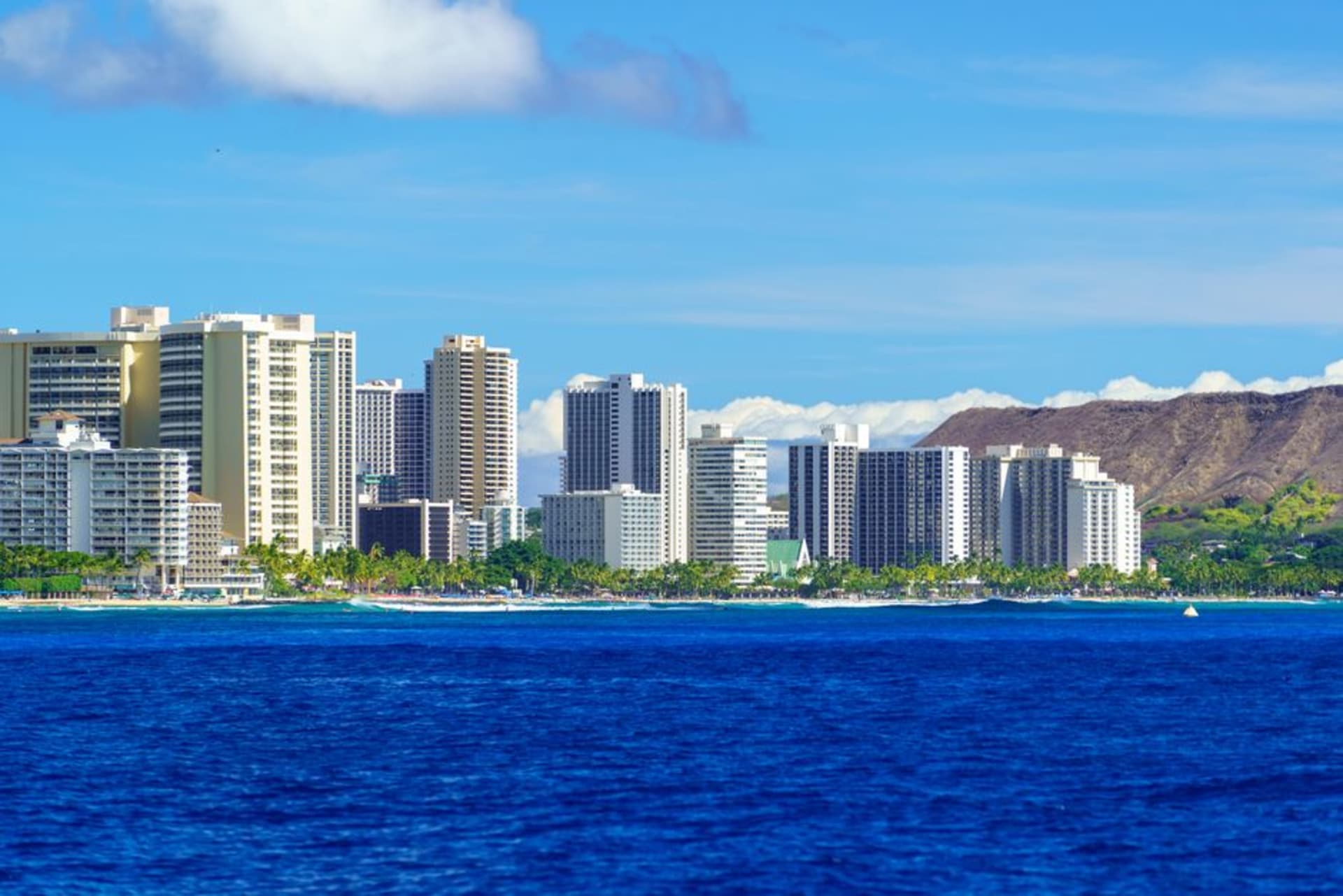
We landed at dusk, and the warm air hit us the moment the airport doors slid open — thick, floral, unmistakably tropical, nothing like the dry heat we knew from Mexico. Lia laughed out loud. By the time we reached Waikiki the sun had gone, but the beach still glowed with that last violet light, and dozens of people stood in the shallows just watching the water as though something were about to happen. Nothing did, and everything did. That first night set the tone: Honolulu is a city that asks you to stop and look. We dropped our bags, walked barefoot into the tepid sea, and stood there until the streetlights came on behind us.
Waikiki and the Long Curve of Sand
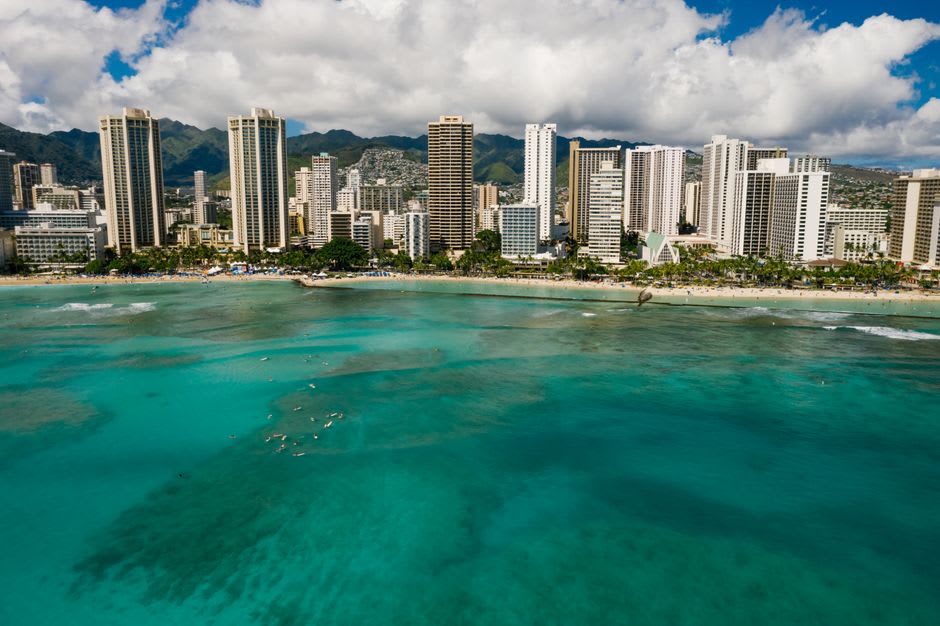
Waikiki gets dismissed as touristy, and it is, but it earned its fame honestly. The beach is a gentle crescent where the waves come in slow and forgiving — perfect, we discovered, for a first surf lesson. Lia stood up on her third try and I did not, and she has not let me forget it. Beyond the surf, the water shelves out impossibly clear over reef, and we snorkelled straight off the sand among fish the colour of highlighter pens. Come evening the whole strip fills with the sound of ukuleles and the smell of grilled everything. We found a quiet spot near the old Moana Surfrider, its white colonial verandah glowing, and let the world drift past.
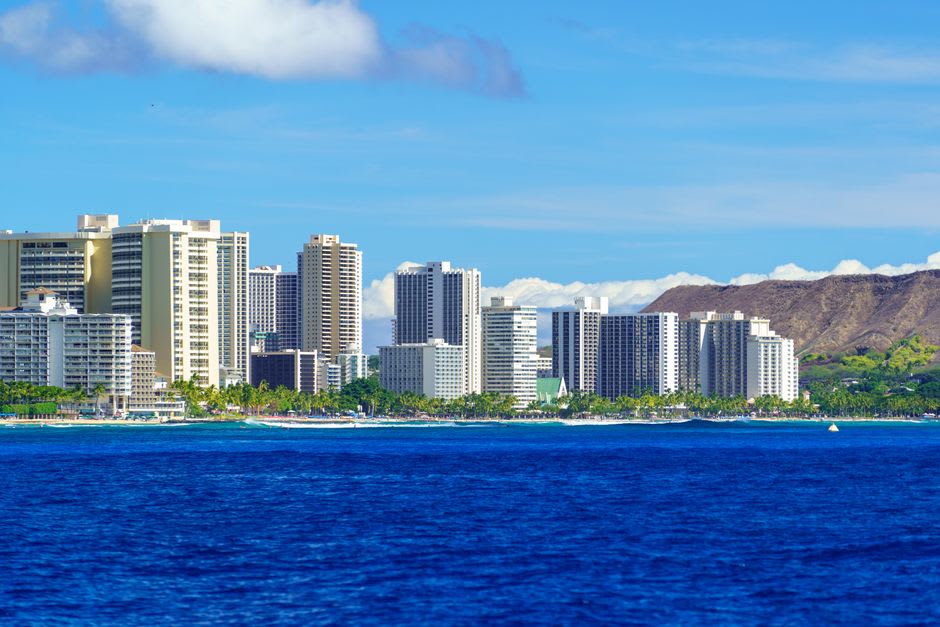
Climbing Diamond Head
We climbed Diamond Head at dawn to beat the heat, and I am glad we did. The trail up the old crater is short but relentless, switchbacks giving way to dim tunnels and a final stair so steep Lia called it “the punishment.” Then the summit, and the reward — the whole southern coast of Oahu spread below, Waikiki’s hotels shrunk to toy blocks, the ocean stretching flat and enormous to the horizon. An old military bunker crowns the rim, cool and shadowed, and we sat in it catching our breath while the sun climbed. A local runner passed us going down, cheerful and dry, having clearly done this a hundred times. We were neither, but the view did not care.
Pearl Harbor and the Weight of It
Not everything here is bright. We took the boat out to the USS Arizona Memorial at Pearl Harbor, and the mood on board went quiet on its own. The white structure floats above the sunken battleship, and you can still see oil rising in slow drops to the surface — the “black tears,” they call them, seeping up more than eighty years on. Lia gripped the rail. The names of the lost cover a marble wall, and nobody spoke above a murmur. It reframed the whole trip for me: this paradise carries a deep scar, and the island holds both truths at once, the beauty and the grief, without asking you to choose.
Getting There
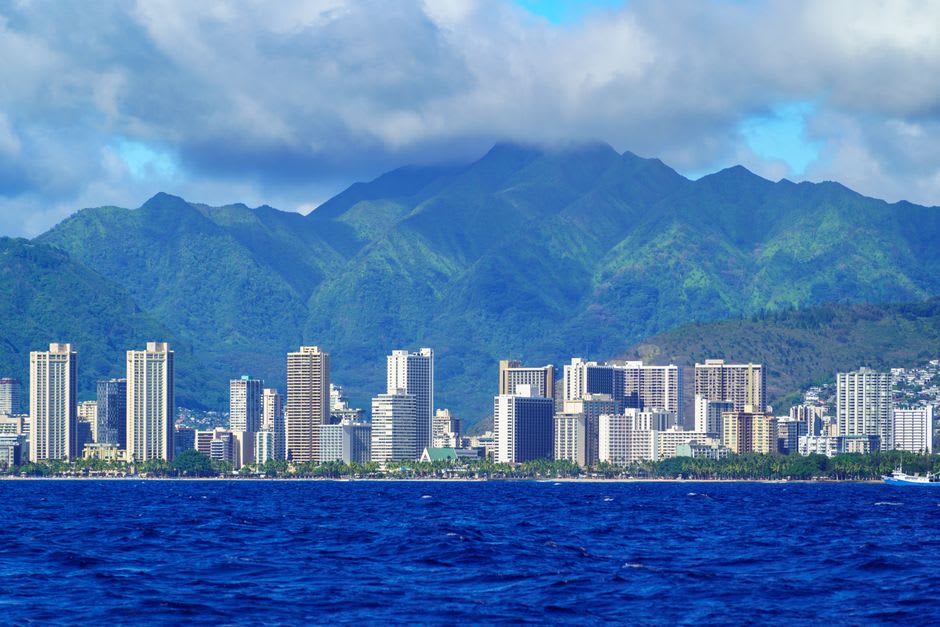
Honolulu’s Daniel K. Inouye International Airport is the main gateway to all of Hawaii, with long-haul flights from the US mainland, Japan, and across the Pacific — ours was a punishing but worthwhile haul with one connection on the West Coast. From the airport, Waikiki is a twenty-minute drive or a cheap shuttle. We skipped a rental car for the first few days and relied on TheBus, Honolulu’s genuinely good public network, before hiring wheels to explore the rest of Oahu. The weather barely changes, but we found late spring and autumn the sweet spots — fewer crowds, lower prices, and the same warm, forgiving sea.