Homer
"The road simply runs out into the sea, and you stand there wondering why you'd ever want it to continue."
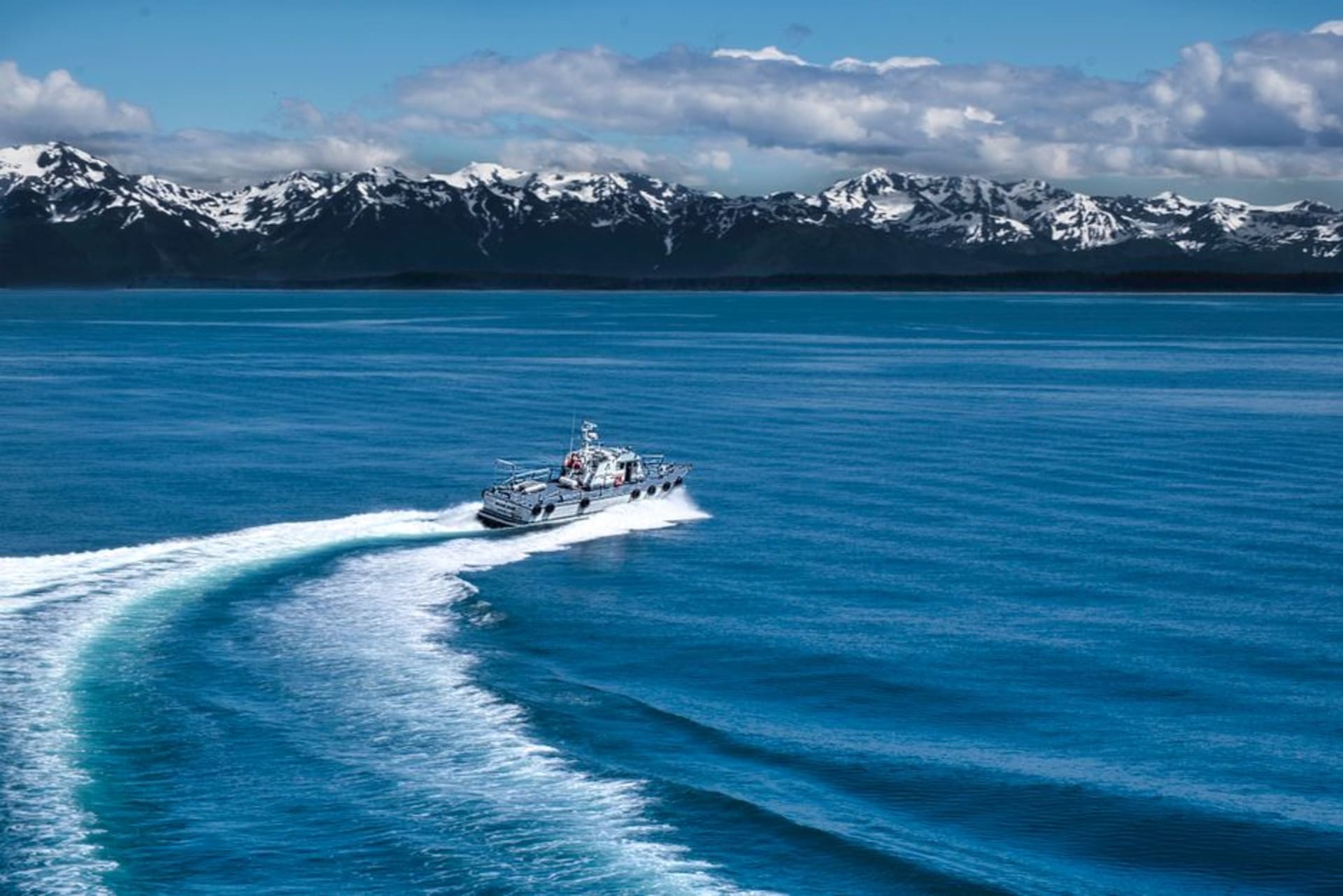
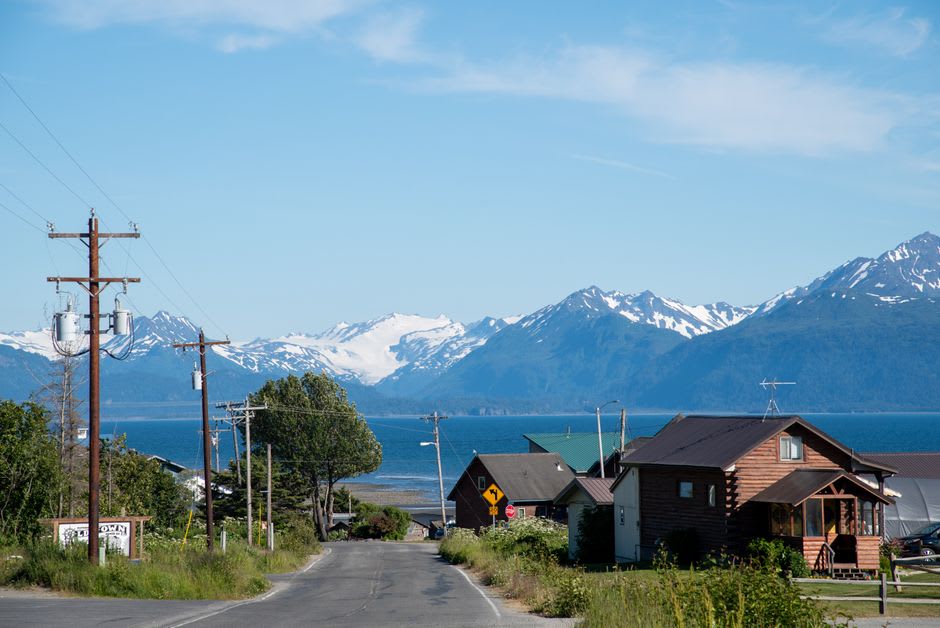
We reached Homer at the hour when the light in Alaska stops behaving like light anywhere else — low, gold, endless, refusing to commit to evening. The road had carried us four and a half hours down the Kenai from Anchorage, and then, near the town, it crested a bluff and the whole of Kachemak Bay opened below us: water like hammered pewter, and across it a wall of mountains with glaciers hanging in the folds. Lia went quiet, which is how I always know a place has landed. We drove down onto the Spit, that improbable four-mile finger of gravel, and the road just ended at the water, and we sat in the car a moment longer than necessary, both of us reluctant to break the spell by opening a door.
The Spit and the Boats
The Homer Spit is the town’s strange, wonderful heart — a natural gravel bar that runs straight out into the bay, lined with weathered boardwalks, fishing charters, chowder shacks and a scatter of galleries and bars. We walked its length in the morning while gulls wheeled over the harbor and men in orange bibs hosed down the decks of halibut boats. At the end sits the Salty Dawg Saloon, a squat log building under a leaning lighthouse tower, its walls papered floor to ceiling in signed dollar bills. We had a beer there at eleven in the morning because that is what you do, and an old deckhand told Lia about a storm off Seldovia that I’m fairly sure grew in the telling.
Halibut and the Cast of the Town
Homer calls itself the halibut fishing capital of the world, and for once the slogan feels earned rather than printed. At the fishing hole and the charter docks, people hauled in flatfish the size of doors, and the smoke of grills drifted down the Spit all afternoon. We ate ours — grilled, simple, with lemon — at a picnic table facing the water, watching a sea otter work a crab a few yards off the pilings. What struck me most, though, was the people. Homer is where a certain kind of American washes up: painters, poets, fishermen, homesteaders, refugees from the Lower 48 who came north for a summer decades ago. Their galleries line Pioneer Avenue, and the conversations run long and unhurried, as if no one here is in any danger of running out of time.
Across the Water
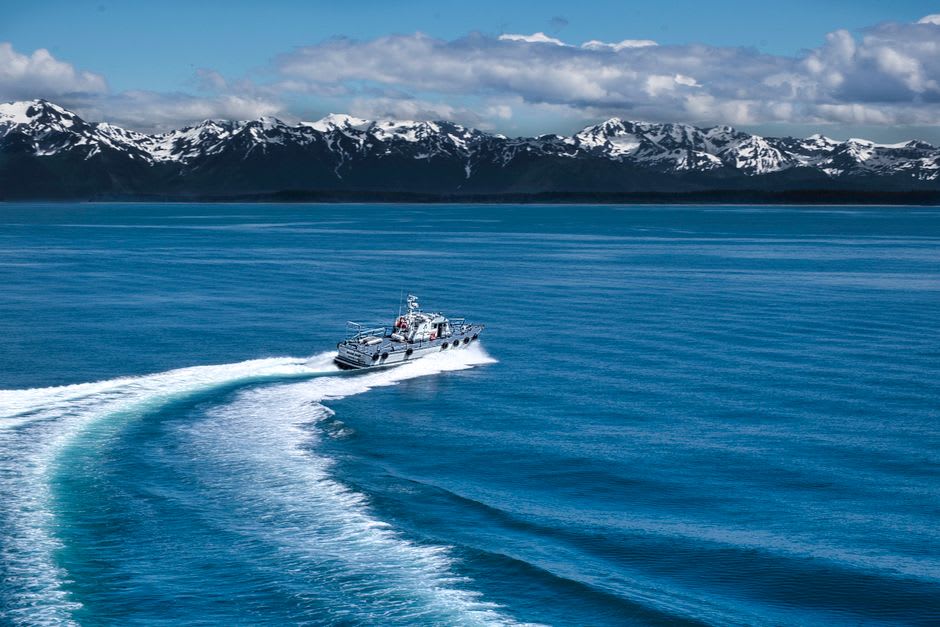
On our last morning we took the water taxi across Kachemak Bay to Kachemak Bay State Park, leaving the Spit behind and motoring toward that wall of mountains that had haunted our arrival. The captain cut the engine near a rookery and we watched puffins and cormorants fuss on the rock. On the far shore we hiked a mossy trail up toward Grewingk Glacier, the forest dripping and green, until the ice appeared at the head of its valley, calving quietly into a milky lake strewn with stranded bergs. We sat on the gravel shore and ate the sandwiches we’d packed, and Lia dipped her hand into water so cold it ached, and neither of us said much, because there was nothing to add.
Getting There
Homer sits at the very end of the Sterling Highway on the southern Kenai Peninsula, about a four-and-a-half-hour drive south of Anchorage — a beautiful road in itself, hugging the coast and the Kenai River. There’s also a small airport with flights from Anchorage. Base yourself in town or out on the Spit, book a halibut charter or a bear-viewing flight well in advance for summer, and set aside at least one full day to cross the bay by water taxi into Kachemak Bay State Park. Summer light lasts nearly all night, so pace yourself and let the long evenings do their work.