Great Sand Dunes
"Sand mountains against snow mountains — my eyes kept refusing the combination."
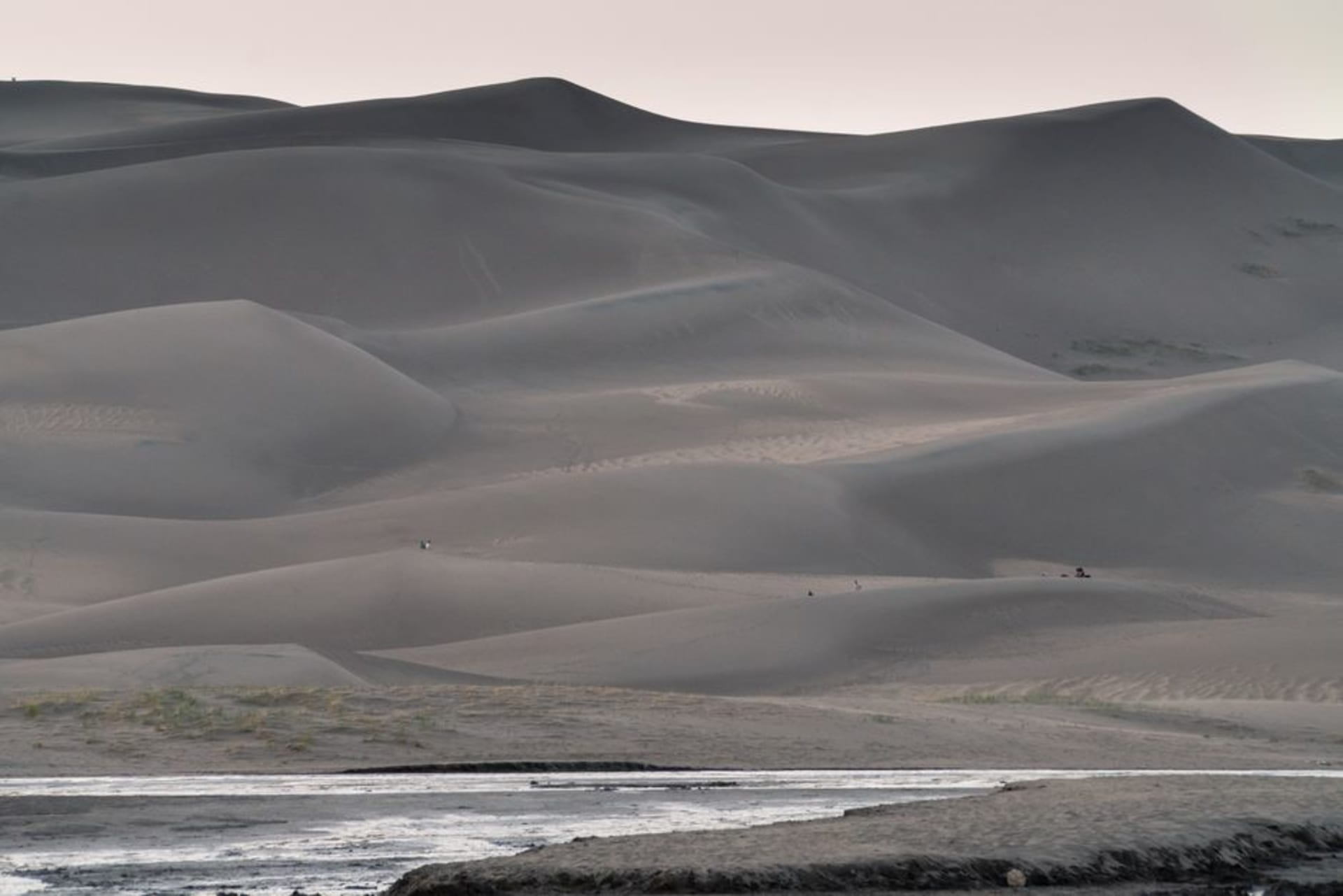
The dunes do not make sense from the road, and that is the whole pleasure of them. Lia and I came up from the San Luis Valley with the Sangre de Cristo Mountains white on the horizon, and slowly, absurdly, a range of pale sand assembled itself at the base of the snow peaks, seven hundred feet high and out of nowhere. We pulled over just to look. A desert leaning against the Rockies. I have seen a lot of landscapes that photograph better than they feel; this one is the opposite. No picture had prepared me for standing at the foot of it and craning my neck.
Climbing the High Dune
There is no trail up the dunes, which means everyone picks their own ridgeline and suffers up it in their own way. Lia and I aimed for High Dune, the tall one visible from the parking area, and I learned quickly that for every two steps up you slide one step back. My calves were on fire within twenty minutes. But the reward, up on the knife-edge crest with wind peeling threads of sand off the top, was total: the whole dunefield rippling below, the valley beyond, and those cold peaks close enough to feel. We ran the descent in great loping bounds, sinking to the ankle each stride, laughing like children the entire way down.
Medano Creek in Spring
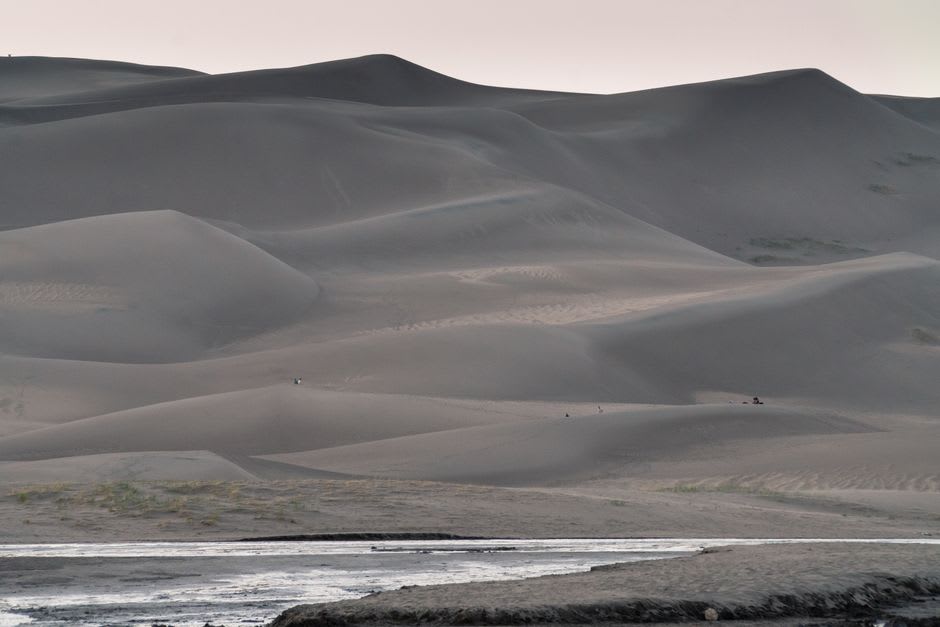
We timed our visit for late May on a ranger’s tip, and it turned out to be the secret to the place. Each spring the snowmelt feeds Medano Creek, a wide, ankle-deep sheet of water that runs right along the base of the dunes and pulses in gentle surges called surge flow. Families were everywhere with buckets and folding chairs, kids belly-flopping in three inches of water while the sand mountain towered over them. Lia rolled up her jeans and waded out, and I followed, and we stood in cold snowmelt with hot sand behind us and it was one of those small perfect contradictions that travel occasionally hands you.
The Dark After Dusk
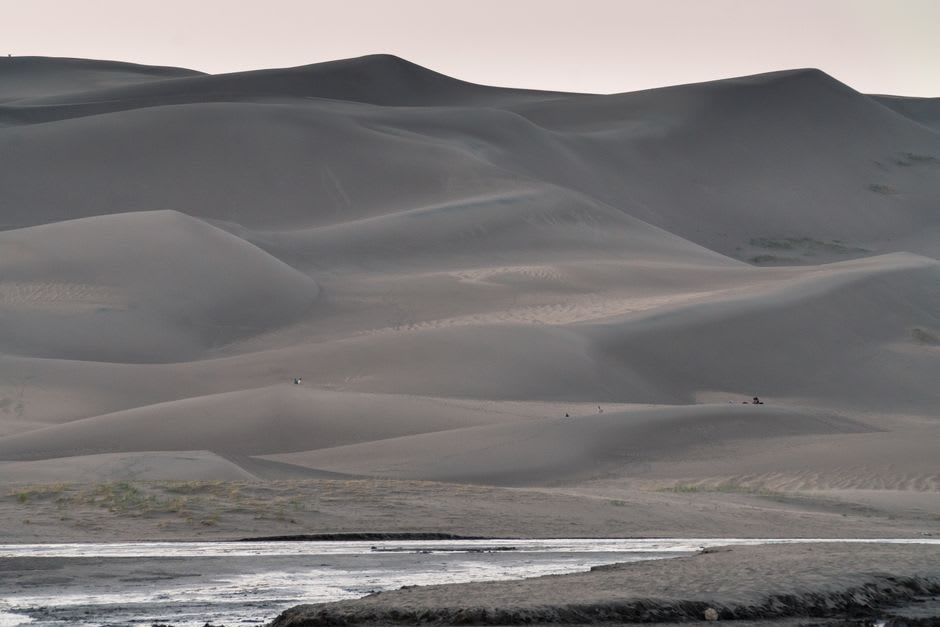
We stayed for the night, and I am glad we did, because the San Luis Valley holds some of the darkest skies in the United States and the dunes give you a horizon like nowhere else. After the day-trippers cleared out we walked back onto the sand in near silence, the ridges just visible as blacker shapes against the stars. The Milky Way came up thick over the Sangre de Cristos. Lia lay flat on the still-warm sand and I lay beside her, and for a long while we did nothing but watch satellites cross and try to name the constellations we half remembered. The wind had smoothed away every footprint from the day.
Getting There
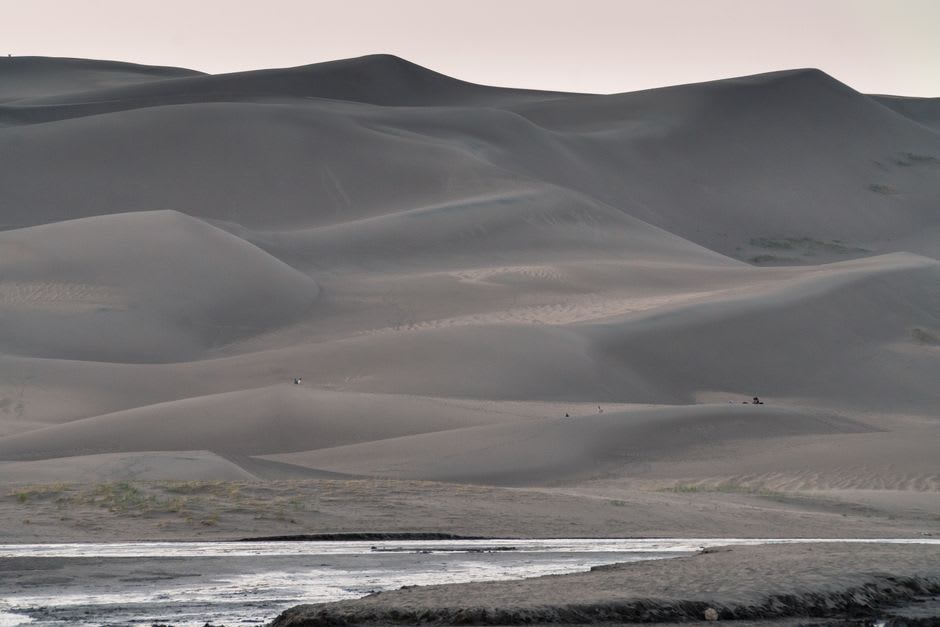
Great Sand Dunes National Park sits in southern Colorado’s San Luis Valley, about a four-hour drive from Denver or two and a half hours from Colorado Springs. The nearest base is the small town of Alamosa. For Medano Creek you need to come between late April and early June; the flow peaks in late May and vanishes by summer. Bring closed shoes for climbing, since the sand surface can exceed 60 degrees Celsius on hot afternoons, and go up early or late to avoid it. Stay past dark if you can. The sky alone is worth the trip.