We nearly didn’t come. On the map Great Basin sits in the emptiest corner of Nevada, a long way from anywhere, and every person we asked in Ely gave us the same slightly puzzled look, as if we’d chosen to visit the space between two more famous places. But Lia had read one line in a battered guidebook — “the oldest living things on the planet grow here” — and that was enough. We filled the tank, bought too much water, and drove east into a landscape that kept widening until it felt like the road was the only made thing in the world.
The Bristlecone Grove
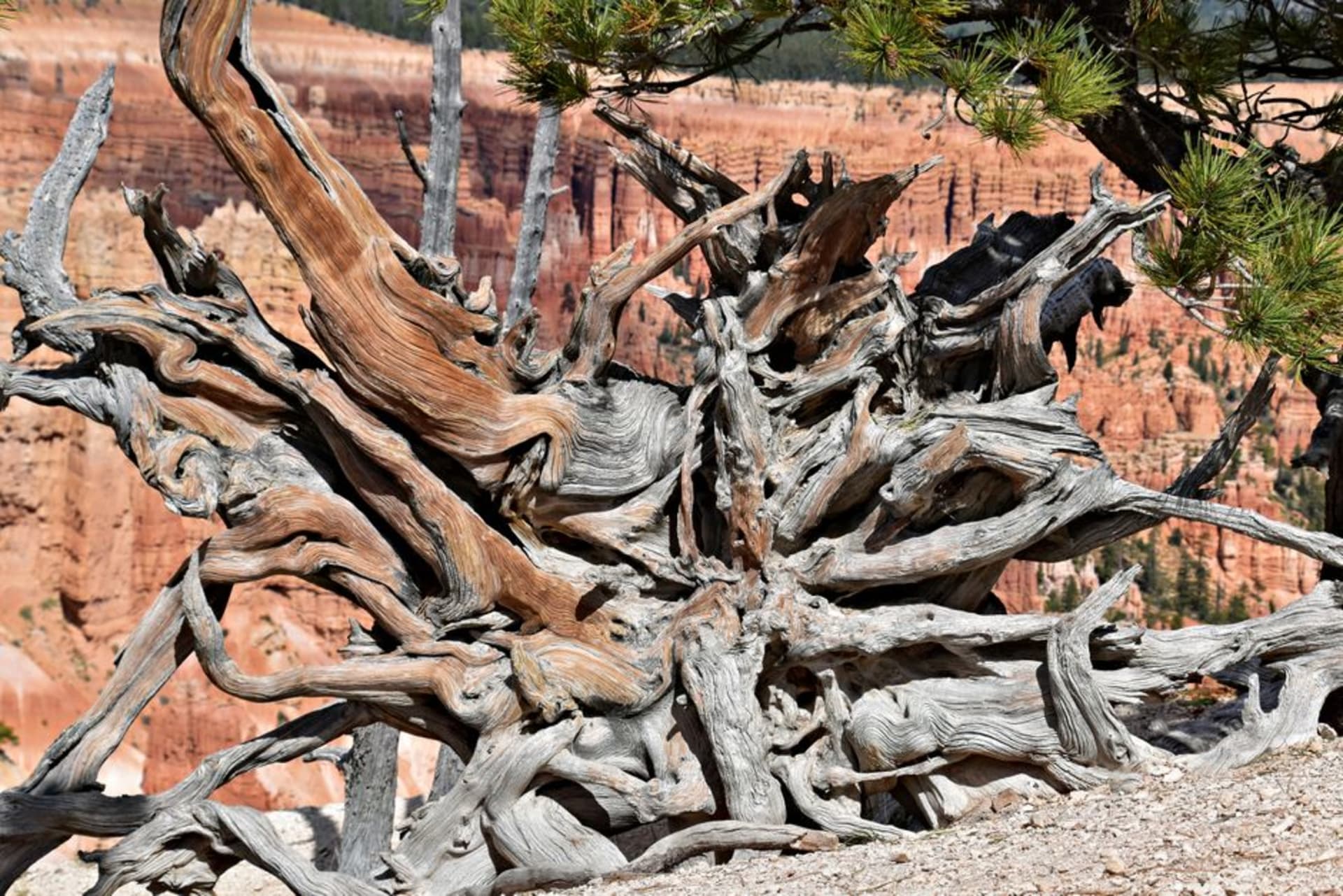
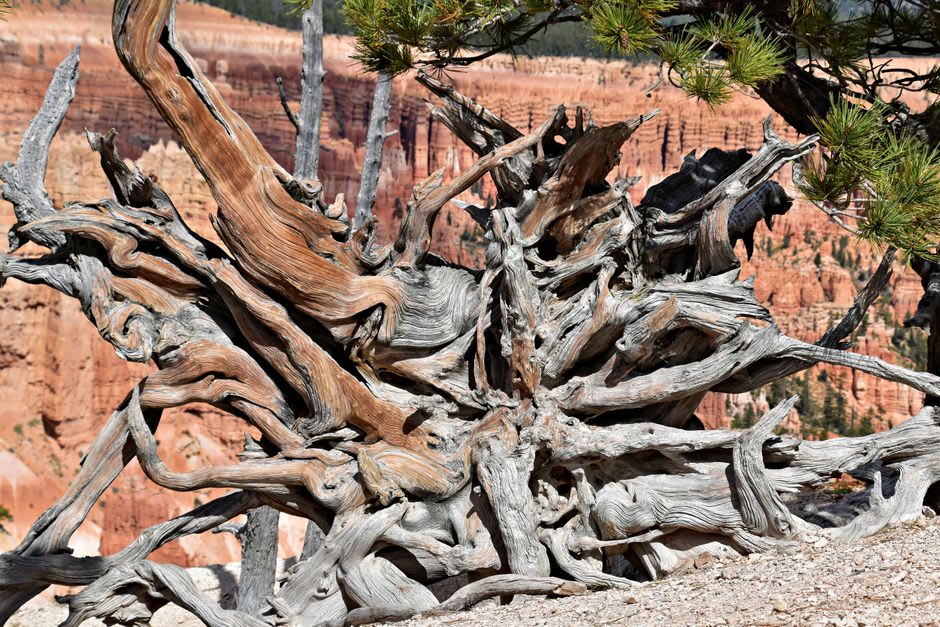
You climb to reach the bristlecone pines, up past 3,000 metres where the air thins and the trees stop pretending to be graceful. They are twisted, half-dead, silvered by wind, and some of them were already ancient when the pyramids were young. Lia stood in front of one for a long time without saying anything. The ranger had told us that morning that a few of these trees are over 4,000 years old, and standing there you feel the arithmetic of that in your chest. The wood is so dense it barely rots; a fallen trunk beside the trail had been lying there, the sign said, for a thousand years. We ate our sandwiches on a rock and spoke in low voices, the way you do in a cathedral.
Lehman Caves
Back down at the mountain’s foot we ducked out of the glare into Lehman Caves, which despite the plural is really one long, decorated passage burrowed into marble and limestone. Our guide carried an old-fashioned tone, half science and half showmanship, and turned the lights off at one point so we could feel a darkness so total it pressed on the eyes. The formations here are famous among cave people for their “shields” — strange flat discs that grow at odd angles and that geologists still argue about. Water beaded on the ceiling. Somewhere far off a single drop fell with a sound like a coin dropped in a well. Lia squeezed my hand in the dark and I understood, without needing to see her face, that she was grinning.
Wheeler Peak and the Night Sky
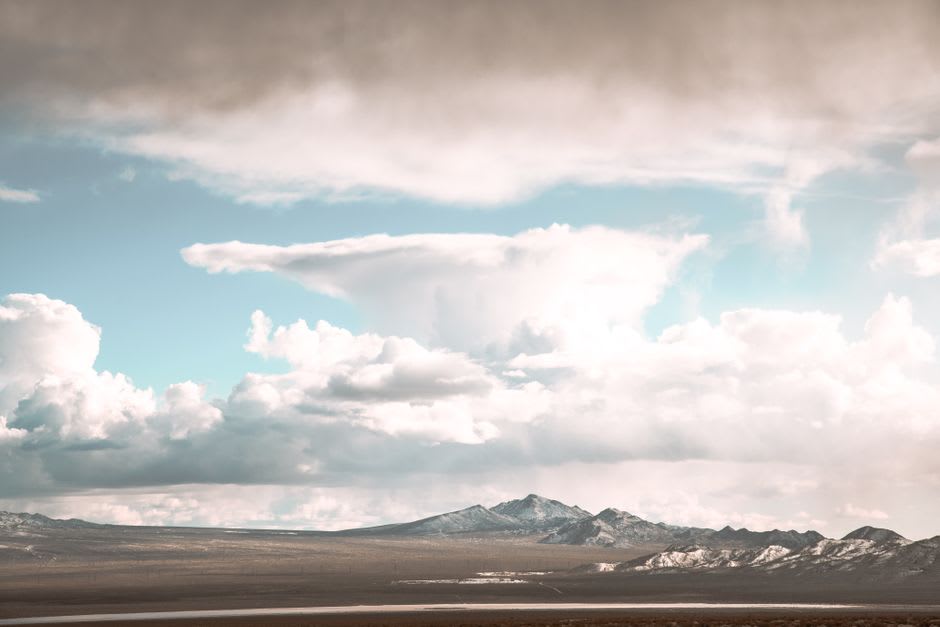
Wheeler Peak dominates everything, a 3,982-metre wall of rock still cradling one of Nevada’s only glaciers in its shadowed north face. We hiked partway up to the alpine lakes, where the water was so cold and clear it looked like poured glass, and turned back when the wind picked up teeth. But the real reason to stay is the dark. This is one of the least light-polluted corners of the lower forty-eight, and after sunset we lay on the still-warm hood of the car and watched the Milky Way arrive — not a smudge but a river, with texture and depth, spilling from horizon to horizon. Lia counted three shooting stars before I found the first. I have seen dark skies since, but that night reset something in me.
Getting There
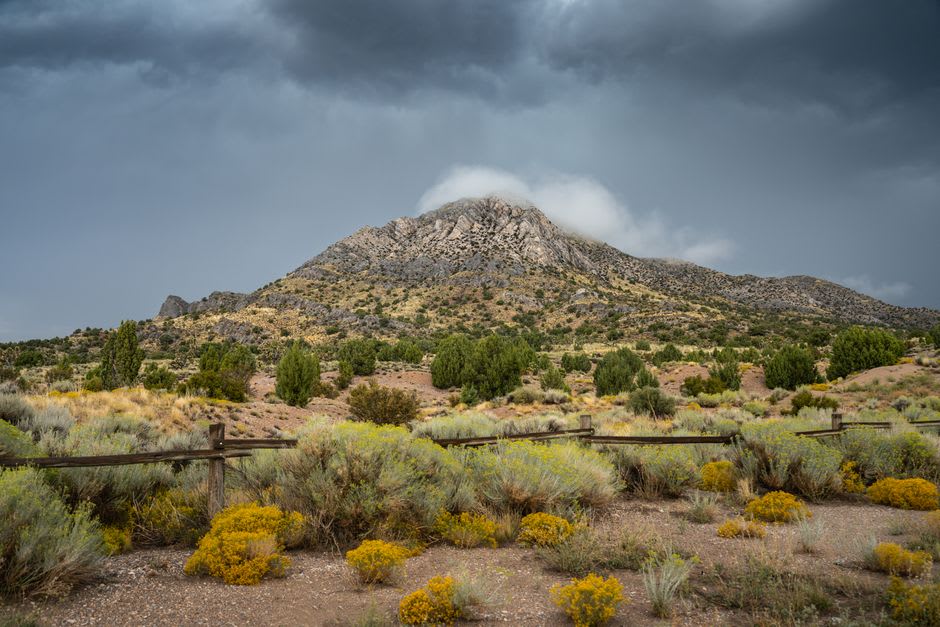
There is no easy way, and I’d argue that’s a feature. The park sits near the tiny town of Baker, just off Highway 50 — the road Nevada proudly calls “the Loneliest Road in America.” Most travellers come from the west via Ely, about an hour’s drive, or from Salt Lake City, roughly four hours to the northeast. Fill your tank before you commit; services thin out fast. Reserve a Lehman Caves tour online well ahead, because tickets are limited and sell out, and bring layers — the desert floor and the peak can differ by twenty degrees. Come for a night at least. The stars alone are worth the miles.