Gatlinburg
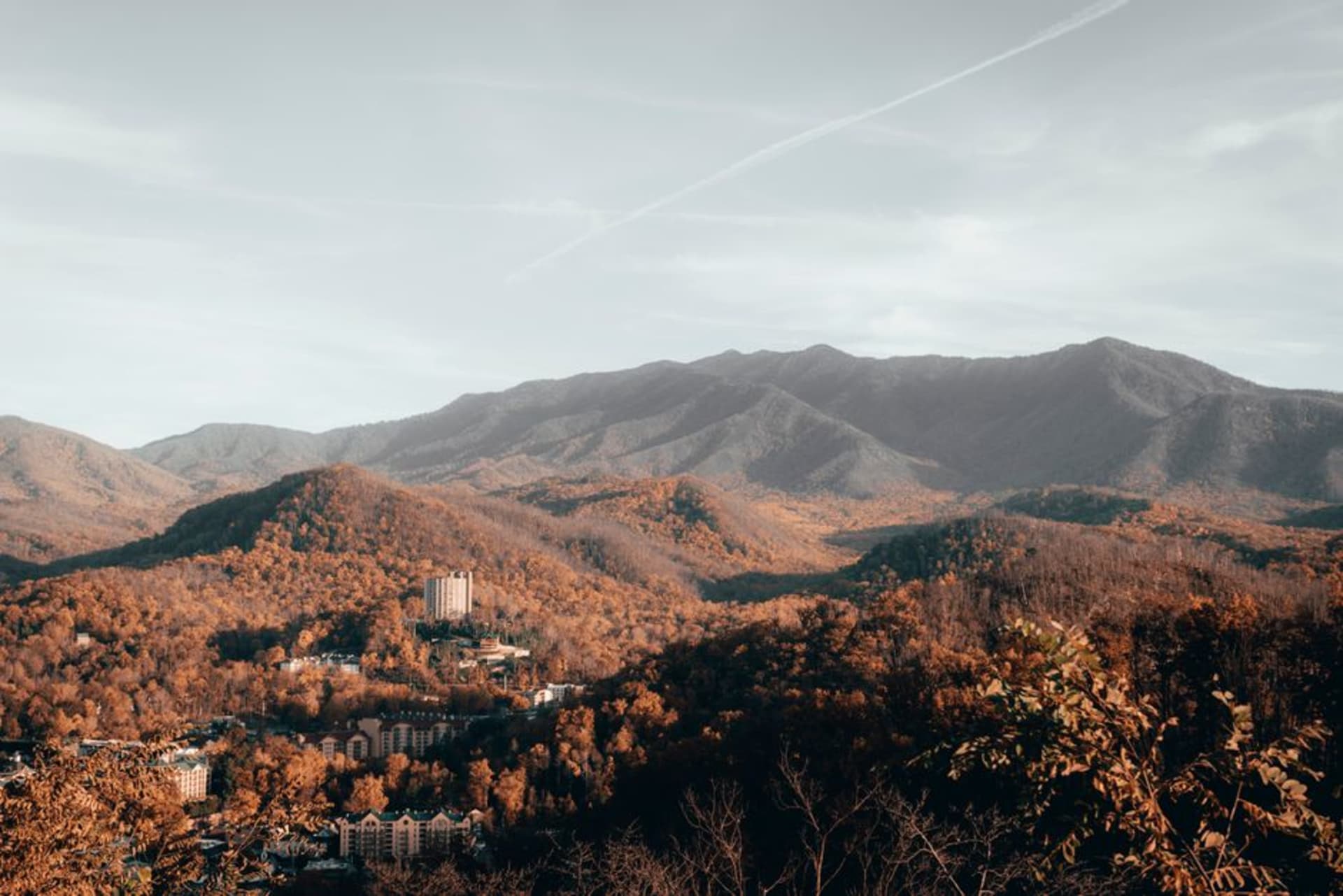
"The Smokies earn their name at dawn — ridge behind ridge, each one paler, dissolving into cloud."
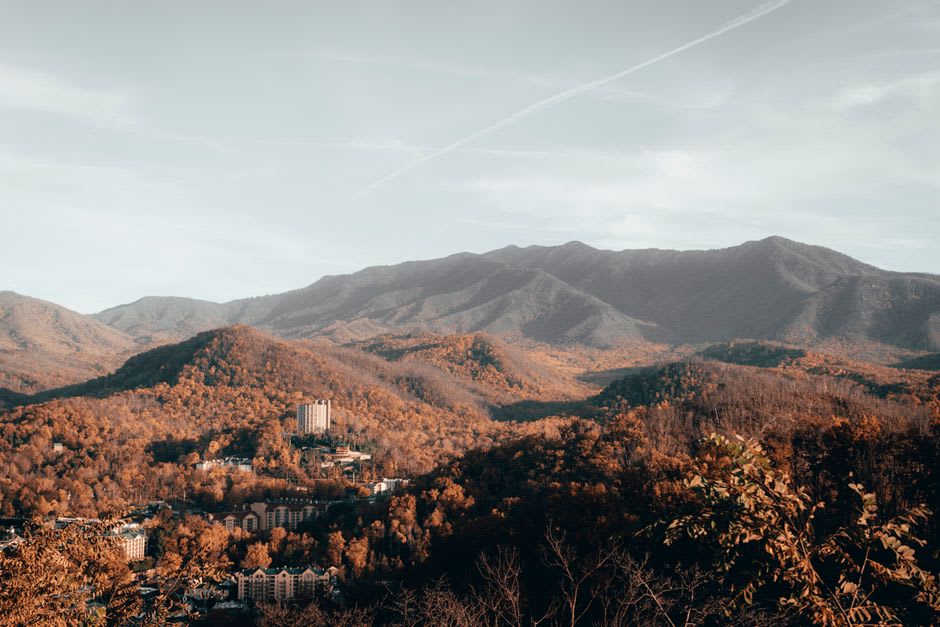
Gatlinburg is a strange and wonderful collision, and the drive in tells you so: one moment you are climbing through some of the wildest forest in the eastern United States, the next you are on a main street of pancake houses, moonshine tasting rooms, and a Ripley’s aquarium. Lia and I had come for the mountains and I confess I braced myself for the town. But that first evening, eating fried everything and watching the ridgelines turn violet behind the neon, something in me relaxed. There is an unpretentious, family-holiday joy to Gatlinburg that refuses to be sneered at. And behind it all, always, loomed the real reason we were here: the Great Smokies, the most visited national park in America, beginning right where the sidewalk ends.
Into the Smokies
We were up early to beat the crowds, driving up to Newfound Gap where the road crosses the spine of the mountains and the state line between Tennessee and North Carolina runs down the middle of the parking lot. The mist was doing its famous work — layer upon layer of blue ridges fading into white, the “smoke” that is really the forest breathing. We hiked a stretch of the Appalachian Trail from the gap, boots in cool mud, salamanders in every trickle of water, and the forest so dense and green and old it felt prehistoric. Later we drove the winding road to Clingmans Dome and climbed its spiral ramp to the highest point in the park, where the whole Appalachian world rolled away beneath us into haze.
Roaring Fork and the old cabins
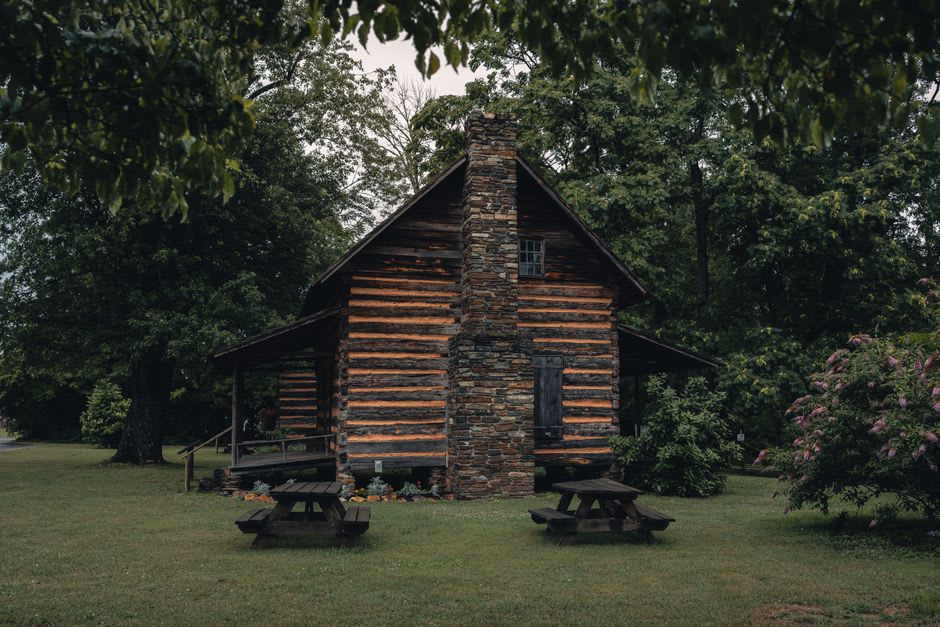
One of my favorite mornings was the Roaring Fork Motor Nature Trail, a narrow one-way loop just minutes from town that most of the crowds skip. The forest closes in overhead, a mountain stream tumbles alongside, and scattered through the trees are the weathered log cabins and grist mills of the Appalachian families who farmed these hollows before the park existed. We parked and walked to a couple of them, floorboards creaking, and I tried to imagine wintering here in the 1890s with nothing but that stream and those walls. A little further on, the trail passes trailheads to waterfalls — we scrambled up to Grotto Falls, where the path actually walks behind the curtain of water, and Lia stood under the overhang laughing as the spray caught the light.
The town and the view from above
Back in Gatlinburg we gave ourselves over to the fun of it. We rode the chairlift and then the SkyBridge — a swaying pedestrian suspension bridge strung high across a ravine, with a glass panel in the middle that Lia refused, absolutely refused, to stand on. We tasted moonshine from little paper cups in a barn-like distillery, sampled it more out of curiosity than conviction, and browsed the craft galleries of the Arts and Crafts Loop, where real Appalachian potters and woodworkers still sell from their studios. In the evening the strip lit up, families drifted between candy shops and pancake counters, and the dark bulk of the mountains stood over all of it — a reminder that the wilderness is never more than a few minutes away.
Getting There
The nearest airport is McGhee Tyson in Knoxville, about an hour’s drive northwest, with good connections across the eastern United States. From there you drive south through Pigeon Forge — Dolly Parton’s hometown and a riot of attractions in its own right — before the valley narrows into Gatlinburg. A car is very useful for reaching the park’s scattered trailheads and scenic drives, though once in town a free trolley loops the strip and even runs to some park entrances, sparing you the notorious summer parking crush. Aim to enter the Smokies early; by mid-morning in peak season the roads fill.