Everyone tells you Illinois is flat, and for hours of driving it is — a green table stretching to every horizon, corn and sky and not much else. Then, close to the Mississippi in the far northwest corner, the land buckles. Lia and I came over a rise and suddenly there were hills, real ones, wooded and steep, and folded down among them a town that looked like a stage set someone had left out in the weather for a century and a half. Galena. Ninety-something percent of it is on the National Register, and you feel that instantly — not as preservation but as a kind of stubbornness, a place that simply declined to be demolished.
Main Street Frozen in Amber
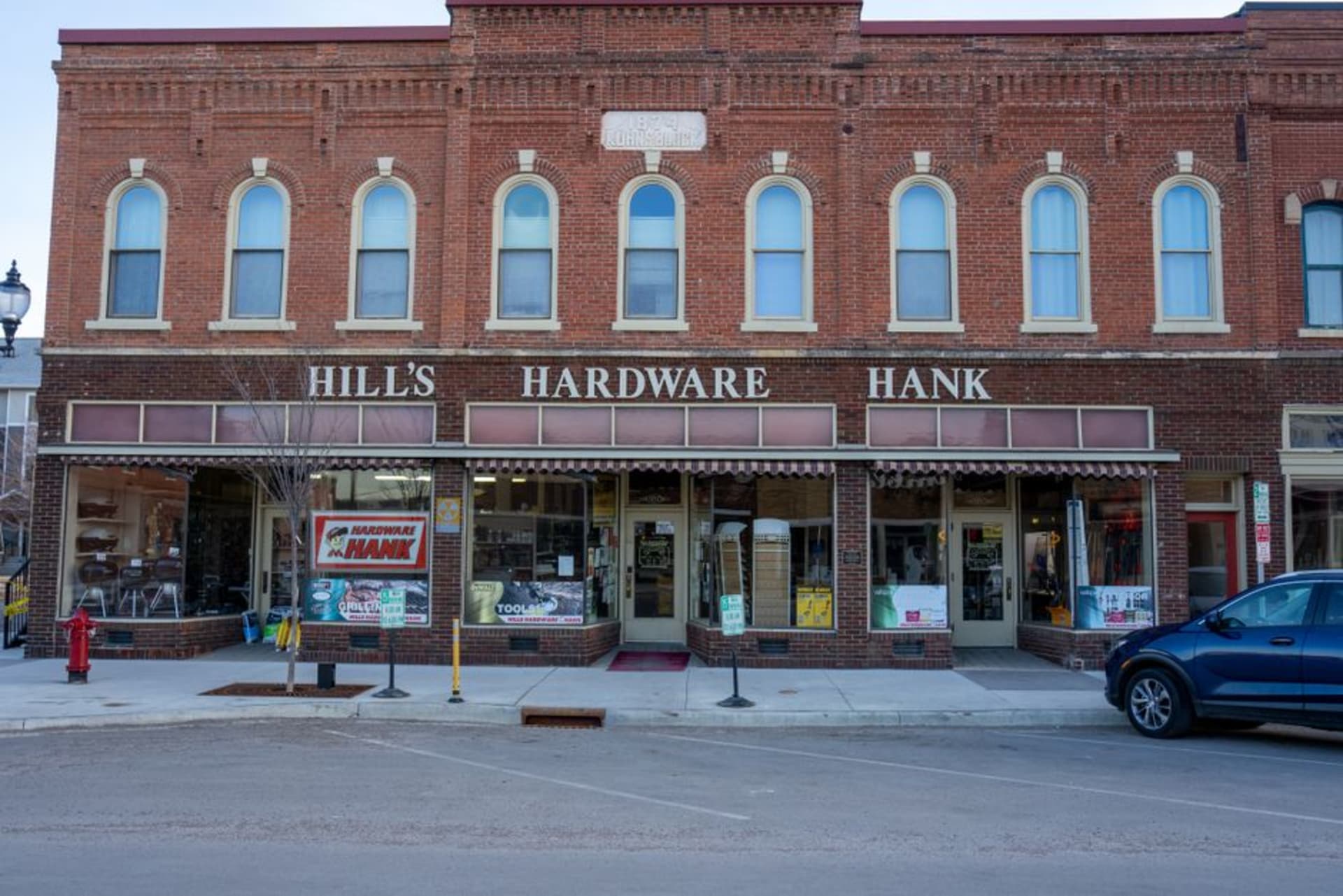
Galena’s Main Street bends along the Galena River at the foot of the bluffs, a solid wall of nineteenth-century brick storefronts that now hold wine shops and bookstores and places selling absurdly good fudge. We walked its length slowly, ducking into a cluttered antiques shop where Lia found a tarnished brass compass she haggled over and lost. The street floods sometimes — there’s a floodgate at one end and old high-water marks painted on the buildings — but mostly it just sits there, impossibly intact. I kept expecting to see a man in a stovepipe hat. Instead there was an ice cream line out the door and a dog asleep in a doorway.

Grant Slept Here
Galena’s great claim is Ulysses S. Grant, who was working in his family’s leather goods store here, going nowhere, when the Civil War pulled him out and eventually made him a general and then a president. The town gave him a house when he came home a hero, and it stands on the hill still, preserved with much of the family’s own furniture inside. We toured it on a quiet morning, and I found it oddly moving — the modest rooms, the sense of a man who’d been ordinary here and would never be ordinary again. Lia lingered at the window where the hills roll away, and I wondered what he’d made of coming back to all this smallness after the size of what he’d seen.

Into the Hills
The country around Galena is the real surprise — the Driftless Area, a patch of the Midwest the glaciers somehow missed, so it kept its ridges and hollows and twisting valleys while everything around it was scraped flat. We drove out into it one afternoon, past red barns and grazing cattle, up narrow lanes that crested onto views stretching toward the Mississippi. We stopped at a hilltop winery, sat on the terrace with a local red neither of us will remember, and watched the shadows of clouds drag slowly across the folded land. It didn’t feel like Illinois. It didn’t feel like anywhere in particular, which is exactly why we didn’t want to leave.

Getting There
Galena sits in the far northwest corner of Illinois, right near the Mississippi and the borders of Iowa and Wisconsin. It’s about a three-hour drive west of Chicago, the nearest major airport, and roughly an hour and a half from Madison, Wisconsin. There’s no train or bus worth the trouble — this is a place you reach by car, and the last stretch through the Driftless hills is half the reward. Weekends bring crowds from Chicago, so aim for a weekday if you can, and give yourself two nights. One is never enough here.