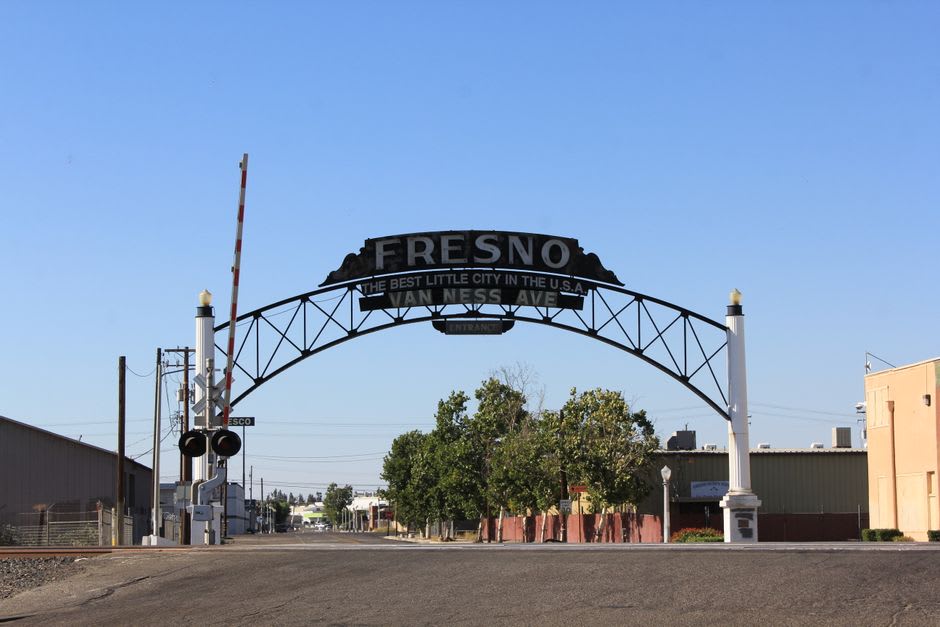
Fresno
"We came to Fresno only to sleep before the mountains, and left having eaten the best peaches of our lives."
Fresno was, on paper, purely practical for us — a bed and a full tank before we drove up into Kings Canyon. But we arrived in late summer, and the first thing that happened was a woman at a roadside fruit stand handed Lia a peach and told her to just try it. Juice ran down to her elbow. We bought a whole flat, ate four of them in the parking lot, and revised our opinion of the place on the spot. This is the most productive farmland on earth, and in Fresno you taste it before you understand it.
The Forestiere Underground Gardens
The strangest and most wonderful thing we found in Fresno was underground. A Sicilian immigrant named Baldassare Forestiere spent forty years hand-digging a labyrinth of rooms, courtyards, and planting chambers beneath the hard valley soil to escape the brutal heat. Down there it was twenty degrees cooler, dim and cool as a wine cellar, with citrus trees growing up through skylights he’d carved to reach the sun.
Our guide, a young woman who clearly loved the place, showed us grapevines a century old still fruiting through the ceiling. Forestiere had no blueprint; he simply dug where the day took him. Lia said it was like walking through one man’s patience made solid, and she was right.
The Tower District
Fresno’s most alive neighborhood is the Tower District, named for the tall Art Deco theater sign that anchors it. We spent an evening there among the vintage shops, taco joints, and old-fashioned marquees, the whole street lit up warm against the dark. It’s the kind of unpretentious, lived-in district where a fine-dining bistro sits next to a taqueria that’s been family-run for generations.
We ate too much at a Mexican place with hand-pressed tortillas, then walked it off past the old theater as a swing band spilled music onto the sidewalk. Fresno doesn’t try to charm you; it just gets on with being itself, and I found that refreshing after a string of prettier, more self-conscious towns.
Gateway to the Sierra
Of course, the real reason to be here is what lies to the east. From Fresno the land rolls up through foothills of golden grass and oak into the Sierra Nevada, and within a couple of hours you can stand beneath the largest trees on the planet. We used the city as our base for day trips into Kings Canyon and Sequoia, driving out at dawn past orchards heavy with fruit and returning at night, dust on the car and giant sequoias still filling our minds.
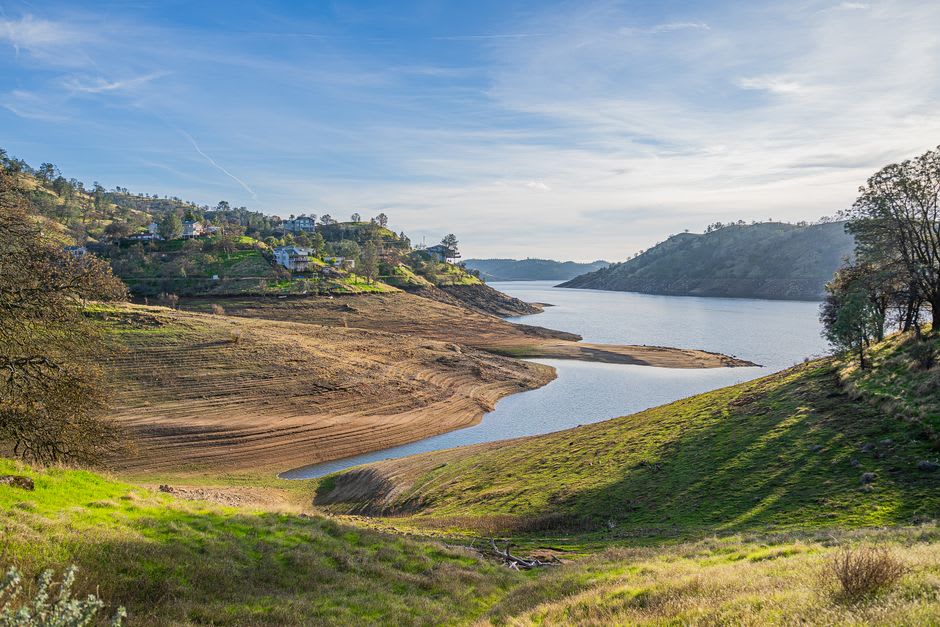
One afternoon we drove up into the foothills near the Kings River and swam in a cold green pool below the road, the valley heat forgotten entirely. Fresno’s genius is its position — a hot, hardworking city holding the keys to some of the coolest, quietest wilderness in America.
Getting There
Fresno sits squarely in the center of California’s Central Valley, along State Route 99, about 3.5 hours from both Los Angeles and San Francisco. Fresno Yosemite International Airport, on the city’s northeast side, offers direct flights across the West and is genuinely convenient to the parks. It’s the closest major city to Yosemite’s south entrance (about 90 minutes) and to Kings Canyon and Sequoia (roughly an hour into the foothills). Amtrak’s San Joaquins line stops downtown with bus connections onward. A car is essential here — the whole point of Fresno is what you can drive to.