Eugene
"By the third mile of the river path I understood why this town runs — it's simply the most natural way to be here."
Lia and I arrived in Eugene expecting a quiet stop between the coast and the mountains, and instead spent our first evening being gently overtaken by joggers. We were walking the riverside path at dusk, and a steady stream of runners flowed past us in both directions — students, retirees, a man pushing a stroller at a pace I couldn’t have matched empty-handed. This is Track Town USA, where the ghost of Steve Prefontaine still sets the tempo. We gave up strolling and started walking briskly, just to belong.
The Willamette and Its Paths
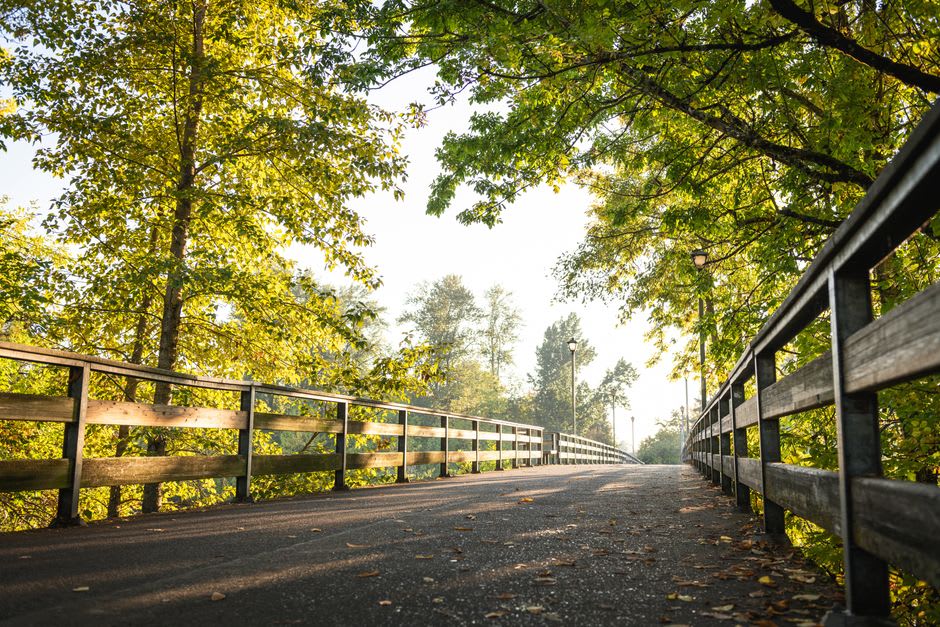
The river is the spine of Eugene. Miles of paved trail run along both banks, stitched together by pedestrian bridges, so you can loop for hours without touching a road. We rented bikes and rode out to Alton Baker Park, where the path slips into cottonwoods and the water runs cold and quick beside you. Herons stood in the shallows. A crew shell knifed past, the coxswain’s voice carrying across the flat morning water.
We stopped at Pre’s Trail, the woodchip running path built in Prefontaine’s memory, and walked a soft mile of it just to feel the springiness underfoot. Even the dirt here is designed for motion.
Forests at the City’s Edge
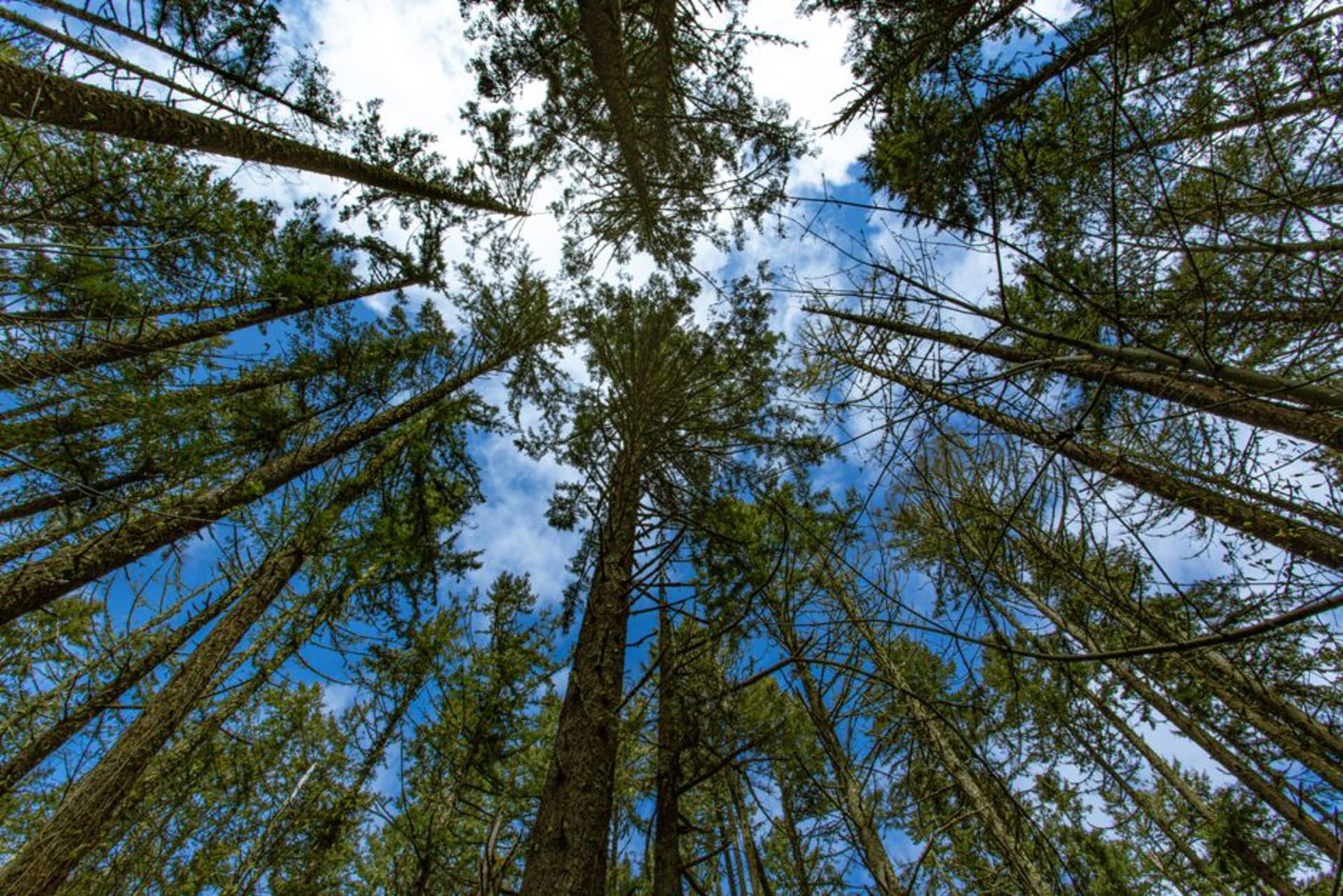
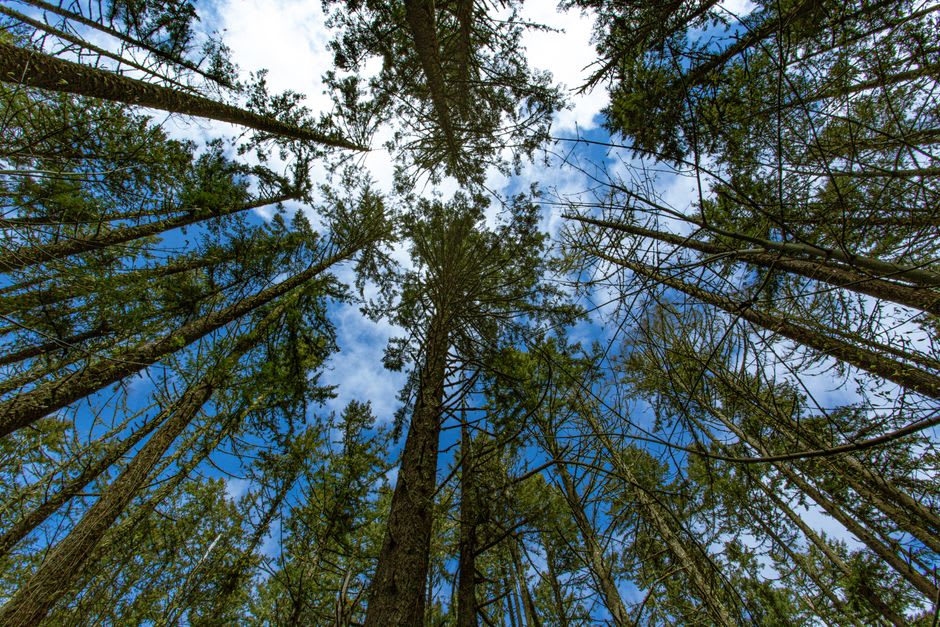
What struck me most about Eugene is how quickly the town surrenders to trees. We drove fifteen minutes to Spencer Butte and climbed through a dark, dripping Douglas-fir forest, the trail turning to bare rock near the top. From the summit the whole valley opened up — the city small and green below, the Coast Range in one direction and the snowy Cascades in the other, and Lia grinning with mud on both knees.
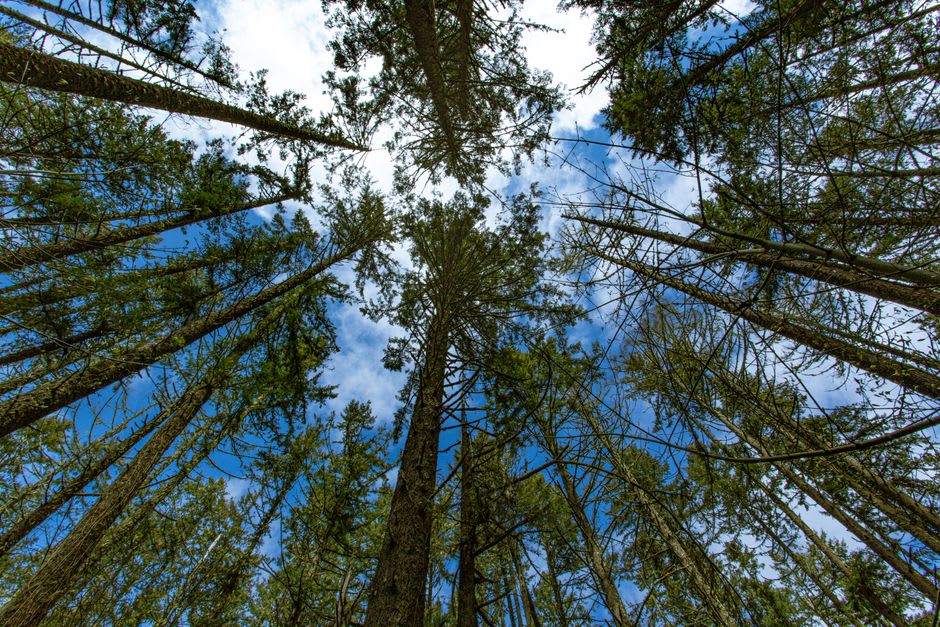
Back in town we wandered Hendricks Park, a hillside of old rhododendrons and towering firs, so quiet we could hear individual raindrops finding their way down through the canopy. Eugene never makes you choose between the city and the wild; it just folds them into each other.
Saturday Market and Campus Energy
On Saturday we joined the crowd at the Eugene Saturday Market, an open-air sprawl of tie-dye, pottery, hot food, and buskers that has run since 1970 and feels gloriously unchanged. Lia bought a hand-thrown mug from a potter who talked us through her whole firing process; I ate a curry from a stall run by a man who’d clearly been perfecting it for decades.
Afterward we drifted onto the University of Oregon campus, past the ivy-covered halls and the hush of Hayward Field’s great curved grandstand. Students read on the lawns; the whole place hummed with the low, hopeful energy of a college town in good weather. We sat under a tree and let it wash over us.
Getting There
Eugene lies at the southern end of Oregon’s Willamette Valley, about 110 miles south of Portland — roughly two hours down Interstate 5. Eugene Airport handles regional flights with connections through Seattle, San Francisco, and Denver, a short drive northwest of downtown. Amtrak’s Coast Starlight and the Cascades line stop at the handsome downtown depot, making the car-free trip from Portland or the coast genuinely pleasant. In town, the EmX bus runs frequently, but Eugene rewards those who arrive ready to walk, cycle, or, if you can manage it, run.