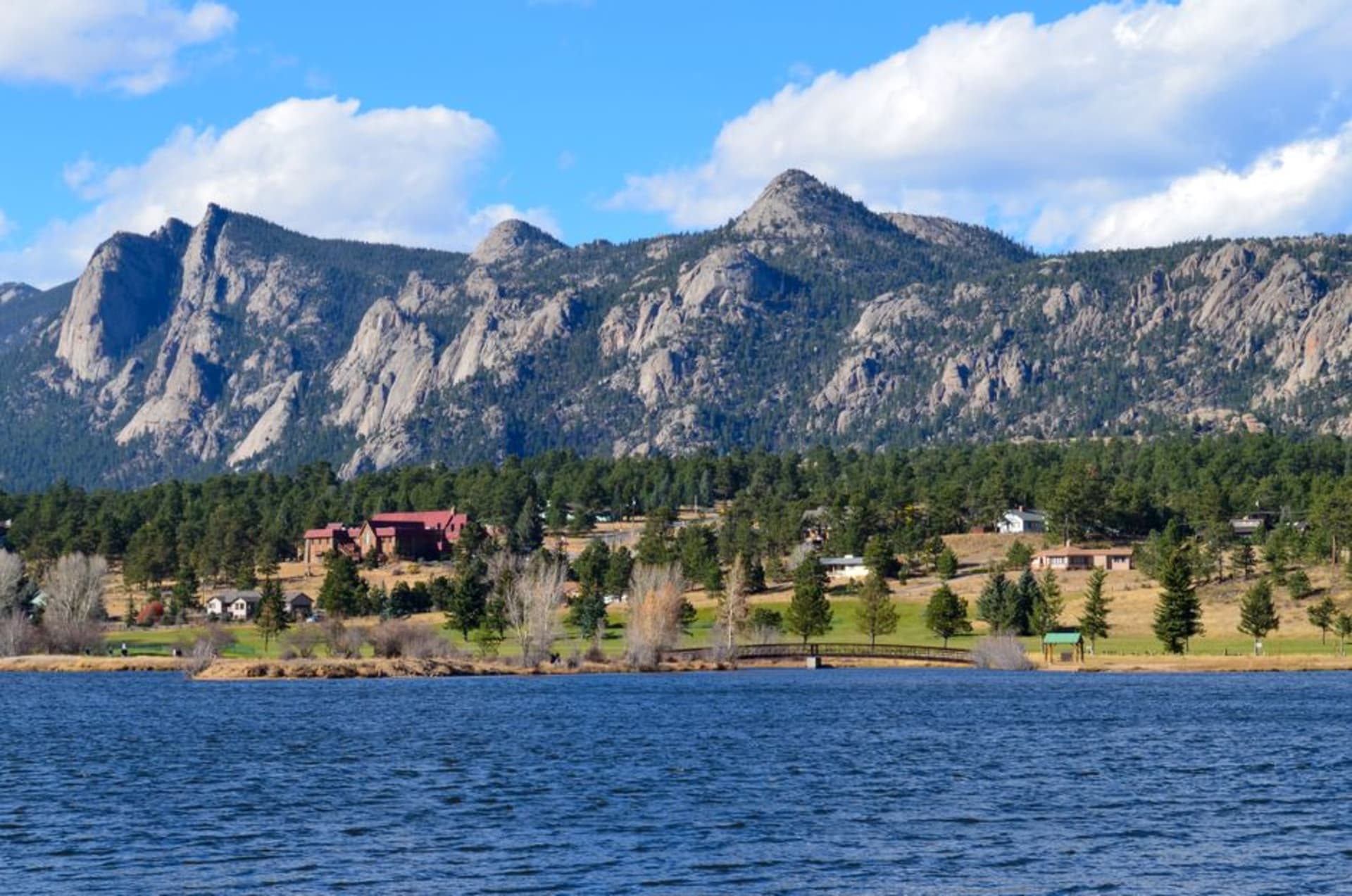
Estes Park
"The town where the elk have right of way and the mountains start at the curb."
We had barely found parking in Estes Park when Lia gripped my arm and pointed. A full-grown bull elk was ambling down a side street, unhurried, antlers swaying, moving between parked cars as though he owned the deed to the whole town. Nobody panicked; a few people slowed, phones out, and let him pass. That was our welcome to Estes Park — a town that sits so exactly on the line between civilization and wilderness that the wild animals simply commute through it.
The elk and the edge of the wild
Estes Park is famous for its elk, and rightly so. In the meadows on the town’s edge, and often right along the river walk downtown, herds graze in the cool of morning and evening. We spent our first dusk on a bench by Lake Estes watching a herd drift across the grass, the bulls occasionally lifting their heads to that eerie autumn bugle that carries for miles. Lia, who grew up nowhere near anything larger than a fox, kept whispering as if we might spook them. We couldn’t. They had seen far more of us than we had of them.
The Stanley Hotel
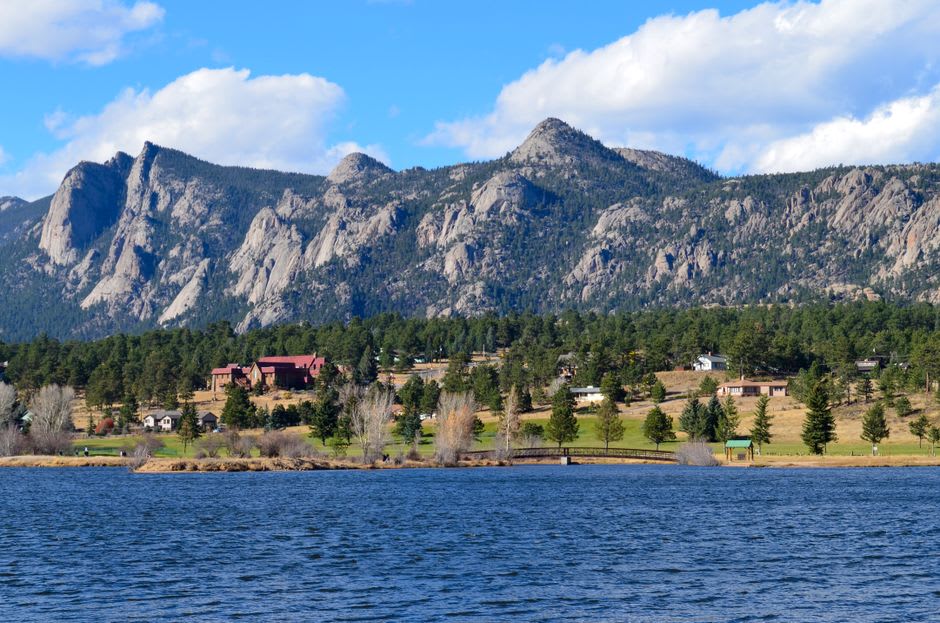
On the hill above town stands the Stanley Hotel, a grand white Colonial-Revival pile from 1909 that inspired Stephen King’s The Shining after he spent an uneasy night there. We walked up for a coffee on the veranda, mostly for the view — the whole valley spread out below and the mountains stacked behind it. The place leans cheerfully into its spooky reputation, but what struck me was the light on that long white facade in the late afternoon, and the way the wind moved through the pines around it. Lia declared it too beautiful to be haunted. I wasn’t so sure.
Into Rocky Mountain National Park
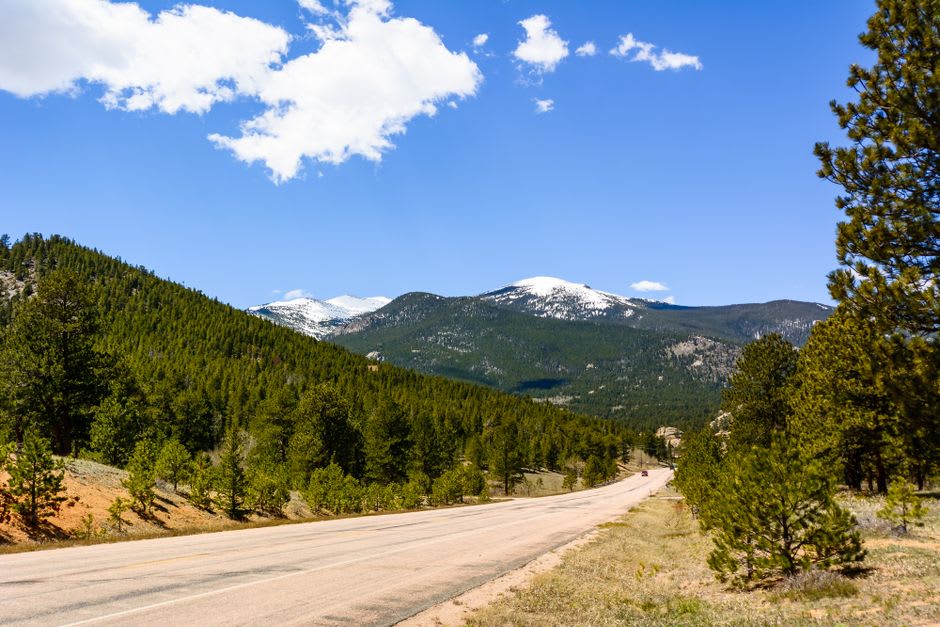
Estes Park exists mostly as a doorway, and the door opens onto Rocky Mountain National Park a couple of minutes past the last shop. We drove in early one morning to beat the crowds and walked the easy loop around Bear Lake, its surface so still it held a perfect upside-down mountain. Higher up, the Trail Ridge Road climbs above the treeline into raw alpine tundra where the wind never stops and marmots whistle from the rocks. We stood at over eleven thousand feet, coats zipped in July, and watched clouds pour over the divide.
Getting There
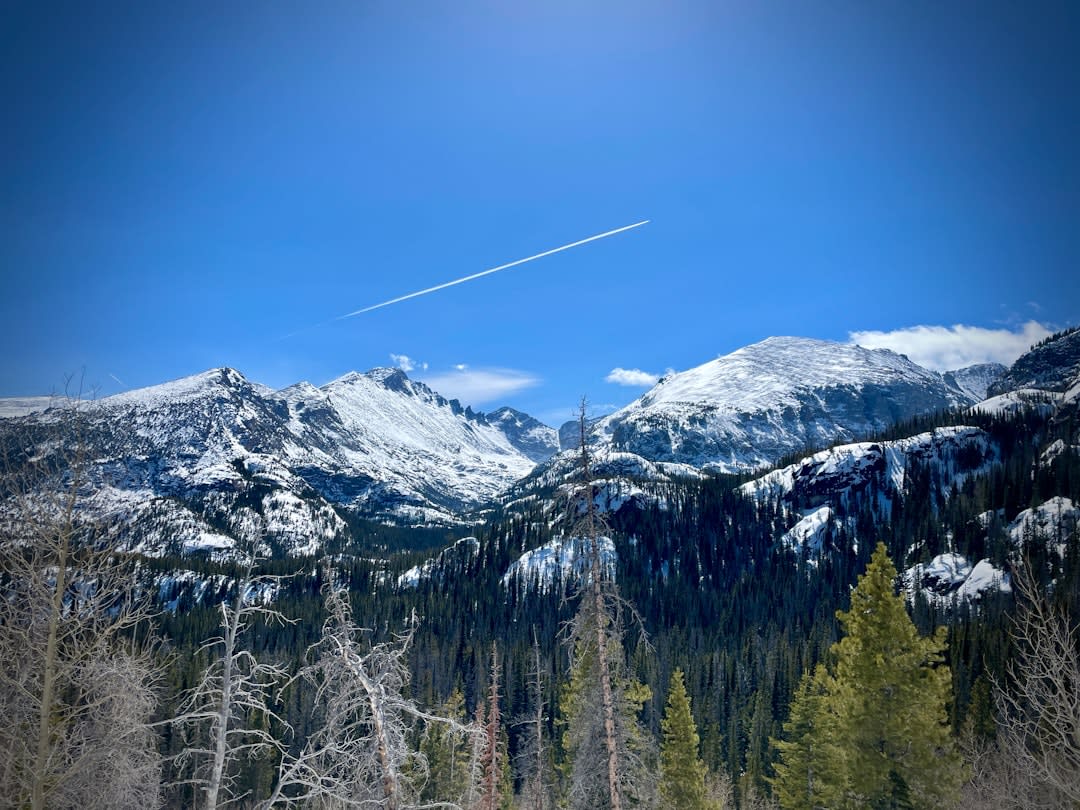
Estes Park lies about ninety minutes northwest of Denver, an easy drive up through the foothills and the narrow, scenic Big Thompson Canyon — the most common approach, and a beautiful one. There is no airport in town; most visitors fly into Denver and rent a car, which you will want here, since the national park and its trailheads spread out well beyond walking distance. In summer the park runs a timed-entry system and a shuttle from town to the busiest trailheads, so plan an early start. Come in September if you can, when the aspens turn gold and the elk rut fills the valleys with sound.