Detroit
"Someone had spray-painted 'still here' on a boarded window, and the whole city seemed to be saying it."
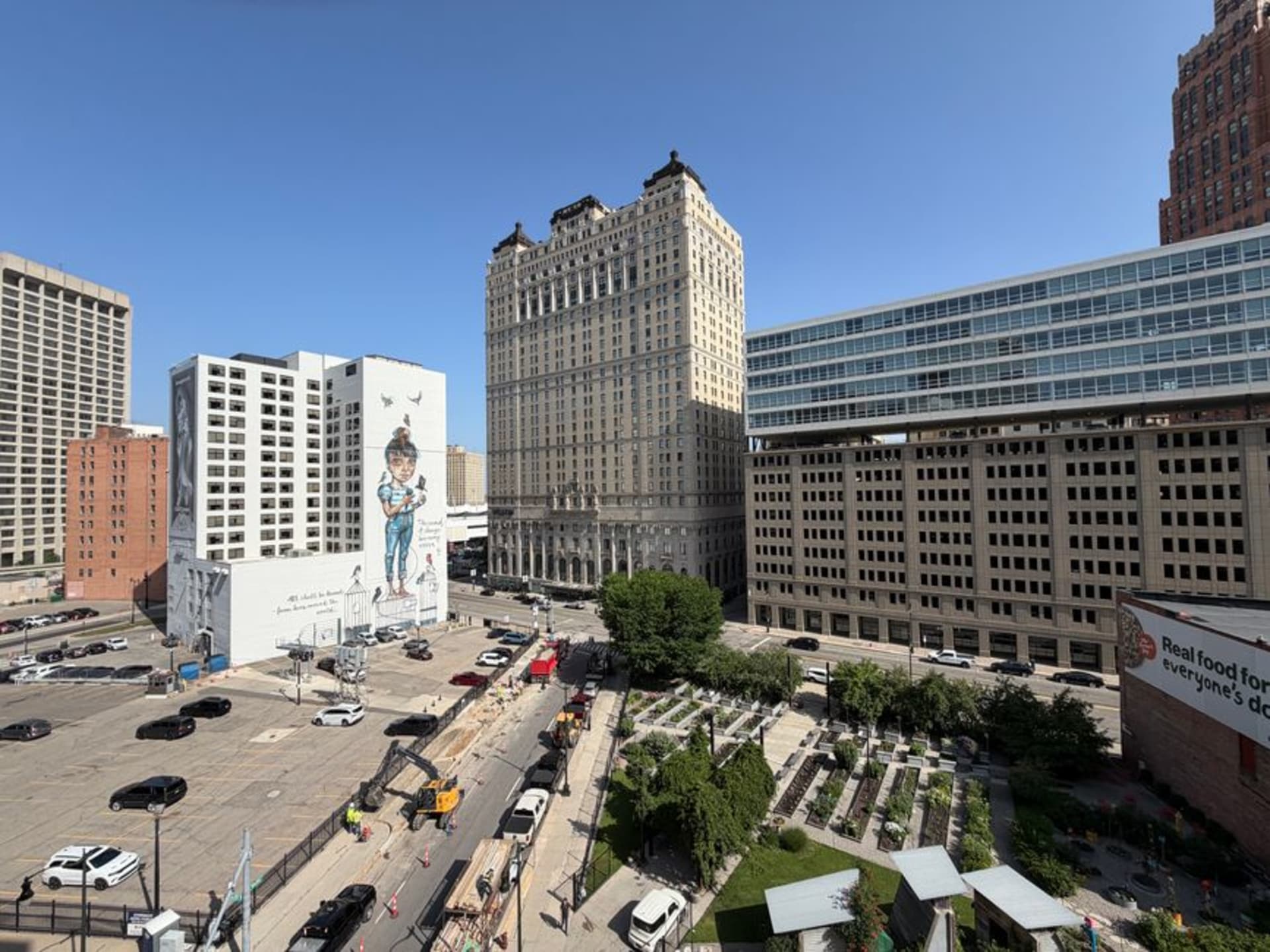
I had a picture of Detroit in my head before we arrived, and it was wrong. Everyone’s is. Lia and I drove in past the vast Michigan Central Station — for years the great ruined symbol of the city’s collapse, now scrubbed and glowing again behind new glass — and it set the tone for everything after. Detroit is not the ruin people expect, nor is it a tidy comeback story. It is both at once, block by block, and it wears that honestly. A barista in Corktown, refilling my coffee, said, “People come to see us fail. We just keep not doing it.” I thought about that line for days.
The Motown sound
We started where the music started: a modest house on West Grand Boulevard with “Hitsville U.S.A.” painted across the front, the tiny studio where Motown recorded the songs that soundtracked half the twentieth century. Studio A is barely bigger than a living room, its piano still in place, the ceiling stained where echo chambers once sat in the attic. Our guide had us sing a few bars of “My Girl” together, badly, and for a moment the whole room grinned. Lia, who does not sing, sang. Standing on the worn wooden floor where Stevie Wonder and the Supremes once stood, I felt the strange intimacy of the place — how something so enormous came from a room so small.
Murals, markets, and Eastern Market
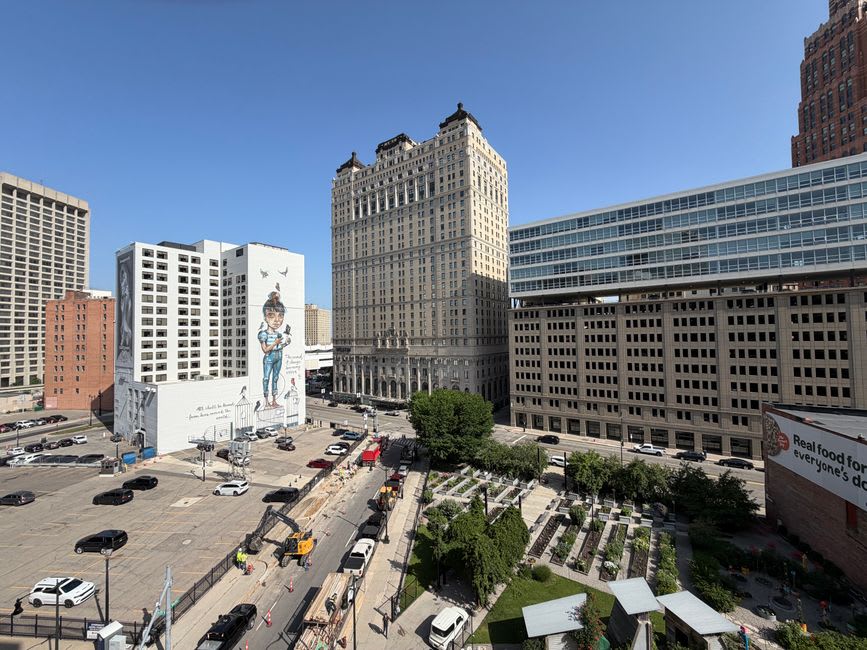
By day two we’d learned to read the city through its walls. Eastern Market, a sprawl of old produce sheds just north of downtown, is covered in some of the largest murals we’d ever seen — whole buildings turned into canvases, painted by artists from around the world. We wandered the Saturday market as vendors stacked greens and a man sold honey from his own hives, then followed the murals block by block until we lost track of time. Lia filled her camera. A muralist on a lift, taking a break, told us the city gave artists space that nowhere else could — “room to be big,” he said, gesturing at the four-story wall behind him.

The river and the Guardian
On our final afternoon we walked the RiverWalk, the reclaimed waterfront path along the Detroit River, with Canada plainly visible on the far bank — the only place in America, someone told us, where you look south to see Canada. Freighters slid past, impossibly long. Afterwards we ducked into the Guardian Building downtown, an Art Deco cathedral of a skyscraper whose lobby is lined floor to ceiling in colored tile and Pewabic ceramic, a burst of orange and gold that made us both stop dead. A security guard, seeing our faces, smiled. “They don’t build lobbies like this to make money,” he said. “They built it to say Detroit mattered.” It still does.

Getting There
Detroit Metropolitan Airport lies about half an hour southwest of downtown, its sweeping McNamara terminal a sight in itself, and rideshares run steadily into the city. Detroit is a driving town at heart — it built the car, after all — and we found a rental invaluable for reaching Eastern Market and the neighborhoods beyond the core. Downtown itself, though, is walkable, and the elevated QLine streetcar and free People Mover loop connect the central sights. Late spring through autumn is the time to come; the winters here are long, grey, and genuinely cold off the river.