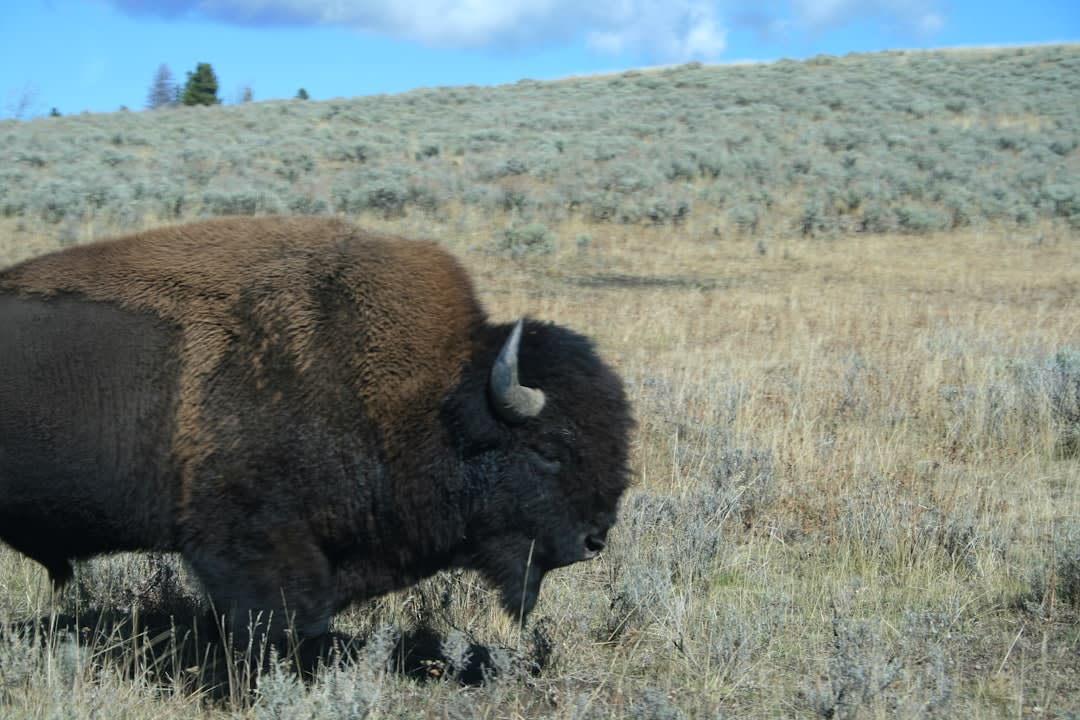
We had rounded a bend on the Wildlife Loop Road when Lia said “stop” in the voice she uses when she means it. The road ahead was simply gone — swallowed by bison. Hundreds of them, calves and bulls, moving across the asphalt with the unbothered patience of animals who know the land is theirs. I killed the engine. For twenty minutes we did nothing but sit in the low golden light and listen to them breathe, huge dark shapes passing so close I could see the flies on their flanks.
The Wildlife Loop
The eighteen-mile Wildlife Loop Road is the beating heart of Custer, and it does not disappoint the way roadside attractions usually do. Beyond the bison — nearly 1,300 of them roam here — we saw pronghorn ghosting across the grass at absurd speeds, a coyote trotting the ditch line, and prairie dogs standing sentry over their towns, chirping alarms as we crawled past. Then came the burros. The “begging burros” are descendants of animals once used to haul tourists up Black Elk Peak, and they now amble up to stopped cars with the confidence of toll collectors. One put its entire head through Lia’s window. She fed it nothing (the rangers ask you not to) and laughed until she cried anyway. The road unspools slowly, deliberately, and rewards anyone willing to drive it at the pace the animals set.
Needles Highway
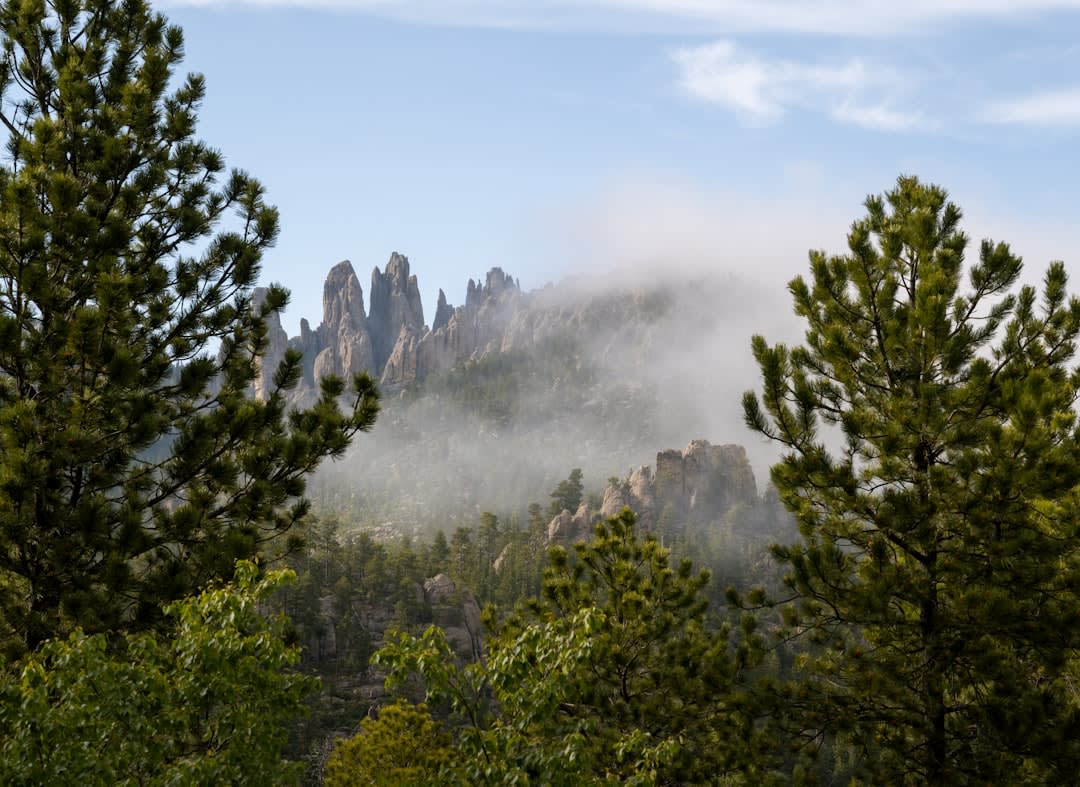
The next morning we drove the Needles Highway, and I gripped the wheel harder than I care to admit. This is fourteen miles of engineering audacity — hairpin turns threading between granite spires that rise like petrified flames, and tunnels blasted so narrow you fold in your mirrors and hold your breath. At the Needle’s Eye tunnel we parked and walked among the rock formations, running our hands over the coarse pink granite warming in the sun. Climbers dotted the spires above us, tiny and patient. Lia found a slab to sit on and we shared an apple while the wind moved through the ponderosa pines with that dry Western hiss I had come to love over the trip. The scale of the rock does something to your sense of proportion. We felt very small and very content.
Sylvan Lake at Golden Hour
We ended our day at Sylvan Lake, and I understood immediately why people call it the crown jewel of the Black Hills. The water sits in a bowl of granite, still as glass, reflecting the boulders and pines so perfectly that the shoreline seems to double. We walked the easy mile-long loop around it as the light went amber, passing families fishing and a solo swimmer cutting slow lines across the middle. At one point the trail squeezes between two enormous rocks, and you emerge onto a view that stops conversation. Lia and I sat on a warm ledge until the color drained from the sky, not talking, watching a heron work the far shallows. It was the kind of ordinary perfect evening you only recognize as such much later.
Getting There
Custer State Park sits in the southern Black Hills of South Dakota, about a 40-minute drive from Rapid City, which has the nearest airport. A car is essential — this is a place built around driving its scenic roads, and there is no public transport within the park. The seven-day vehicle entrance license is inexpensive and well worth it. Combine a visit with nearby Mount Rushmore, Wind Cave, and Crazy Horse; all sit within a short drive. Come in September for cool days, thinning crowds, and the famous Buffalo Roundup, when riders drive the entire herd across the grassland in a thunder you feel through your boots.