Ridgefield
"Ridgefield wears its Revolutionary scars and its modern art with the same understated pride."
A Fairfield County town where a Revolutionary War cannonball is still lodged in a tavern's clapboard wall and a contemporary art museum sits two blocks from the village green. Lia found it more interesting than either of us expected from a place this close to Manhattan.
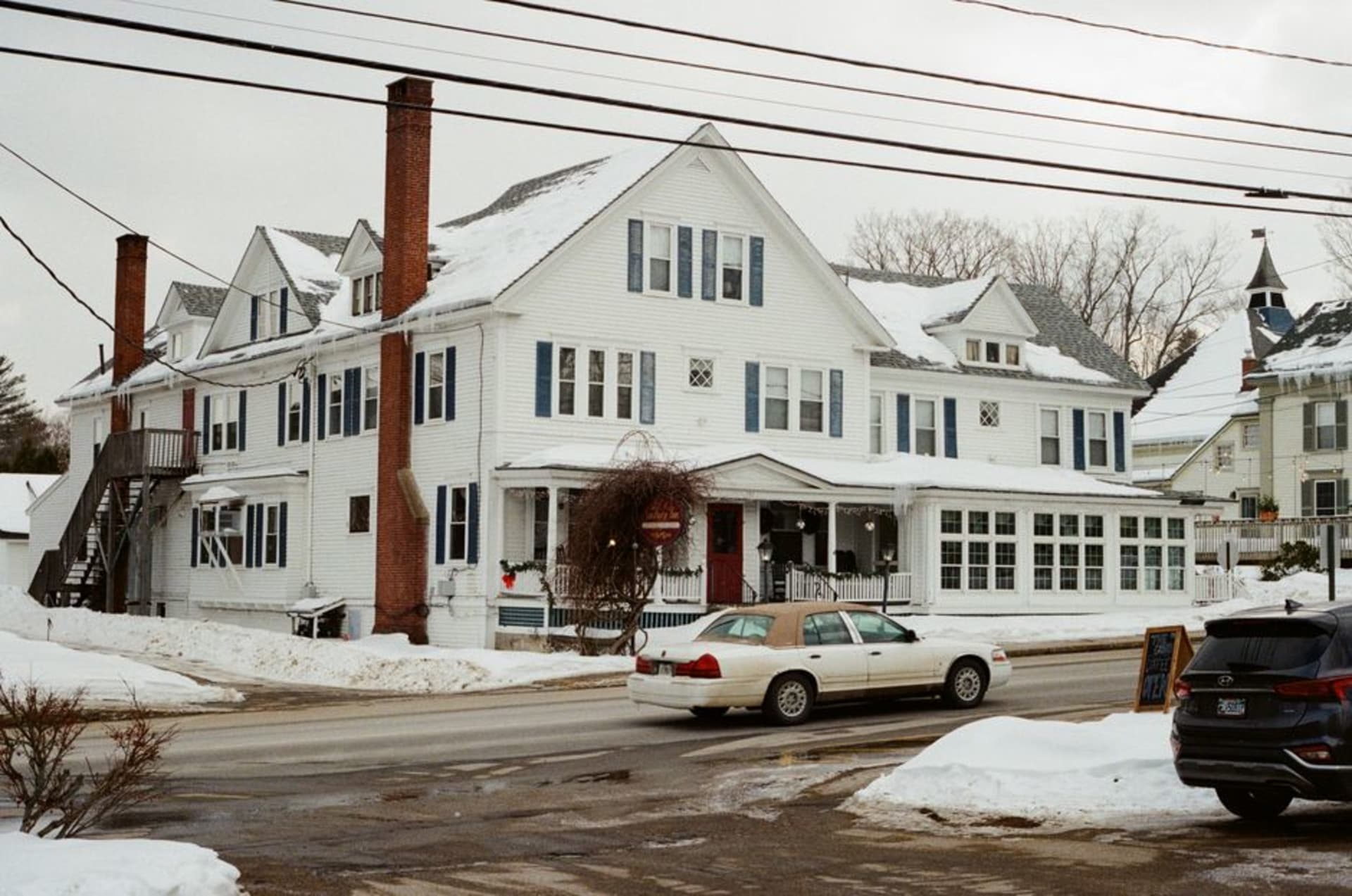
We drove into Ridgefield expecting a wealthy commuter town and not much else — it’s an easy hour from Manhattan, and I’d braced for the manicured blandness that sometimes comes with that — but Main Street won us over fast. It’s a wide, tree-lined boulevard of white clapboard houses and stone churches, laid out generously enough that Lia kept remarking how much sky you could see, a rarity after weeks bouncing between denser New England towns. Ridgefield was founded in 1708, and the street plan hasn’t strayed far from its original grid since, even as the houses along it went from farmhouses to some of the more coveted real estate in the state.
The Keeler Tavern’s cannonball
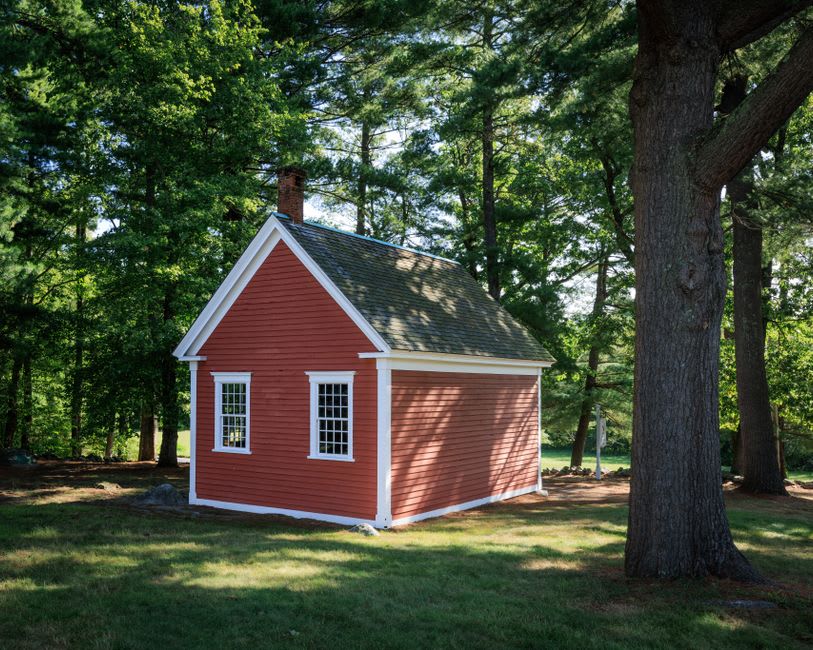
Just off Main Street sits the Keeler Tavern, a red clapboard building that served as an inn and stagecoach stop through the 1700s, and it carries a genuinely strange scar: a British cannonball, fired during the 1777 Battle of Ridgefield, still embedded in the corner post where it struck. The museum guide pointed it out almost casually, as if everyone already knew, and Lia spent a full minute just staring at it, trying to reconcile the domestic tavern interior with the fact that cannon fire had once torn through this exact spot during Benedict Arnold’s retreat.
The Aldrich and Ballard Park
A few blocks down, the Aldrich Contemporary Art Museum occupies a former general store, its severe modern galleries an odd but effective contrast with the colonial streetscape outside, and its sculpture garden spills into the surrounding lawn with pieces that change every season. We wandered afterward into Ballard Park, a small formal garden tucked behind Main Street with a rose arbor and a pond that felt improbably peaceful for how close we still were to the town center. It’s the kind of detail — a serious contemporary art museum in a town this size — that makes Ridgefield feel more layered than its address would suggest.

Getting There
Ridgefield sits about sixty-five miles from New York City, roughly an hour and fifteen minutes by car via I-684 and Route 35, and it’s also reachable by Metro-North to nearby Branchville or South Norwalk with a short taxi onward. Bradley International Airport (BDL) near Hartford is the nearest major airport for international travelers, about an hour and a half northeast. A car is the easiest way to see the town properly, though the historic Main Street corridor itself is entirely walkable.
Keep exploring
More of Connecticut