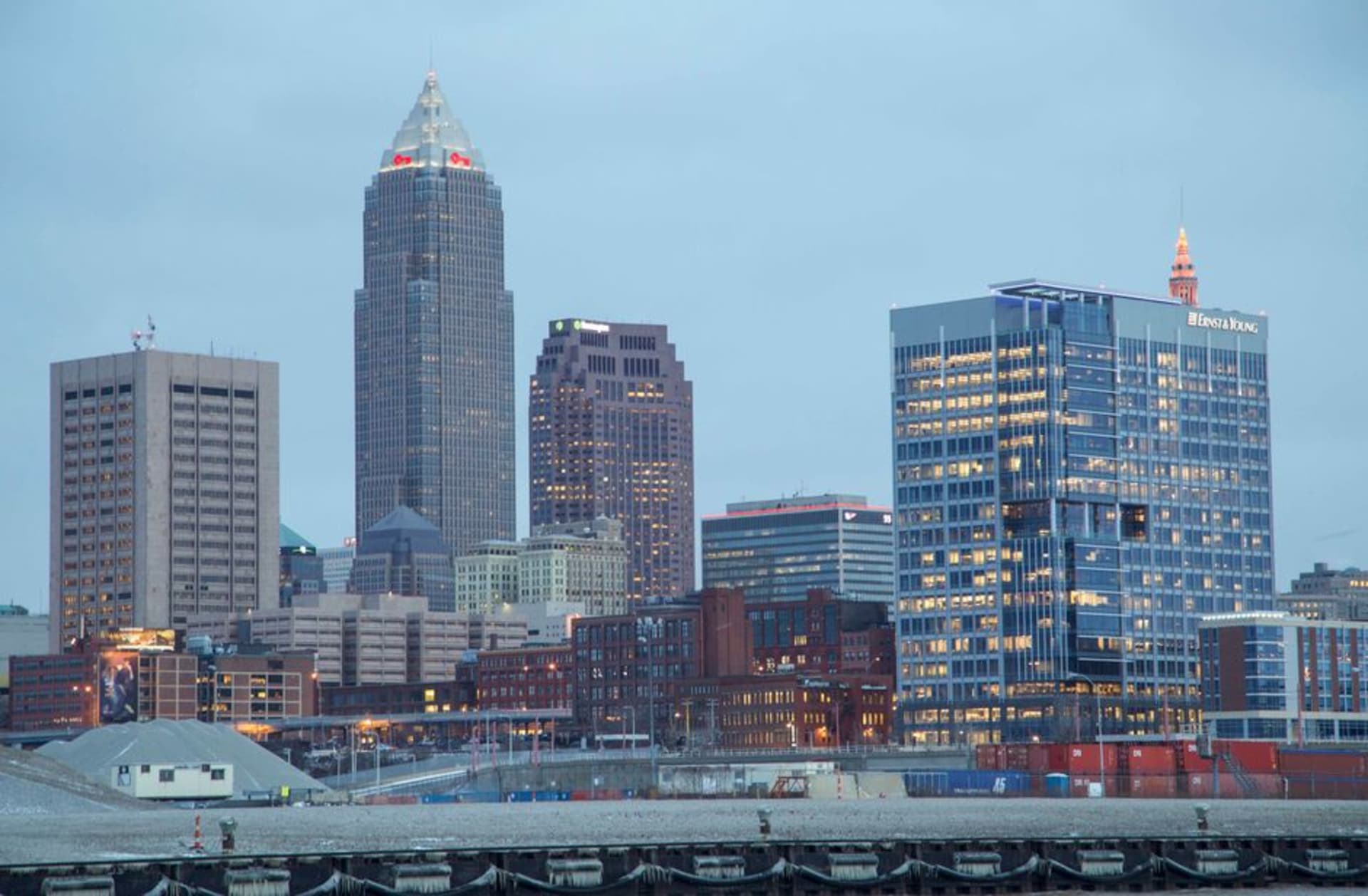
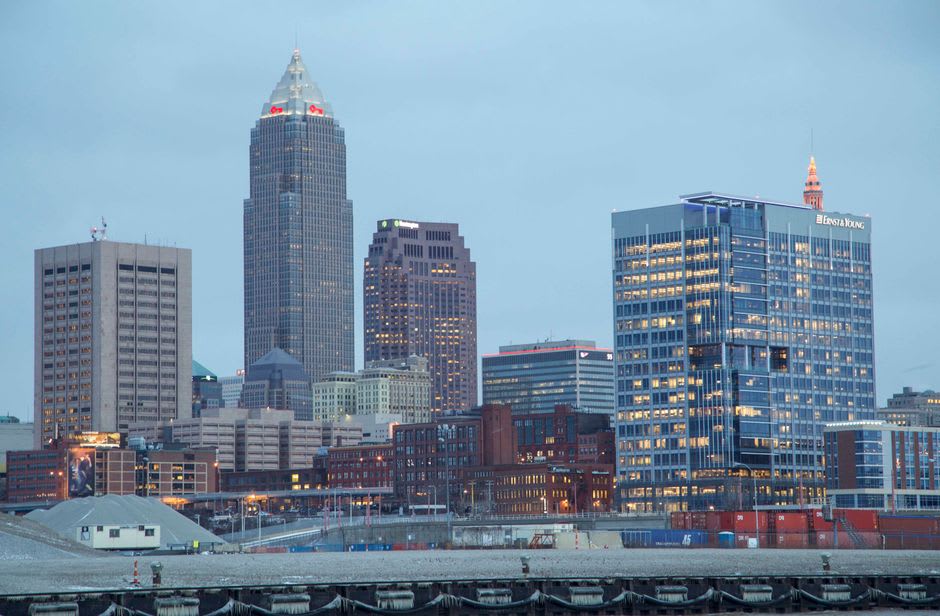
We had a free day between destinations and someone in a diner near Sandusky told us to give Cleveland a chance, so we did, mostly out of politeness to a stranger. By the end of the afternoon Lia was drafting reasons to stay a second night. There is a particular pleasure in a city that under-promises — you walk in bracing for rust and grey and instead find music, art, and a lakefront breeze that smells of fresh water and possibility.
The Rock and Roll Hall of Fame
I.M. Pei’s glass pyramid sits right on the lake, and inside it holds one of the most genuinely moving collections I have wandered through. Not because I am a great music historian — I am not — but because the objects are so human. Janis Joplin’s painted Porsche. Handwritten lyrics scrawled and crossed out on hotel stationery. A wall of the actual outfits, sweat-stained and sequinned, that people wore on stages that changed things. Lia, who knows far more about American music than I do, kept grabbing my sleeve at each turn. We spent three hours and could have spent five. Cleveland claims rock and roll partly because a local DJ, Alan Freed, helped popularize the very phrase, and standing among the guitars and the reverent crowds, the claim felt earned rather than opportunistic.
University Circle and Free Art
The next morning we took the train out to University Circle, and the Cleveland Museum of Art quietly astonished me. It is free — genuinely, entirely free — and yet the collection runs from Egyptian antiquities to Rodin to a Caravaggio, arranged around a luminous glass-roofed atrium where locals sit reading and children sprawl on the floor to sketch. We drifted through the medieval armor hall and the Asian galleries and then out into the surrounding neighborhood of gardens and grand cultural institutions. Afterward we ate at the West Side Market on our way back, a soaring 1912 hall of vendors where we bought Hungarian sausage, Slovenian pastry, and a bag of fruit, and picnicked on the steps outside. The city’s old immigrant layers are still there in the food if you look for them.
The Flats and the River
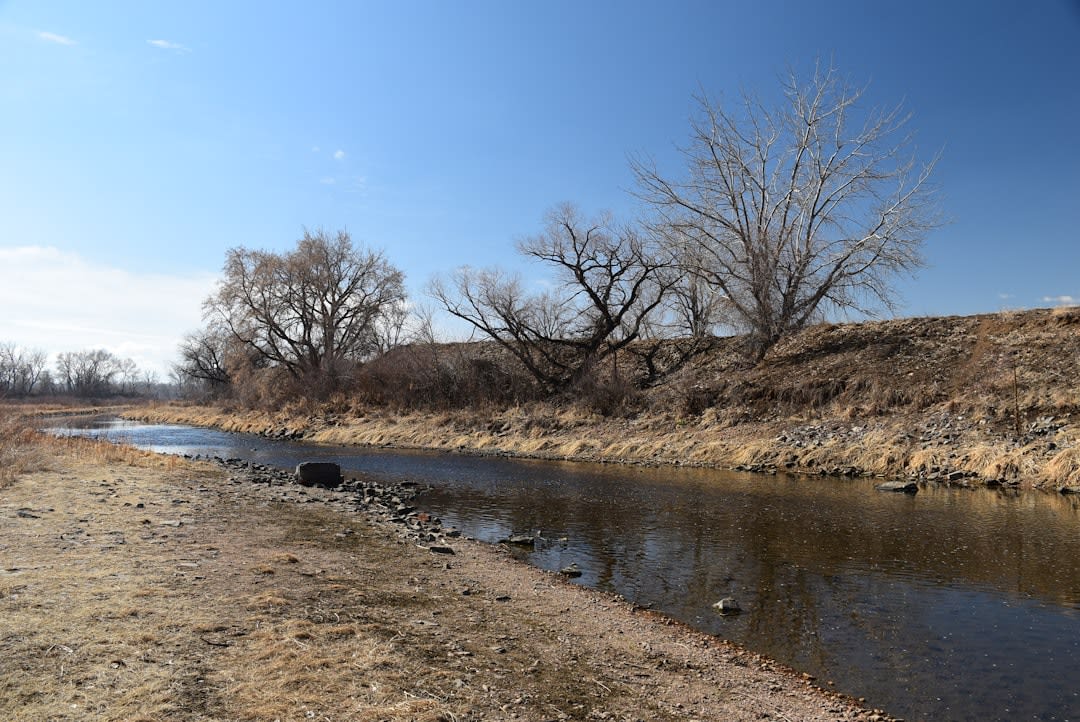
In the evening we walked down to the Flats, the low ground where the crooked Cuyahoga River bends through the old industrial heart of the city. This is the river that famously caught fire in 1969 — a symbol of everything gone wrong with American waterways — and helped spark the clean-water movement. Today kayakers thread between the freighter docks and restored warehouses now full of restaurants and patios. We sat by the water with a local beer as a huge lake freighter eased upriver under a lift bridge, its horn rolling off the buildings. The contrast — heavy industry and a Tuesday-evening date crowd sharing the same riverbank — captures Cleveland exactly. It is a working city learning to enjoy itself, and it does both at once.
Getting There
Cleveland Hopkins International Airport connects to most major US hubs and links to downtown by the RTA Red Line train in about half an hour — a rare Midwestern city where you can skip a rental car for a short visit. Downtown, the lakefront attractions, and University Circle are all reachable by the RTA rail and rapid bus lines. If you are road-tripping, Cleveland sits on I-90 along the Lake Erie shore, an easy stop between Buffalo and Chicago. Late spring through early autumn brings the kindest weather and the liveliest lakefront; winters here are long, grey, and famously snowy off the lake.